Blog
Page 31 of 52
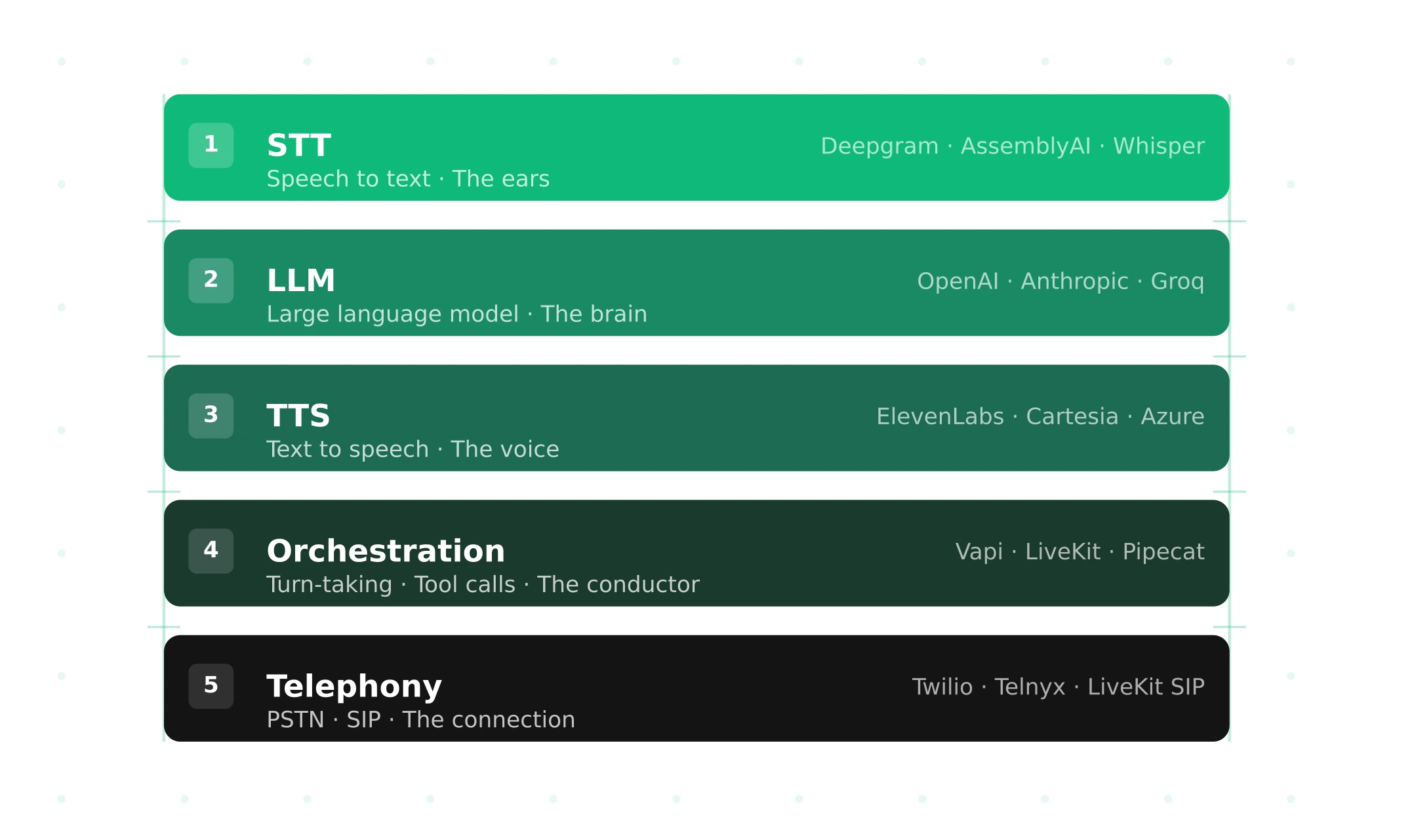
The Voice Agent Stack: Every Layer, the Latency Budget and the Real Cost (2026)
Every layer of a voice agent stack, from SIP and codecs to turn detection and evals, with an 800 ms latency budget and verified per-minute costs.
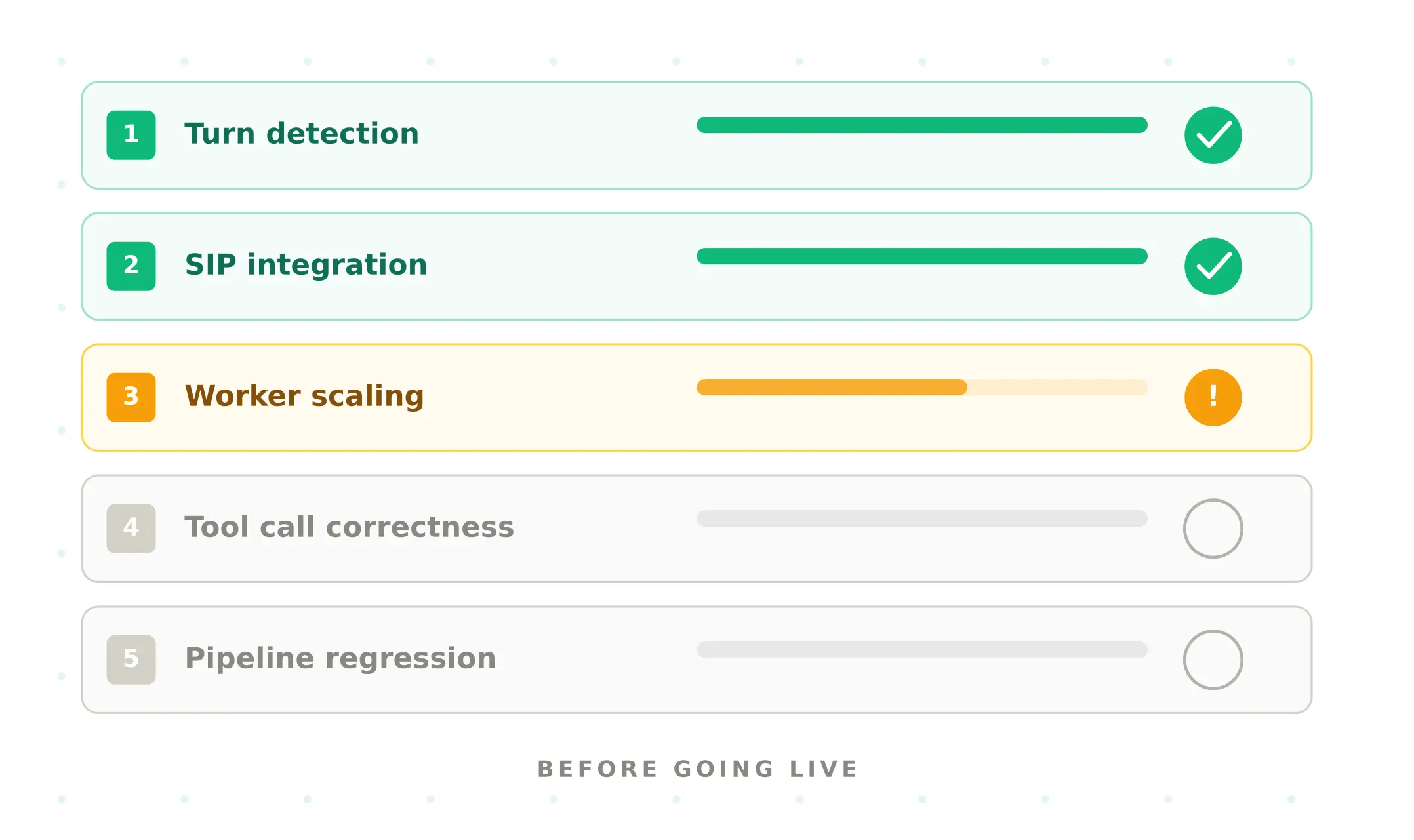
LiveKit voice agent testing guide: unit tests, simulations, SIP and load (2026)
How to test LiveKit voice agents: pytest helpers, judges, audio simulations, SIP, lk load tests, and turn-detector traps that differ between dev and prod.
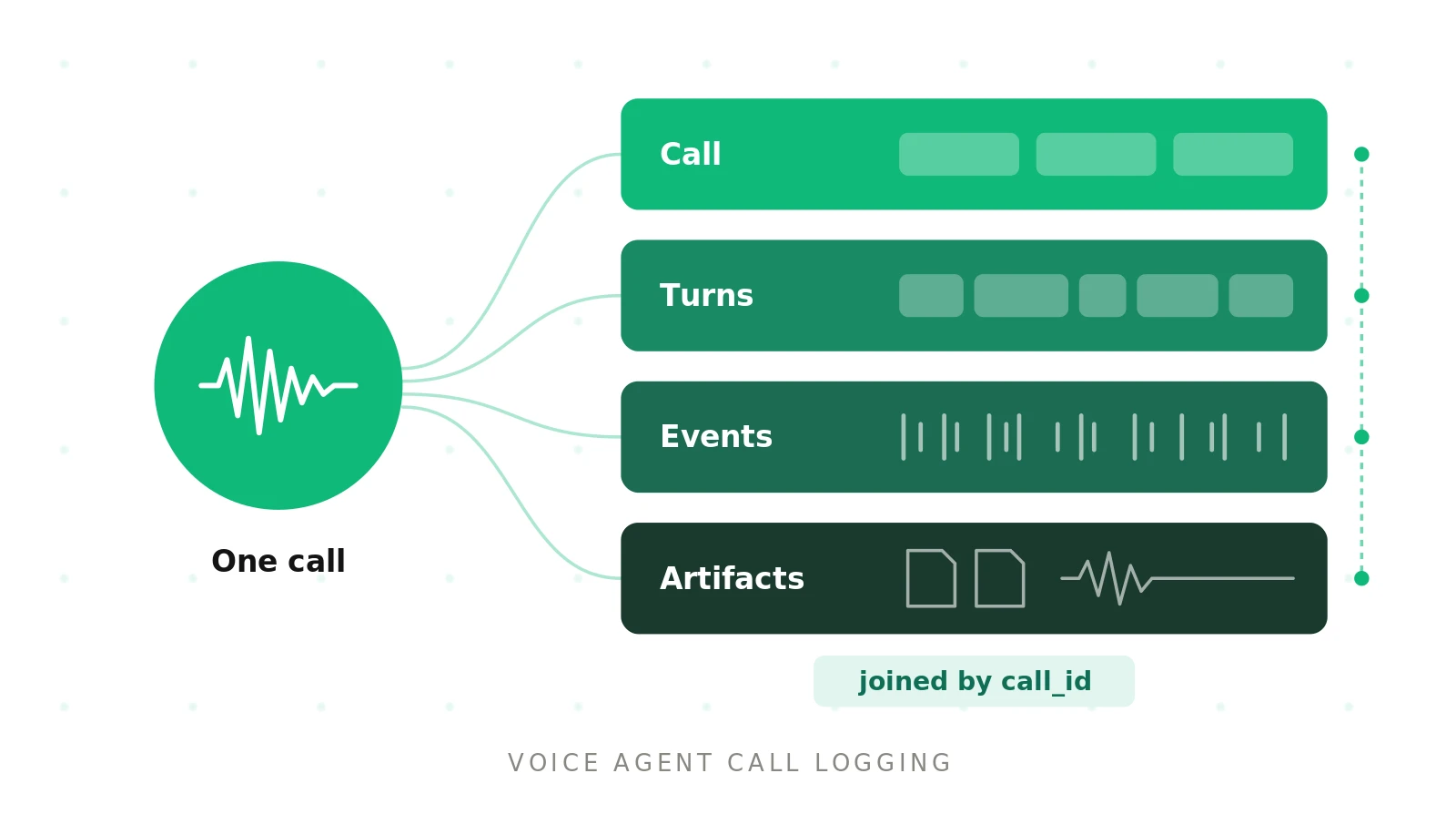
What to Log on Every Voice Agent Call: The Complete Schema
The voice agent call logging schema: call, turn, event and artifact fields, join IDs, OpenTelemetry code, redaction rules, and the 10 queries to run.
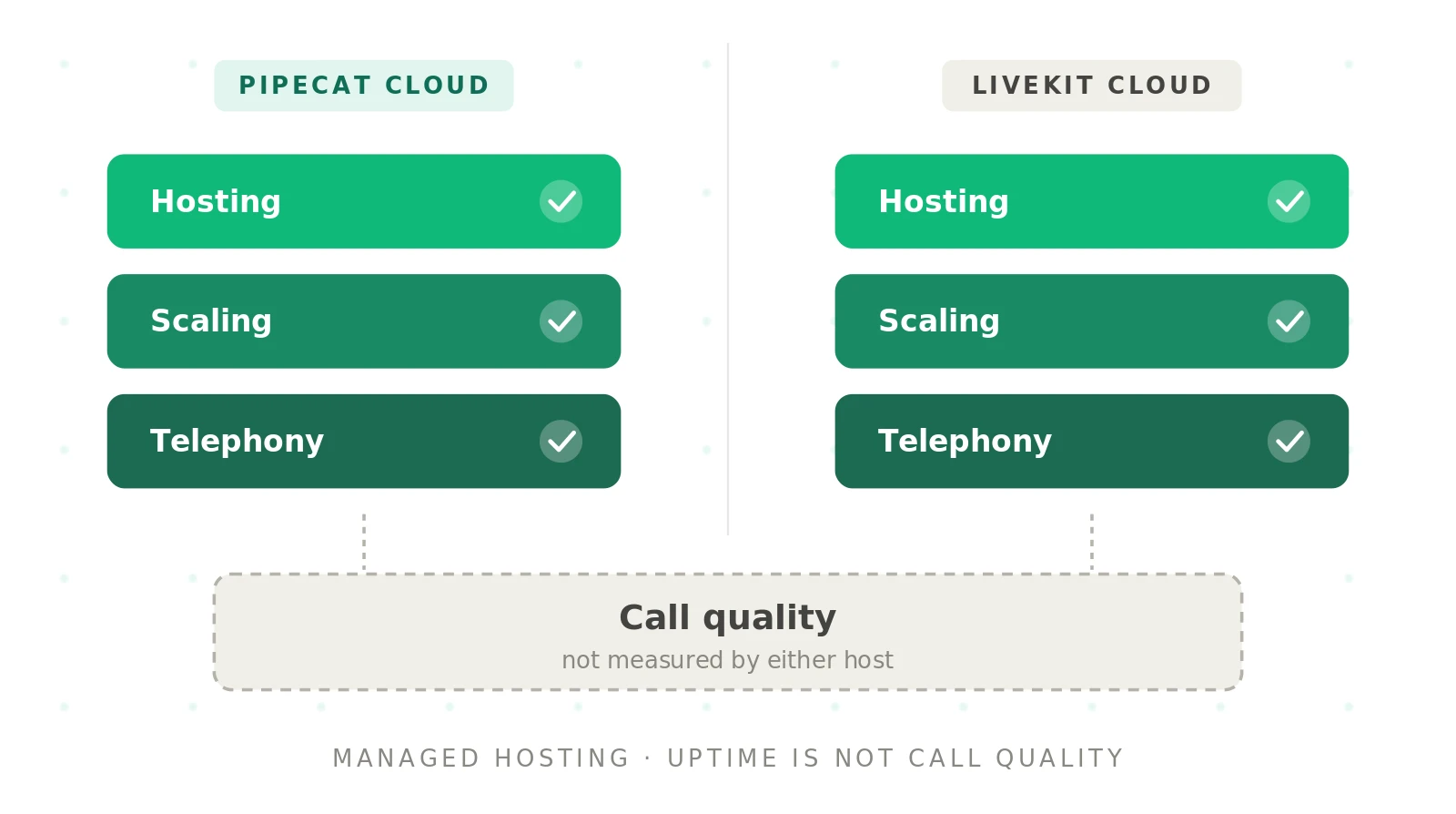
Pipecat Cloud vs LiveKit Cloud: Managed Voice Agent Hosting Compared
Pipecat Cloud vs LiveKit Cloud, side by side: deploy CLI, cold starts, regions, telephony, logs, compliance, pricing model, lock-in, and a pilot plan.
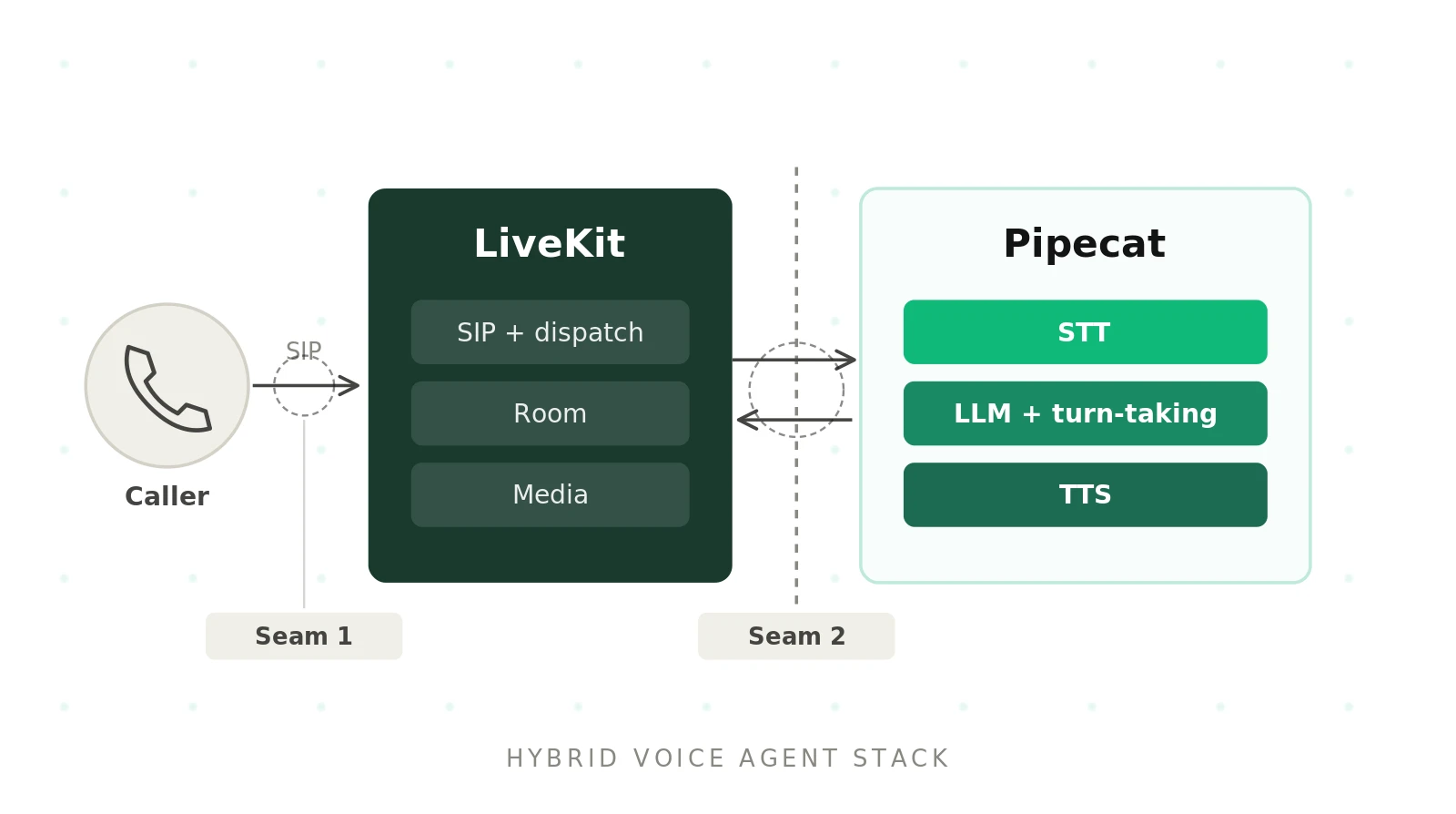
Can You Use LiveKit and Pipecat Together? The Hybrid Voice Agent Stack
Yes, LiveKit and Pipecat work together. A build guide for Pipecat on LiveKit transport: SIP dispatch, tokens, outbound calls, and the seams that break.
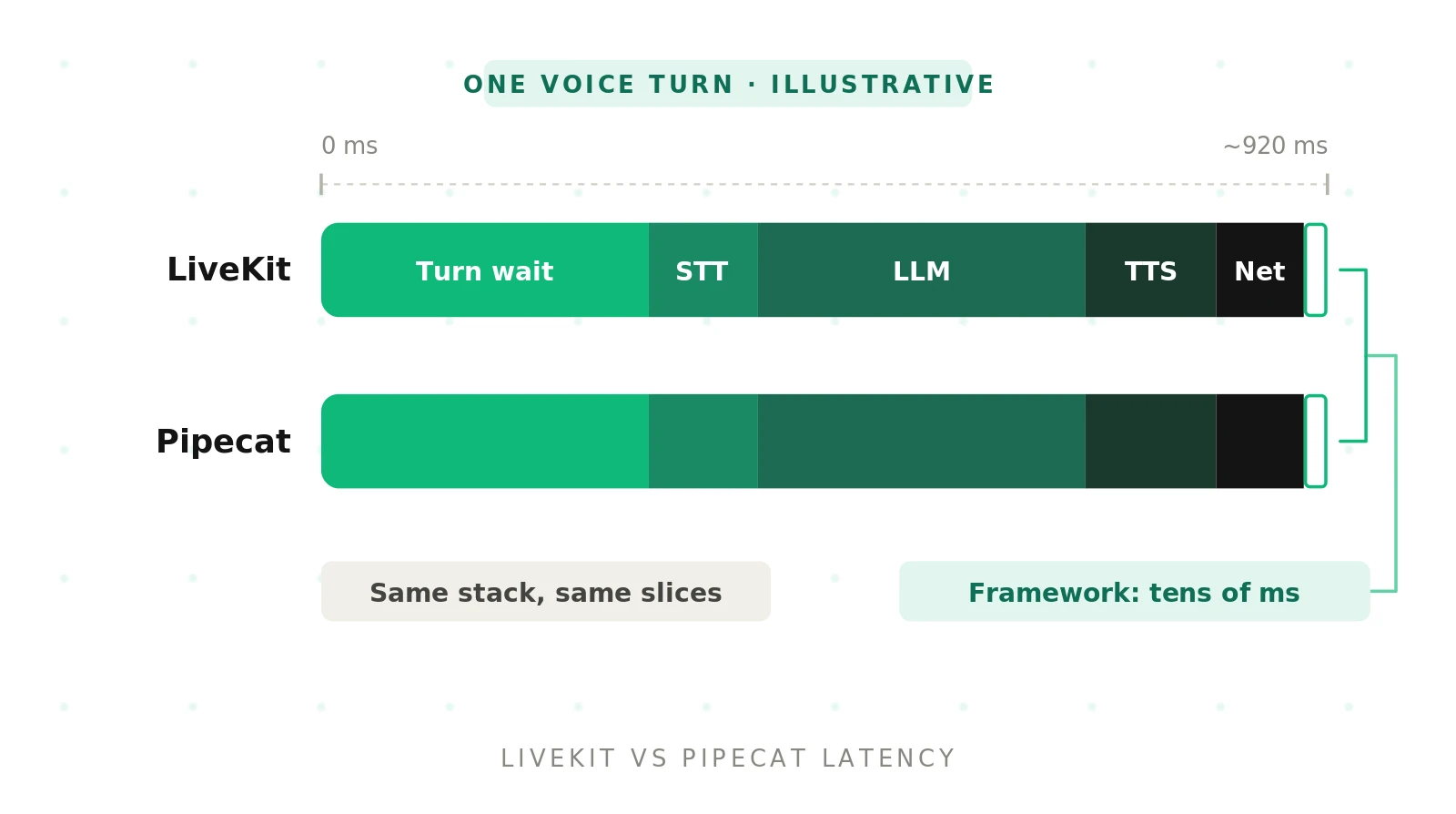
LiveKit vs Pipecat Latency: Where the Milliseconds Actually Go
LiveKit vs Pipecat latency, turn by turn: why the framework is a small slice, which knobs move p95, and how to cut delay without cutting callers off.
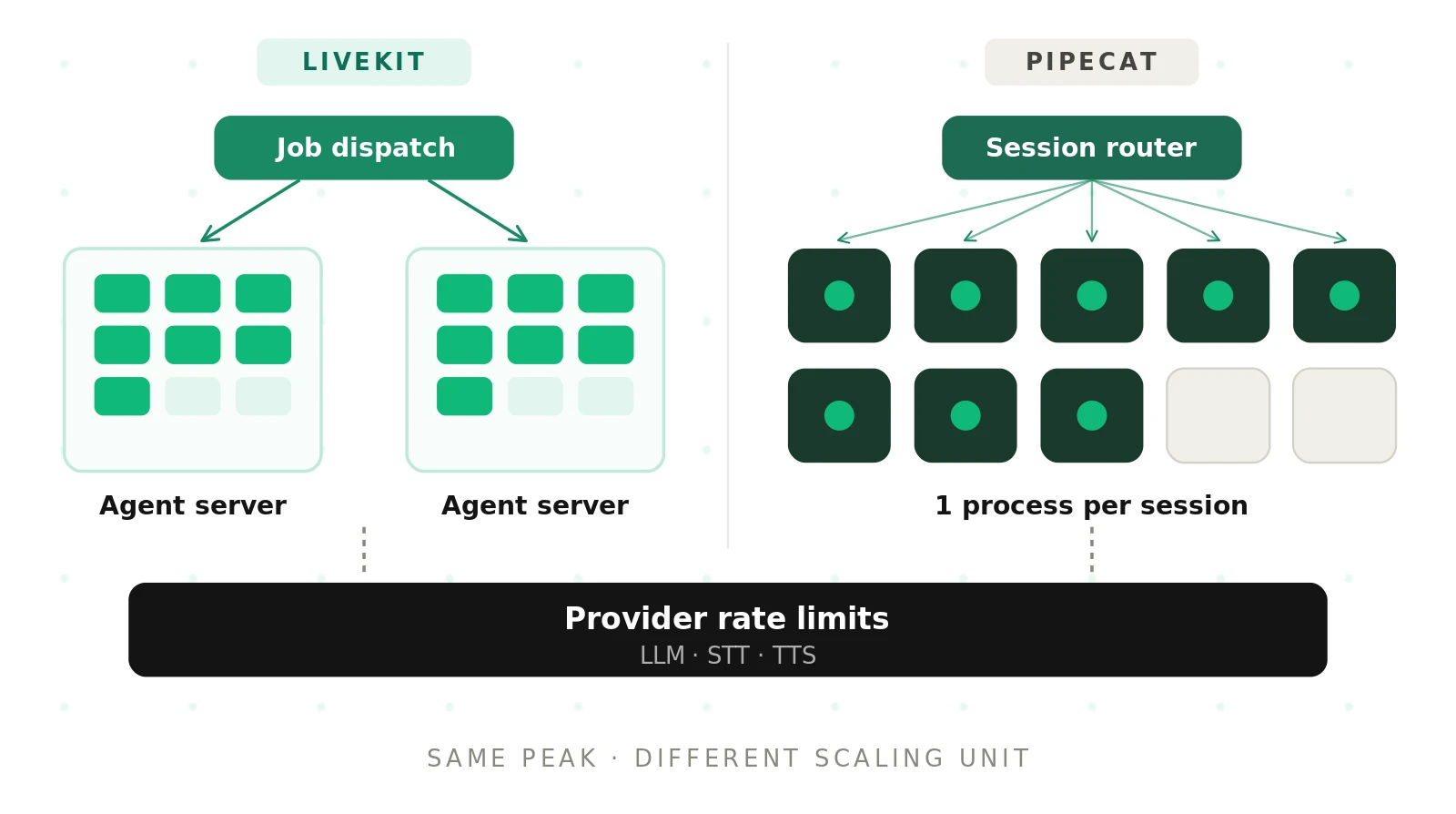
LiveKit vs Pipecat at Scale: Concurrency, Workers, and Production Load
LiveKit vs Pipecat scaling from 10 to 10,000 calls: agent servers vs per-session processes, cold starts, draining, rate limits, and a capacity worksheet.
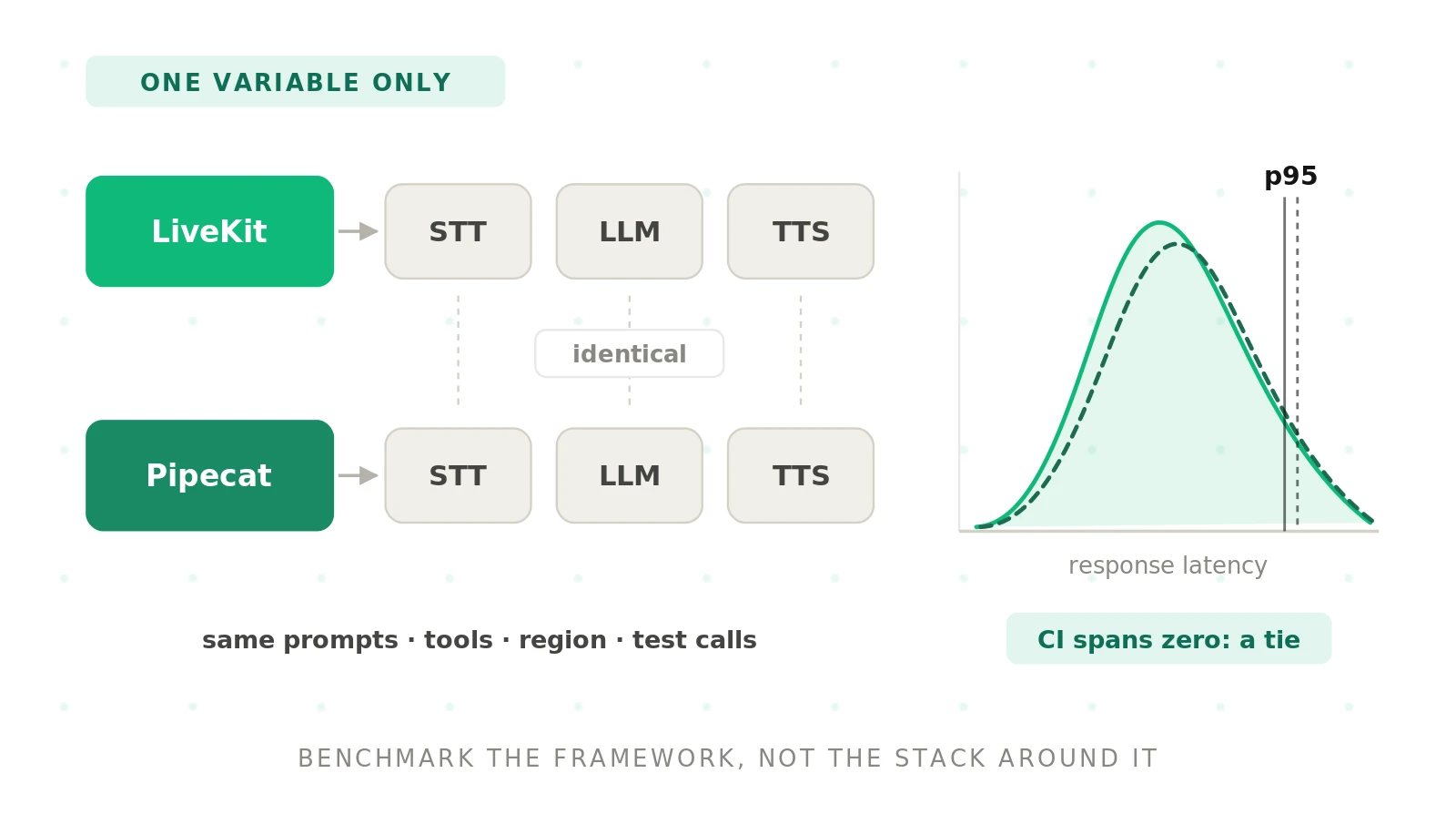
How to Benchmark LiveKit vs Pipecat on Your Own Workload
Generic LiveKit vs Pipecat benchmarks mislead. Hold STT, LLM, TTS, prompts, and region constant, vary only the framework, and measure p95 and turn quality.
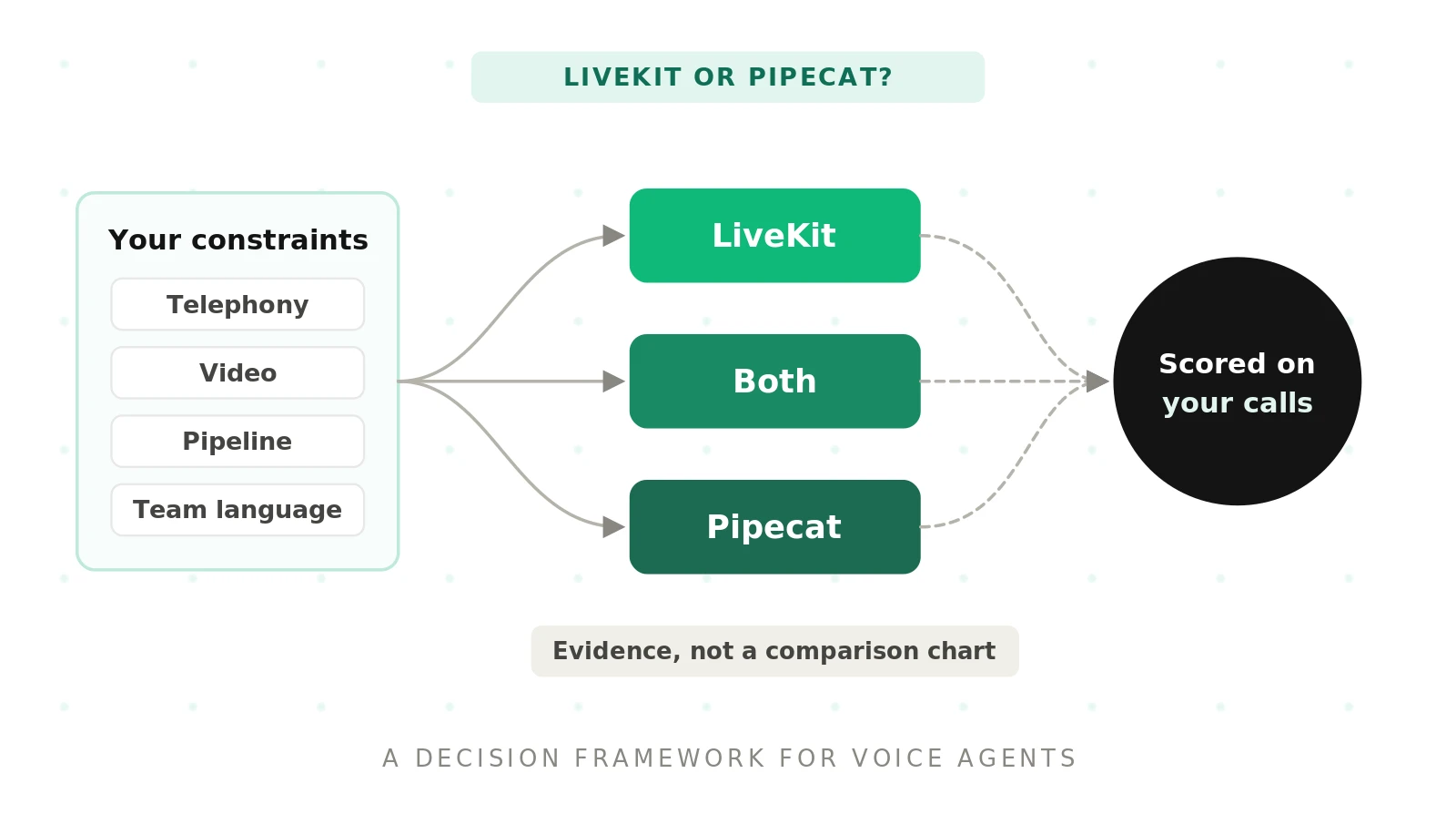
How to Choose Between LiveKit and Pipecat (A Decision Framework)
LiveKit or Pipecat? A 10-criterion decision framework with a weighted scoring worksheet, a decision tree, three worked archetypes, and a two-week POC plan.