Blog
Page 32 of 52
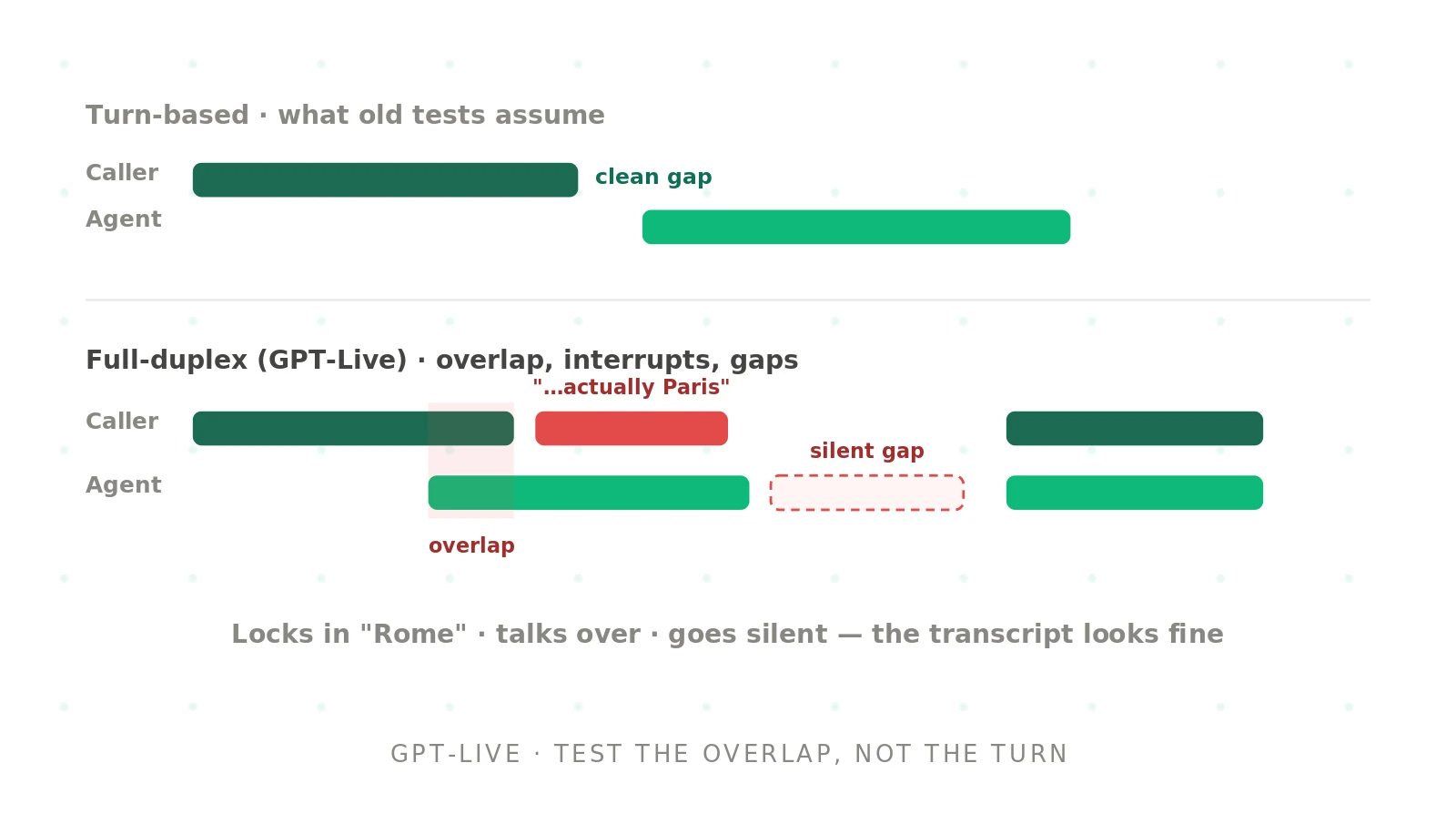
How to test GPT-Live voice agents: a complete gpt-live-1 API test plan
A hands-on test plan for GPT-Live voice agents on the gpt-live-1 API: turn-taking, barge-in, tool-call arguments, latency, cost per call, and regressions.
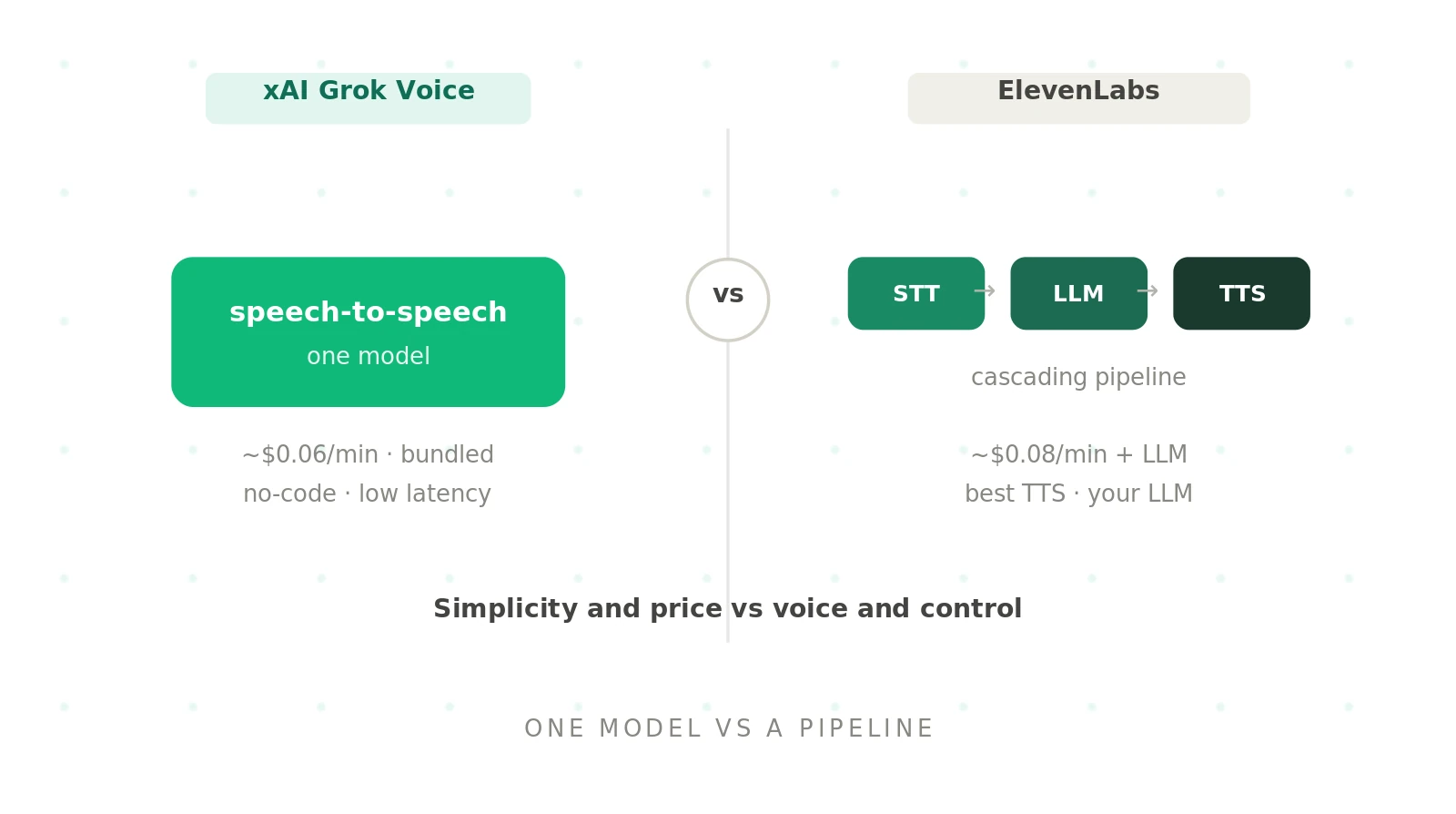
xAI Voice Agent vs ElevenLabs: Grok Voice Agent Builder pricing per minute, features, and which to choose (2026)
xAI Grok Voice Agent vs ElevenLabs in 2026: cost per minute, Think Fast 2.0, voices, languages, SIP telephony, tools, compliance, and a fair test plan.
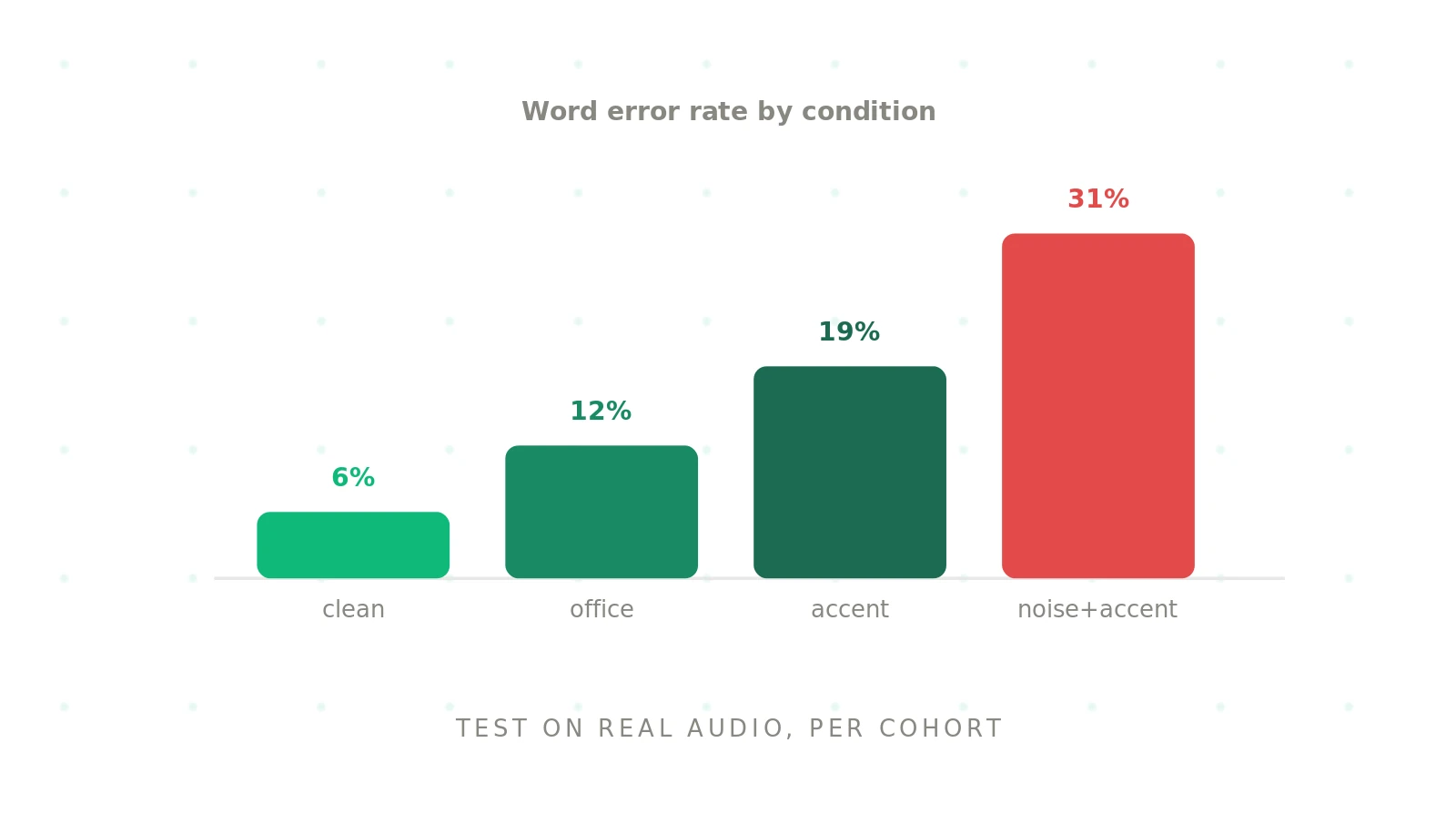
STT evaluation: how to test speech-to-text for voice agents (2026)
STT evaluation for voice agents: WER, entity accuracy, keyterm recall, latency and endpointing, plus normalization rules and a Python harness you can run.
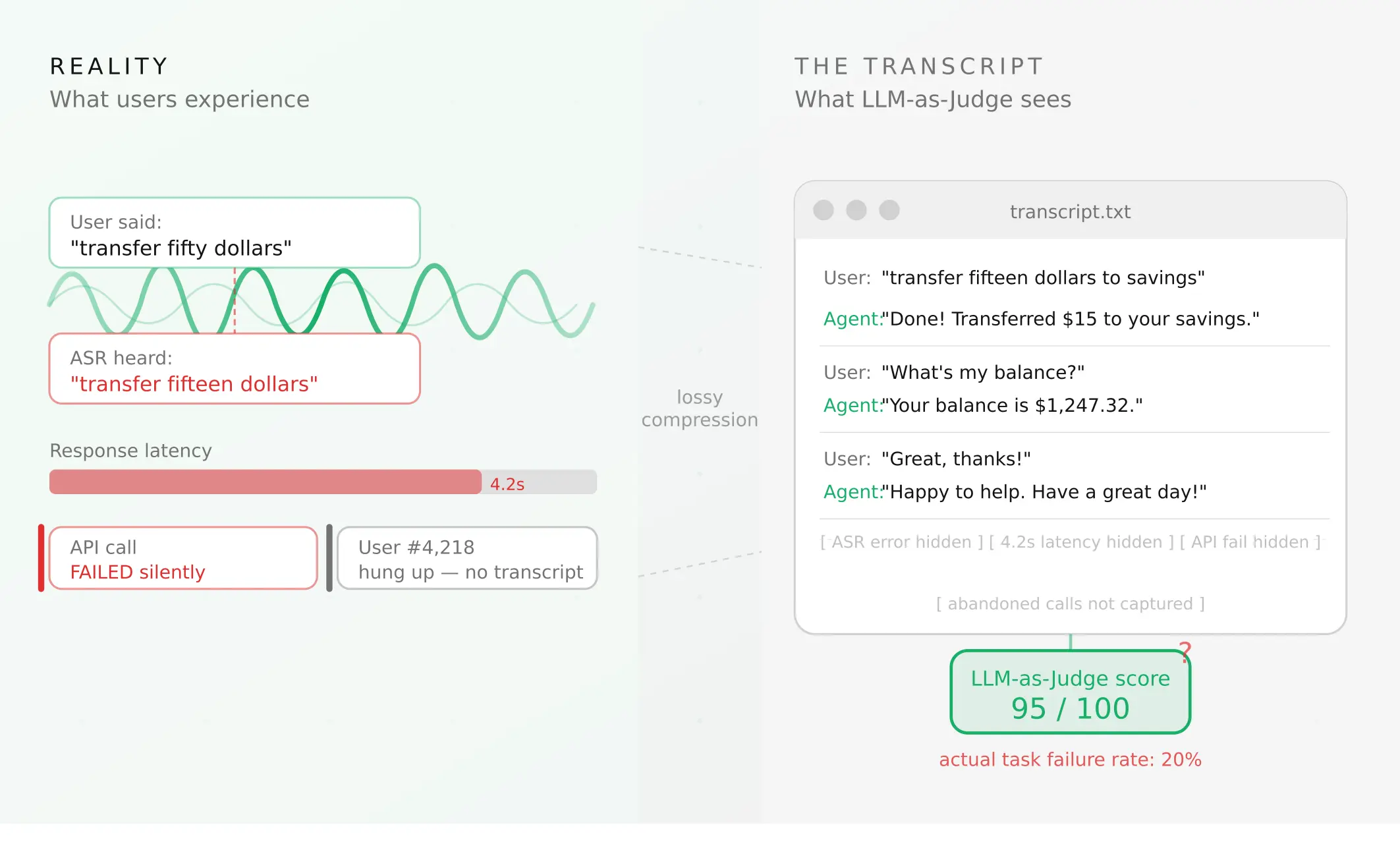
LLM-as-a-judge limits in voice AI: 9 failure modes and how to catch them
LLM-as-a-judge misses real voice agent failures. See 9 failure modes backed by research, how to catch false positives, and the fixes that hold up.
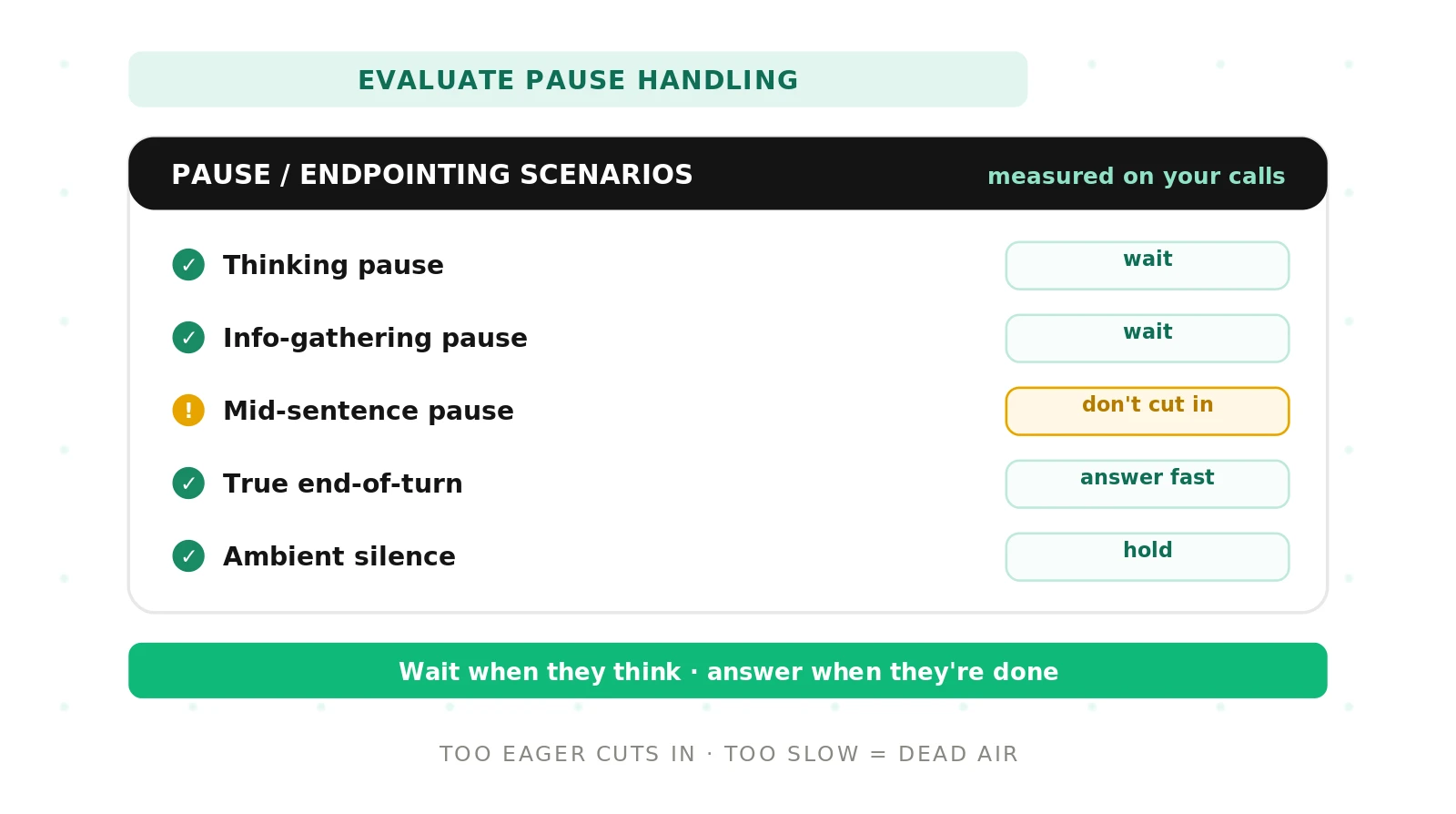
How to Evaluate Pause Handling in AI Voice Agents
Learn how to evaluate pause handling in AI voice agents: measure premature-endpoint and dead-air rates across realistic pause scenarios on real call audio.
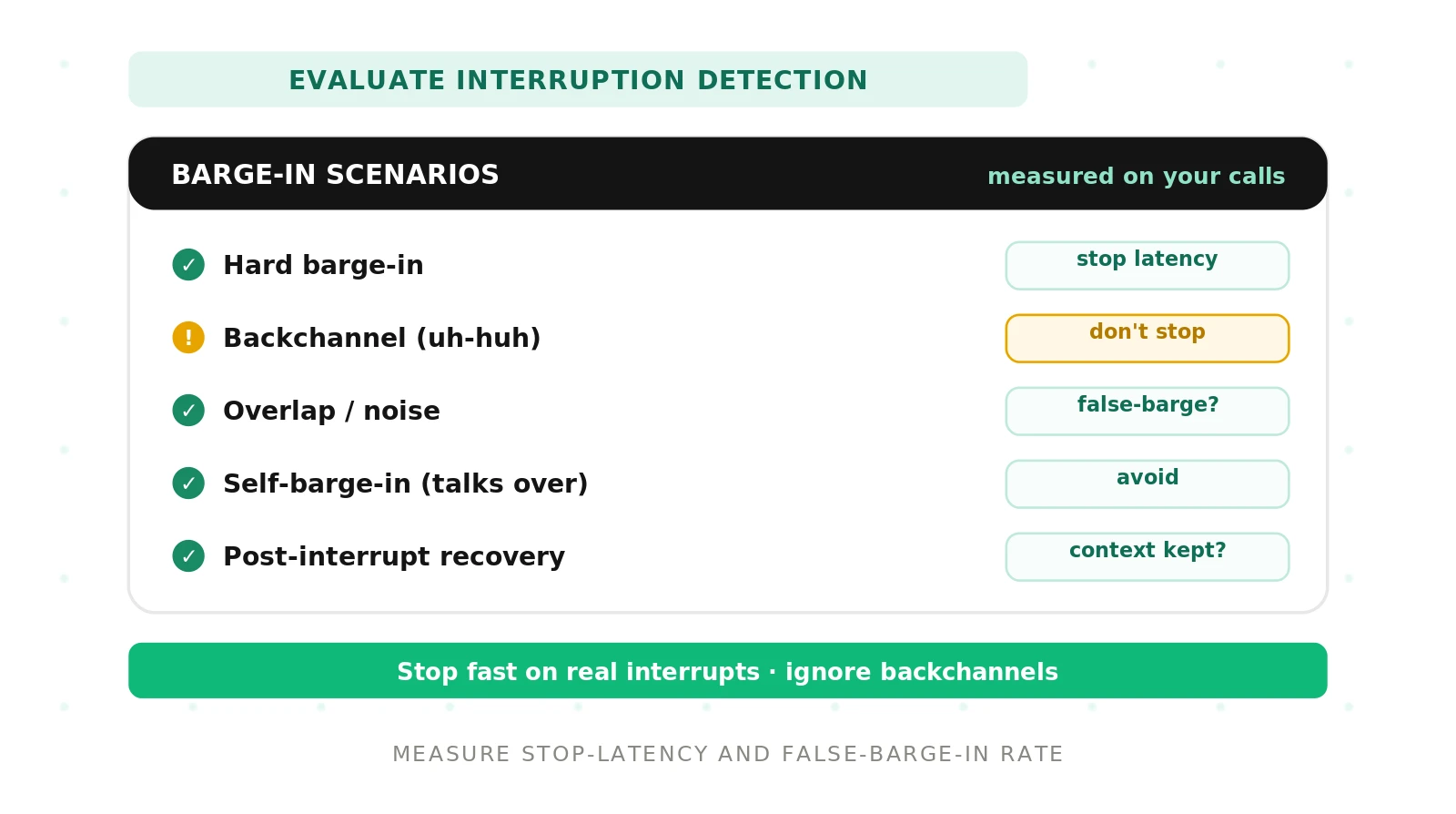
How to Evaluate Interruption Detection in Voice Agents
Interruption detection decides whether a voice agent stops when a caller cuts in. Here is how to score barge-in, stop latency, and false barge-ins.
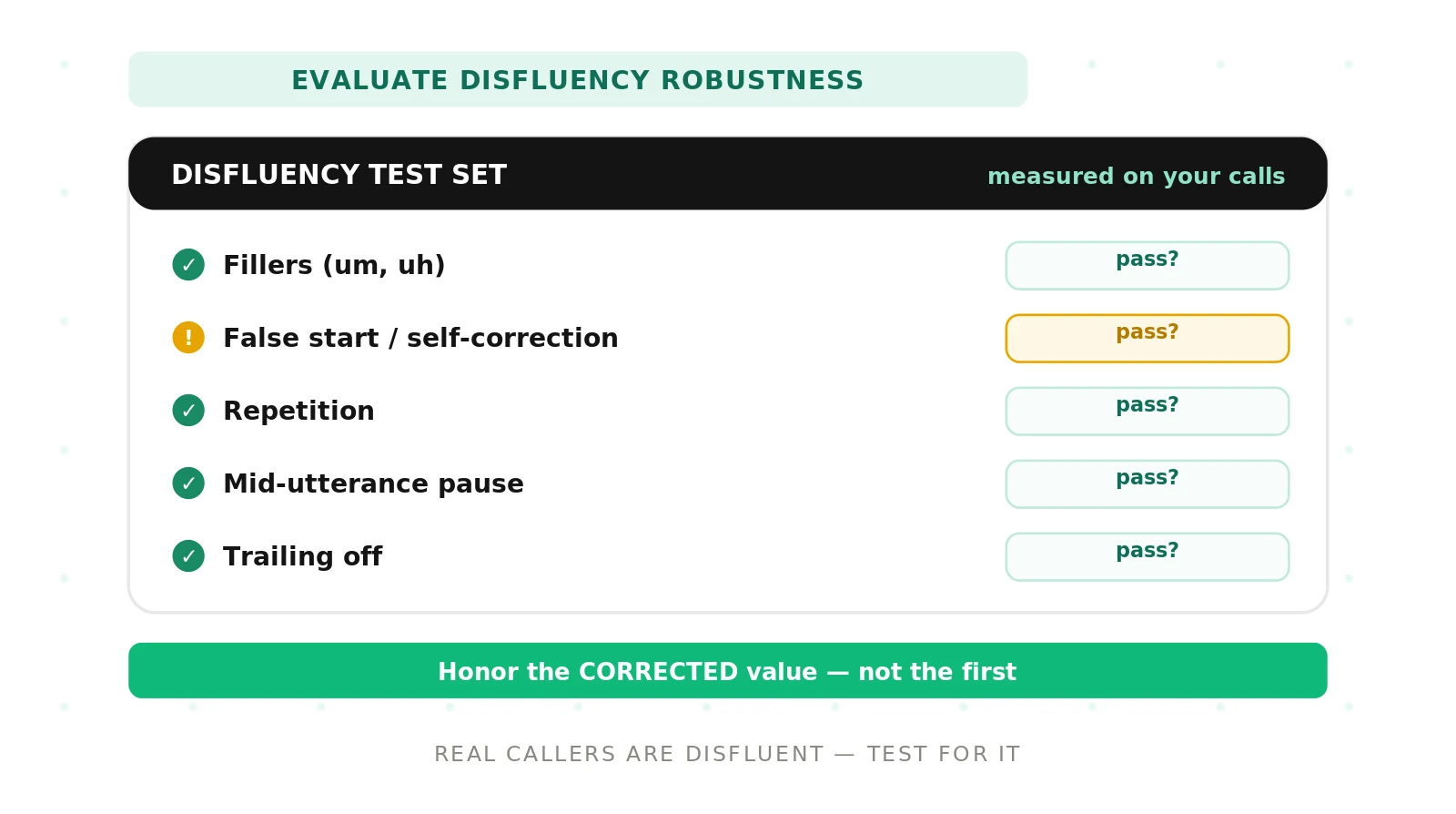
How to Evaluate Disfluency Robustness in Voice Agents
Disfluency robustness is how well a voice agent handles fillers, false starts, and self-corrections. Learn how to test it on your own real calls.
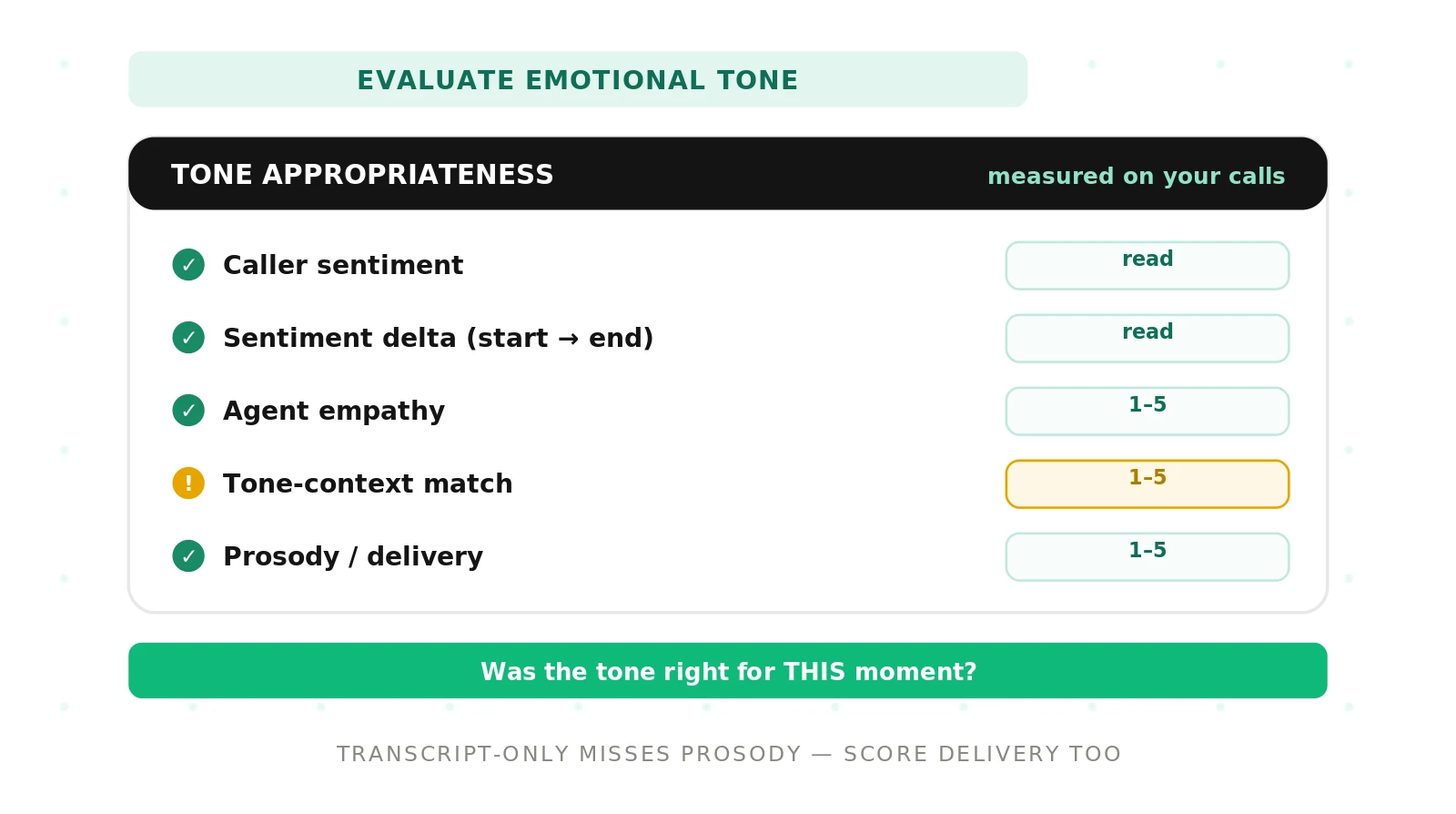
How to Evaluate Emotional Tone in AI Voice Agents
Emotional tone voice agent evaluation scores whether your AI agent sounds empathetic and matches the caller's mood, tested on real, emotionally varied calls.
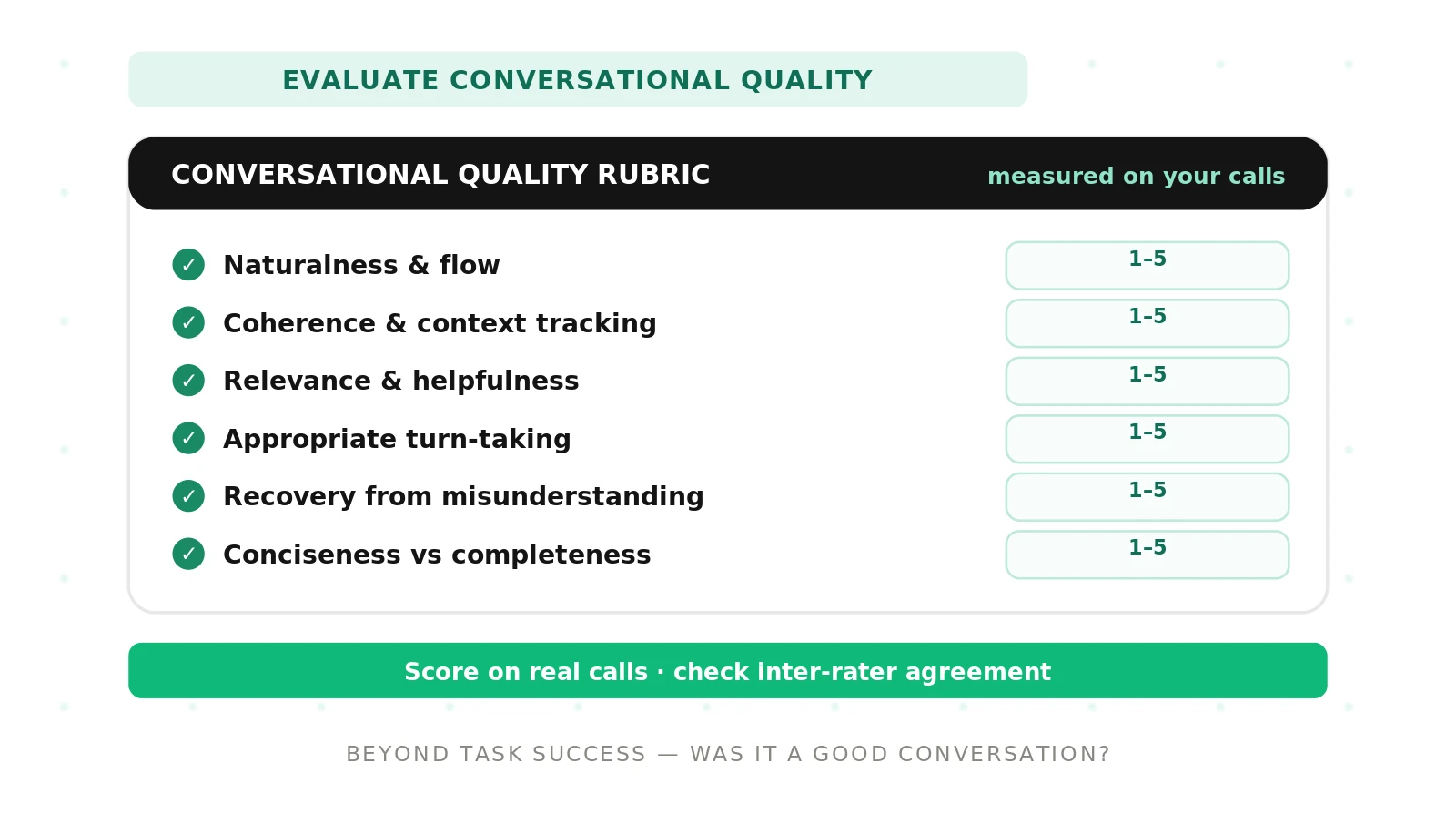
How to Evaluate Conversational Quality in Voice Agents
Conversational quality in voice agents is the subjective feel of a call. Learn the sub-dimensions, rubrics, rater agreement, and how to score it at scale.