Voice AI Evaluation Insights & Testing Guides
Practical guides, research, and field reports on testing, evaluating, and monitoring AI voice agents — from the Evalgent team.
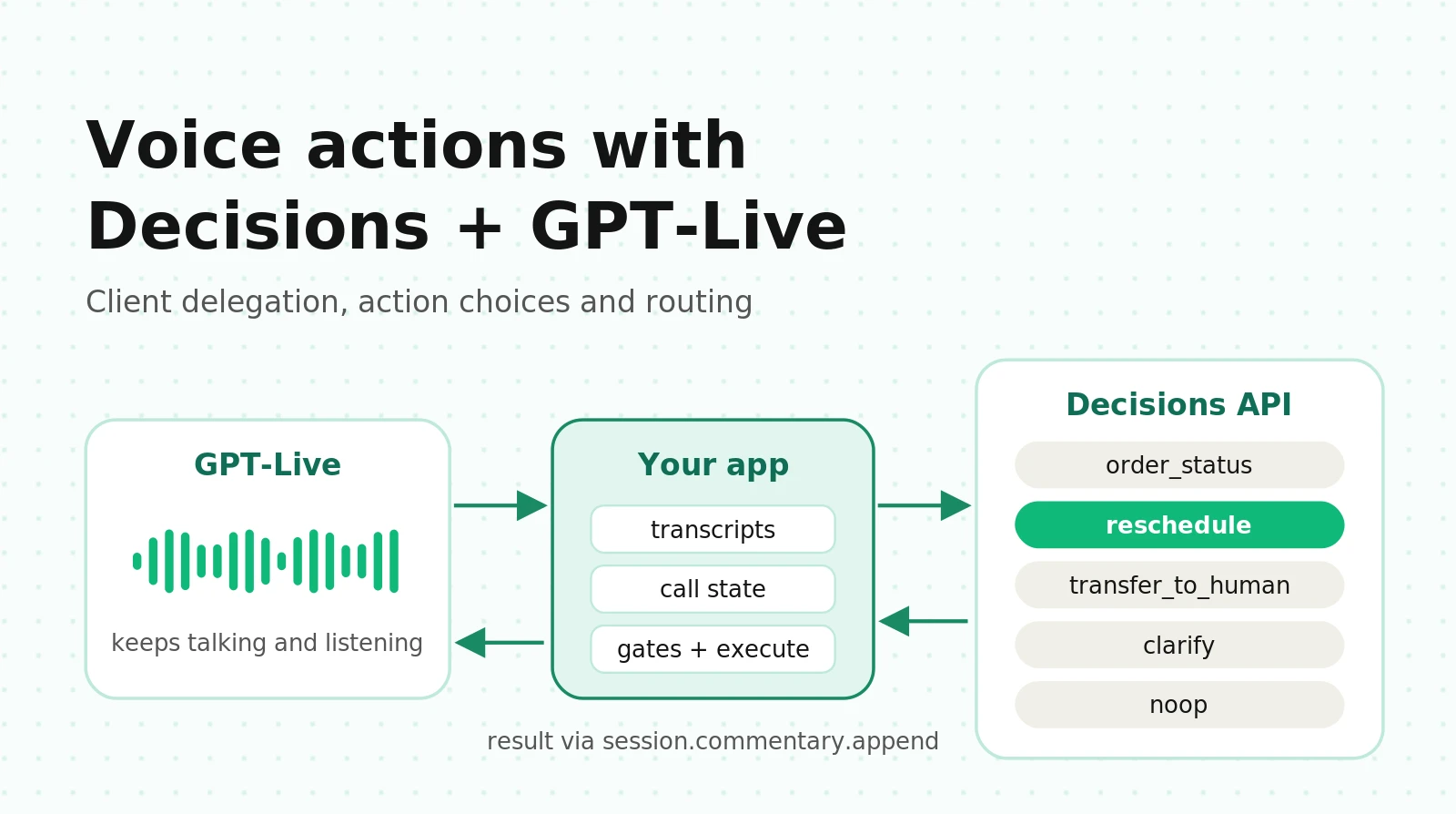
Using OpenAI's Decisions API with GPT-Live in a Voice Agent: Client Delegation, Action Choices and Routing
Wire OpenAI's Decisions API to GPT-Live with client delegation: exact events, a phone action catalog, Python code, safety gates, latency, cost and tests.
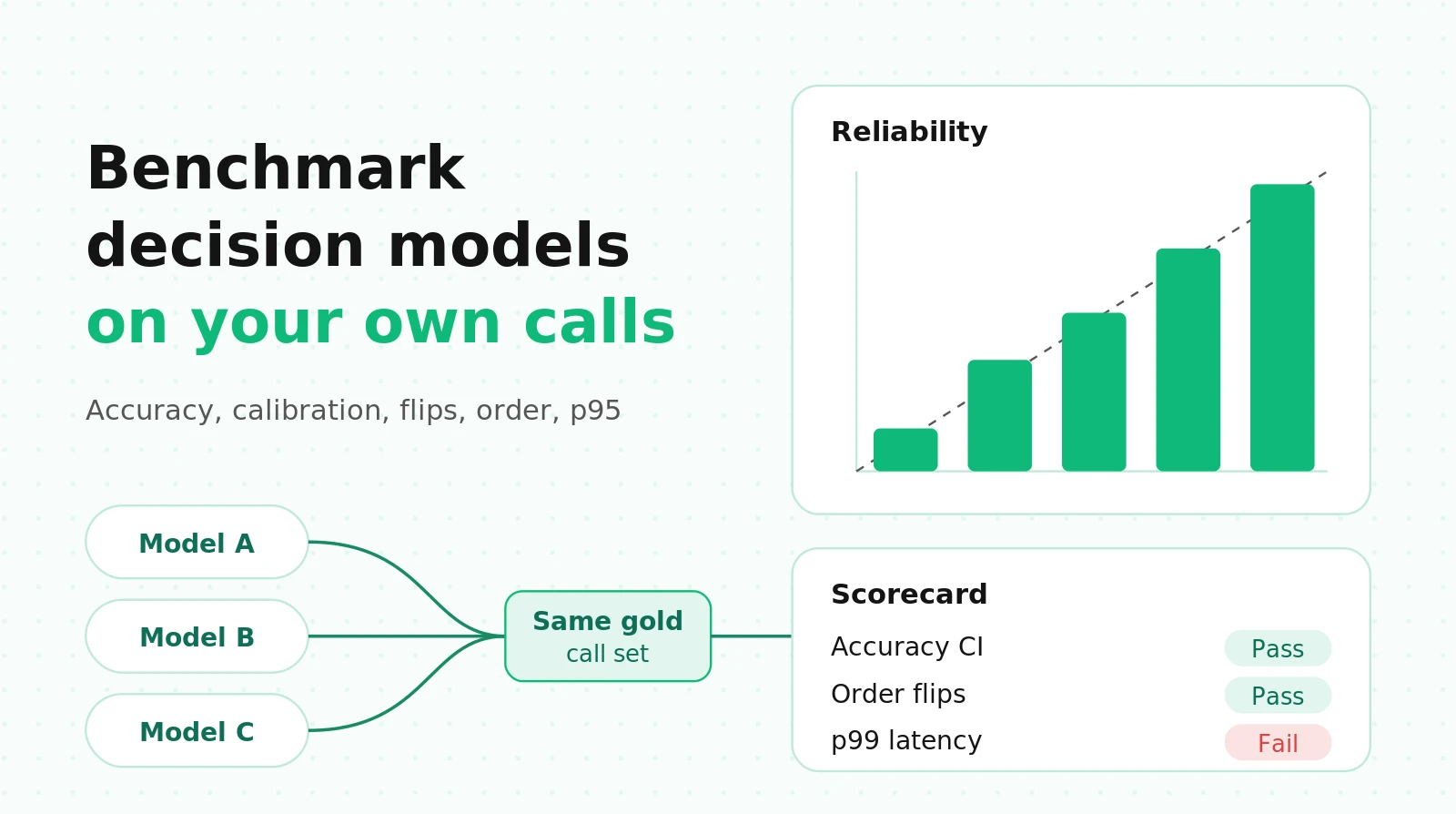
How to Benchmark a Decision Model on Your Own Call Data (Jev, OpenAI Decisions, LLM Judges)
A reusable protocol to benchmark Jev, OpenAI Decisions and LLM judges on real calls: sample sizes, kappa, ECE, flips, order tests, p95 latency, cost.
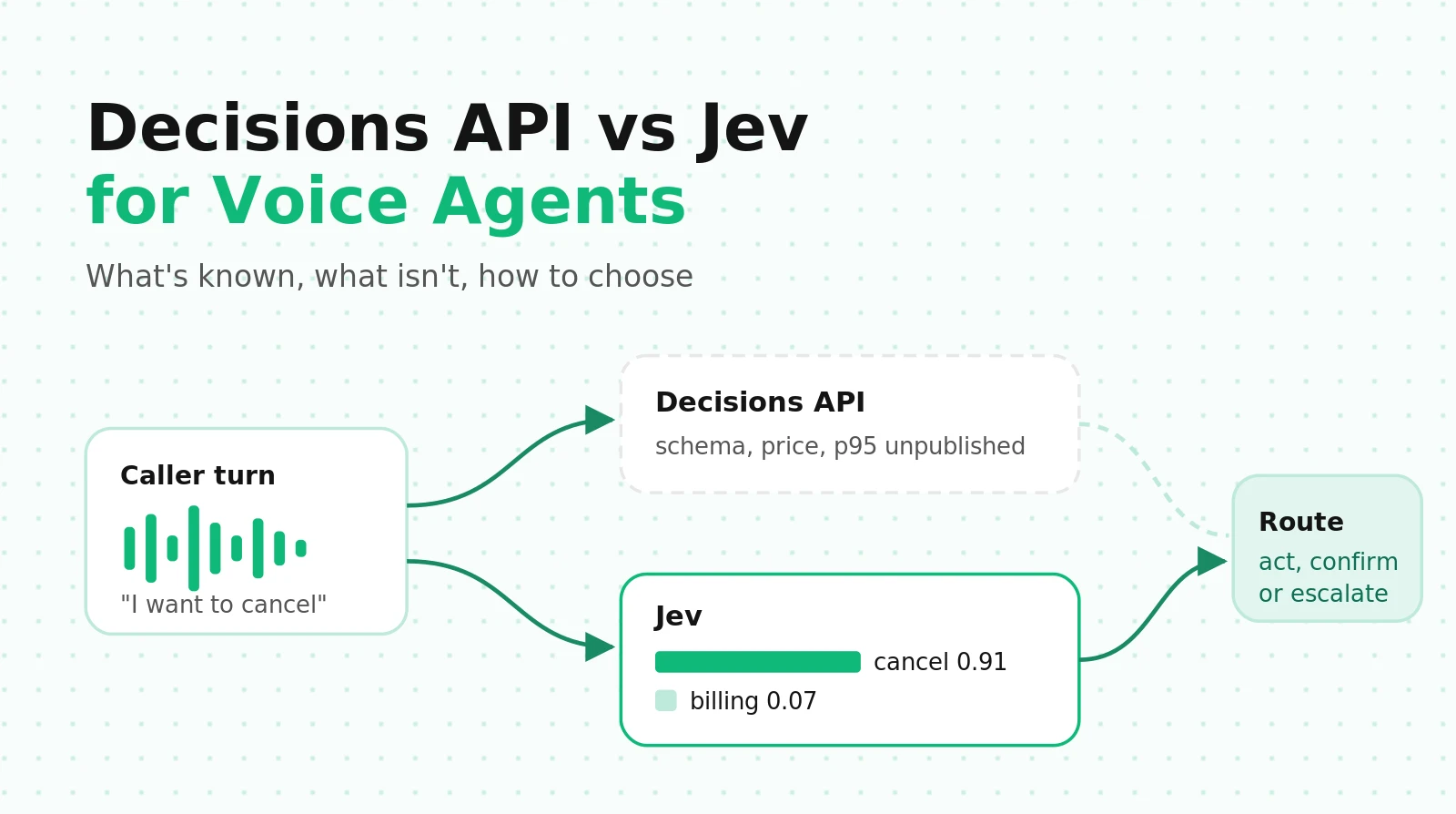
OpenAI Decisions API vs Jev for Voice Agents: Pricing, Probabilities, Voice
OpenAI's Decisions API is now in public beta. Compare it with Jev for voice agents: $0.10 vs $0.042 per 1M tokens, probabilities, images and latency.
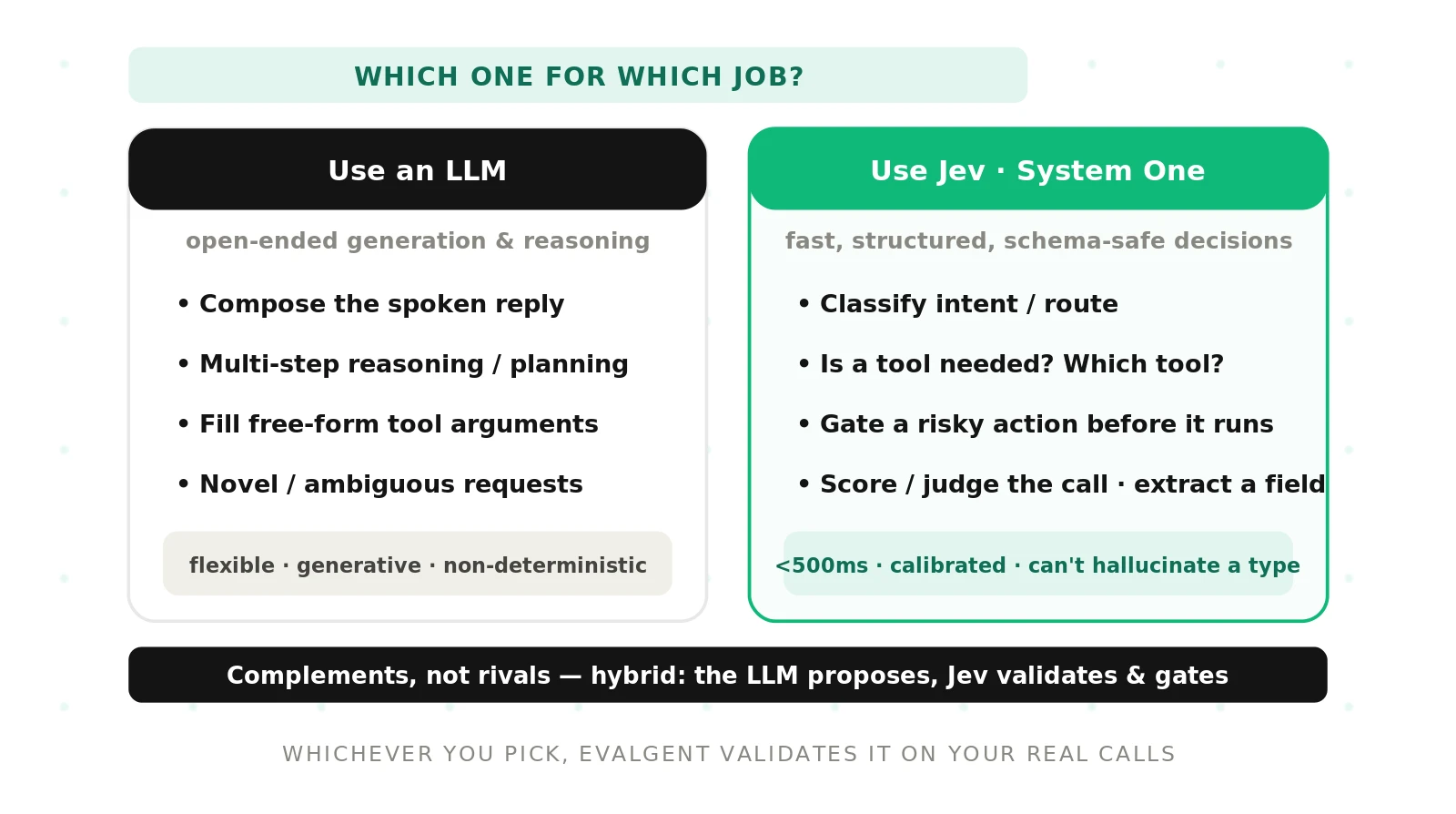
Jev vs LLM: The Key Differences, and When to Use Each
Jev vs LLM: an LLM writes text, Jev returns typed, calibrated decisions in milliseconds. 8 differences, side-by-side code, and the Jev alternatives.
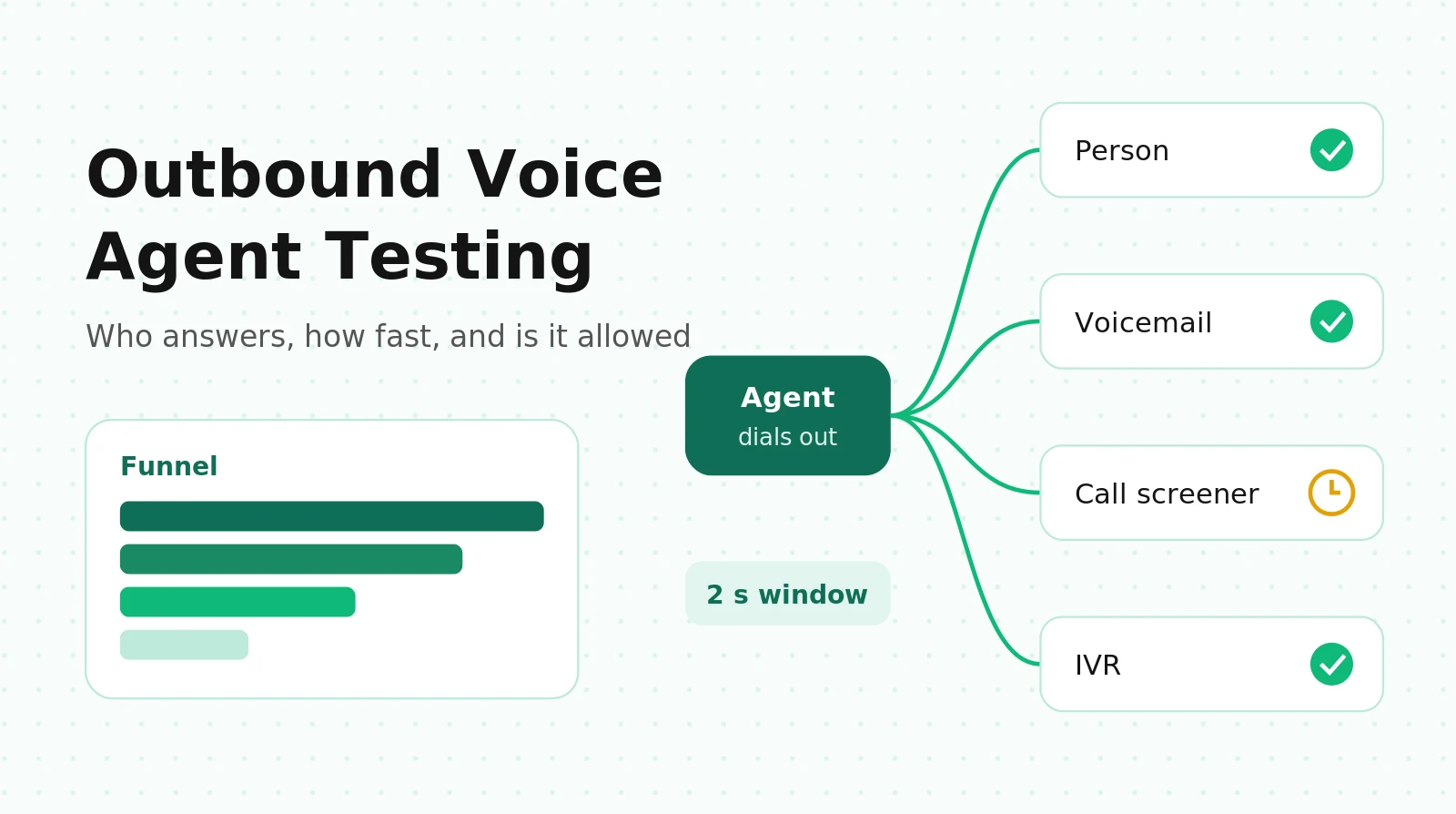
Outbound Voice Agent Testing: Voicemail, Answer Rates, Compliance and a Go-Live Test Plan
Outbound voice testing for AI agents: the call outcome funnel, a who-answers test matrix, 2-second rules, spam labels, and Python to audit call logs.
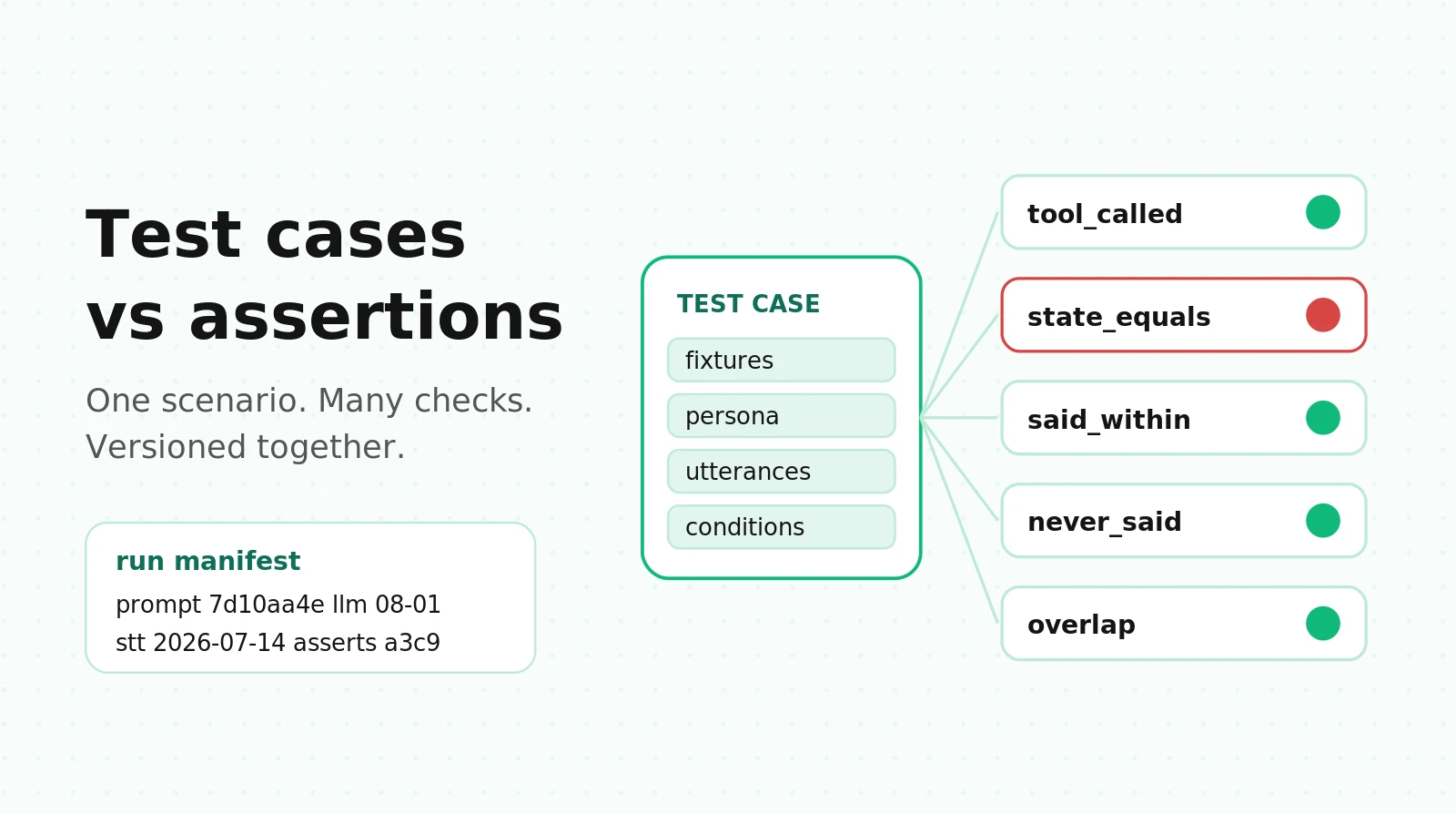
Voice Agent Test Cases vs Assertions: What Each Is, Examples, and How to Version Them
Voice agent test cases vs assertions: clear definitions, a worked example, assertion types, pass^k, production monitors and a repo layout for versioning.
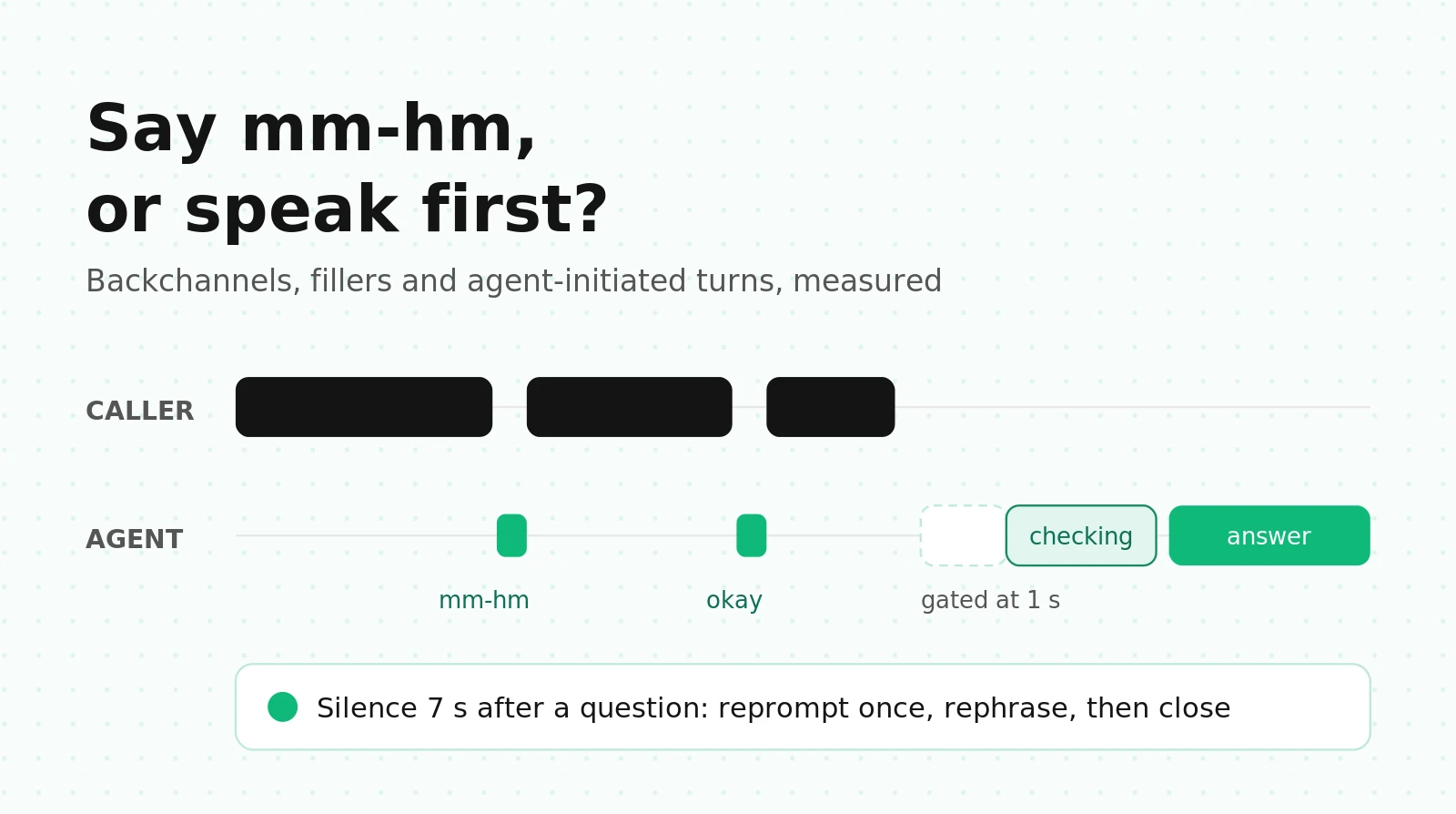
Backchanneling and Proactivity in Voice Agents: When to Say 'Mm-hm' and When to Speak First
When a voice agent should say mm-hm, use a filler or speak first. Research on timing, LiveKit and Pipecat settings, and metrics with code to test it.
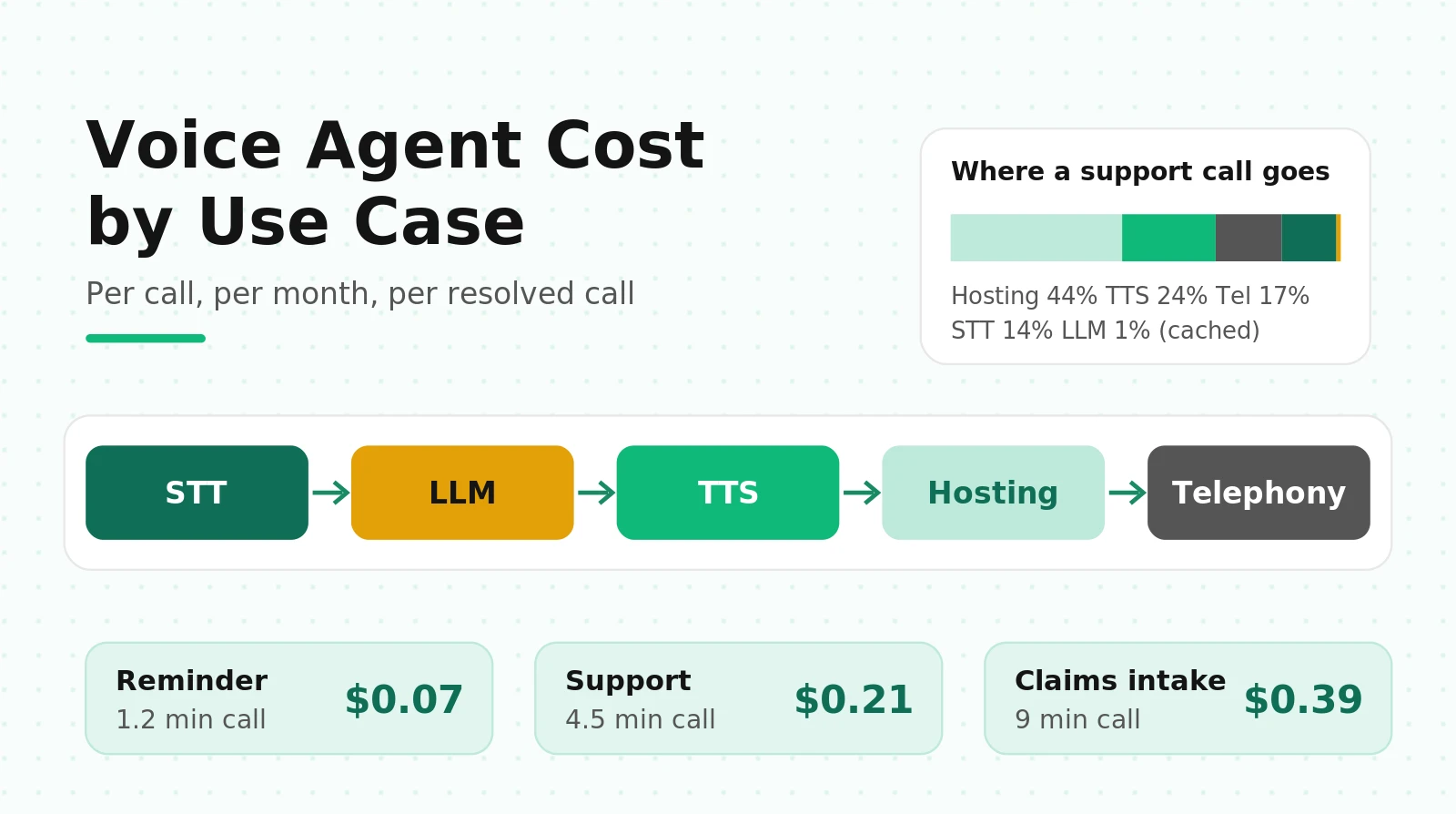
Voice Agent Cost by Use Case: AI Voice Agent Cost Per Call and Per Month for 24 Use Cases at 10k–1M Minutes
AI voice agent cost per call for 24 use cases on an in-house stack, from $0.06 to $0.49 per call, with monthly totals, sensitivity, and a calculator.
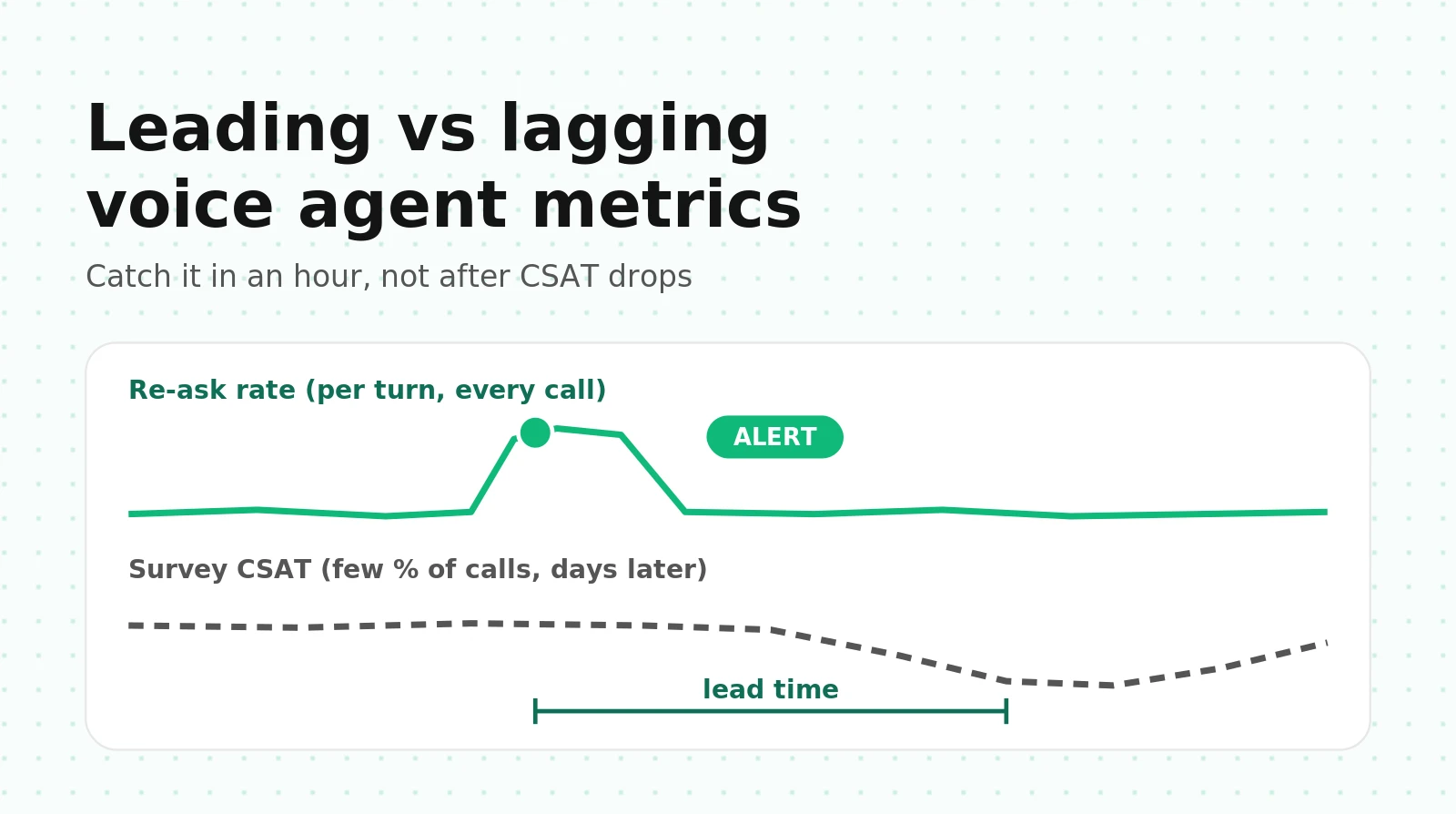
Leading vs Lagging Voice Agent Metrics: Catch Problems Hours Before CSAT Drops
Leading vs lagging indicators for voice agents: map 15 metrics by time-to-signal, prove which predict CSAT, and alert on them hours before surveys move.