AI voice agent testing guides by Evalgent
Evalgent's in-depth guides on testing, evaluating, and monitoring AI voice agents — reference content for reliable production agents.
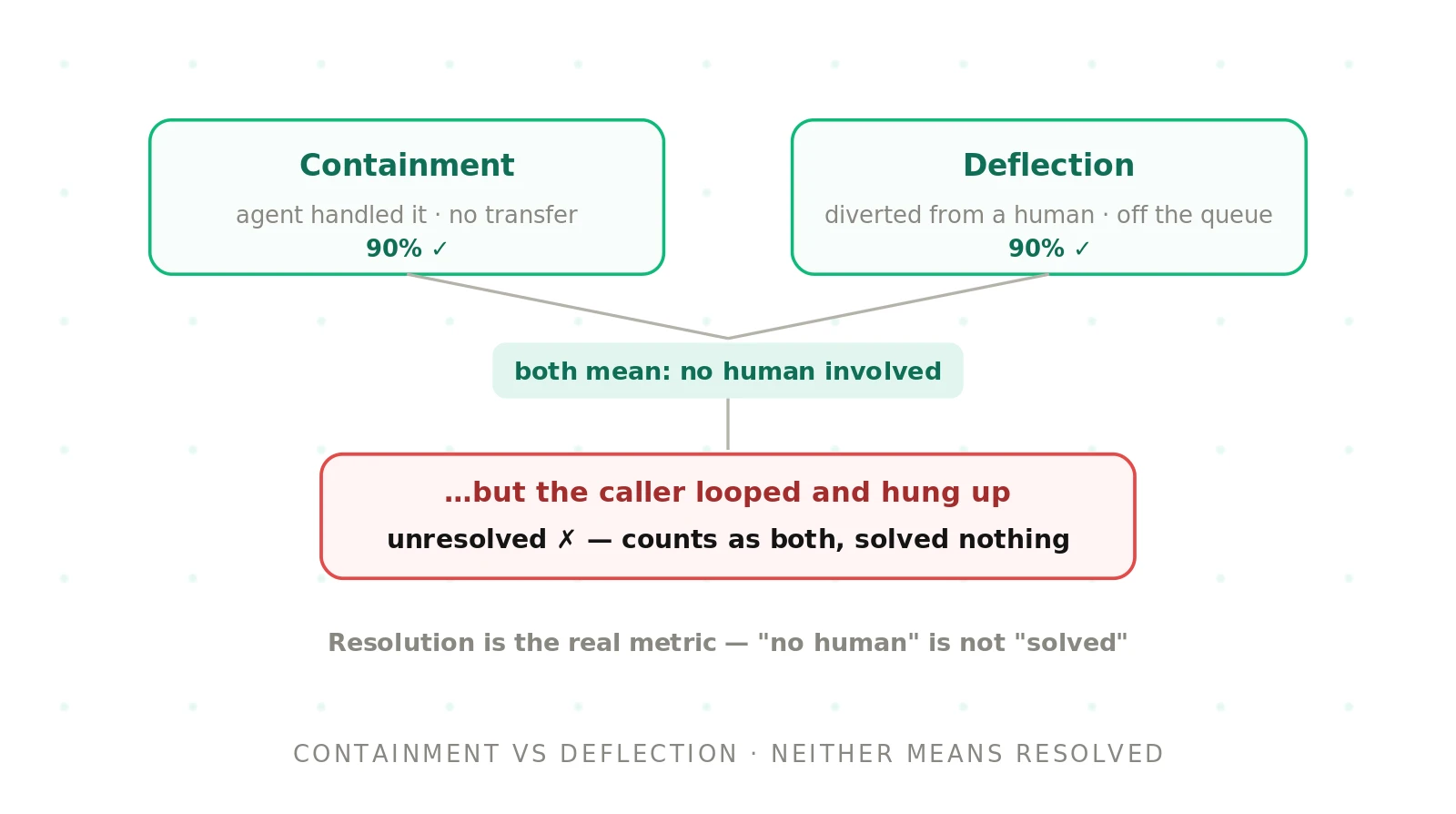
Containment vs deflection: what's the difference for voice agents?
Containment is the agent handling a call itself; deflection is diverting it from a human. Learn the difference and why neither means the issue was solved.
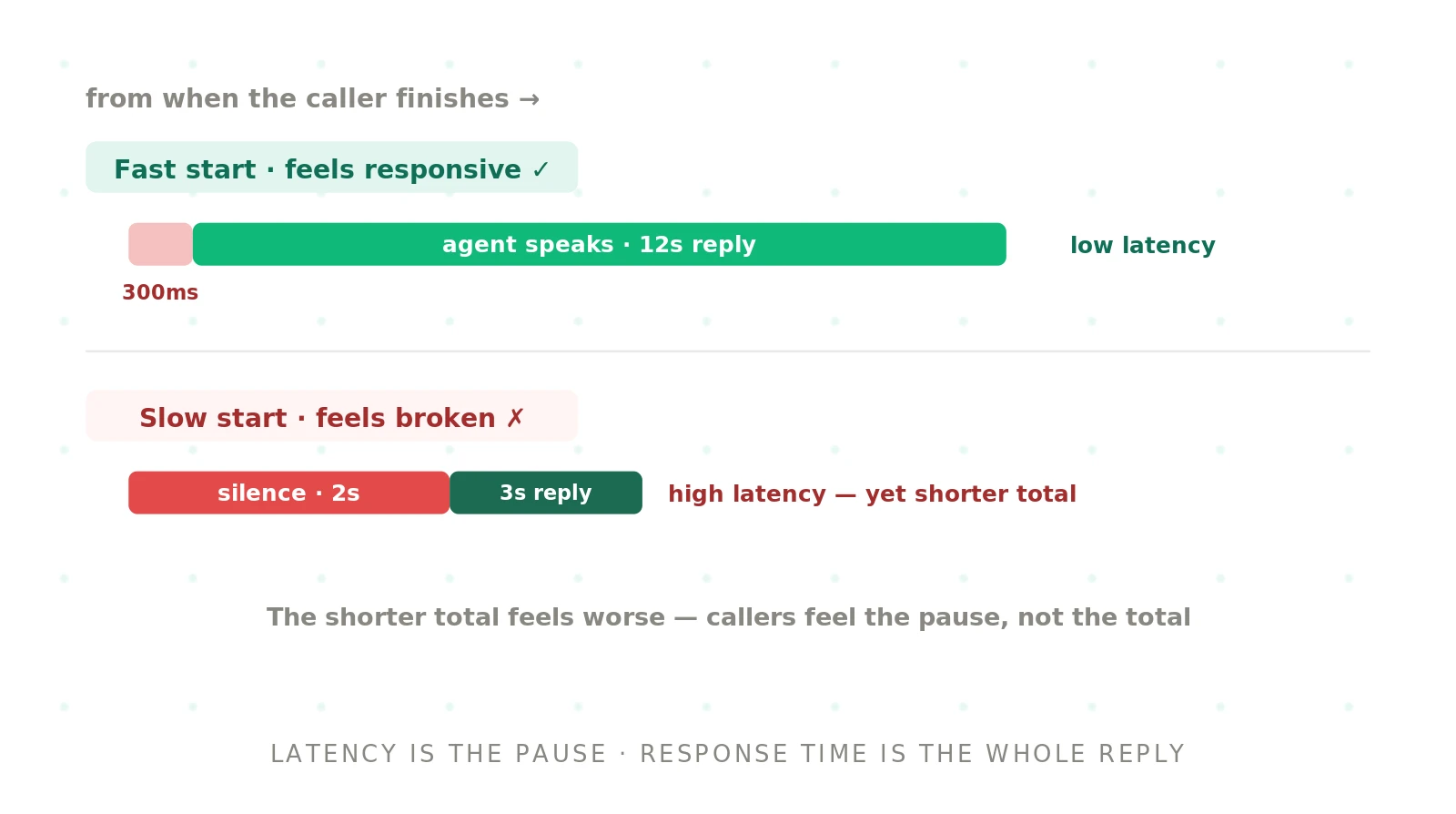
Latency vs response time in voice agents: what's the difference?
Latency is how fast the agent starts replying; response time is how long the full reply takes. Learn why the pause, not the total, is what callers feel.
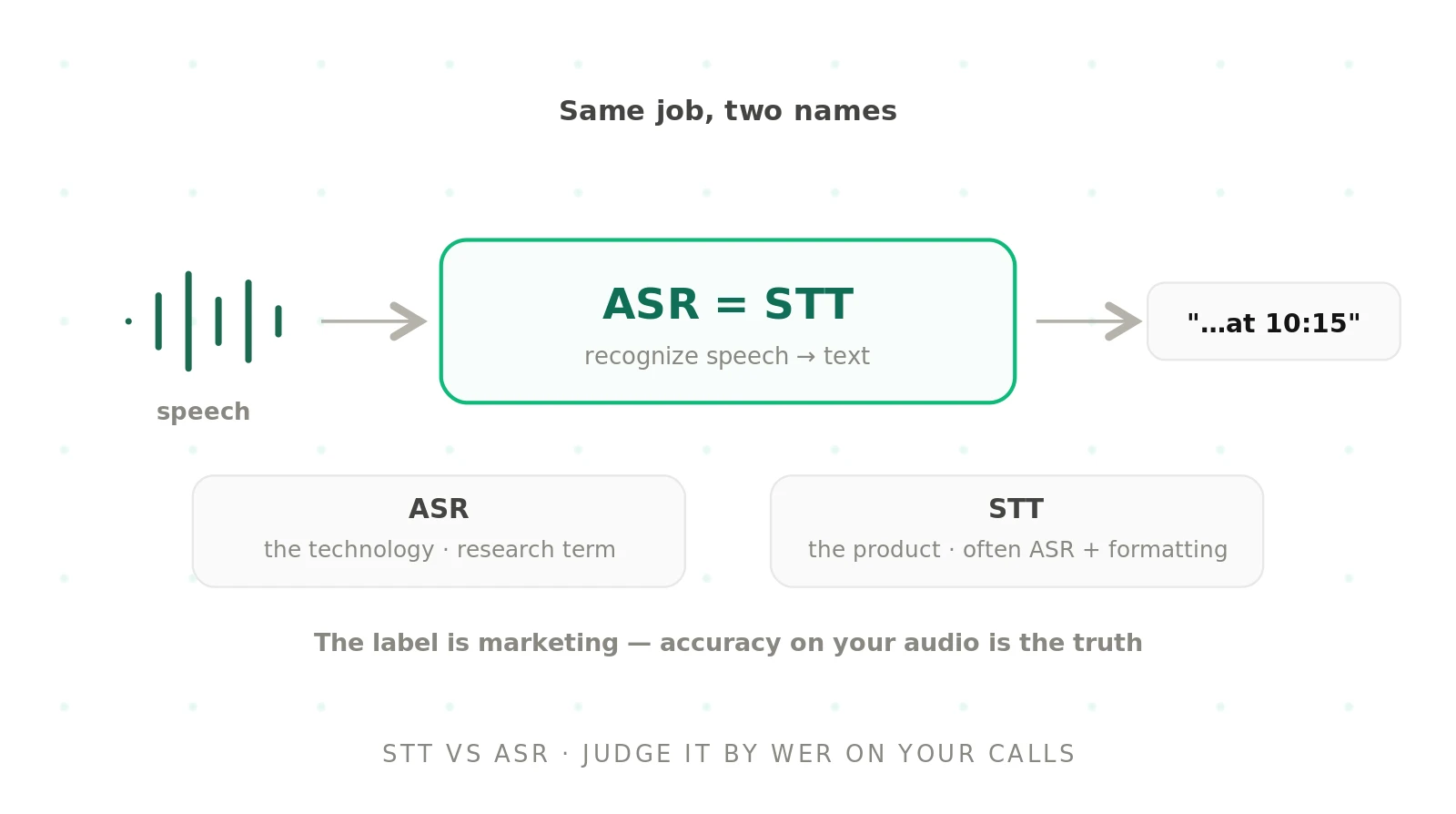
STT vs ASR: what's the difference?
STT and ASR mean nearly the same thing — turning speech into text. Learn the subtle difference, why both terms exist, and what actually matters.
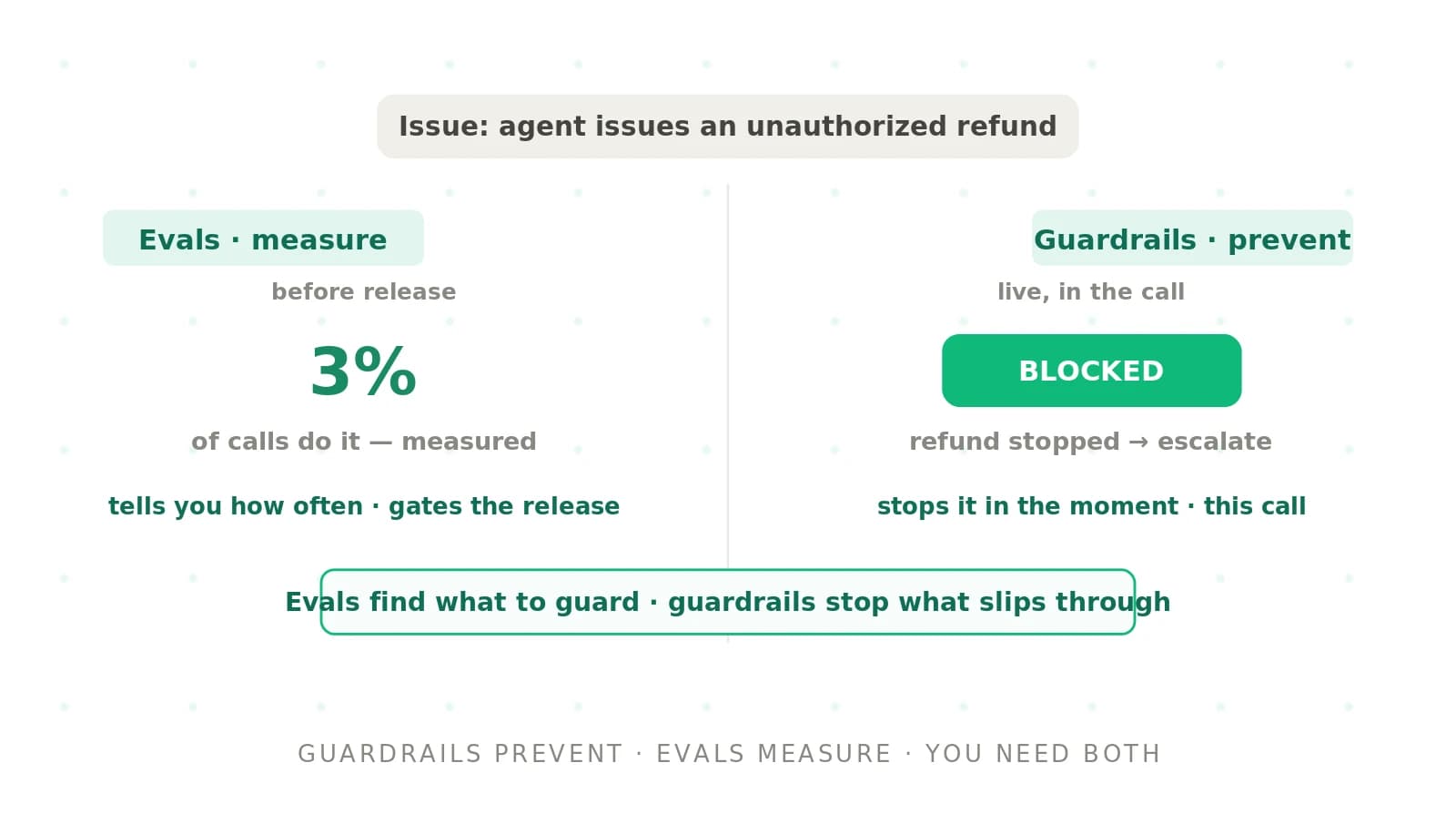
Guardrails vs evals: what's the difference for voice agents?
Guardrails prevent bad behavior live; evals measure it before release. Learn the difference, why you need both, and how they work together.
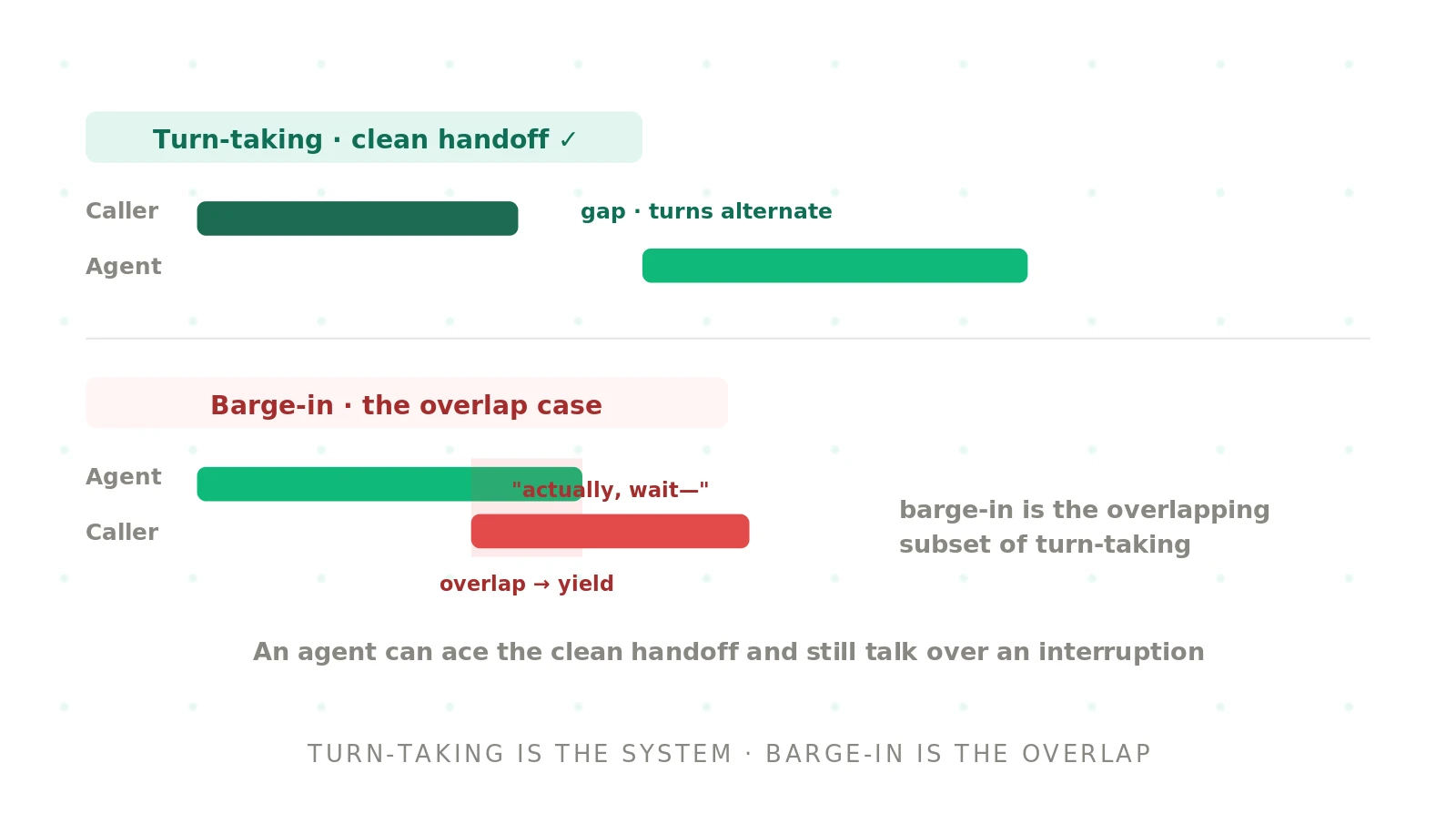
Barge-in vs turn-taking: what's the difference in a voice agent?
Turn-taking manages whose turn it is to speak; barge-in is the overlap case. Learn the difference and why an agent can pass one but fail the other.
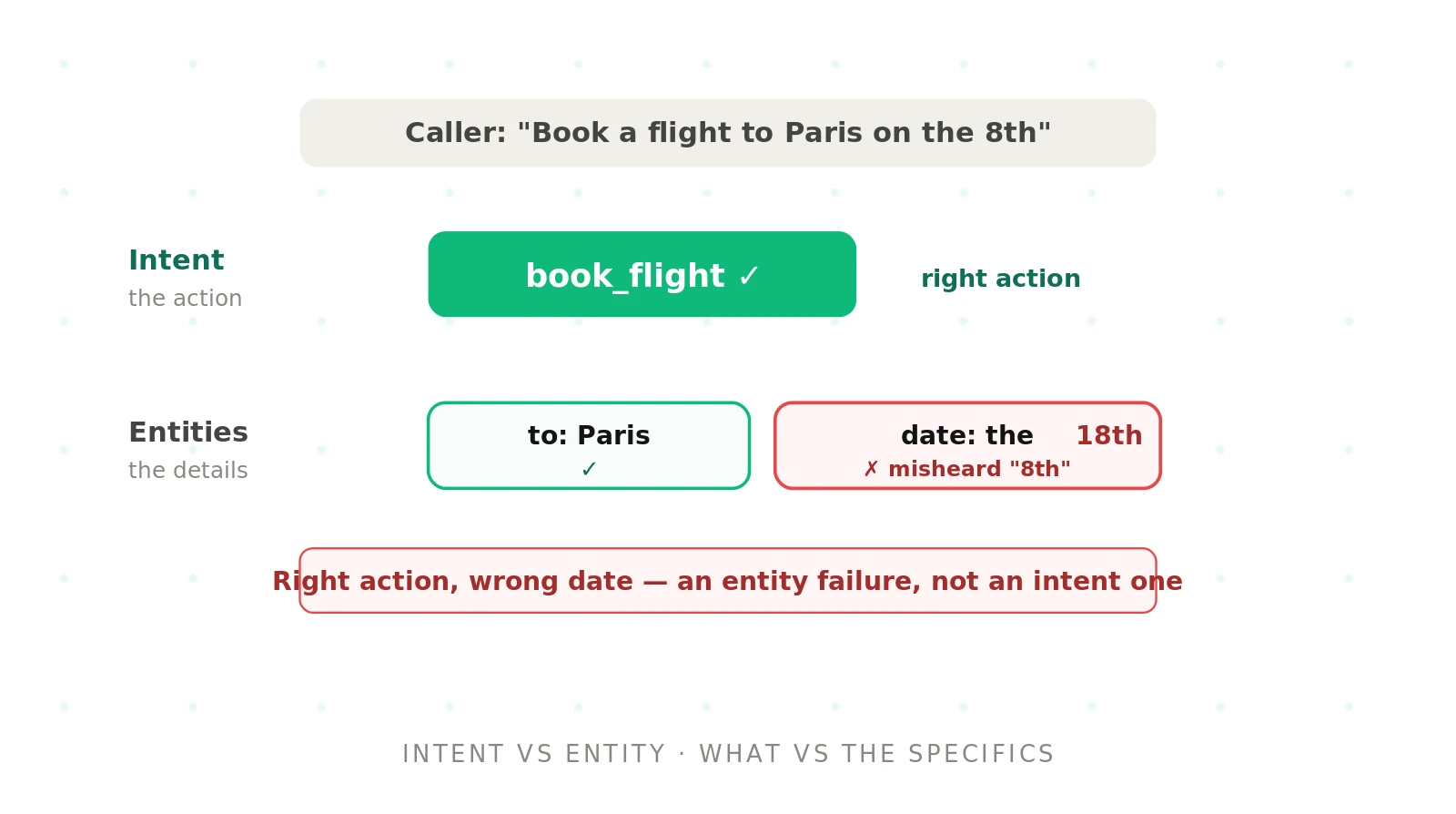
Intent vs entity in voice agents: what's the difference?
Intent is what the caller wants; entities are the details it needs. Learn the difference, why they fail differently, and how to test each one.
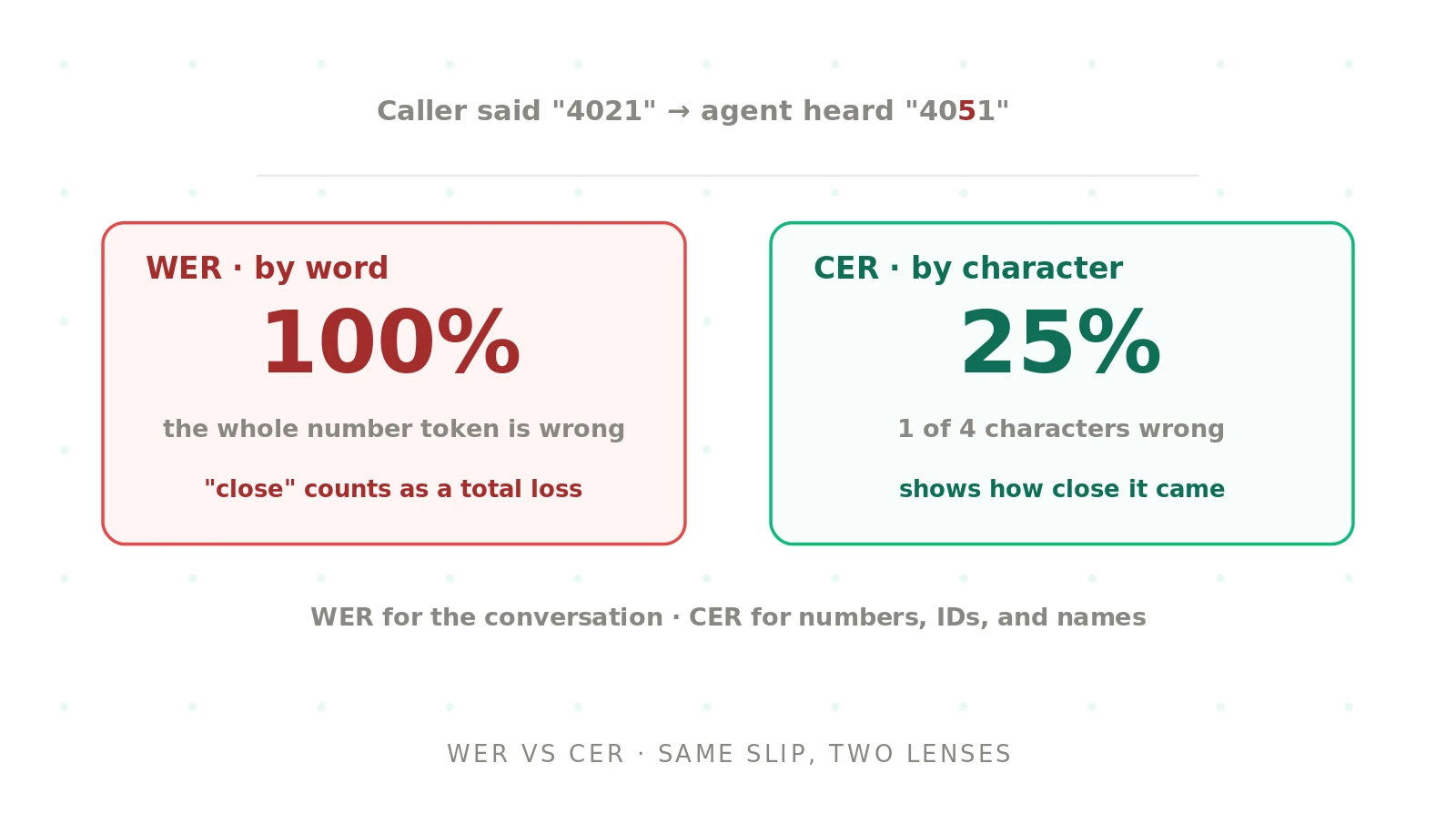
WER vs CER: what's the difference for voice agents?
WER measures transcription errors by word; CER measures by character. Learn the difference and when each matters for numbers, names, and accuracy.
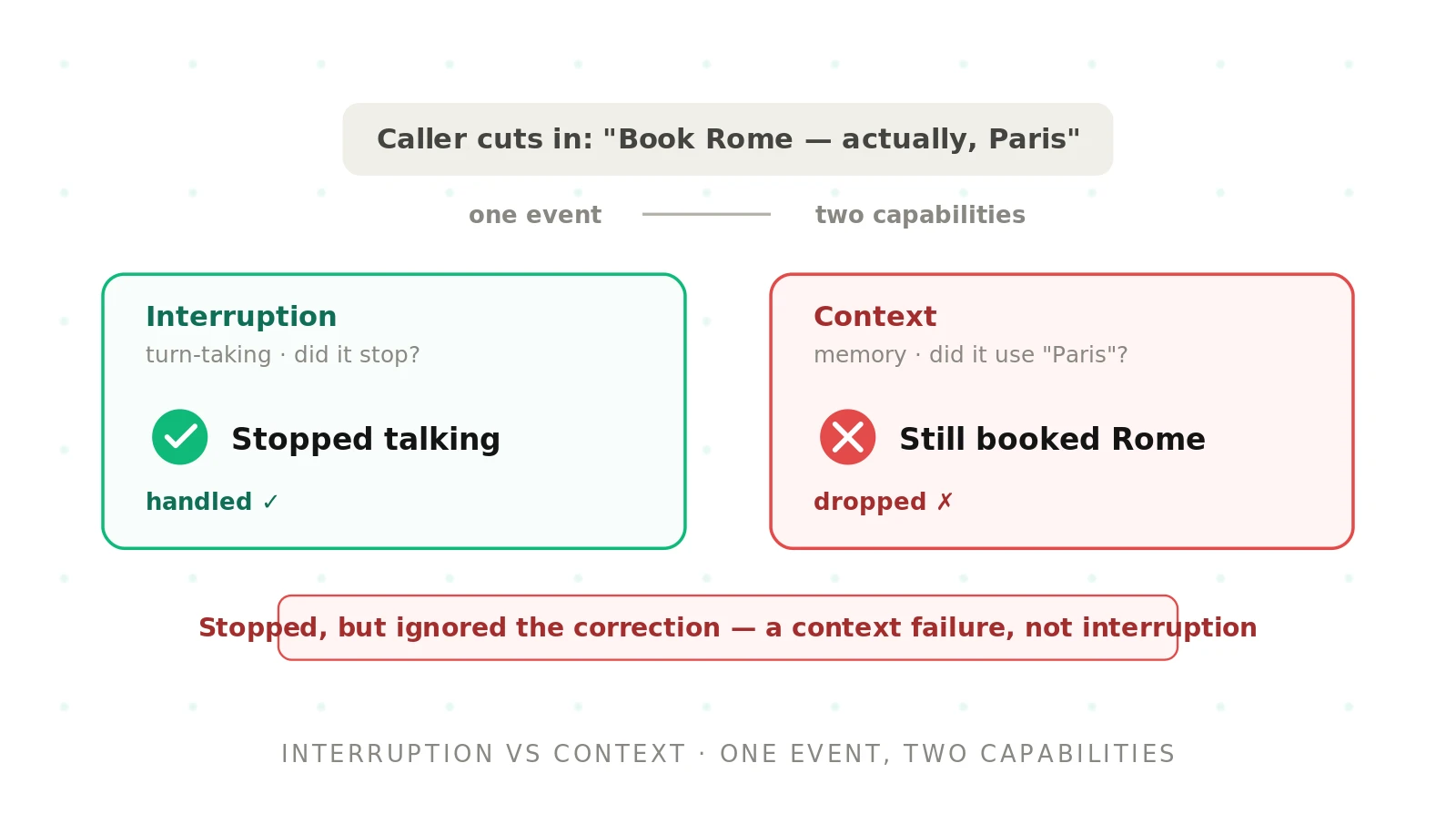
Interruption vs context in voice agents: what's the difference?
Interruption is a turn-taking event; context is conversational memory. Learn why a caller cutting in tests both, and how to tell which one failed.
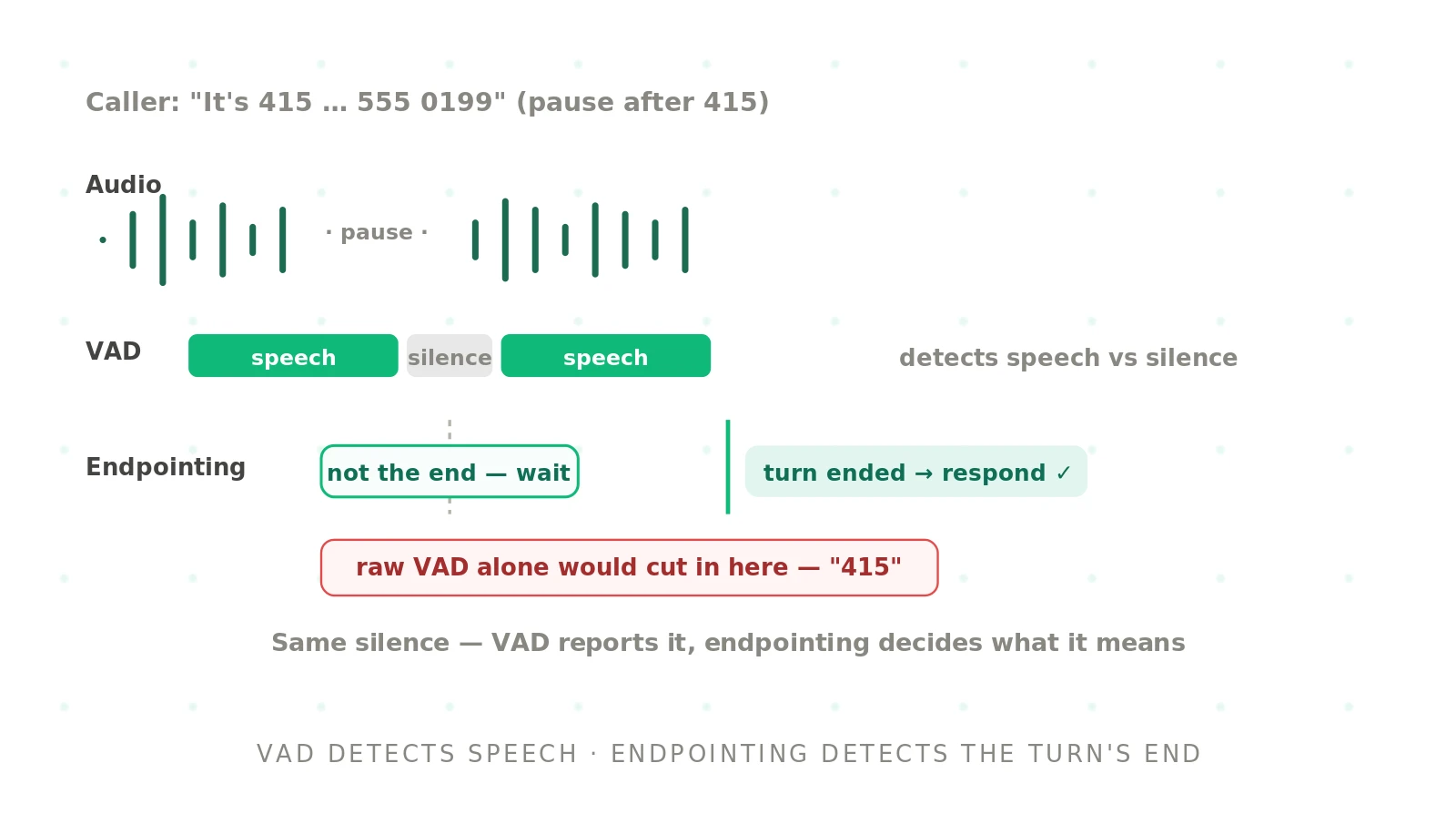
VAD vs endpointing: what's the difference in a voice agent?
VAD detects whether someone is speaking; endpointing decides when they've finished. Learn the difference and why confusing them cuts callers off.