Blog
Page 4 of 32
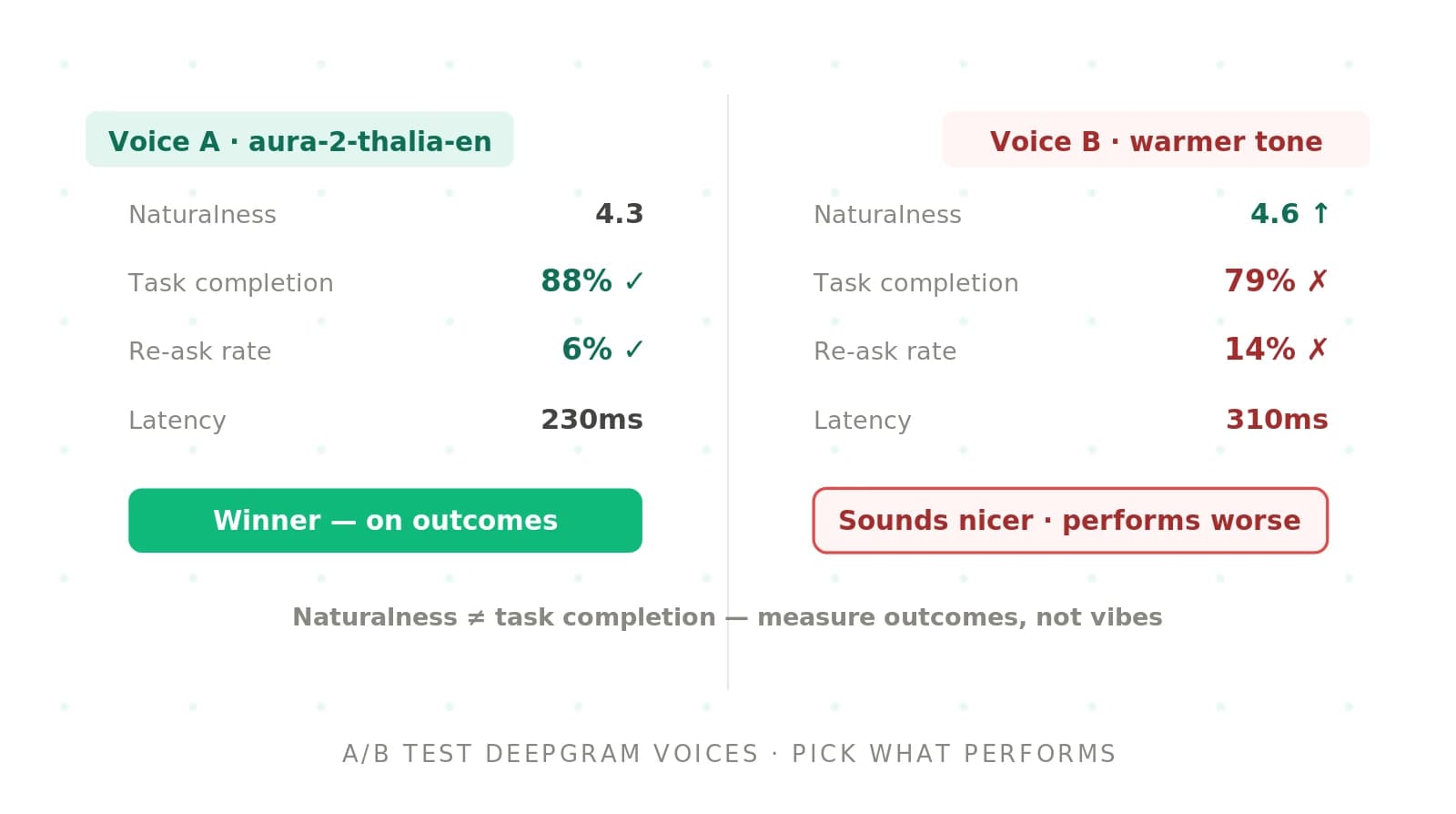
How to Evaluate Voice Variations With A/B Tests in Deepgram (2026)
Evaluate voice variations with A/B tests in Deepgram: pin Aura-2 or Flux TTS per session, randomize by caller, size the sample, and avoid peeking errors.
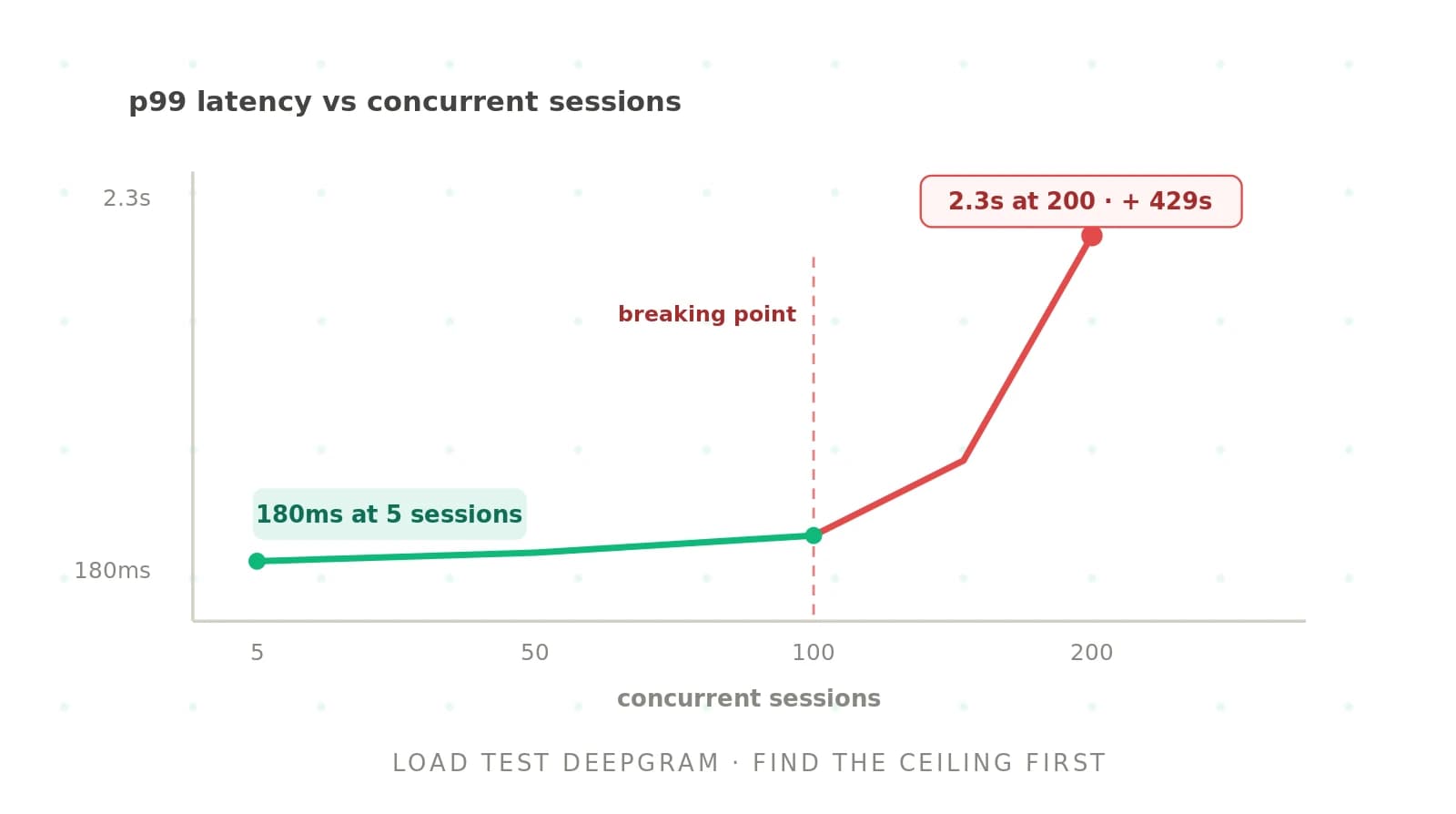
The Best Way to Load Test Deepgram's Voice Agent API (2026 Harness)
The best way to load test Deepgram's Voice Agent API: Erlang B sizing, Poisson arrivals, real-time 20 ms audio, p99 turn latency, and an asyncio harness.
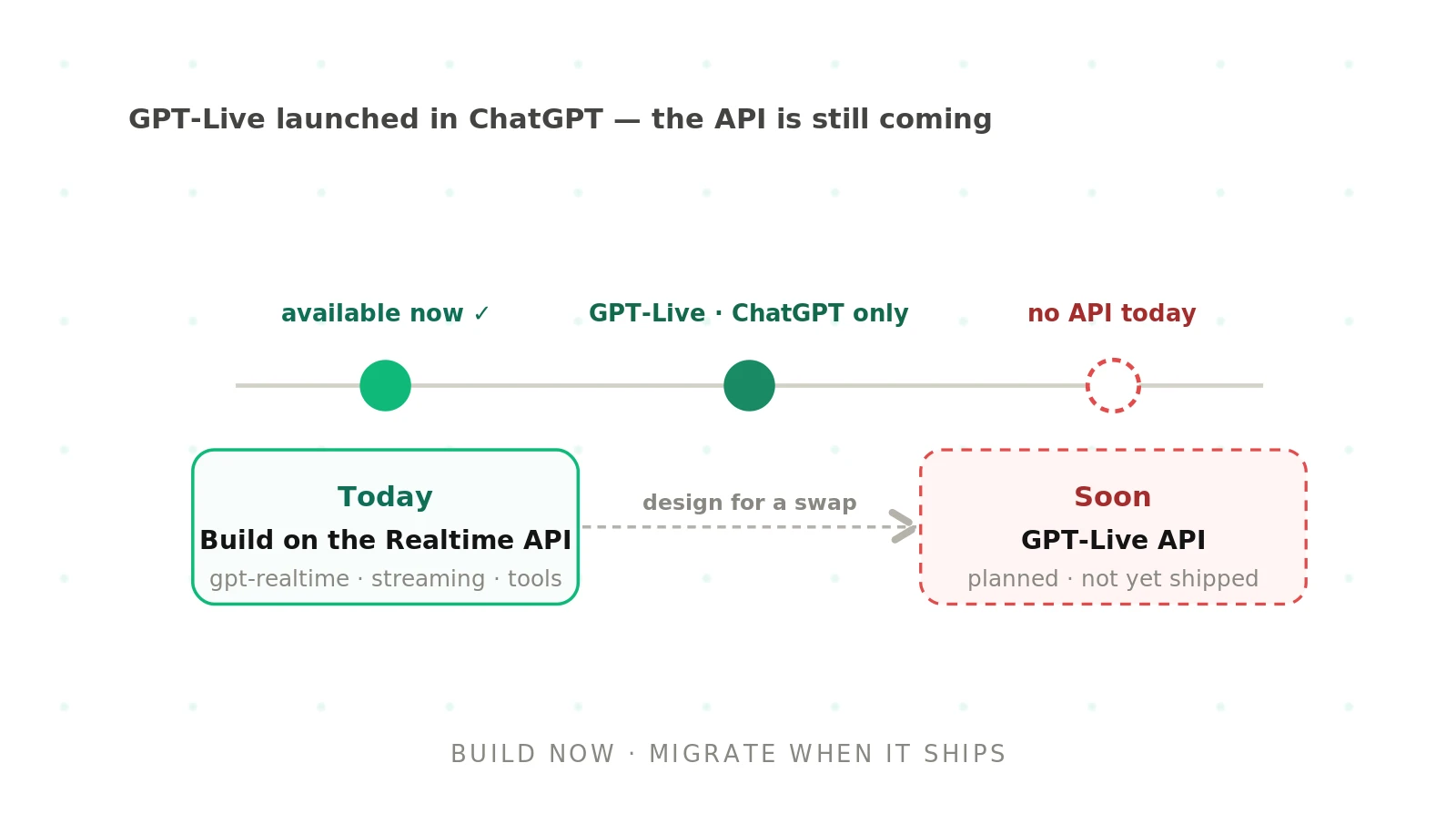
GPT-Live API architecture: build voice agents with gpt-live-1
GPT-Live API architecture explained: how gpt-live-1 splits voice from backend reasoning, plus WebRTC and SIP session code, delegation, and pricing.
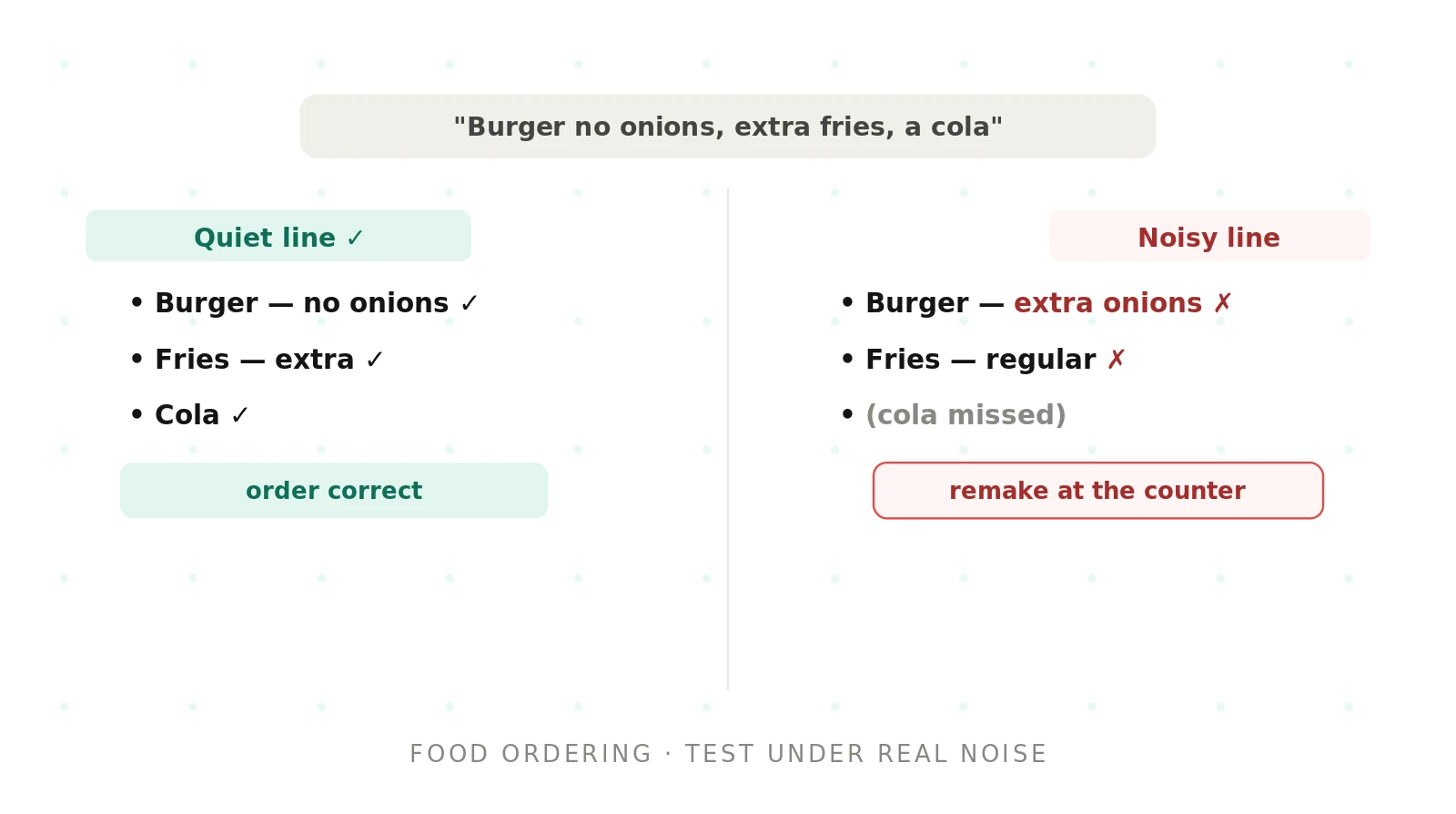
Menu modifiers in voice ordering: how to test food ordering voice agents
What menu modifiers are, how POS menus model them, why voice agents get them wrong, and how to test drive-thru and phone ordering before rollout.
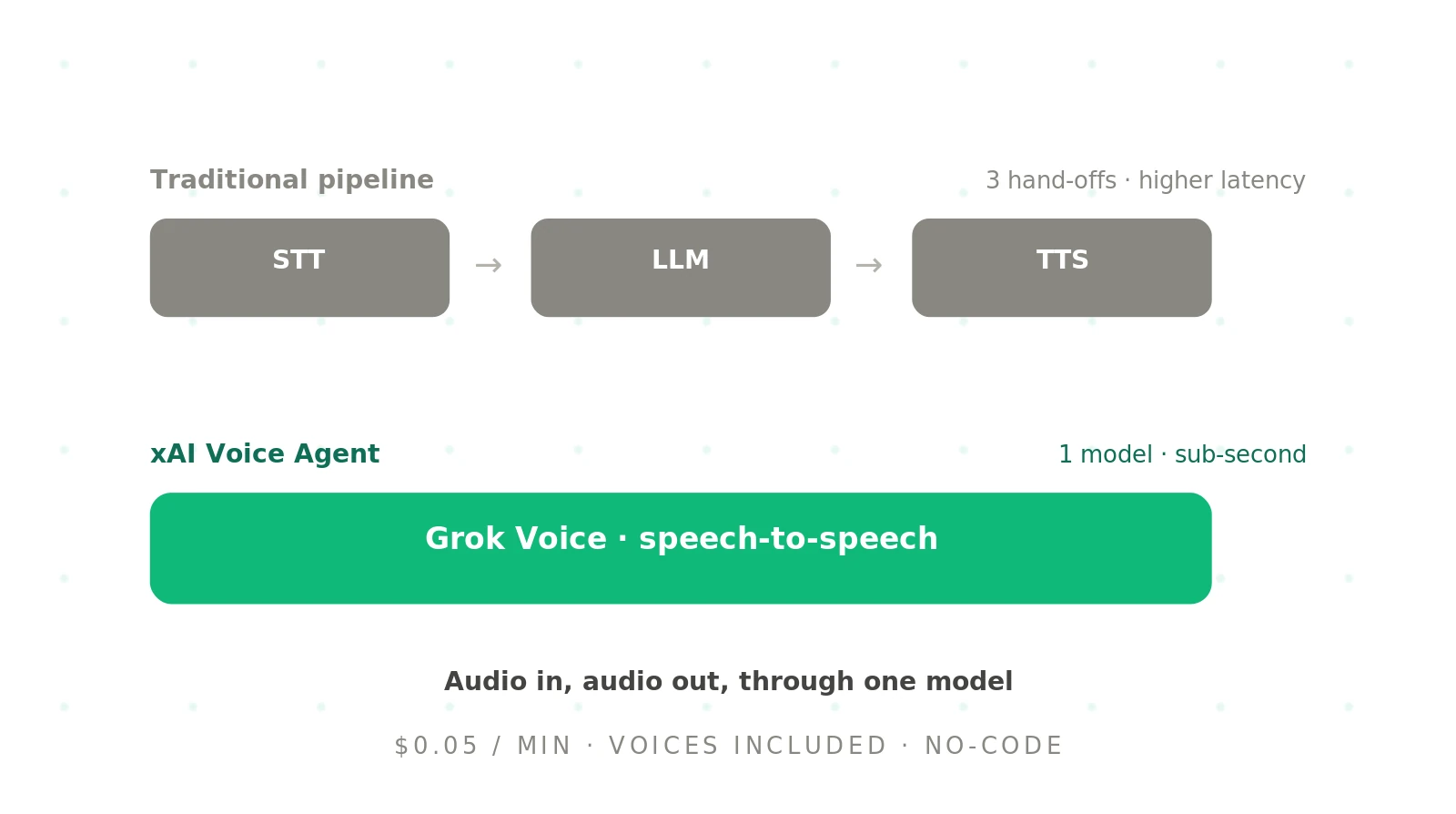
Grok Voice Agent Builder (xAI) Pricing: $0.08/min and Setup (Oct 2026)
Grok Voice Agent Builder (xAI) pricing, October 2026: $0.08 per minute plus $0.01 telephony. Cost math, models, voices, cloning and phone setup.
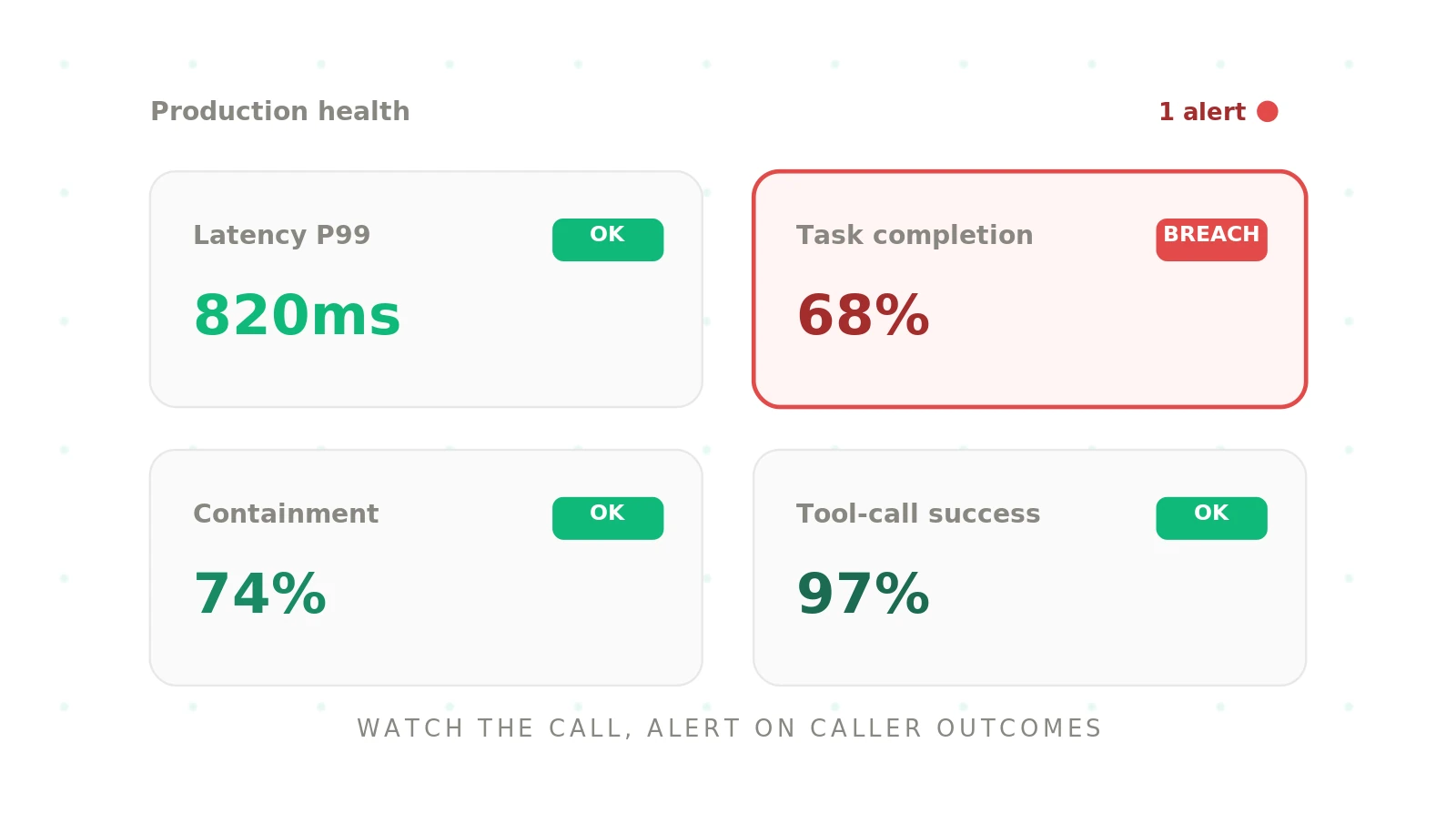
How to Monitor Voice Agents in Production: Tool Failures, Latency Spikes and Dead Air
How to monitor voice agents in production on LiveKit or Pipecat: tool-call failure rates, p95 latency per segment, dead-air detection and burn-rate alerts.
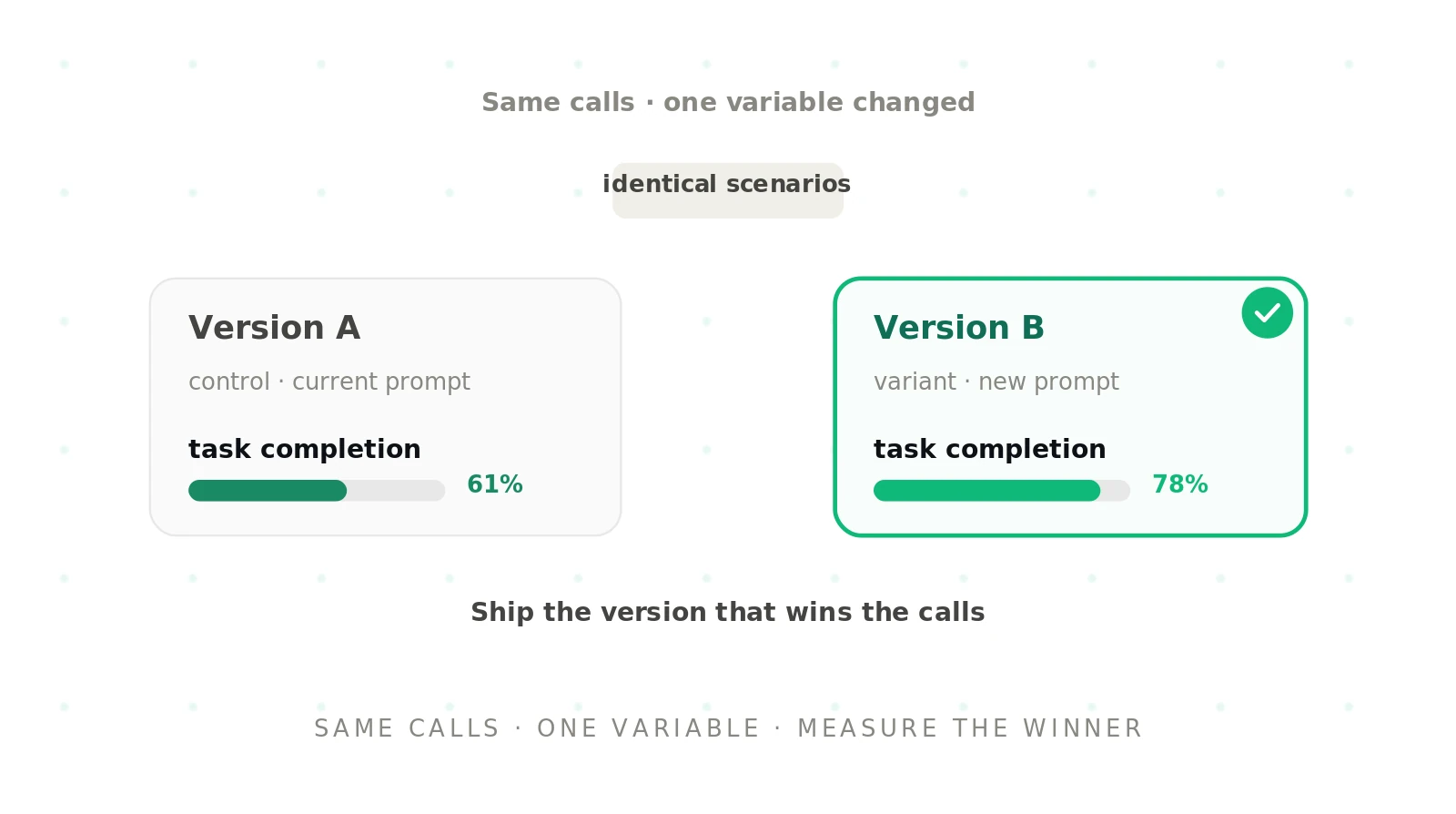
How to A/B Test Voice Agent Prompts: Offline Pairs, Live Splits, and the Sample-Size Math
How to A/B test voice agent prompts on LiveKit or Pipecat: paired offline runs, caller-level live splits, blind judging, and sample-size math that holds.
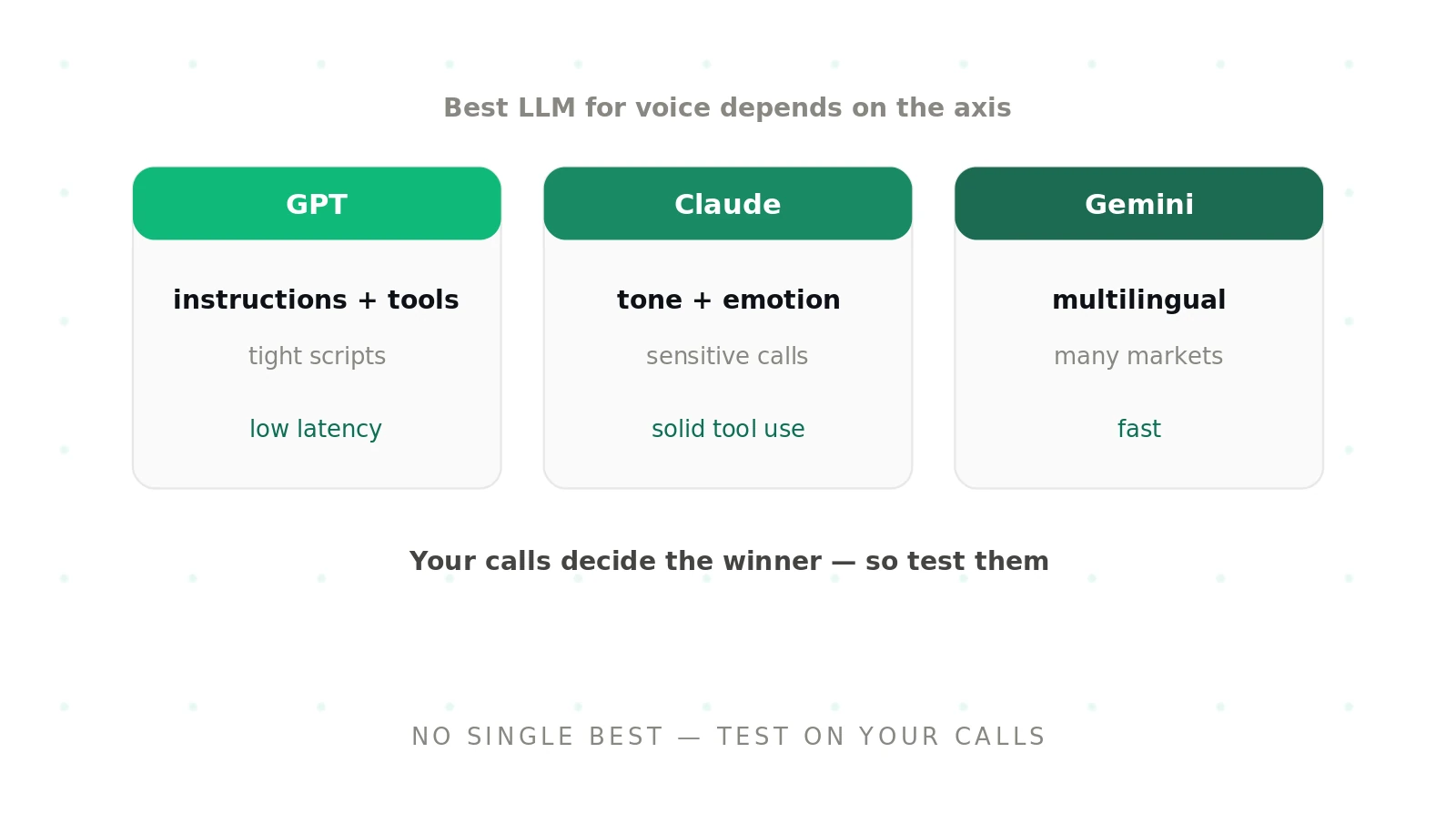
Best LLM for voice agents (October 2026): latency, tool calling, cost per minute
Best LLM for voice agents, October 2026: GPT-6, Claude, Gemini, Grok and open models compared on first-token latency, tool calling and cost per minute.
Full-duplex voice agents: turn-based vs full-duplex, models, testing
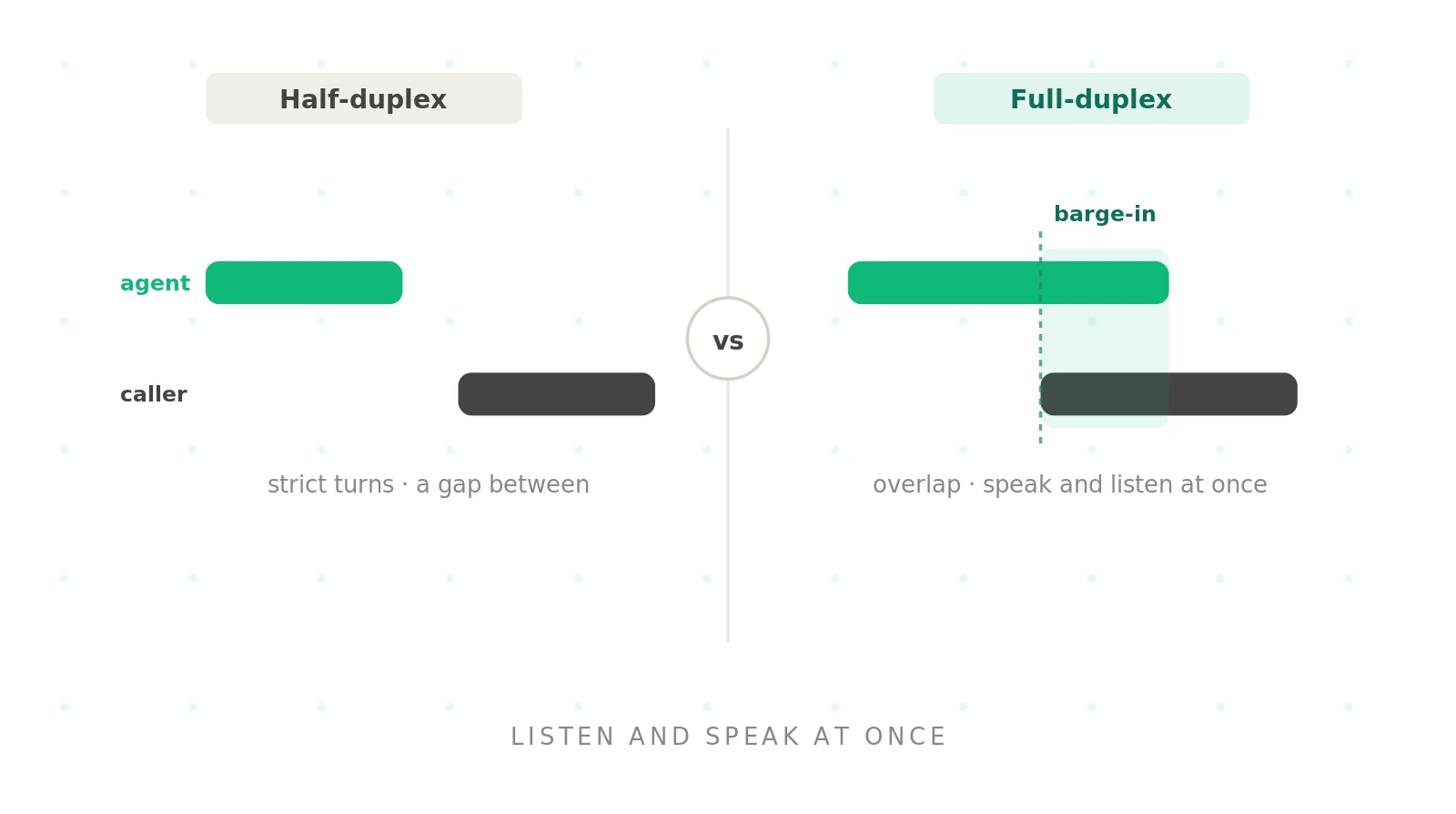
Turn-based vs full-duplex voice agents: one waits for silence, the other listens while it speaks. Compare GPT-Live, Moshi and PersonaPlex, and how to test.