Blog
Page 6 of 59
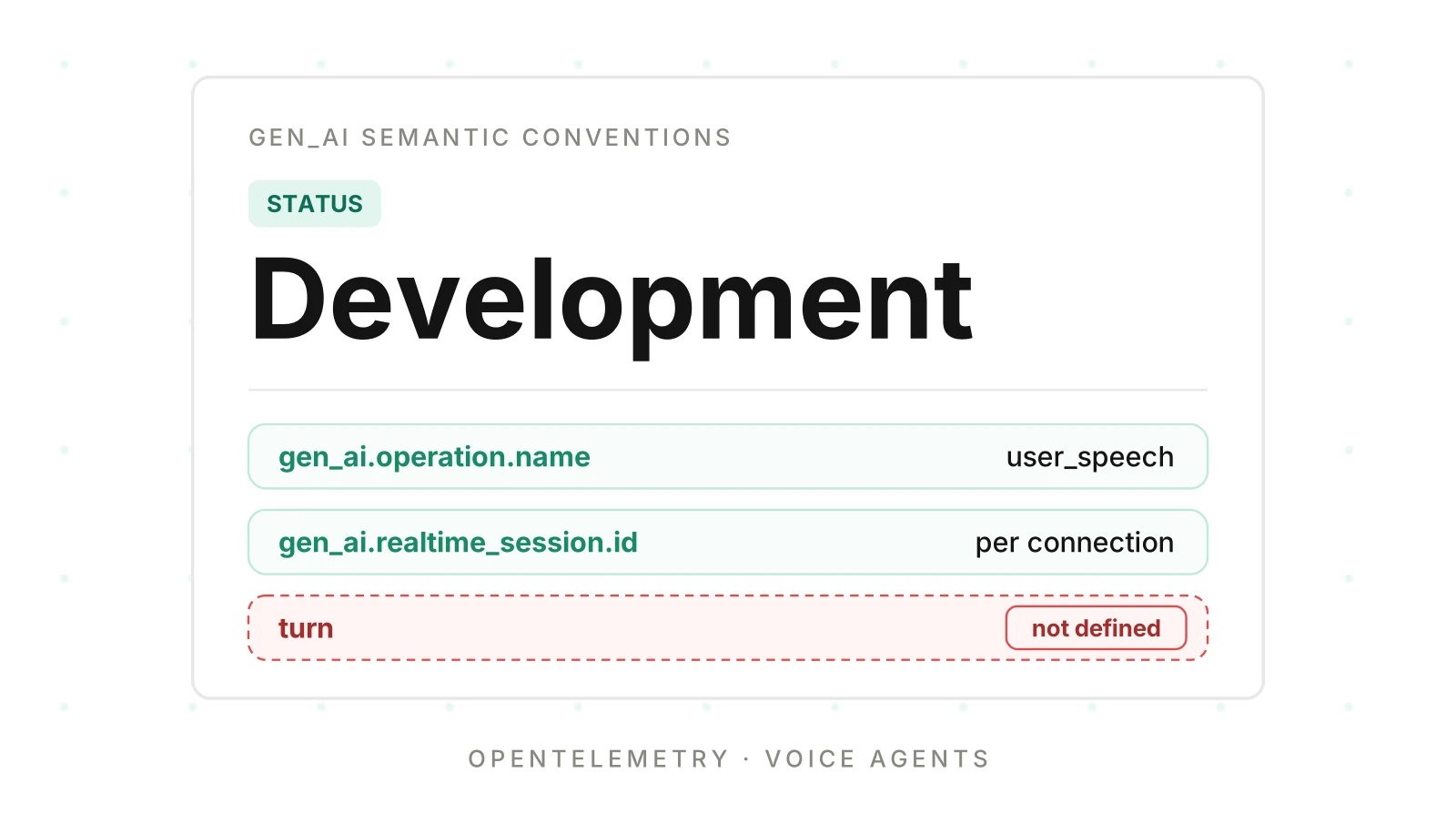
OpenTelemetry GenAI Semantic Conventions for Voice Agents: What Exists and What to Add
What the OpenTelemetry GenAI semantic conventions cover for voice agents as of Nov 2026, what they lack, and a 5-step plan to adopt gen_ai names safely.
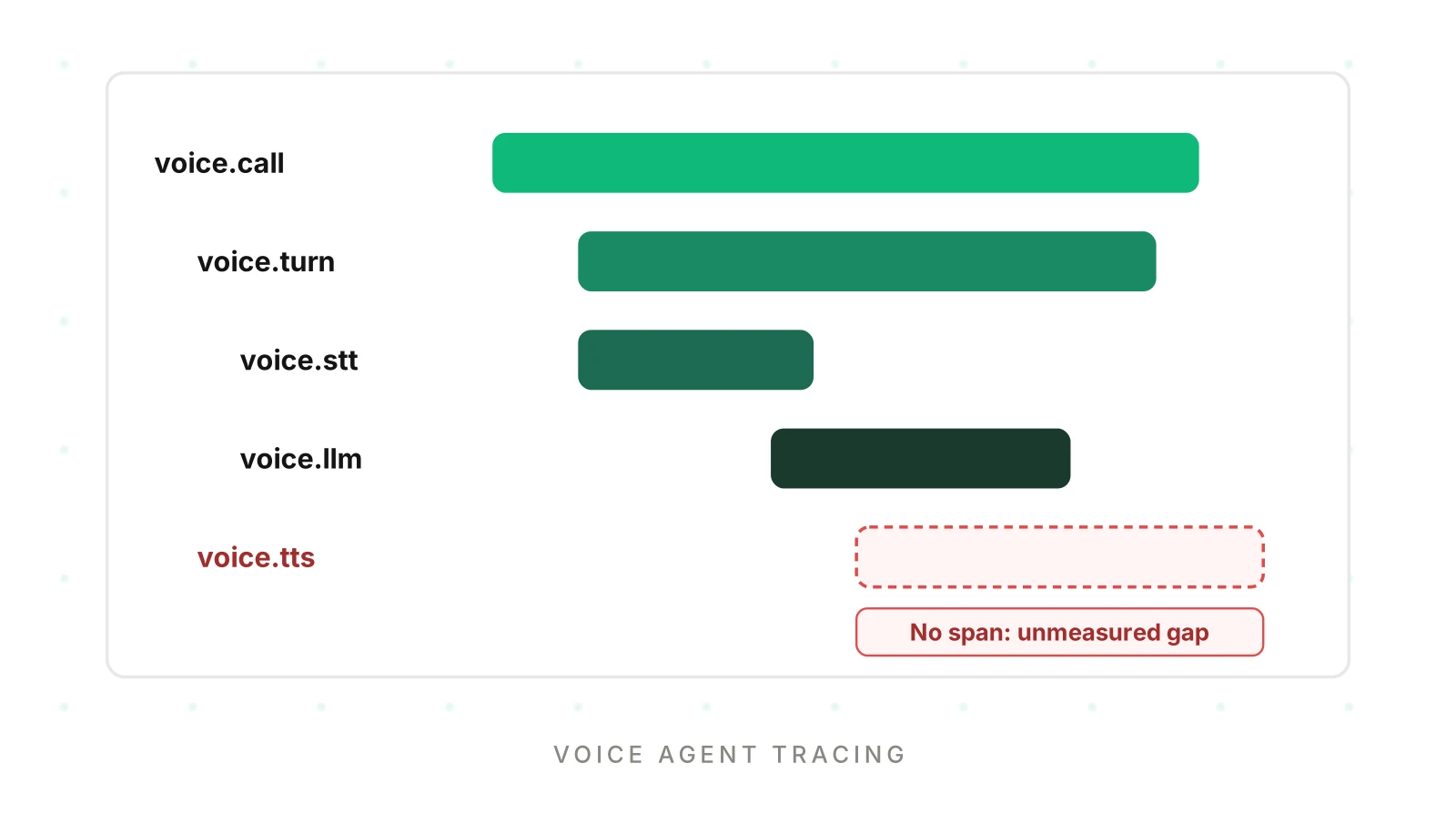
OpenTelemetry Trace and Span Model for Voice Agents: ASR, LLM, Tools and TTS
A recommended OpenTelemetry span tree for voice agents: call, turn, STT, LLM, tool and TTS spans, what each starts and ends on, and handling overlap.
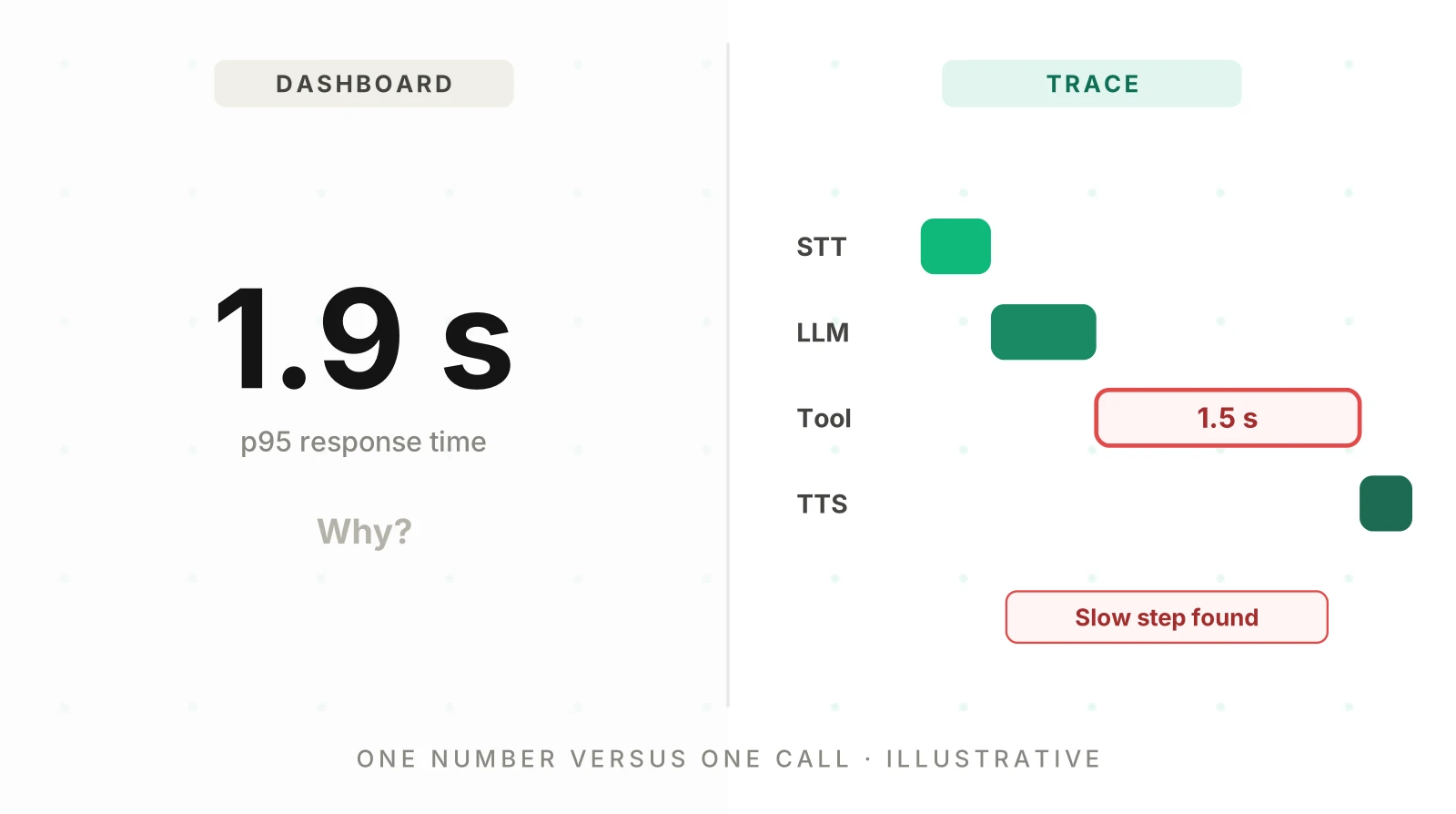
What Is Voice Agent Observability? Traces, Logs, Metrics and Root Cause
What voice agent observability is, the signals it uses (traces, logs, metrics, recordings), what it answers that dashboards cannot, and what to capture per call.
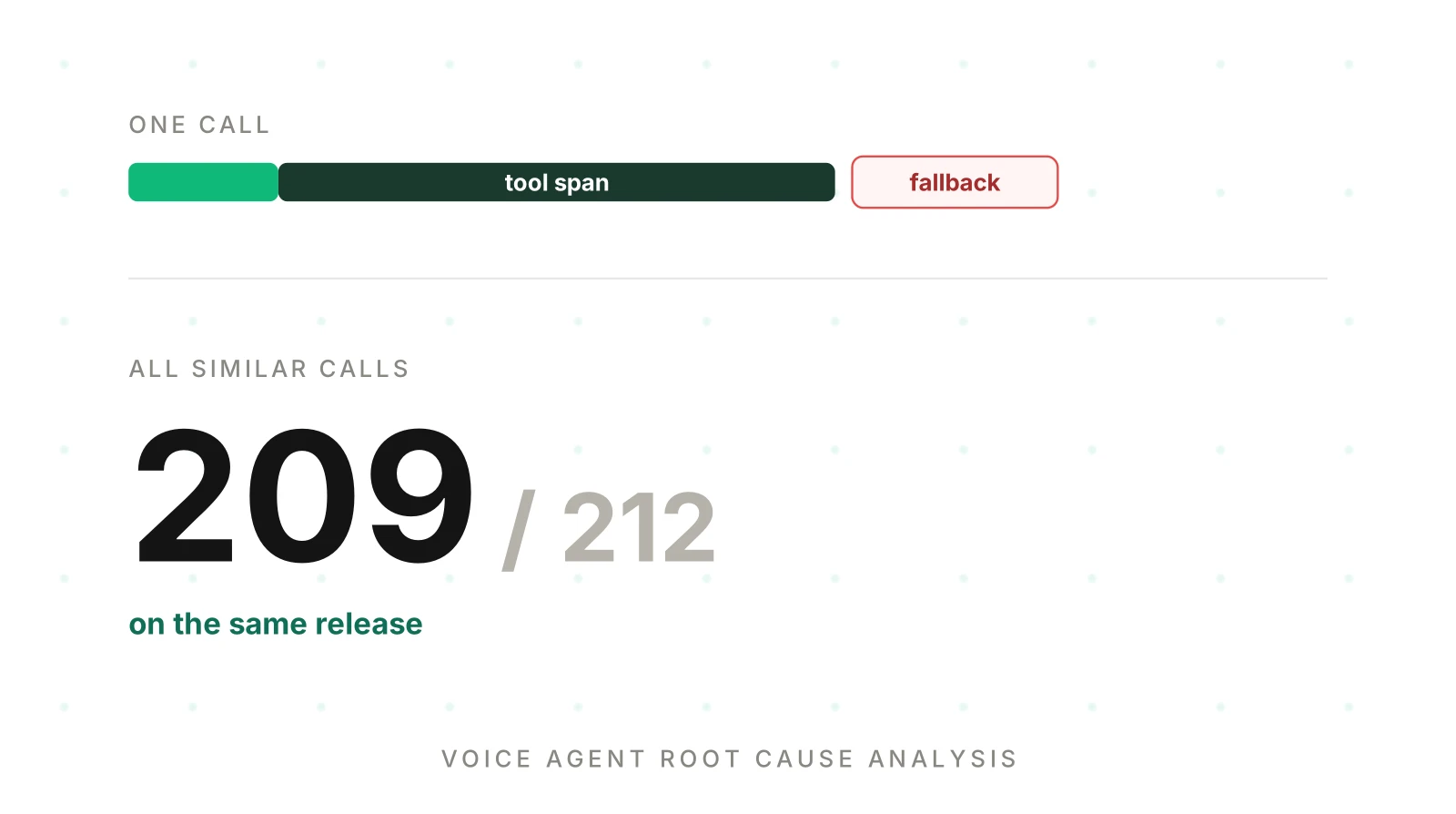
Voice Agent Traces Show What Happened, Not Why the Call Failed
Voice agent root cause analysis needs more than a trace. See what a trace misses, the context to add, and a 6-step routine that groups failures into causes.
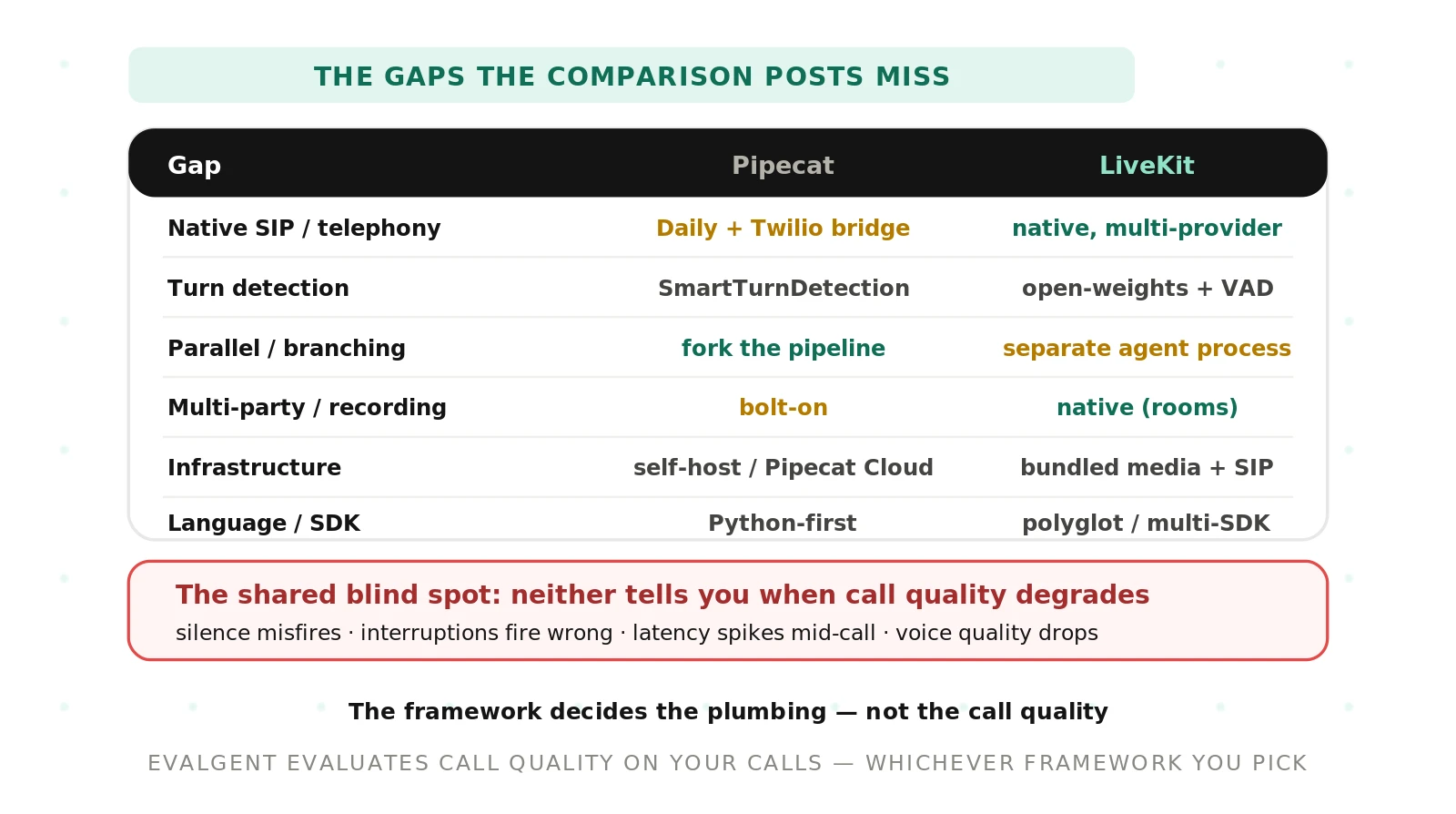
LiveKit vs Pipecat: The Deep Gaps the Comparison Posts Miss
LiveKit vs Pipecat comparisons skip the gaps that bite in production: SIP telephony, turn detection, branching, lock-in, and the call-quality blind spot.
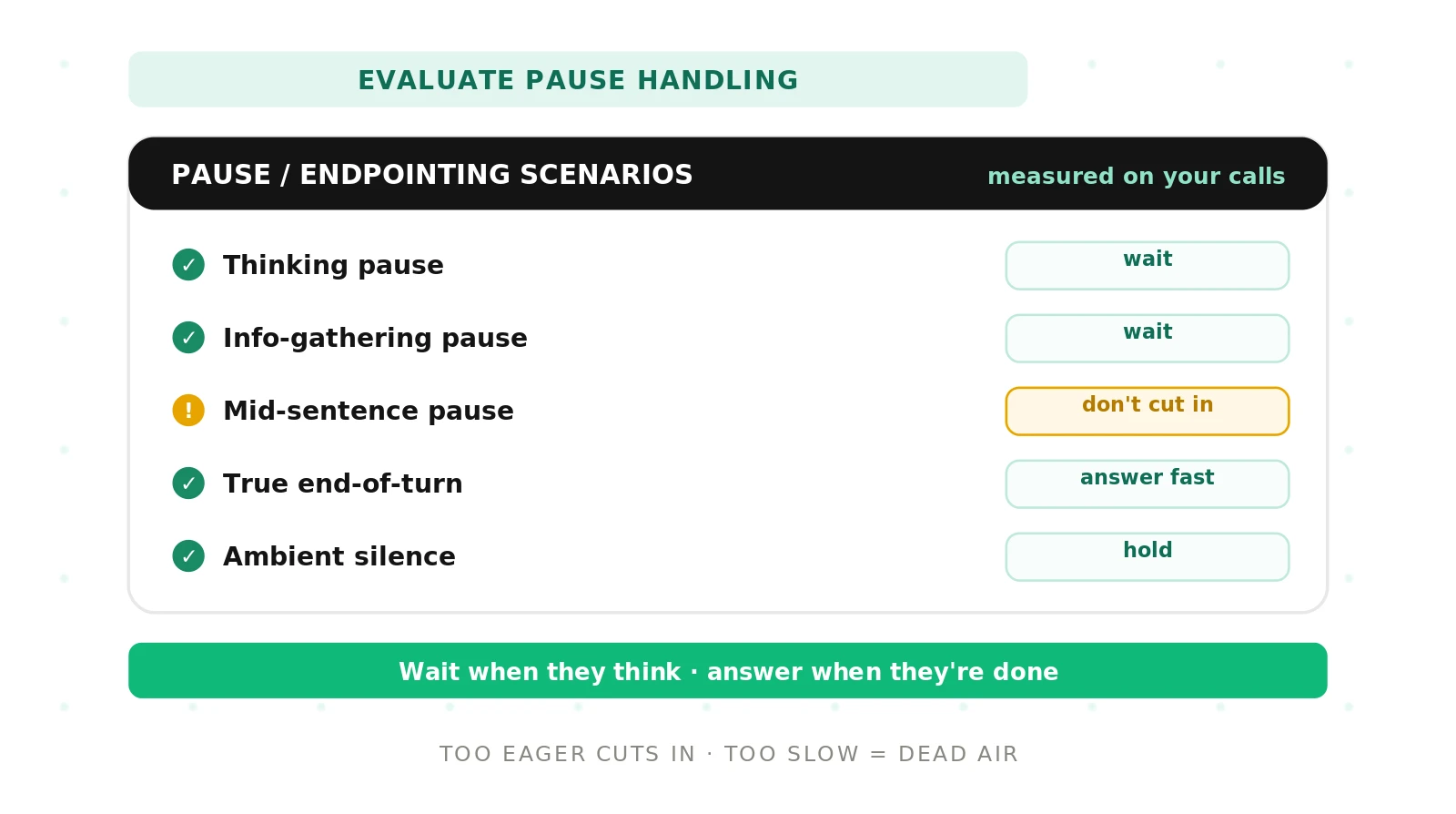
How to Evaluate Pause Handling in AI Voice Agents
Learn how to evaluate pause handling in AI voice agents: measure premature-endpoint and dead-air rates across realistic pause scenarios on real call audio.
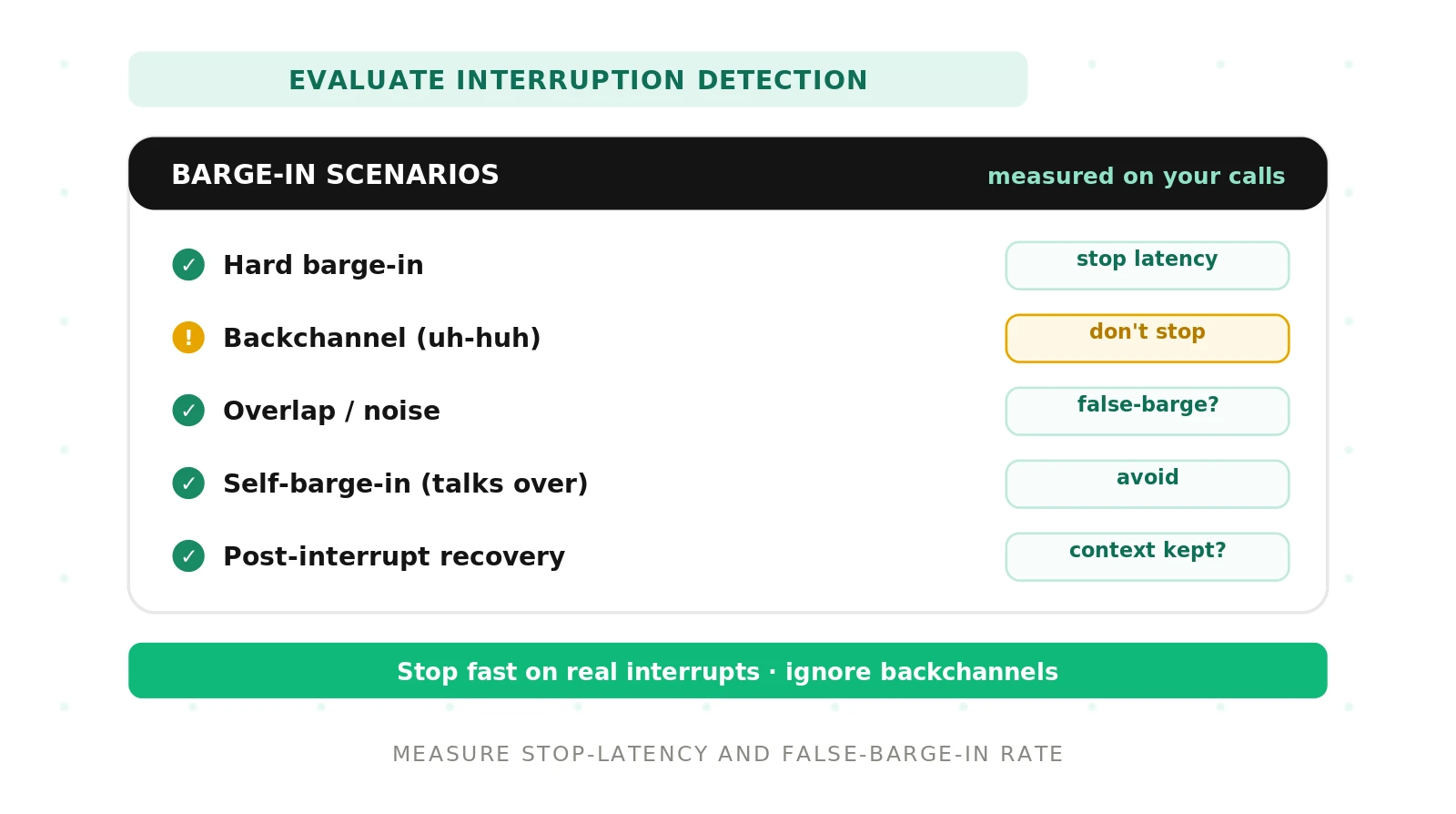
How to Evaluate Interruption Detection in Voice Agents
Interruption detection decides whether a voice agent stops when a caller cuts in. Here is how to score barge-in, stop latency, and false barge-ins.
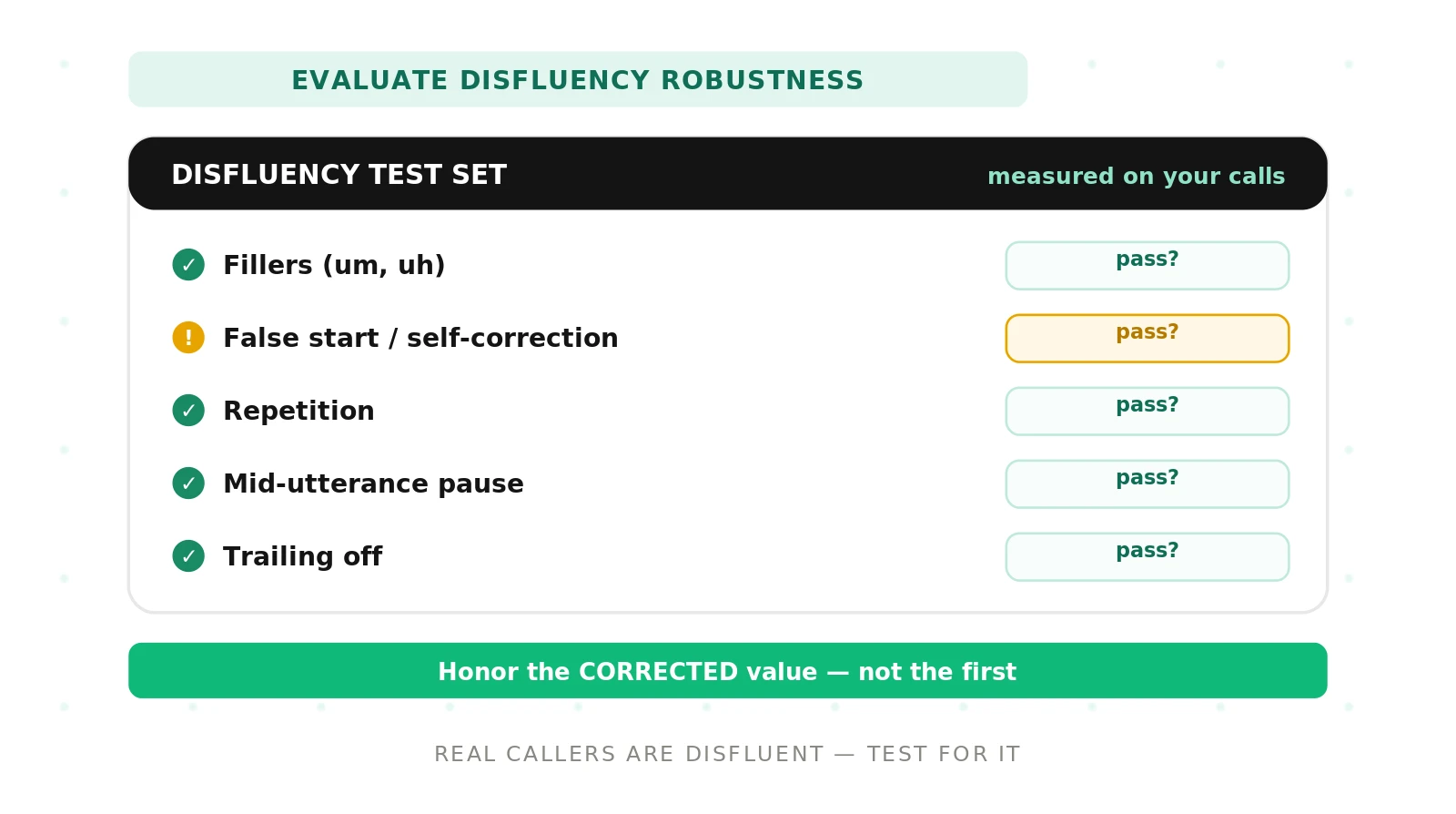
How to Evaluate Disfluency Robustness in Voice Agents
Disfluency robustness is how well a voice agent handles fillers, false starts, and self-corrections. Learn how to test it on your own real calls.
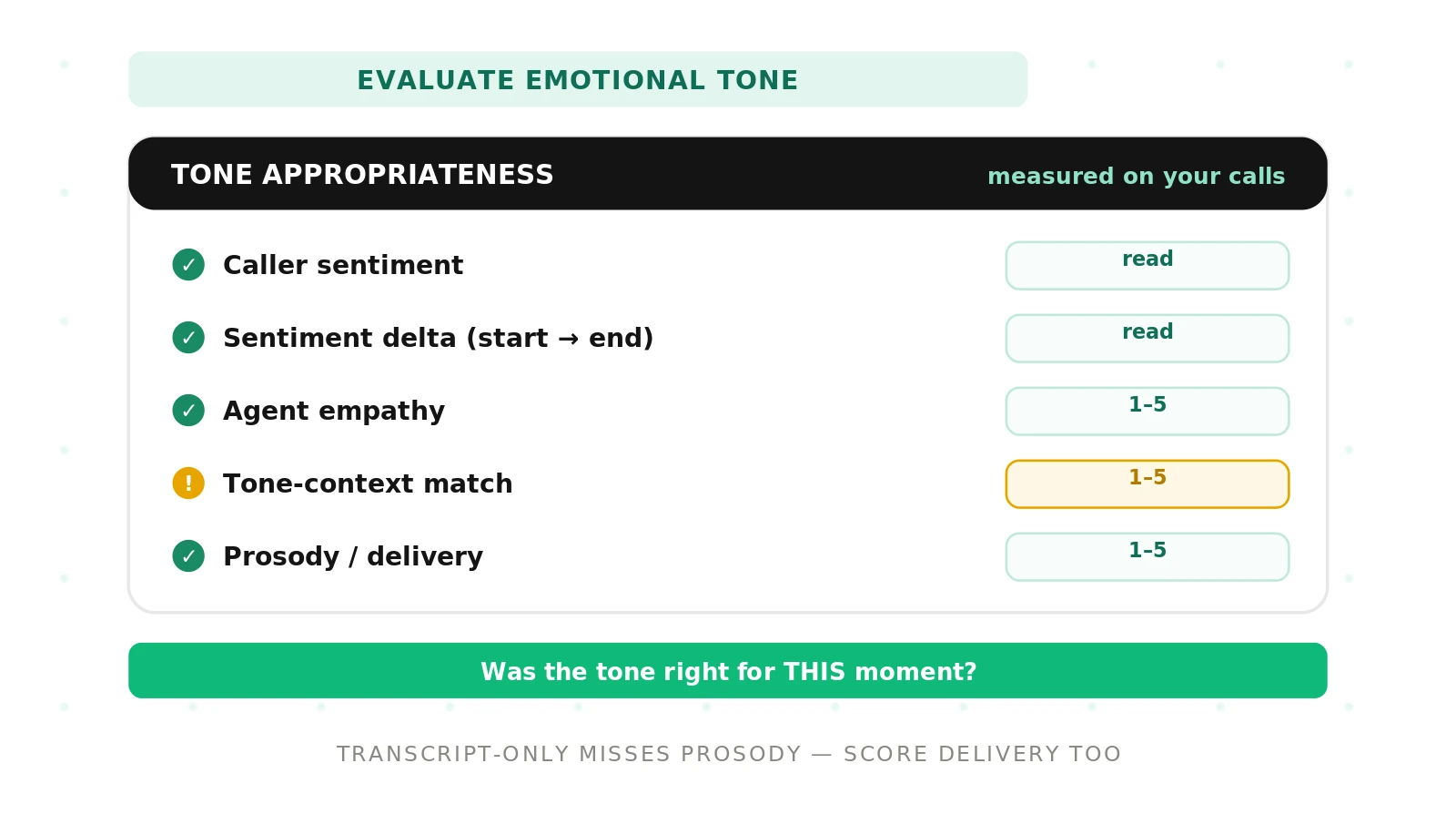
How to Evaluate Emotional Tone in AI Voice Agents
Emotional tone voice agent evaluation scores whether your AI agent sounds empathetic and matches the caller's mood, tested on real, emotionally varied calls.