Blog
Page 2 of 32
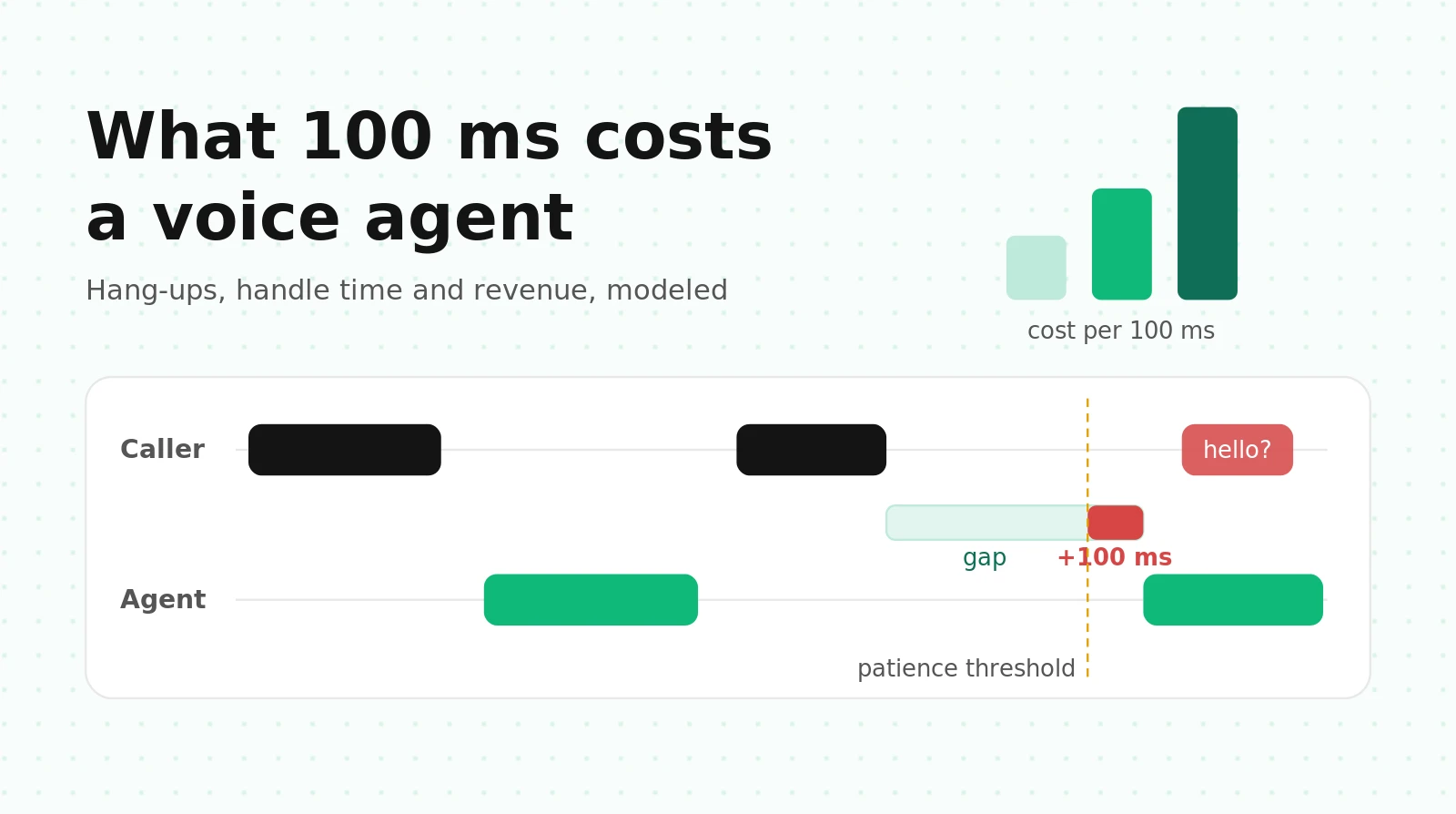
The Cost of Latency in Voice Agents: What Each 100 ms Does to Hang-Ups, Handle Time and Revenue
Voice agent latency impact, priced: what the research proves, a labeled model for AHT, hang-ups and revenue, and code to measure your own latency curve.
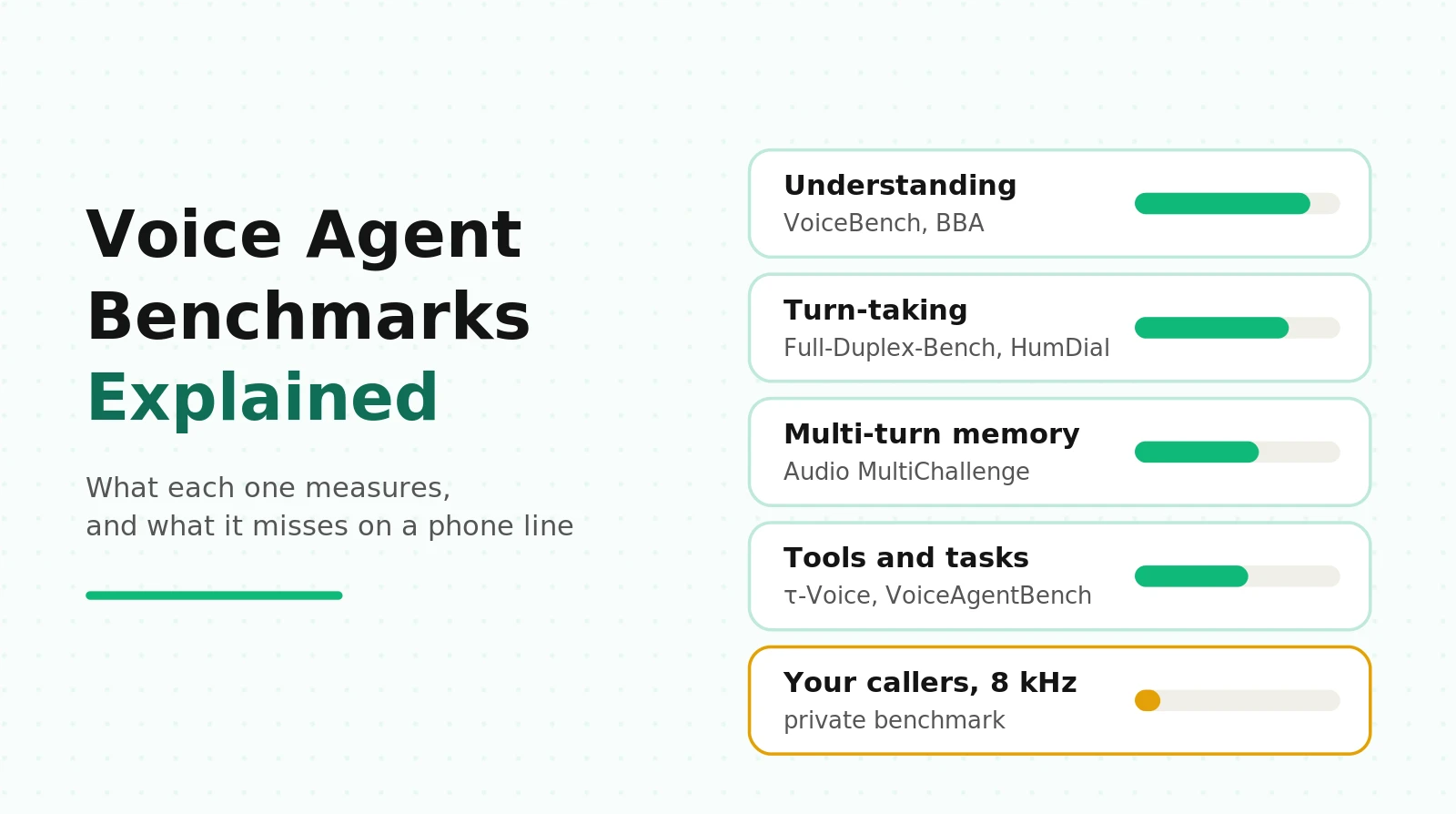
Voice Agent Benchmarks Explained: VoiceBench, VoiceAgentBench, Full-Duplex-Bench, τ-Voice and More
What VoiceBench, VoiceAgentBench, Full-Duplex-Bench, HumDial, VocalBench, Audio MultiChallenge, τ-Voice and Big Bench Audio measure, and what they miss.
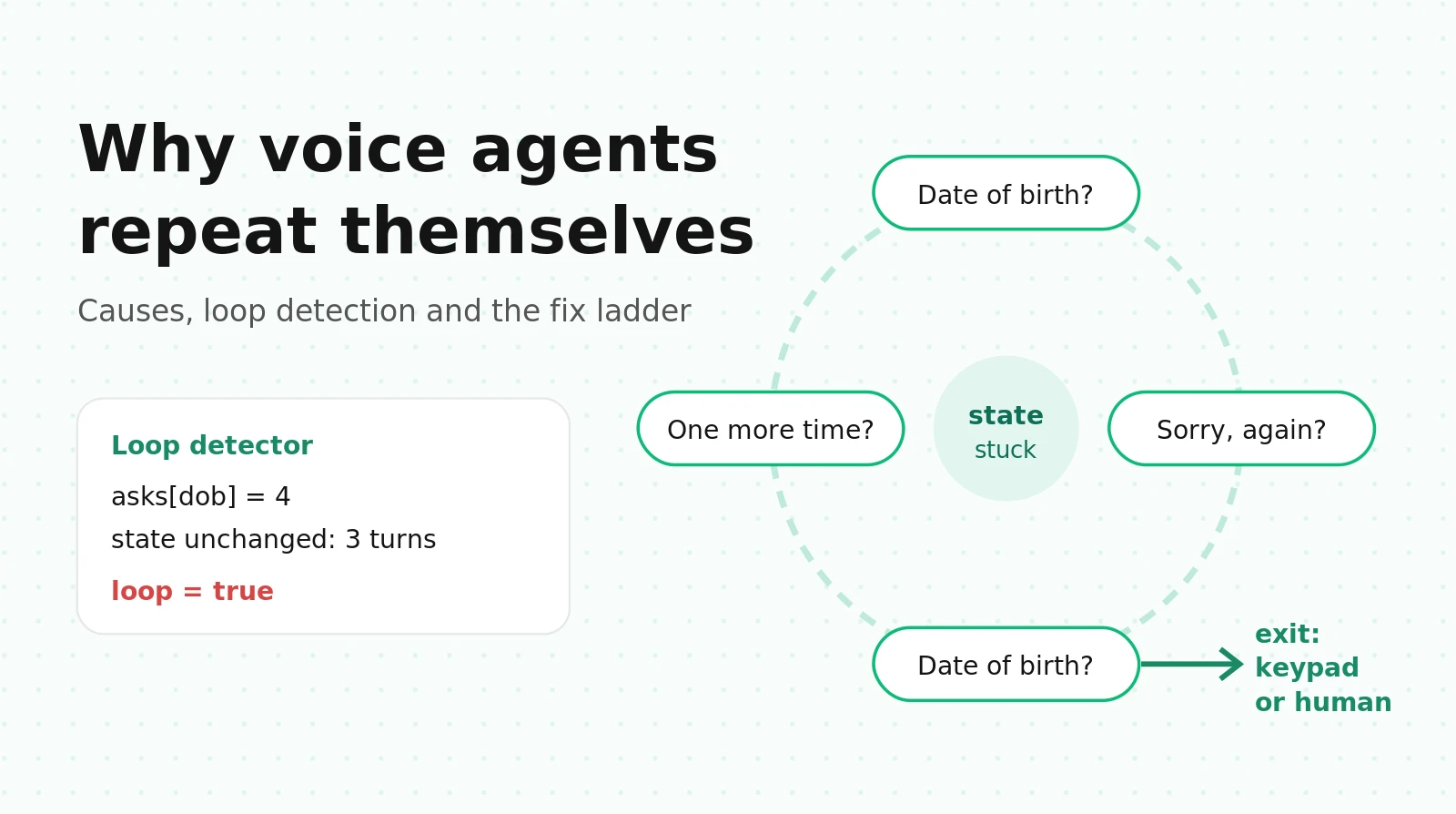
Why Voice Agents Get Stuck Repeating Themselves (and How to Detect Repetition Loops)
Why a voice agent keeps repeating itself: eight root causes, a re-ask rate metric, Python loop detection for transcripts, and a fix ladder that ends loops.
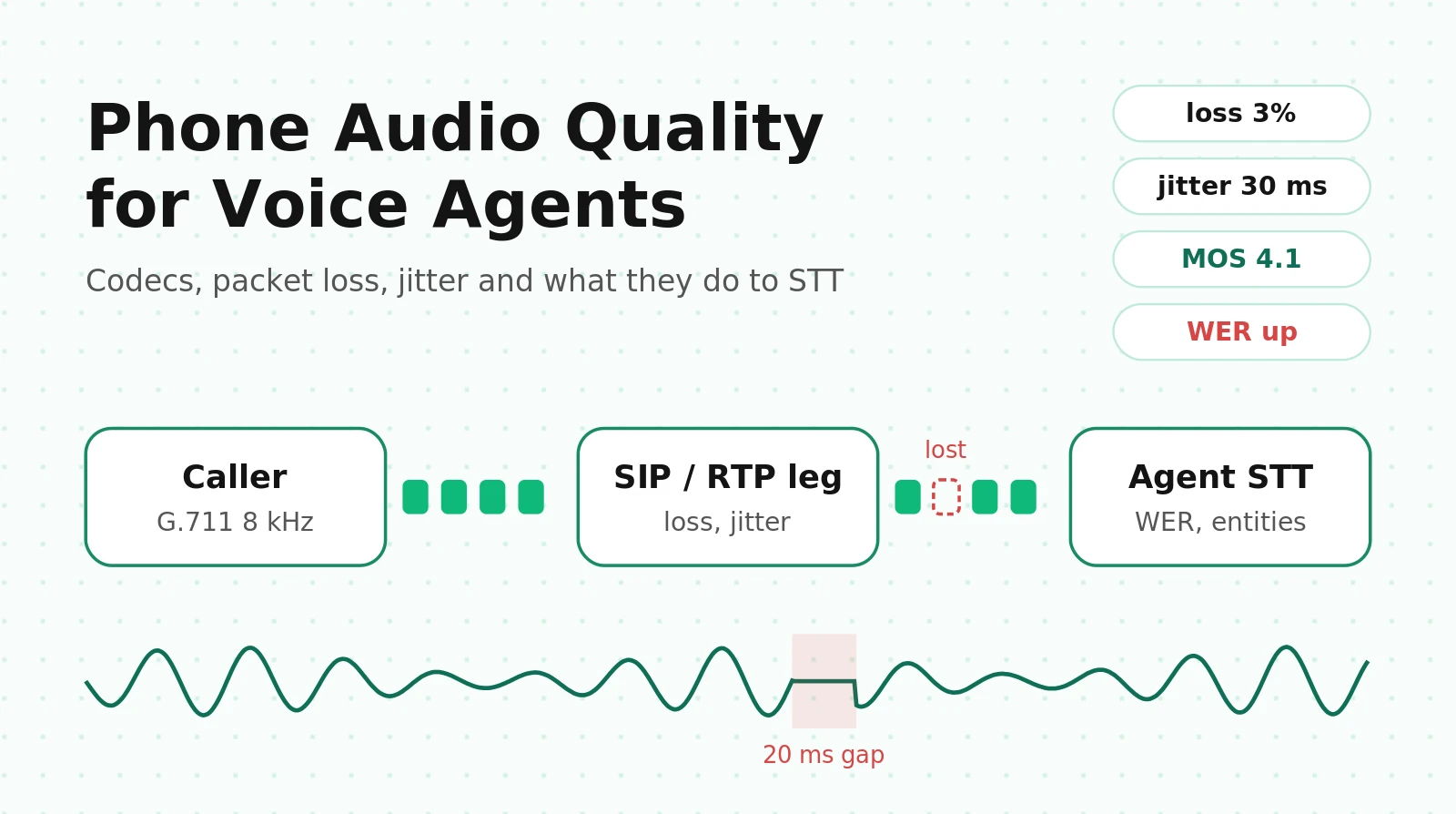
Voice Call Quality Metrics for Voice Agents: Codecs, Packet Loss, Jitter and What They Do to STT
How G.711 vs Opus, packet loss, jitter and PLC change STT accuracy on phone calls, with the E-model math, stat field names and a netem test plan.
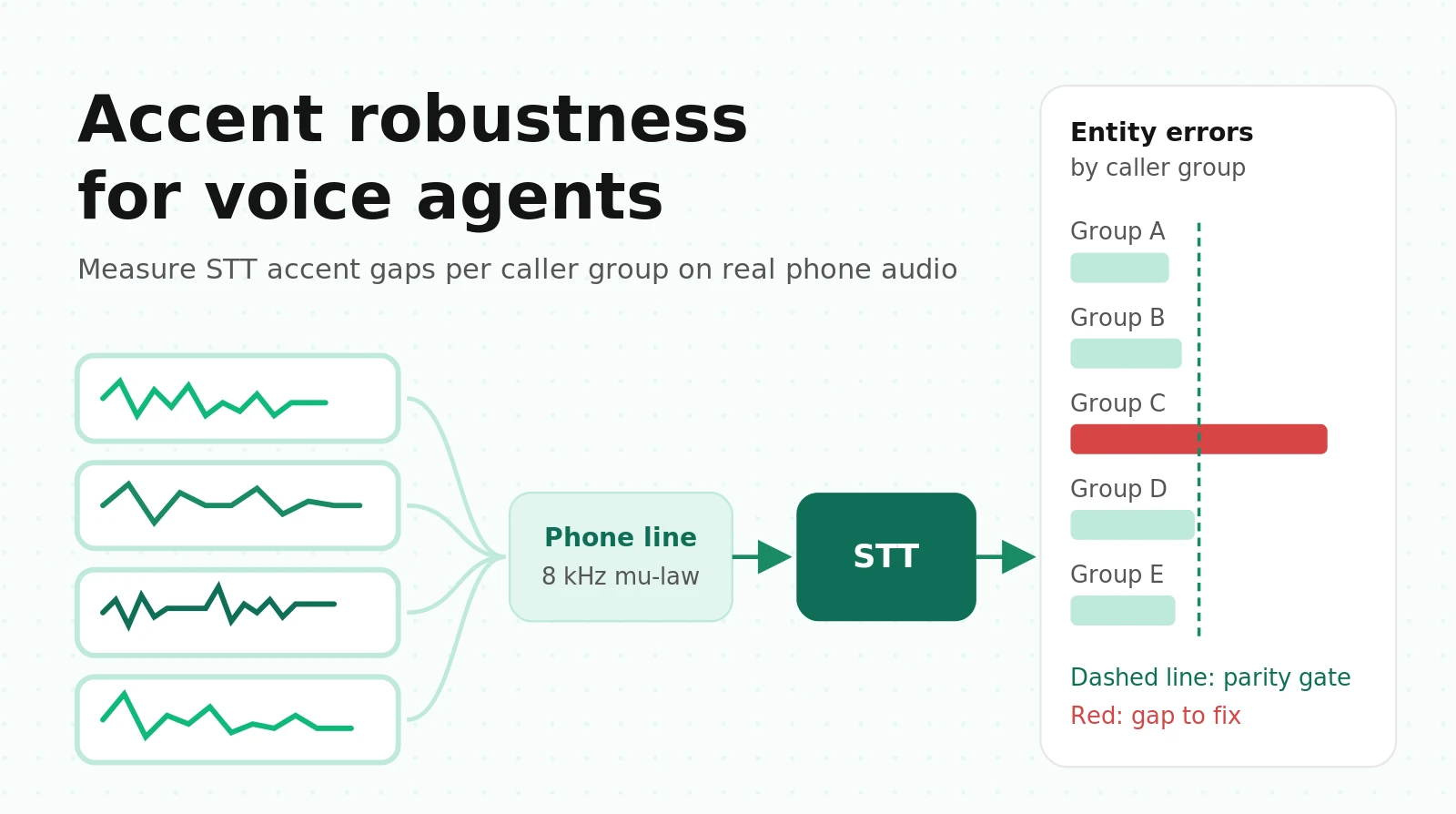
Accent Robustness for Voice Agents: Finding and Fixing Speech Recognition Accent Bias on US Calls
How STT accent errors break voice agents on US phone calls, what the research measured, and how to test, monitor and fix accent gaps with real numbers.
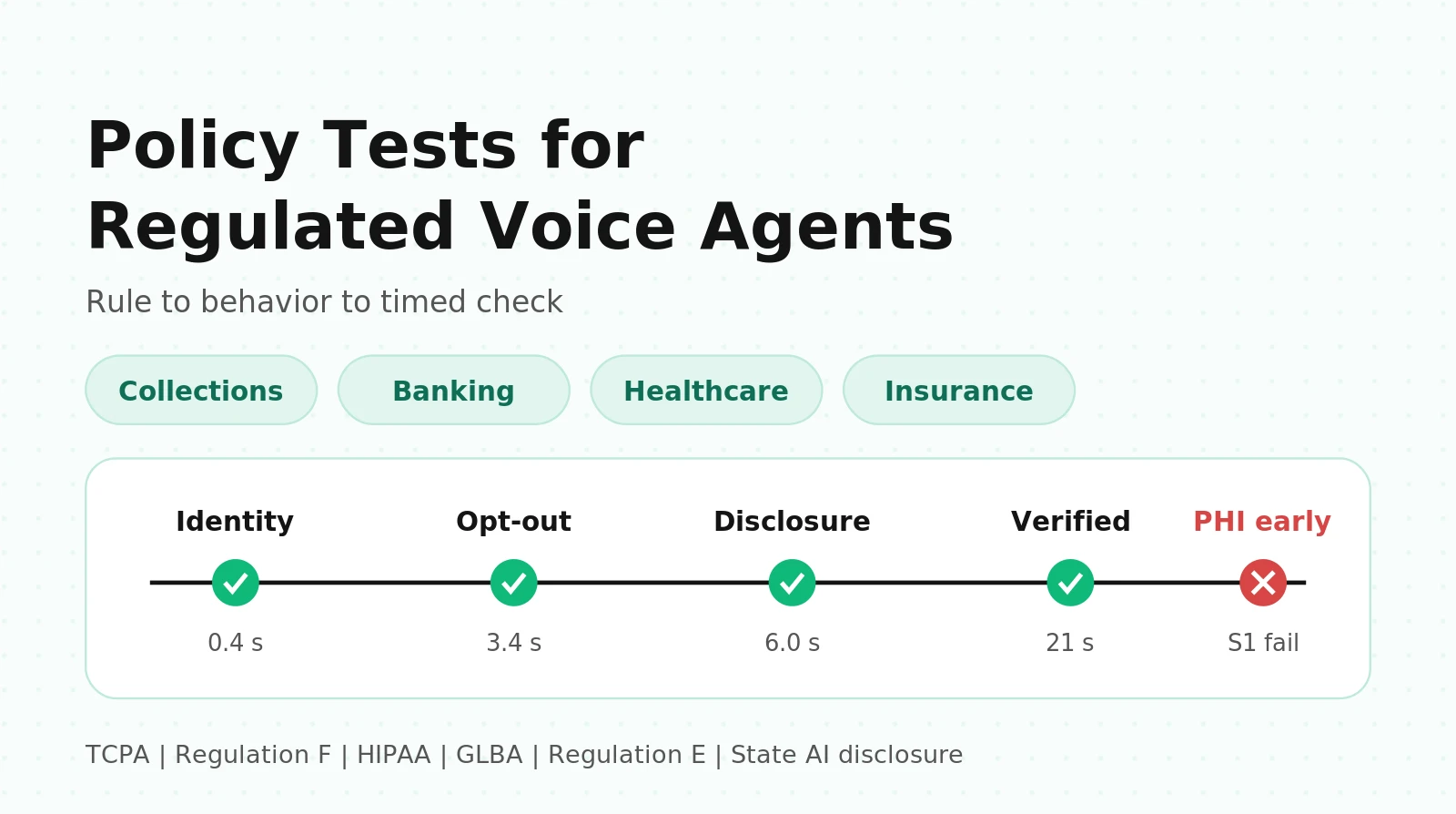
Voice Agent Compliance Testing: Policy and Guardrail Test Cases for Financial Services, Healthcare, Insurance and Collections
Voice agent compliance testing, rule by rule: TCPA, Reg F, HIPAA, GLBA and insurance test cases with pass criteria, scoring, severity and timing code.
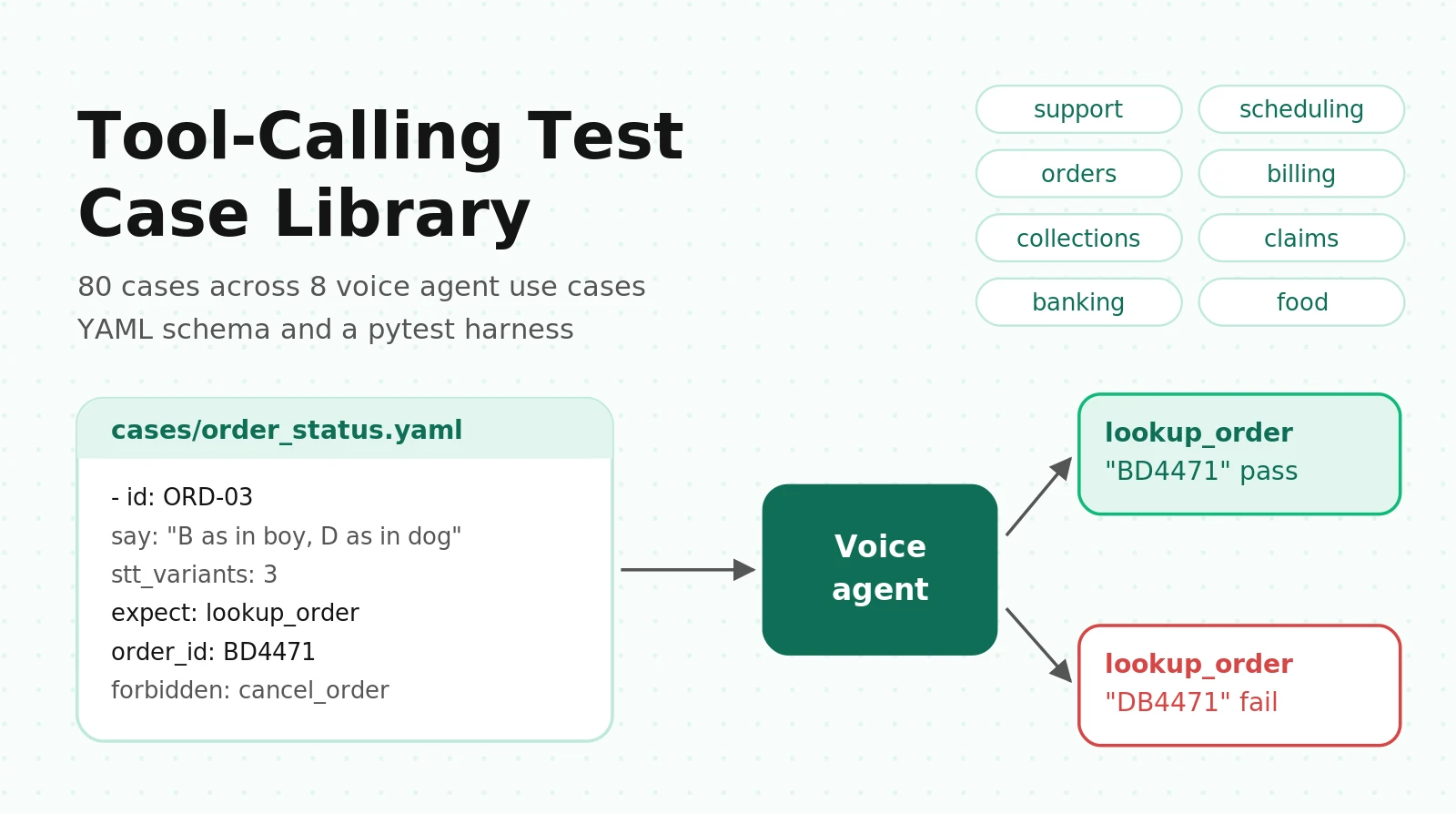
Voice Agent Tool Calling Test Cases: A Copyable Library for 8 Use Cases
80 copyable voice agent tool calling test cases for support, scheduling, orders, billing, collections, claims, banking and food, with YAML and pytest.
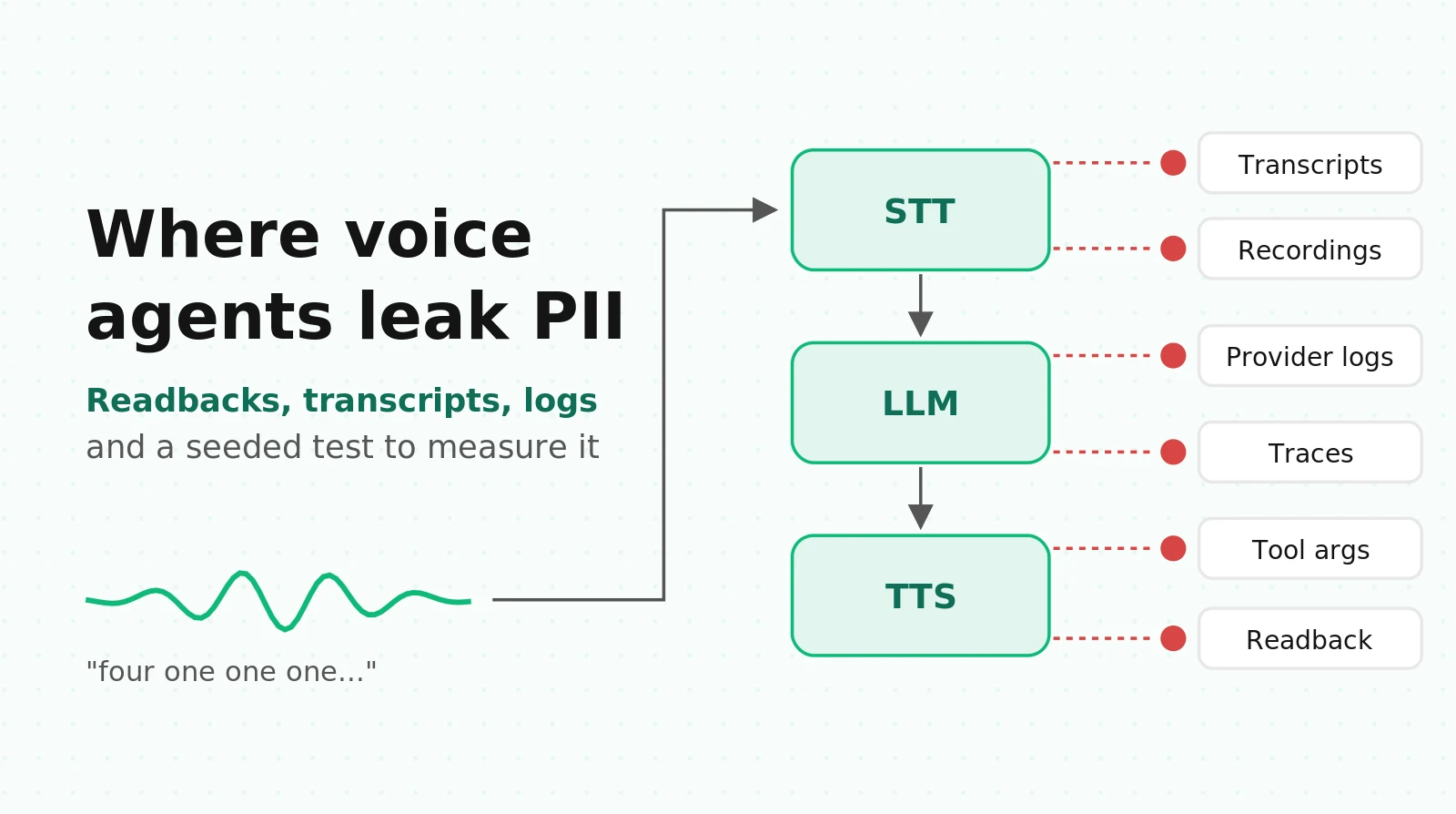
Voice Agent PII Redaction: Detecting Leaks in Spoken Readbacks, Transcripts and Logs
Where voice agents leak card numbers and SSNs: readbacks, STT, LLM logs, recordings, traces. Redaction failure modes, detection code, seeded test plan.
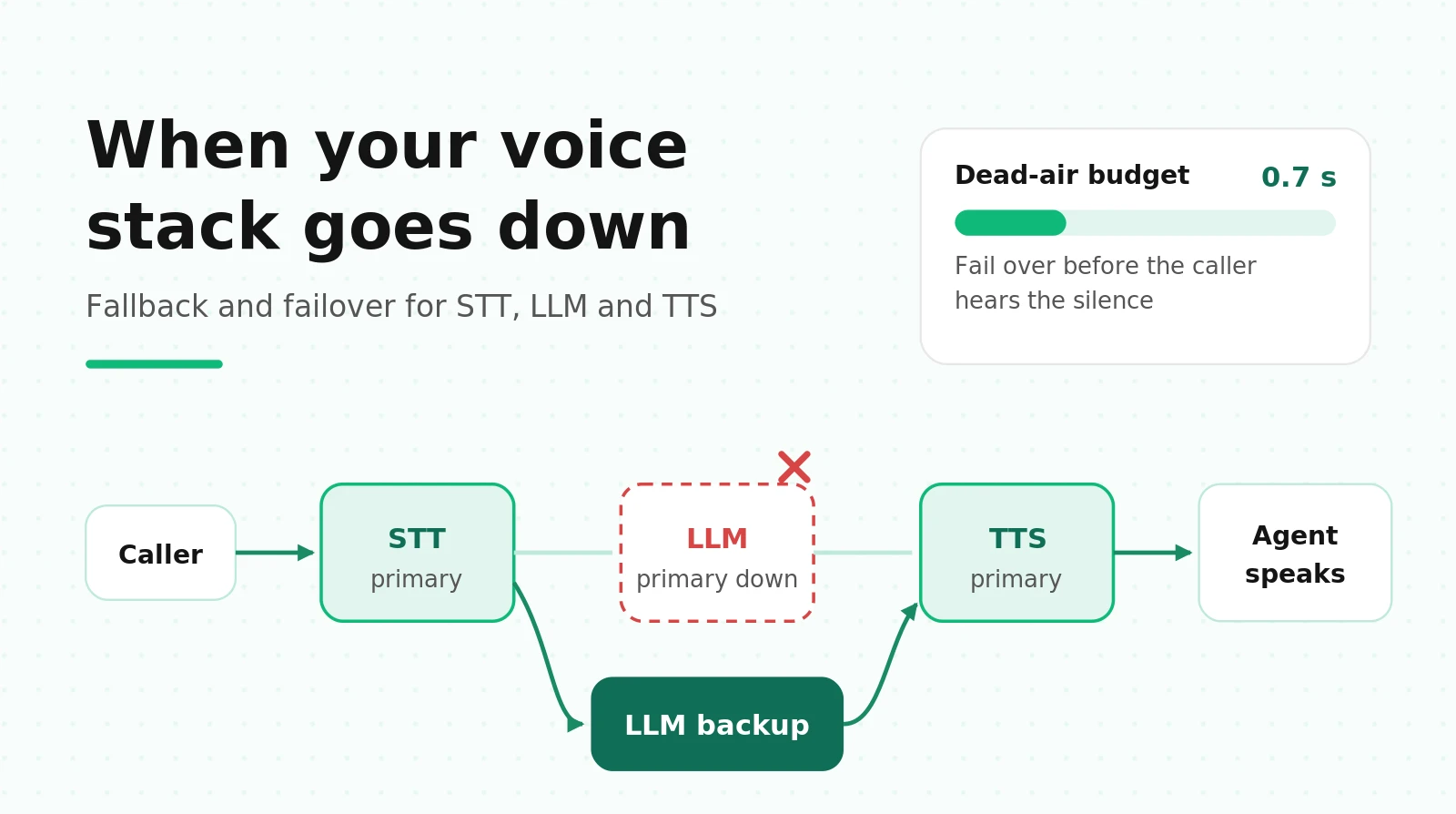
When Your STT, LLM or TTS Provider Goes Down: Voice Agent Fallback and Failover That Holds Up on Live Calls
Voice agent fallback, verified in source: what callers hear when STT, LLM or TTS fails, real timeout defaults, availability math and fault-injection tests.