Blog
Page 40 of 41
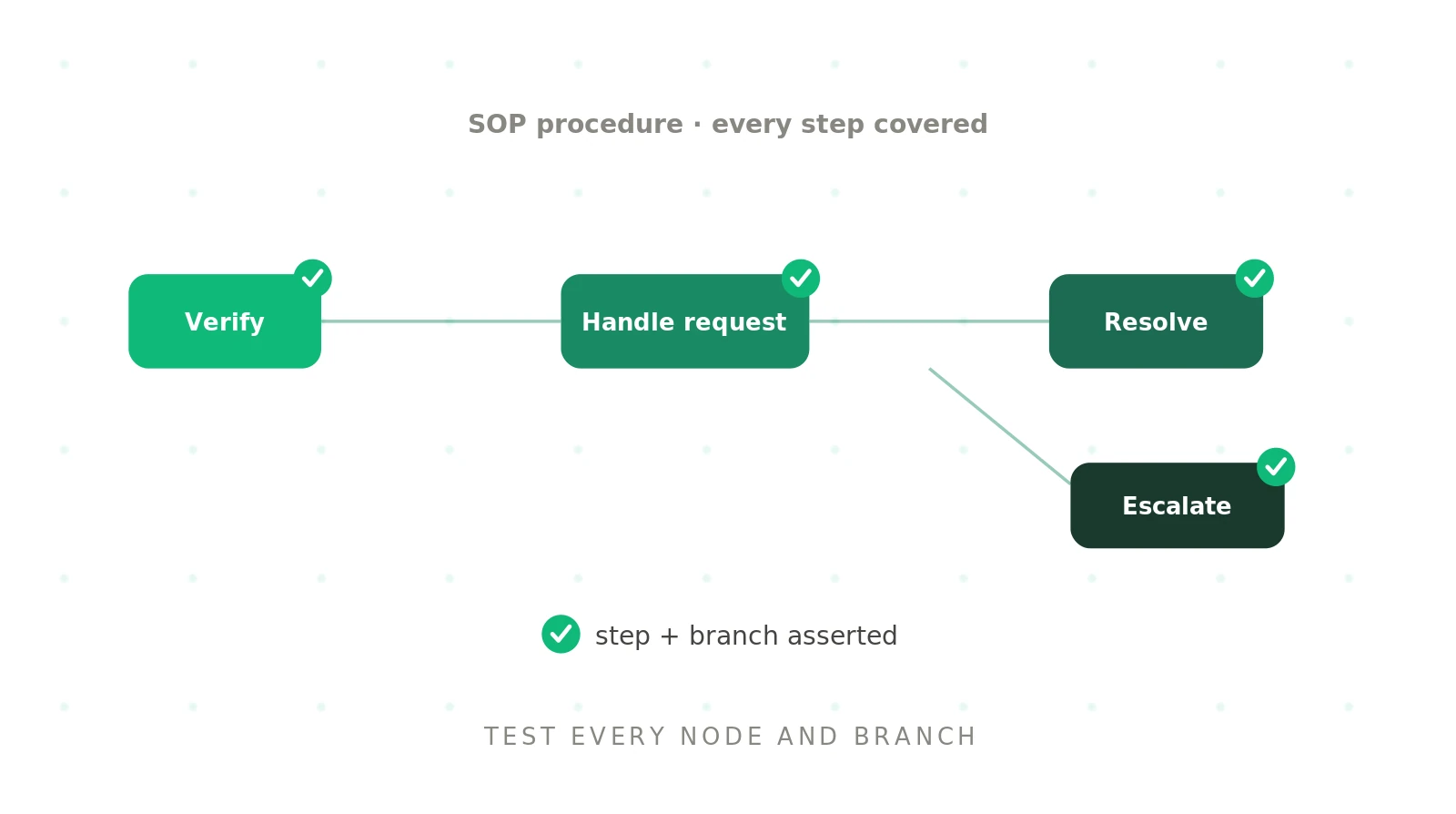
Testing SOP-based voice agents: how to verify procedure adherence
Testing SOP-based voice agents means verifying every step and branch of the procedure. Learn SOP adherence testing, step coverage, and metrics.
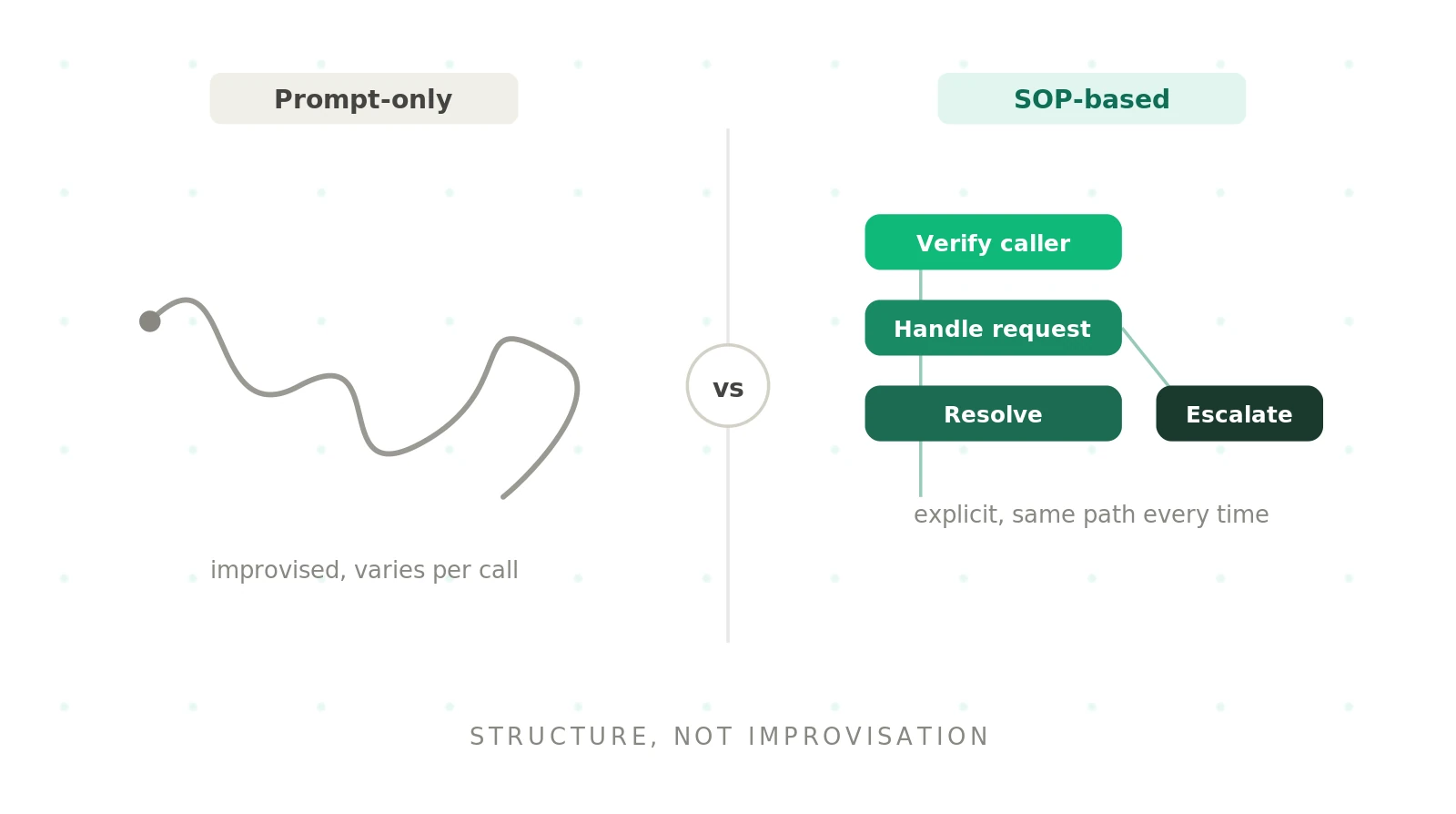
SOP-based voice agents: how standard operating procedures make agents reliable
SOP-based voice agents follow standard operating procedures instead of relying on a prompt. Learn how SOPs improve reliability, control, and testability.
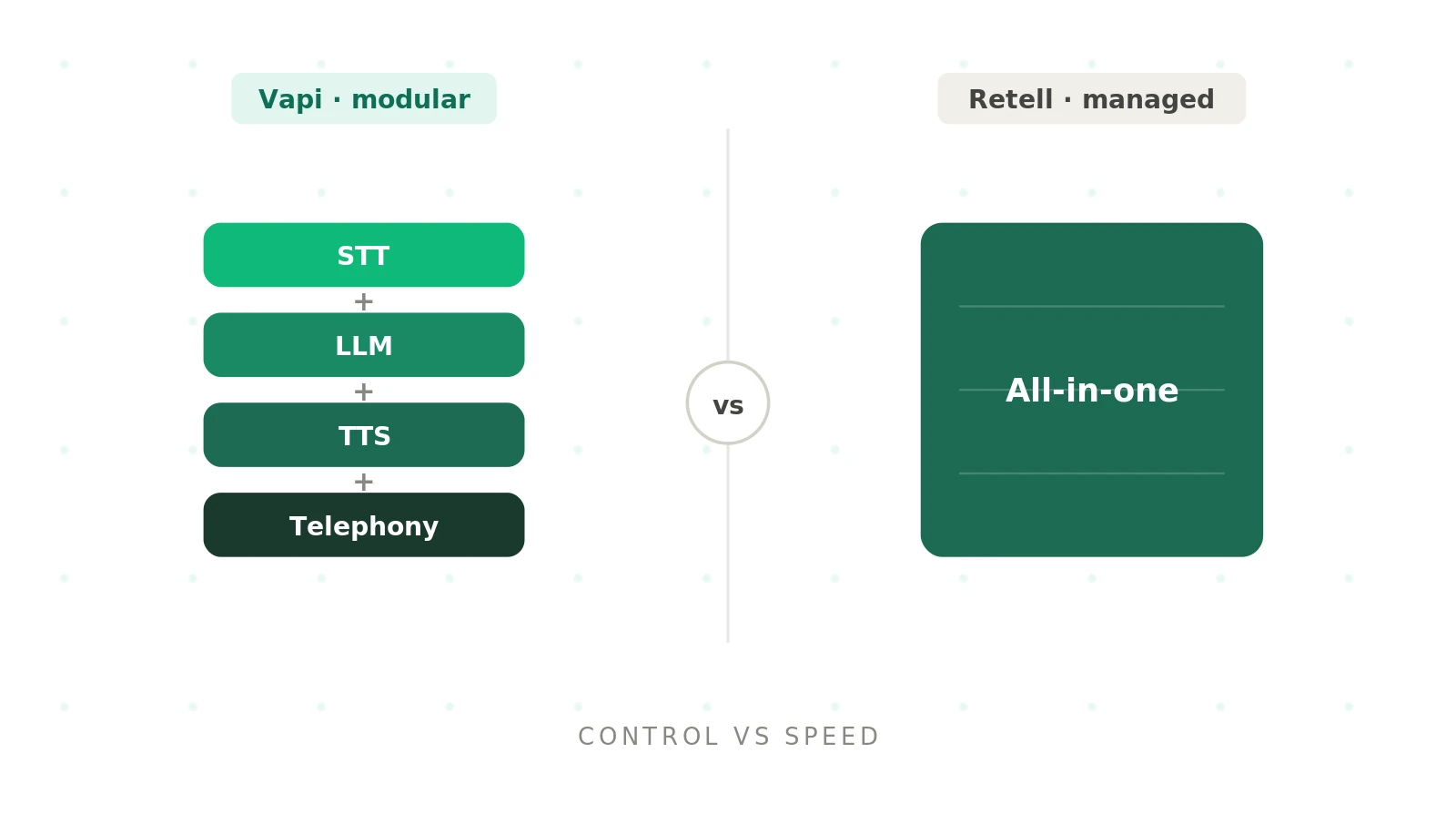
Vapi vs Retell: which voice agent platform should you choose?
Vapi vs Retell compared on architecture, pricing, latency, telephony, and scale. A clear decision framework for choosing a voice agent platform in 2026.
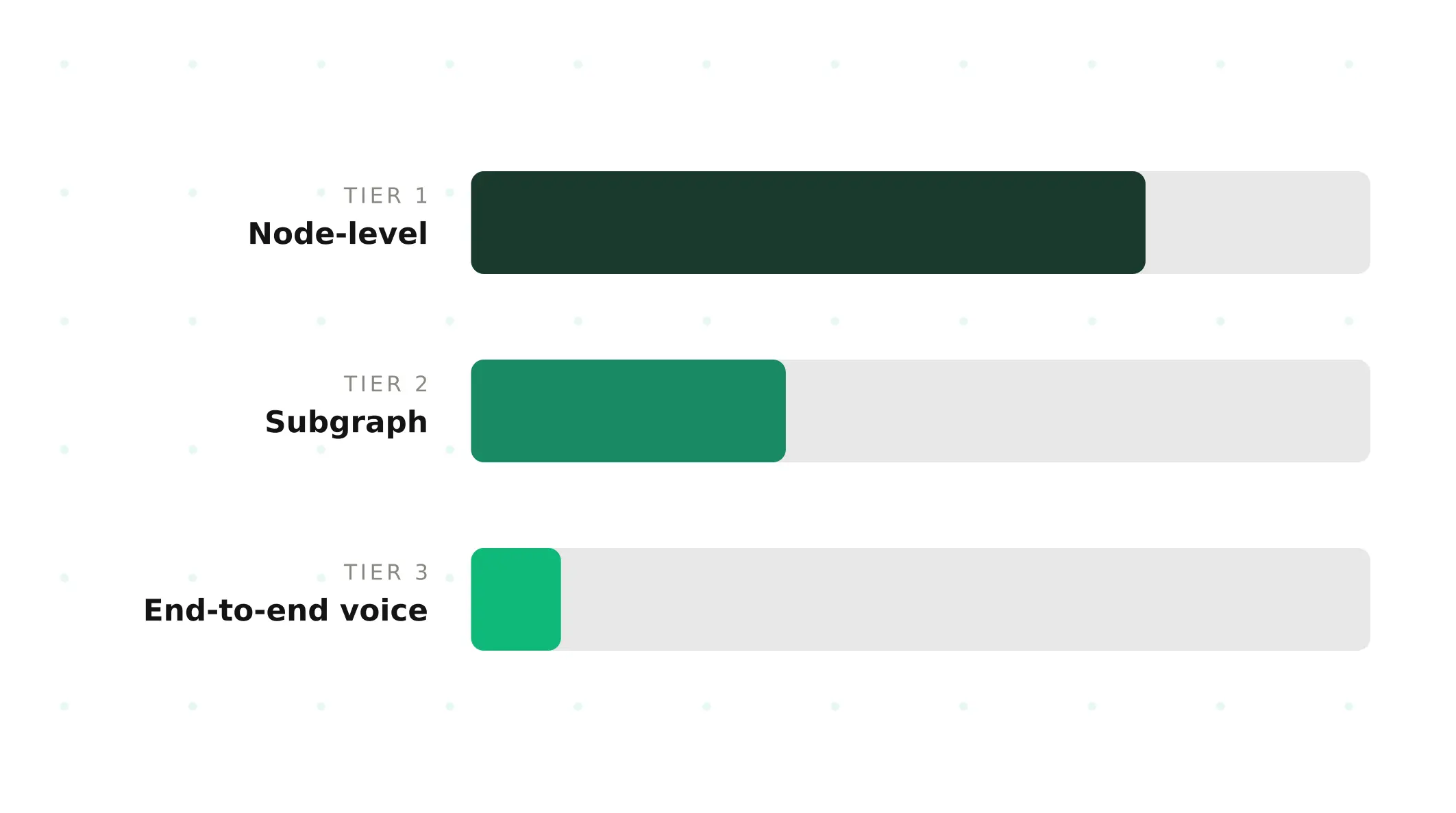
Testing Graph-Based Voice Agents: The Three-Tier Model
Testing graph-based voice agents requires three tiers — node, subgraph, end-to-end voice. Most teams stop at tier one. Here's what production-grade looks like.
Should You Build a Graph-Based or Prompt-Based Voice Agent?
Graph-based vs prompt-based voice agents: a decision framework. Five questions, a clear matrix, and three hybrid patterns most teams actually ship.
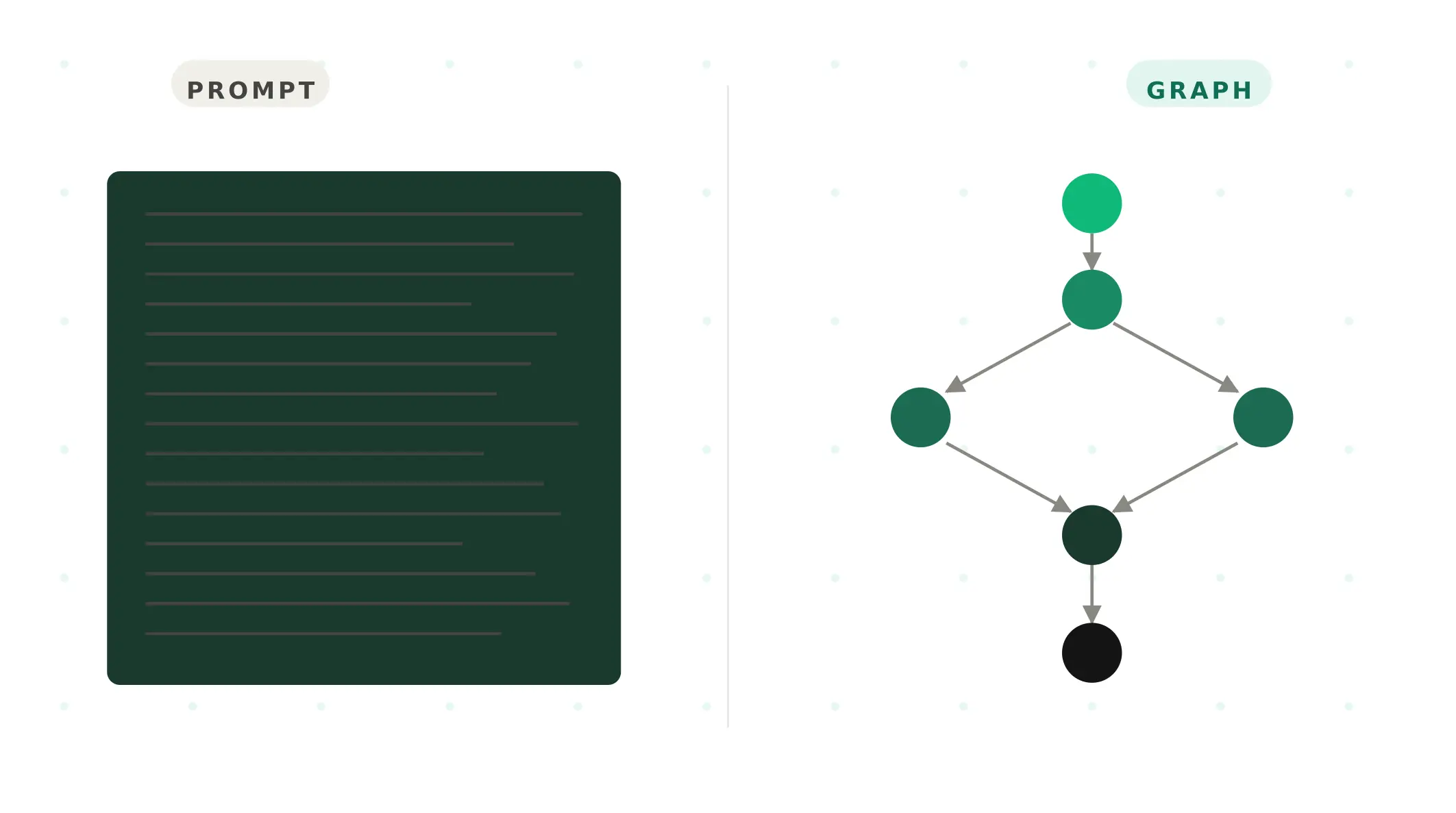
Why Production Voice Agents Are Becoming Graphs, Not Prompts
Graph-based voice agents externalise control flow that prompt-based agents trust the LLM to handle. Why this is the architecture winning production deployments.
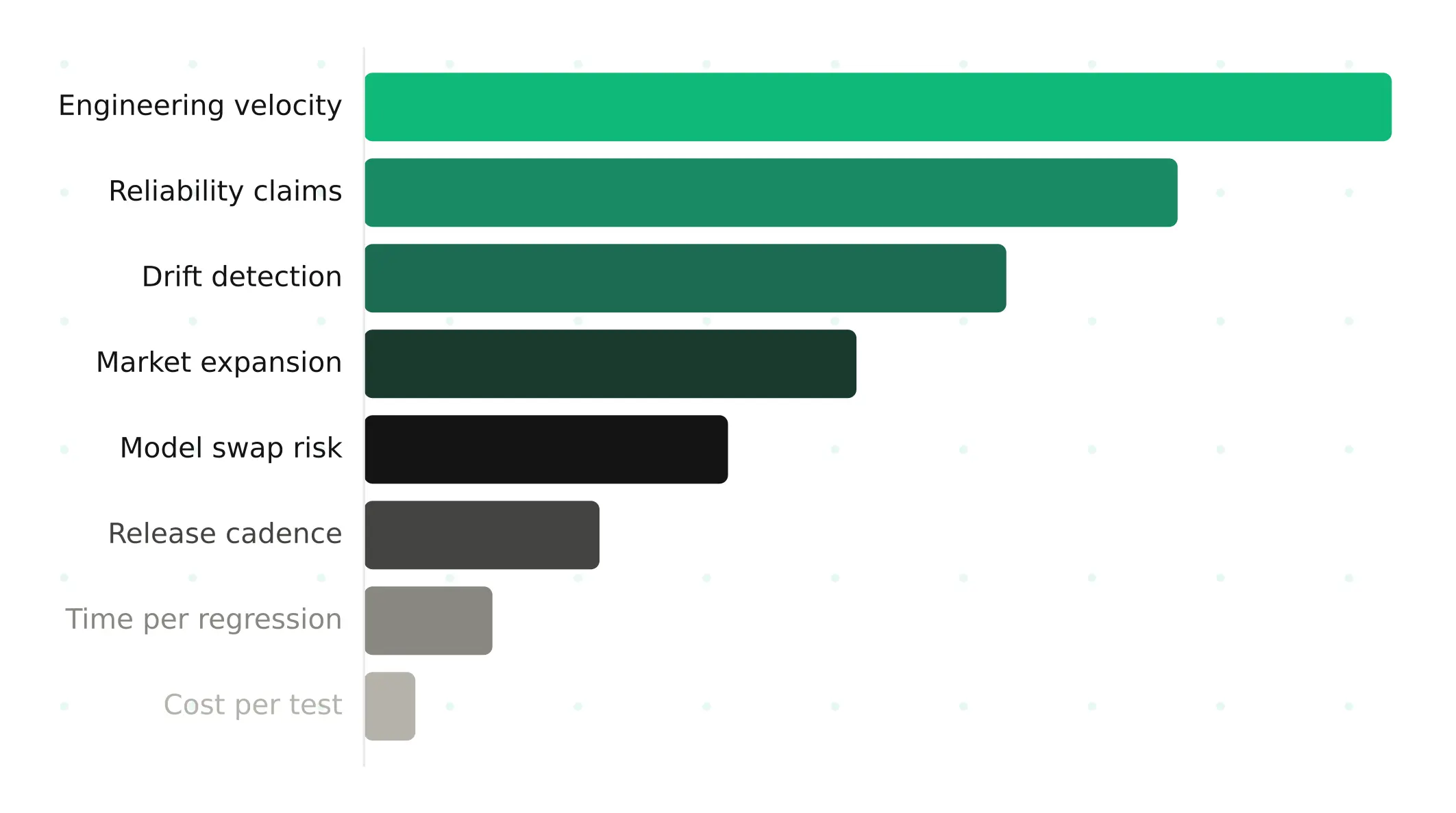
The ROI of AI Voice Agent Testing Isn't What You Think It Is
Cost-per-test is the wrong way to measure voice agent testing ROI. Six capabilities that change how teams ship voice AI — and what they're worth.

You don't read AI-generated code. Why are you listening to every call?
Nobody reads AI-generated code anymore. Tests became mandatory. Voice agents are next — eval-driven development is how reliable voice AI gets shipped.

AI Agent Testing vs Voice Agent Testing: What General Tools Miss for Voice
AI agent testing measures text outputs. Voice agent testing measures behaviour through an acoustic pipeline. Five failure categories general tools miss.