Test your voice agent
Vapi vs Retell: which voice agent platform should you choose?
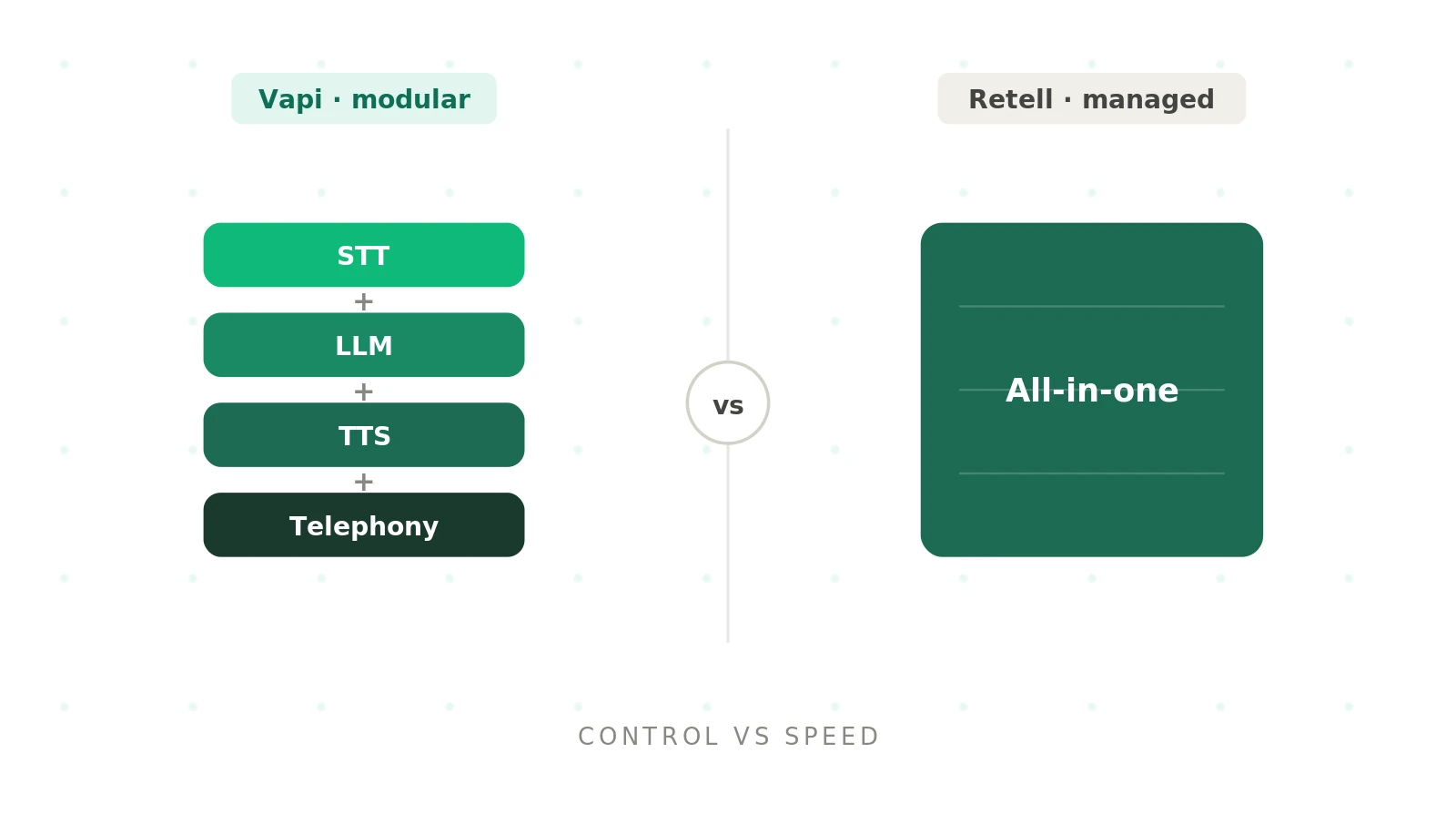
Choosing a voice agent platform is a build decision you live with for a long time. Vapi and Retell are two of the most common shortlists in 2026, and they take opposite approaches. This guide compares them on architecture, pricing, latency, telephony, and scale, then gives a clear framework for picking one.
Whichever you choose, one fact holds for both: a platform gets your agent live, but it does not prove the agent works with real callers. That gap is where Evalgent fits, and we return to it at the end. First, the comparison.
Vapi vs Retell at a glance
The two platforms solve the same problem with different philosophies. Vapi hands you the building blocks. Retell hands you a working system. The table below summarises where they differ most.
| Factor | Vapi | Retell |
|---|---|---|
| Approach | Developer-first, modular | Low-code, managed |
| Component choice | Pick your own STT, LLM, TTS | Curated providers, simpler |
| Base platform fee | ~$0.05/min | ~$0.07–$0.08/min |
| Typical all-in cost | ~$0.13–$0.31/min | ~$0.11–$0.31/min |
| Latency (2026) | ~700–1,500ms | ~600–800ms, sub-500ms possible |
| Telephony | Bring your own (BYOK) | Built-in, or bring your own SIP |
| Standout feature | Full pipeline control | Branded caller ID, built-in analytics |
| Best for | Engineering teams | Fast launches |
Figures are approximate 2026 ranges and depend on configuration. Always check the official Vapi pricing and Retell pricing pages before budgeting.
What is Vapi?
Vapi: a developer-first voice agent platform that orchestrates speech-to-text, an LLM, and text-to-speech while letting you choose each component yourself.
Vapi is built for control. You select your own STT, LLM, voice, and telephony provider, then wire them together through Vapi's orchestration layer. This modular design is powerful for engineering teams that want to tune every stage. The Vapi docs cover its SDKs, tool calling, and webhooks in depth.
The trade-off is overhead. A typical Vapi deployment touches four to six providers, which means multiple invoices and several vendor relationships to manage. You get flexibility, but you own the integration work.
What is Retell?
Retell: a lower-code voice agent platform that bundles telephony, voice, and analytics so teams can launch agents quickly.
Retell optimises for speed. It ships with curated voice providers, built-in telephony through Twilio, and a knowledge base, so you can stand up an agent without heavy engineering. The Retell docs detail its no-code builder alongside its API.
Retell still gives choice where it matters. It supports several voice providers and major LLMs, including GPT, Claude, and Gemini models. The difference is that sensible defaults are already in place, so you configure rather than assemble.
Architecture and control: BYOK vs managed
This is the core of the Vapi vs Retell decision. Vapi uses a bring-your-own-key model. You supply API keys for each component and Vapi orchestrates them. That suits teams who already have provider preferences and want to optimise cost or quality per stage.
Retell leans managed. The platform handles the plumbing between components, so you spend less time on integration and more on the conversation design. For a refresher on what these components are, see our voice agent stack guide.
Neither approach is better in the abstract. The right one depends on whether your constraint is engineering time or fine-grained control.
Pricing compared
Both platforms charge a base orchestration fee, then pass through the cost of the models and telephony you use. The headline rate is never the full story.
| Cost component | Vapi | Retell |
|---|---|---|
| Base platform | ~$0.05/min | ~$0.07–$0.08/min |
| LLM | pass-through (~$0.02–$0.20/min) | ~$0.003–$0.08/min |
| Telephony | bring your own (~$0.01/min) | ~$0.015/min, or $0 with own SIP |
| Concurrency | plan-dependent | 20 free, then ~$8/mo each |
| Typical all-in | ~$0.13–$0.31/min | ~$0.11–$0.31/min |
Vapi has the lower base fee, which appeals on paper. Retell often lands lower all-in for teams using its defaults, and its concurrency pricing is friendly at scale. For most deployments the totals are close, so cost rarely decides this on its own. Confirm current numbers on the Vapi and Retell pricing pages, since rates change.
Latency and conversation quality
Latency is where callers feel the difference. A long pause makes an agent feel broken, even when the answer is correct. In 2026 benchmarks, Retell tends to run faster, often in the 600–800ms range, with sub-500ms possible on tuned setups. Vapi typically lands between 700 and 1,500ms, depending on the providers you choose.
Retell also supports barge-in, so callers can interrupt mid-response and the agent stops to listen. Vapi can achieve strong latency too, but more of the tuning is on you. If natural turn-taking matters, test it directly rather than trusting a spec sheet.
Telephony, SIP, and scaling
Telephony shapes both cost and reliability. Vapi expects you to bring your own telephony, which adds a vendor but gives you control over routing. Retell includes telephony through Twilio and also supports your own SIP trunk, which can drop telephony cost to zero on calls you route yourself.
Scaling concurrent calls is where Retell's pricing stands out. It includes 20 concurrent calls, with extra concurrency at roughly $8 per slot per month. Teams expecting spiky call volume should model concurrency cost early, because it adds up faster than per-minute rates.
Features beyond the basics
Both platforms cover tool calling, knowledge bases, and webhooks. The differences show up in operational features. Retell offers branded caller ID and verified phone numbers, which reduce calls being flagged as spam. Vapi does not offer this today.
Retell also ships detailed post-call analytics, while Vapi's reporting is more generic and often needs custom work to extract the same insight. If your team needs analytics on day one, that gap matters.
Which should you choose?
Match the platform to your constraint, not to a feature checklist.
- Choose Vapi if you are an engineering-led team that wants full control of the pipeline, has provider preferences, and can absorb the integration work. It rewards teams optimising cost and quality per component.
- Choose Retell if you want to launch fast with strong defaults, built-in telephony and analytics, lower latency out of the box, and friendlier concurrency pricing. It rewards teams shipping quickly with a small engineering footprint.
Searches for retell vs vapi and vapi vs retell surface the same decision. Vapi AI and Retell AI are the two names most teams shortlist, and each is usually the other's main alternative. If you are evaluating a vapi alternative, Retell is normally the one considered; if you want a Retell alternative, Vapi is. This voice agent platform comparison comes down to the constraint you optimise for, not a single winning feature.
For many teams the honest answer is that either platform can ship a good agent. The deciding factor is rarely the platform itself.
Vapi vs Retell for scale and growth
As call volume grows, two things decide cost and effort: scalability and how easily you can swap components. Vapi maximises LLM choice and lets you change TTS providers freely, which helps teams optimise as models improve. Its SDK gives engineers low-level access for custom routing, tool calling, and infrastructure. Retell trades some of that flexibility for managed scalability, handling concurrency and infrastructure so you grow without re-architecting.
Switching later is possible but not free. Moving from Vapi to Retell, or the reverse, means rebuilding prompts, tools, and call flows on a new orchestration model. For exact retell ai pricing at higher tiers, model concurrency slots alongside per-minute cost, because concurrency often dominates the bill at scale. Neither platform removes the need to re-test as you grow, since new traffic surfaces new edge cases that smaller volumes never reveal.
The step both skip: testing before production
Vapi and Retell both get an agent built. Neither proves it works under real conditions. This is the same demo-to-production gap that breaks agents regardless of platform: accents, interruptions, background noise, and edge cases that no builder surfaces for you.
This is where Evalgent comes in. Evalgent is platform-agnostic voice agent testing that runs realistic conversations against your agent, whether it was built on Vapi, Retell, or anything else. Its five primitives carry the work: Scenarios define real test conversations, Profiles configure caller personas and accents, Metrics measure what matters with custom thresholds, Evaluations run automated batches as synthetic callers, and Reviews let your team inspect failures with audio and transcript together.
The result is a release gate that sits above your build platform. Read our Vapi testing guide for a platform-specific walkthrough, our guide to synthetic callers for the testing method, and the ai voice agent testing pillar for the full discipline. Whatever you build on, test before real callers do.
Frequently asked questions
Is Vapi or Retell better for voice agents?
Neither Vapi nor Retell is universally better. Vapi suits engineering teams that want full control over the LLM, voice, and telephony stack. Retell suits teams that want to launch quickly with built-in telephony, analytics, and lower latency. The better choice depends on whether your constraint is control or speed to production.
Vapi vs Retell which is cheaper?
Vapi has a lower base platform fee at around $0.05 per minute, while Retell starts near $0.07 per minute. All-in costs are usually close once you add the LLM, voice, and telephony. Retell can land lower for teams using its defaults, and its concurrency pricing is friendlier at scale. Check both pricing pages for current rates.
What is the difference between Vapi and Retell?
The main difference between Vapi and Retell is architecture. Vapi is developer-first and modular: you bring your own STT, LLM, TTS, and telephony. Retell is lower-code and managed, bundling curated providers, built-in telephony, and analytics. Vapi gives more control; Retell gives faster setup and stronger defaults.
Does Vapi or Retell have lower latency?
Retell generally has lower latency, often in the 600–800ms range, with sub-500ms possible on tuned configurations, plus built-in barge-in. Vapi typically runs between 700 and 1,500ms depending on the components you select. Latency varies with configuration, so measure it on your own setup before deciding.
Is Retell easier to use than Vapi?
Retell is generally easier to use than Vapi for non-engineering teams. It offers a low-code builder, built-in telephony, and sensible defaults, so you configure rather than assemble. Vapi is more powerful but expects you to wire components together yourself, which suits developers who want full control of the pipeline.
Can you bring your own telephony to Vapi and Retell?
Yes. Vapi uses a bring-your-own-key model, so you supply your own telephony provider by design. Retell includes telephony through Twilio but also supports your own SIP trunk, which can reduce telephony cost to zero on calls you route yourself. Both let you control routing if you need it.
Which is better for scaling concurrent calls vapi or retell?
Retell has clearer concurrency pricing for scaling, including 20 free concurrent calls and additional slots at roughly $8 per month each. Vapi concurrency depends on your plan and providers. Teams expecting spiky volume should model concurrency cost early, since it can grow faster than per-minute charges.
Do you still need to test voice agents built on Vapi or Retell?
Yes. Vapi and Retell get an agent built, but neither proves it works with real callers. Accents, interruptions, noise, and edge cases break agents on every platform. Platform-agnostic testing with synthetic callers, such as Evalgent, is what confirms production readiness before real users find the failures.
Conclusion
Vapi and Retell are both capable platforms that differ on one axis: control versus speed. Choose Vapi for a developer-led build with full pipeline control, and Retell for a fast launch with strong defaults and lower latency.
The platform decision matters less than what comes after it. Whichever you pick, the agent still has to survive real callers, and that only gets proven through testing. Choose your platform, then build your test suite. The second step is the one that protects production.
Related Articles
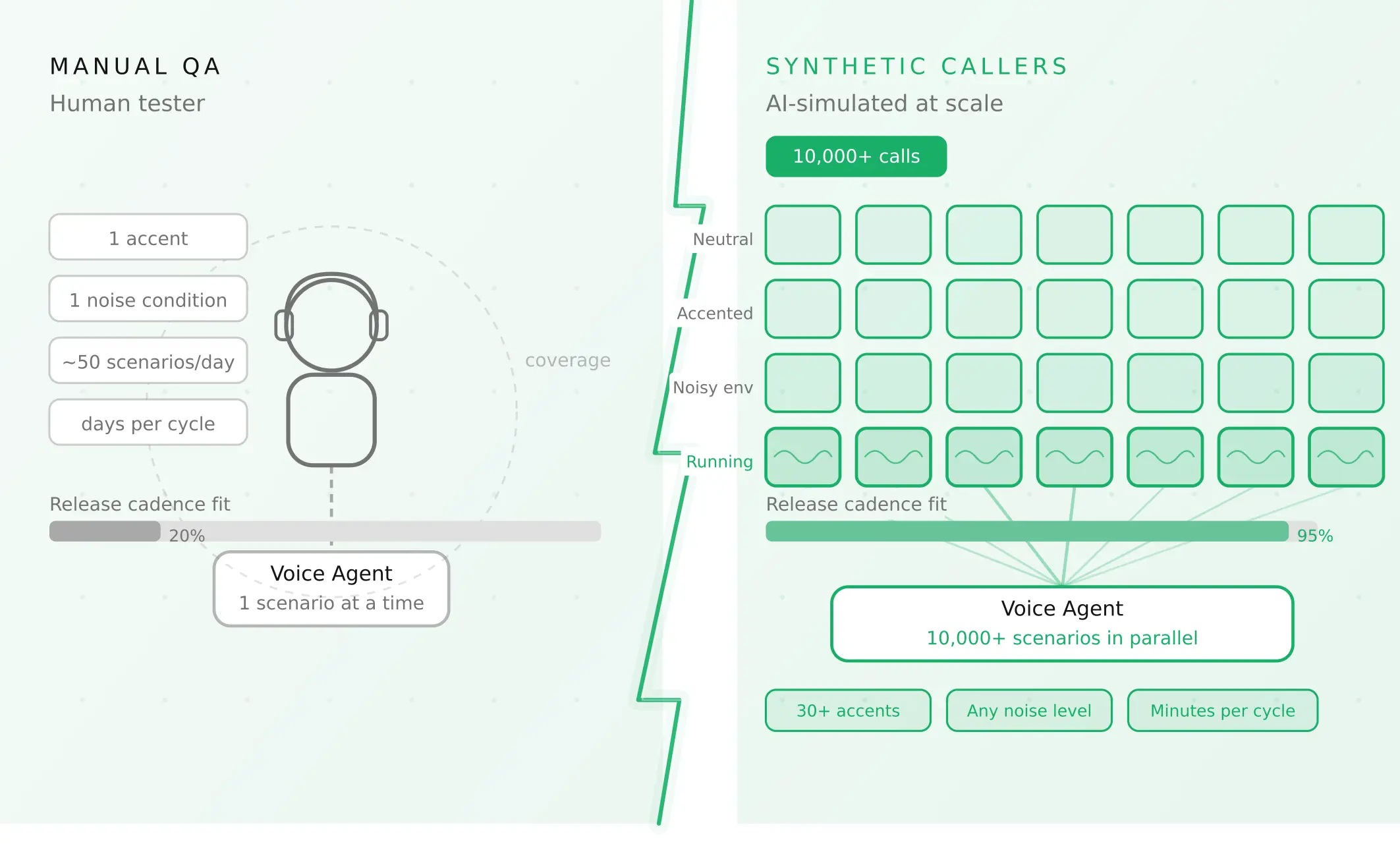
How to automate voice agent testing: synthetic callers vs manual QA
Learn how ai test automation replaces manual QA for voice agents. Compare synthetic callers vs human testers, with a 5-step framework to scale without hiring.
Read more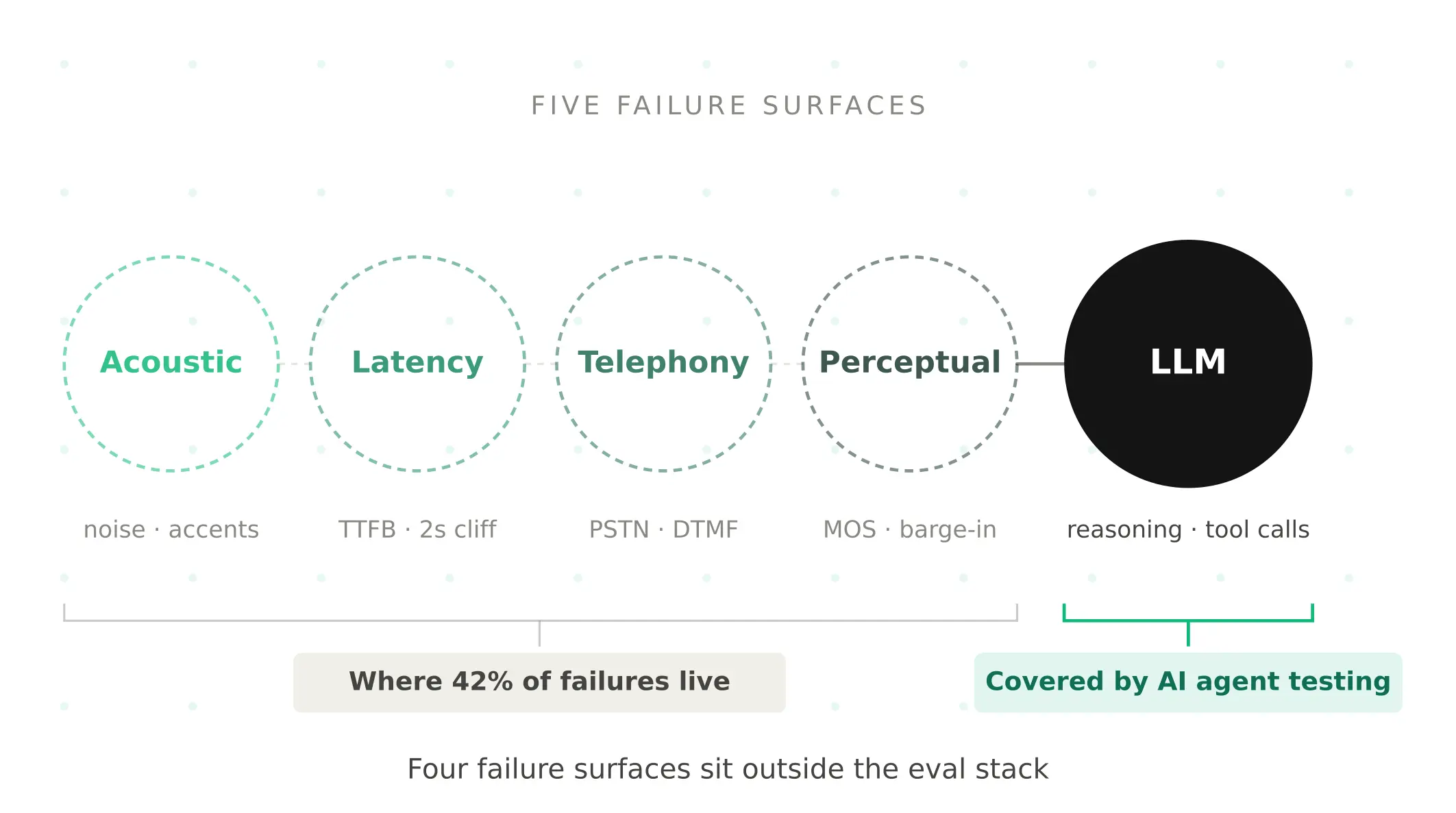
AI Agent Testing vs Voice Agent Testing: What General Tools Miss for Voice
AI agent testing measures text outputs. Voice agent testing measures behaviour through an acoustic pipeline. Five failure categories general tools miss.
Read more