Blog
Page 33 of 34
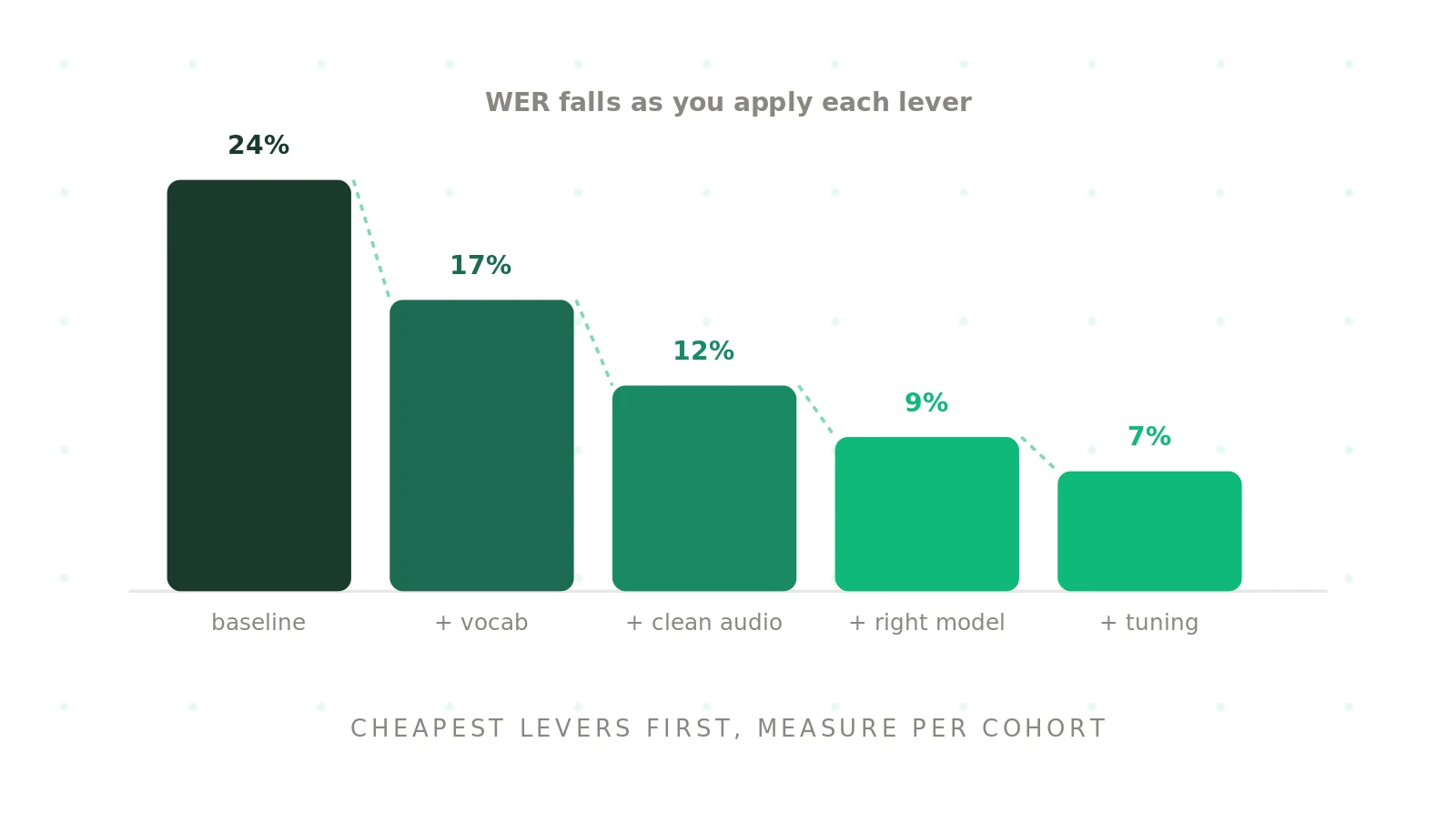
How to improve WER: reducing word error rate for voice agents
Improve WER for your voice agent with custom vocabulary, cleaner audio, model choice, and tuning. A practical guide to reducing word error rate per cohort.
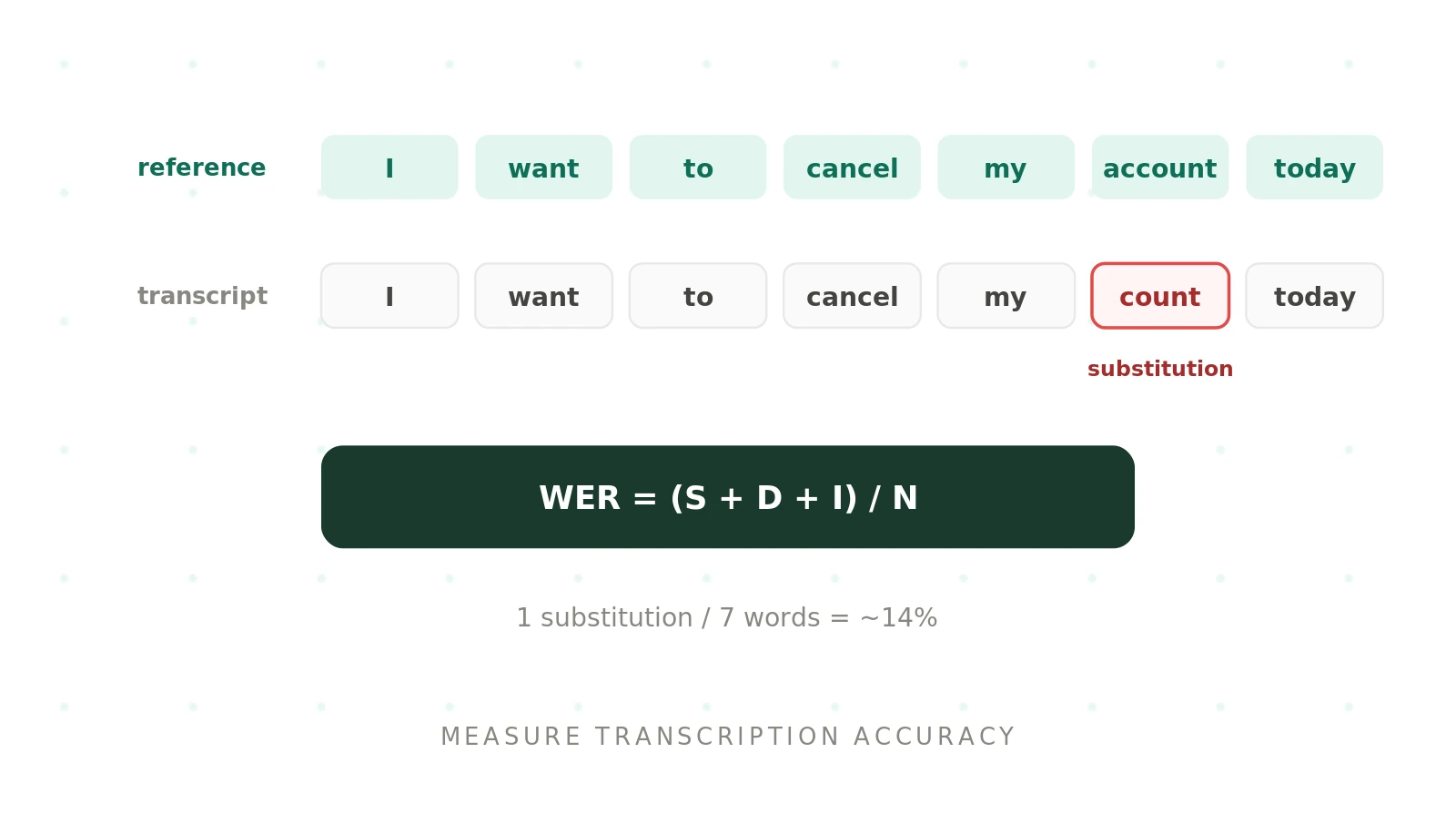
Word error rate (WER): the complete guide for voice agents
Word error rate measures speech-to-text accuracy via substitutions, deletions, and insertions over total words. Learn how to calculate it and its limits.
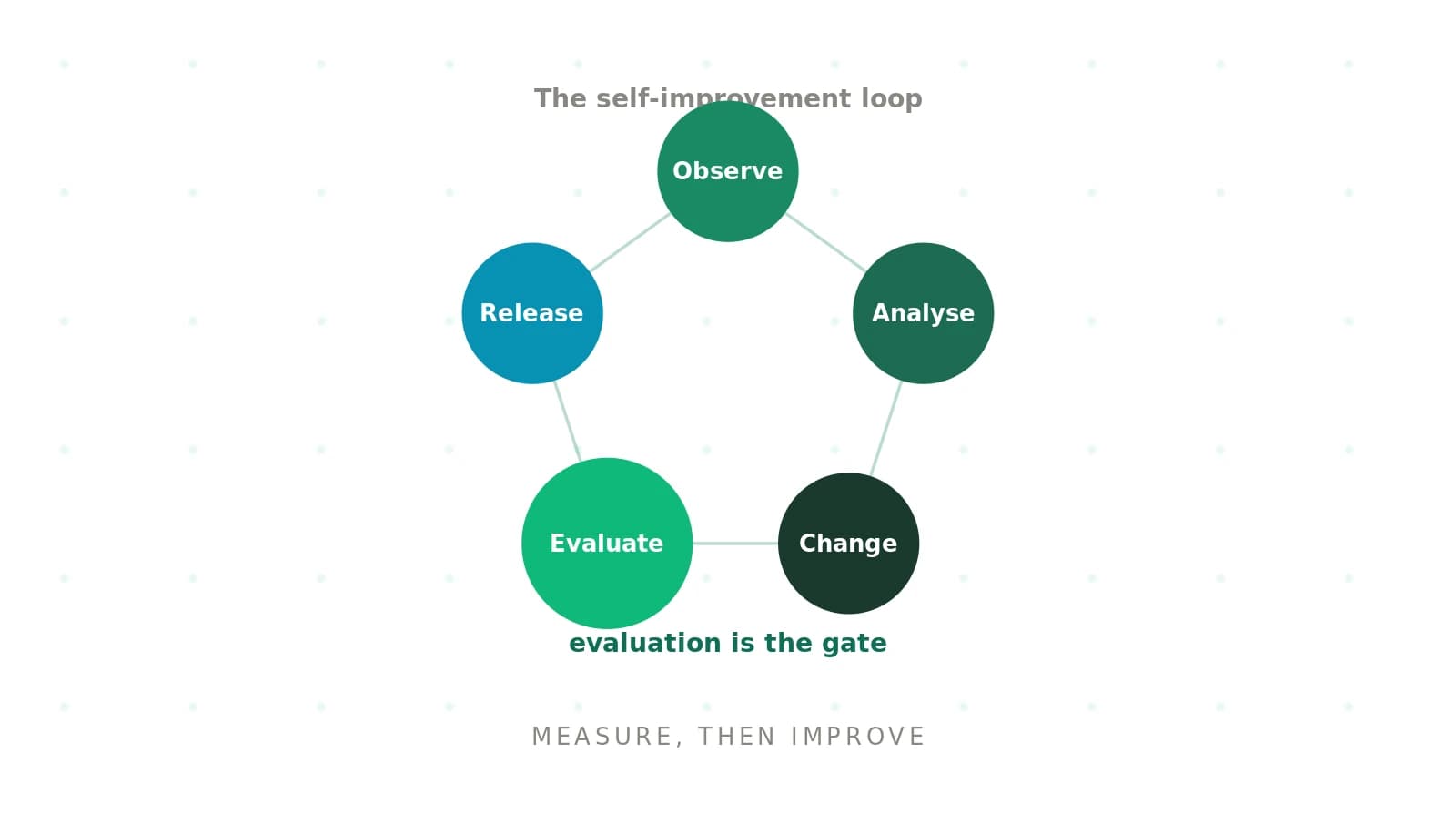
Self-improving voice agents: how feedback loops make agents better
Self-improving voice agents get better from production feedback. Learn how the loop works, where it differs from retraining, and how to keep it safe.
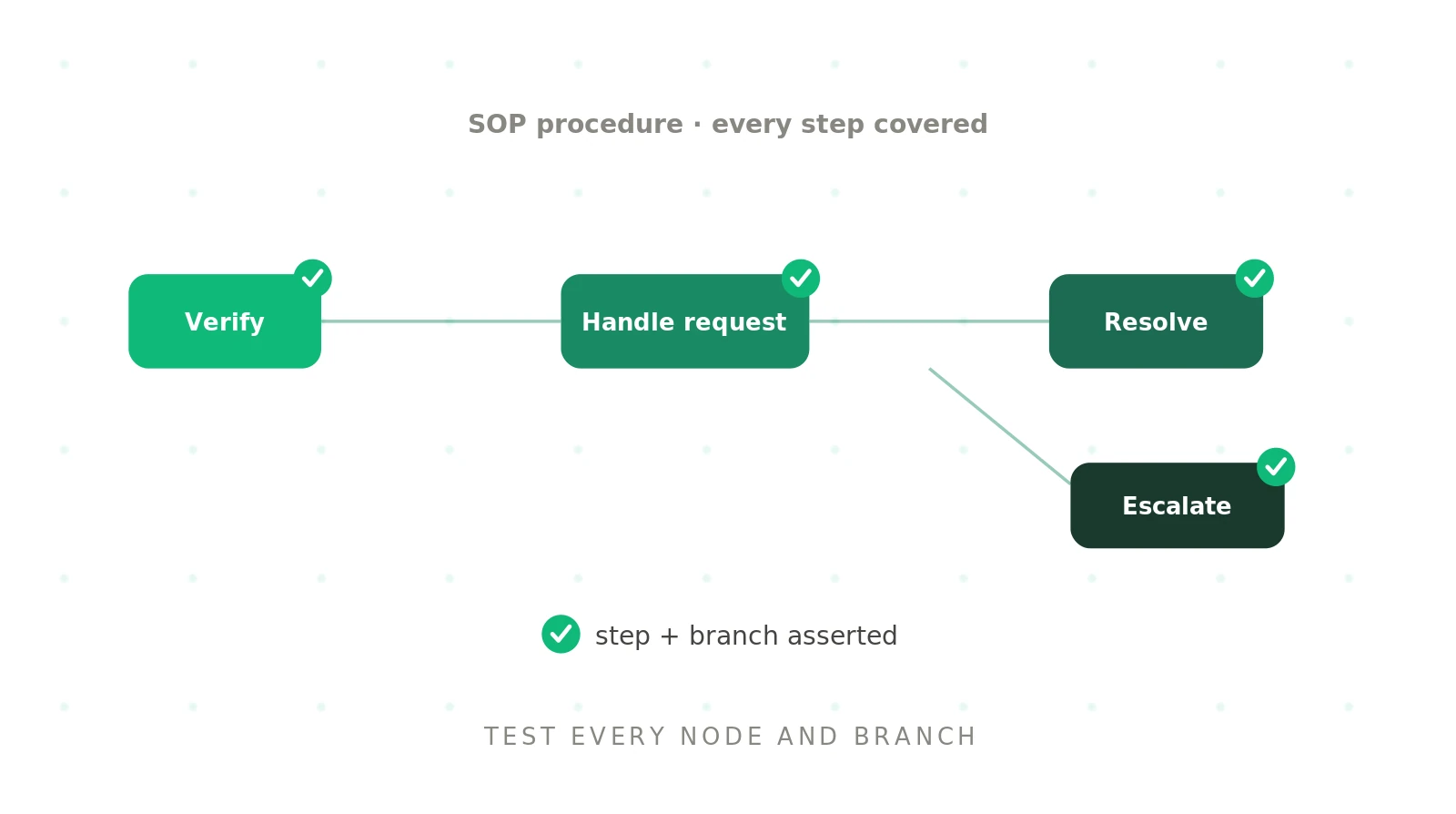
Testing SOP-based voice agents: how to verify procedure adherence
Testing SOP-based voice agents means verifying every step and branch of the procedure. Learn SOP adherence testing, step coverage, and metrics.
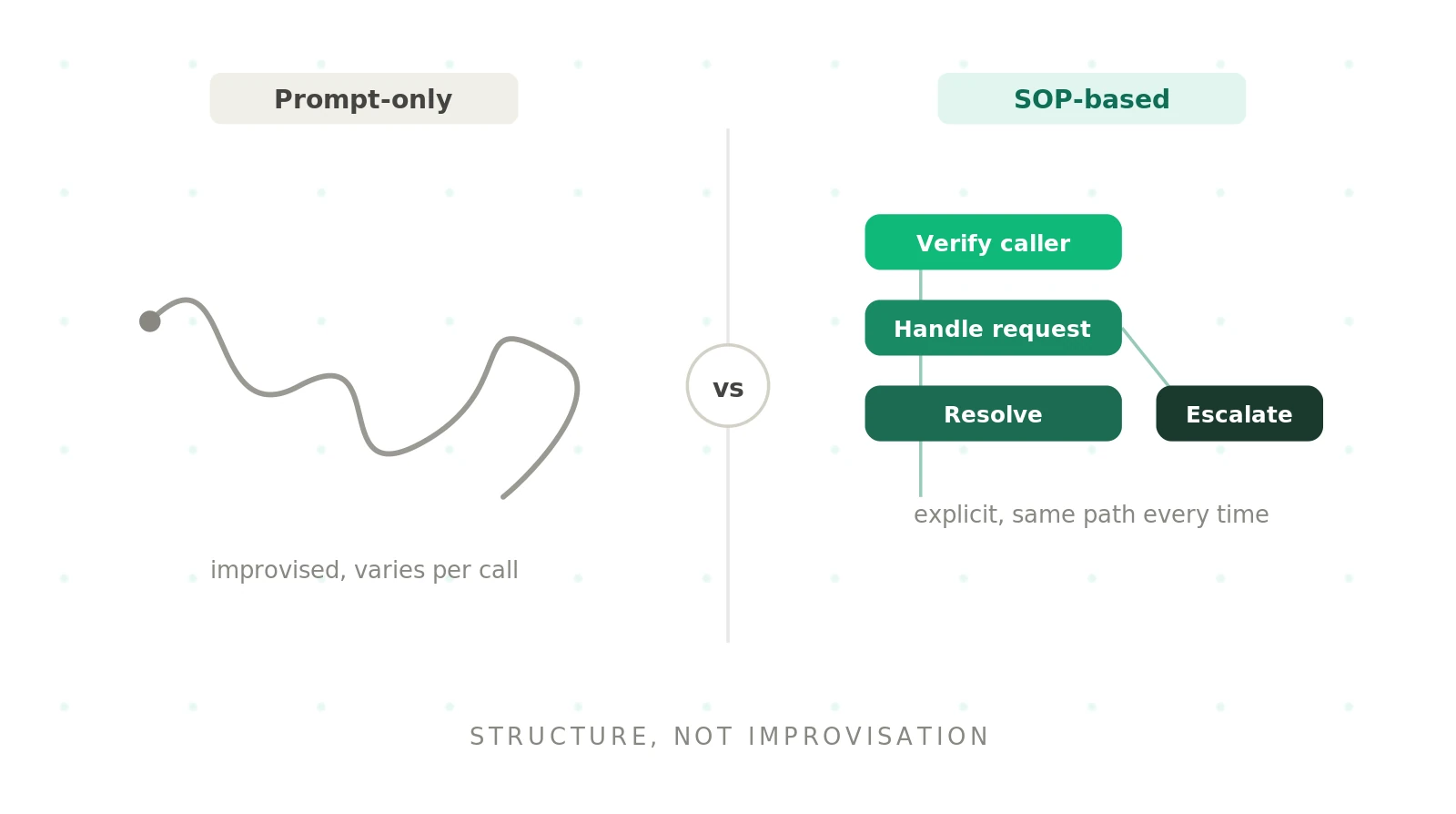
SOP-based voice agents: how standard operating procedures make agents reliable
SOP-based voice agents follow standard operating procedures instead of relying on a prompt. Learn how SOPs improve reliability, control, and testability.
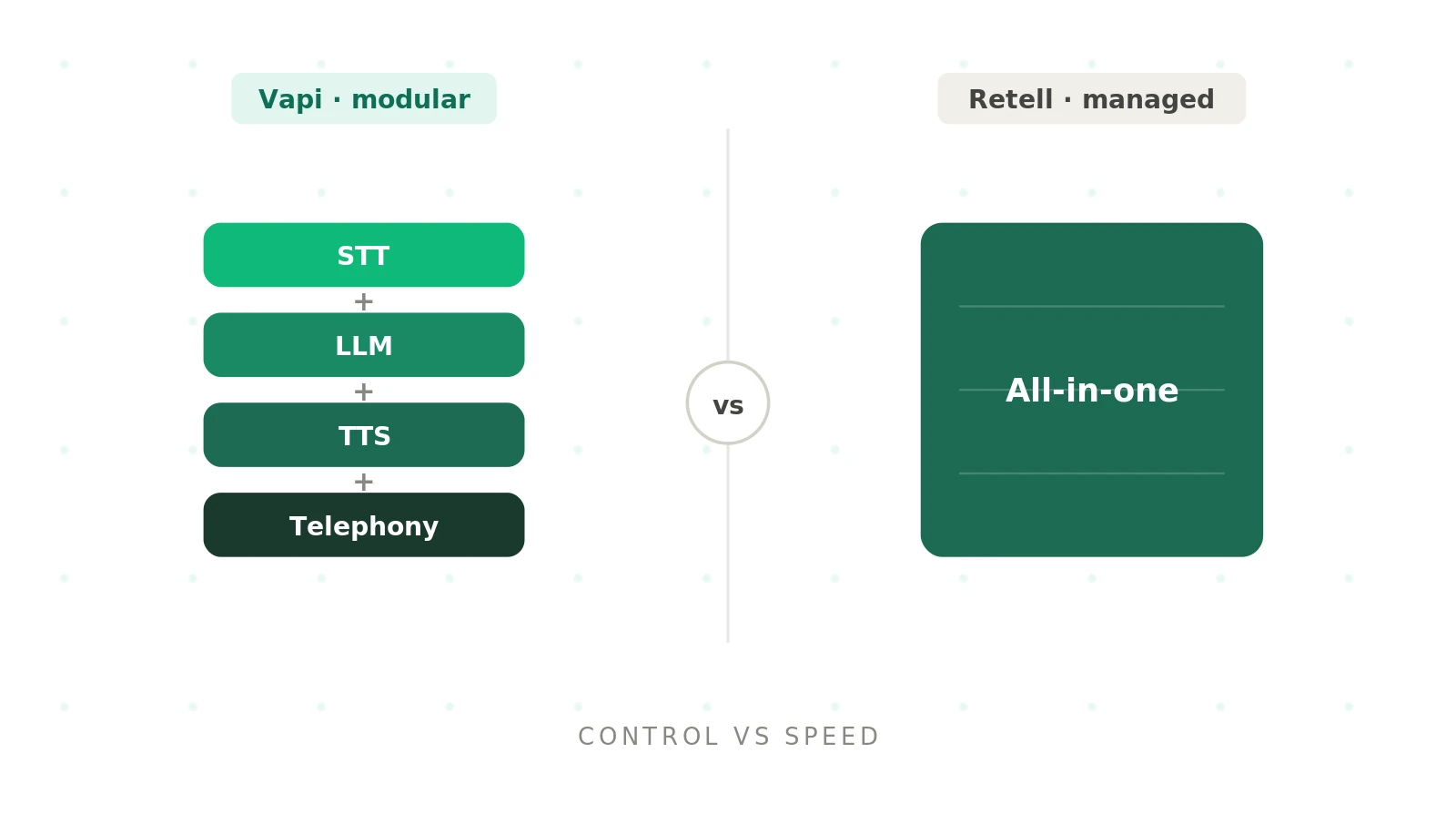
Vapi vs Retell: which voice agent platform should you choose?
Vapi vs Retell compared on architecture, pricing, latency, telephony, and scale. A clear decision framework for choosing a voice agent platform in 2026.
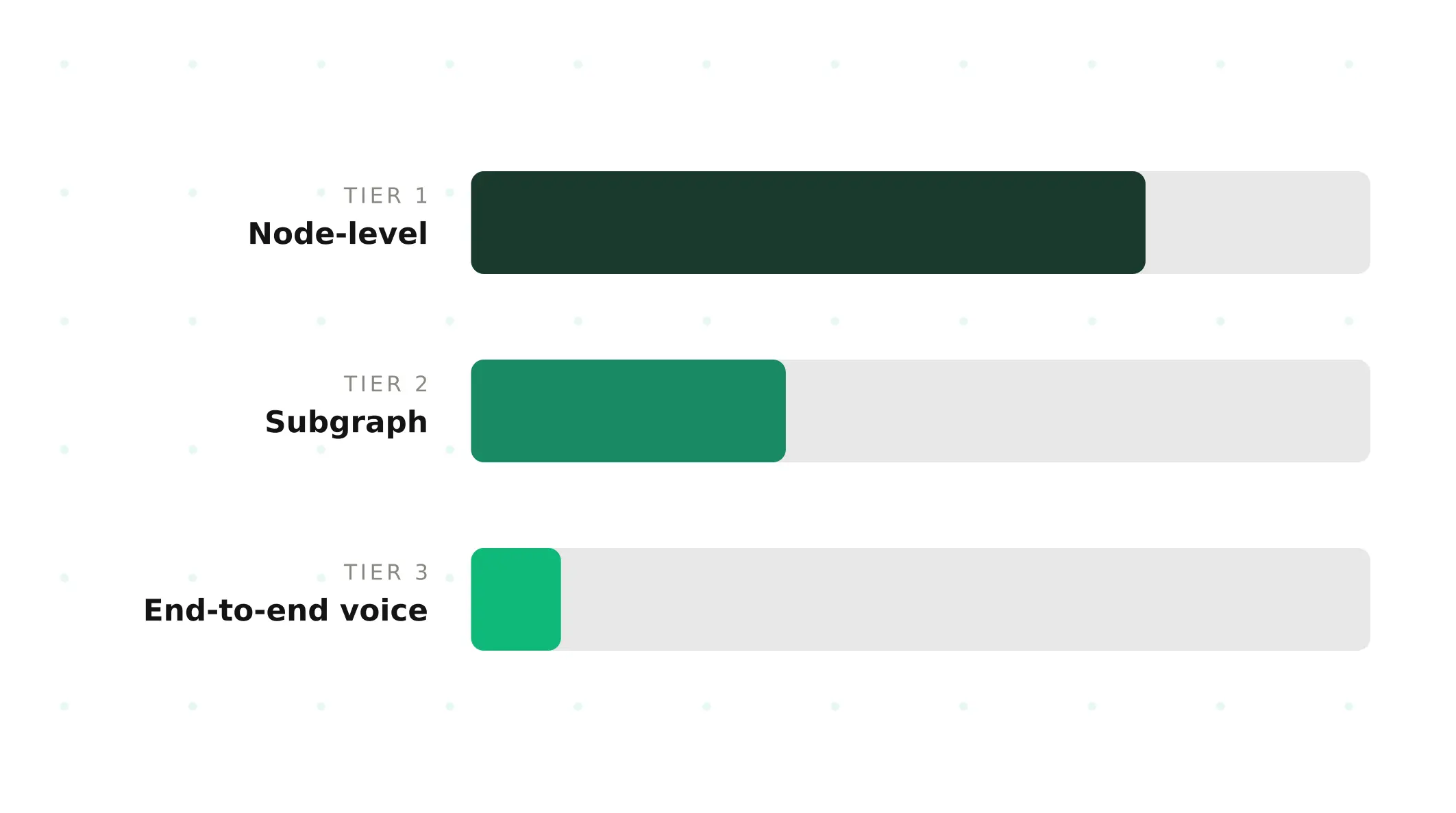
Testing Graph-Based Voice Agents: The Three-Tier Model
Testing graph-based voice agents requires three tiers — node, subgraph, end-to-end voice. Most teams stop at tier one. Here's what production-grade looks like.
Should You Build a Graph-Based or Prompt-Based Voice Agent?
Graph-based vs prompt-based voice agents: a decision framework. Five questions, a clear matrix, and three hybrid patterns most teams actually ship.
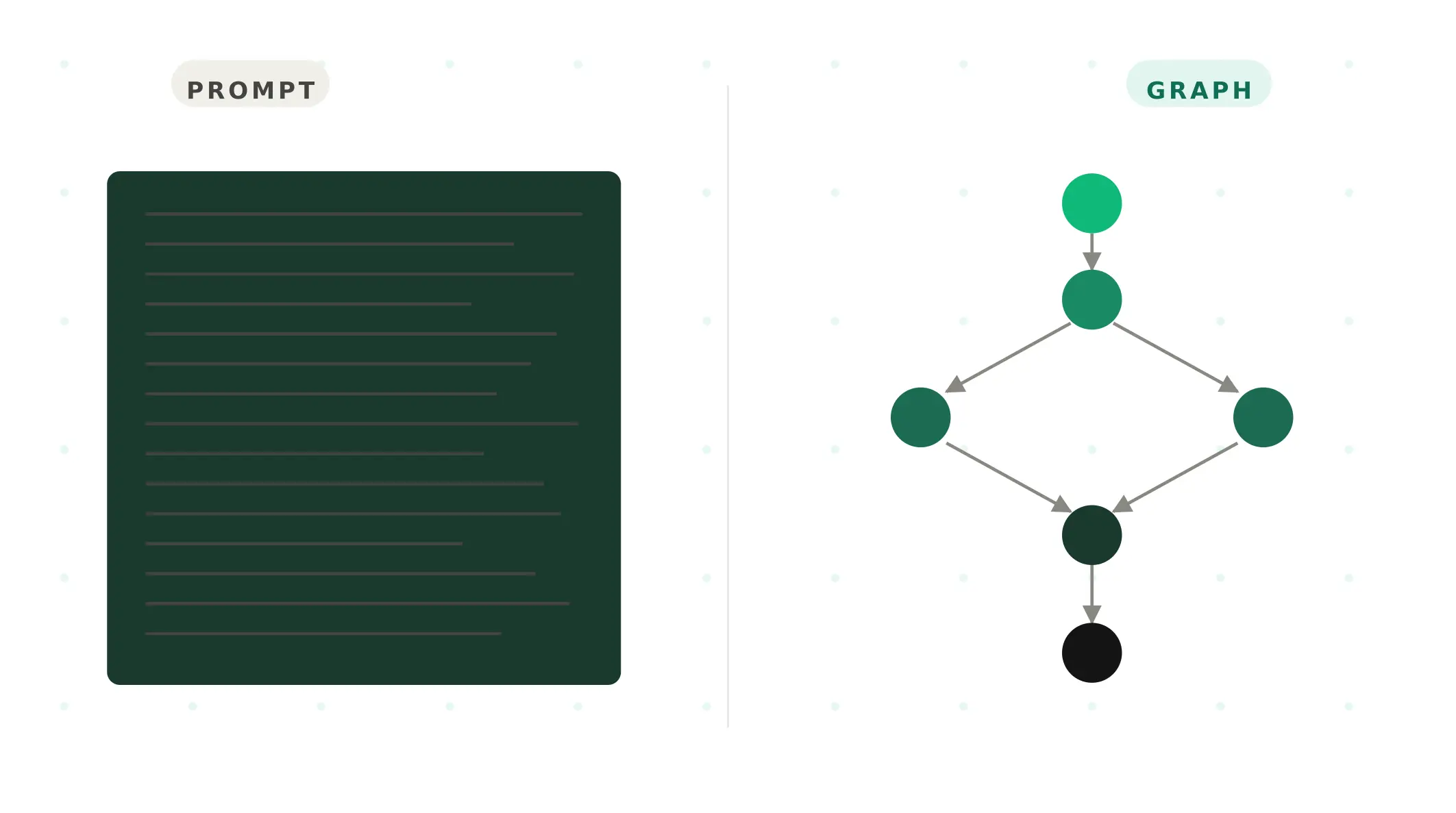
Why Production Voice Agents Are Becoming Graphs, Not Prompts
Graph-based voice agents externalise control flow that prompt-based agents trust the LLM to handle. Why this is the architecture winning production deployments.