Blog
Page 19 of 22
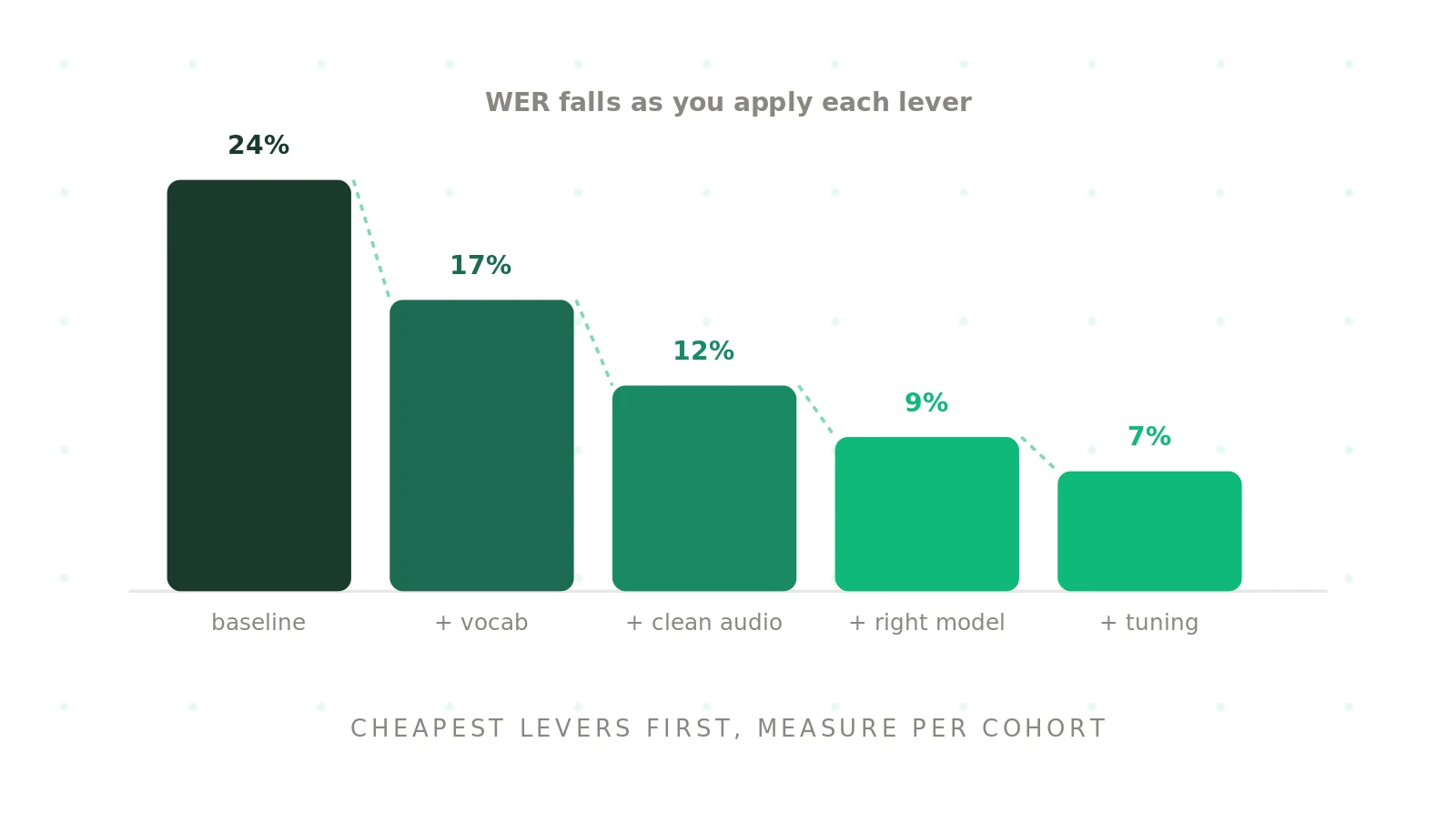
How to improve WER: reducing word error rate for voice agents
Improve WER for your voice agent with custom vocabulary, cleaner audio, model choice, and tuning. A practical guide to reducing word error rate per cohort.
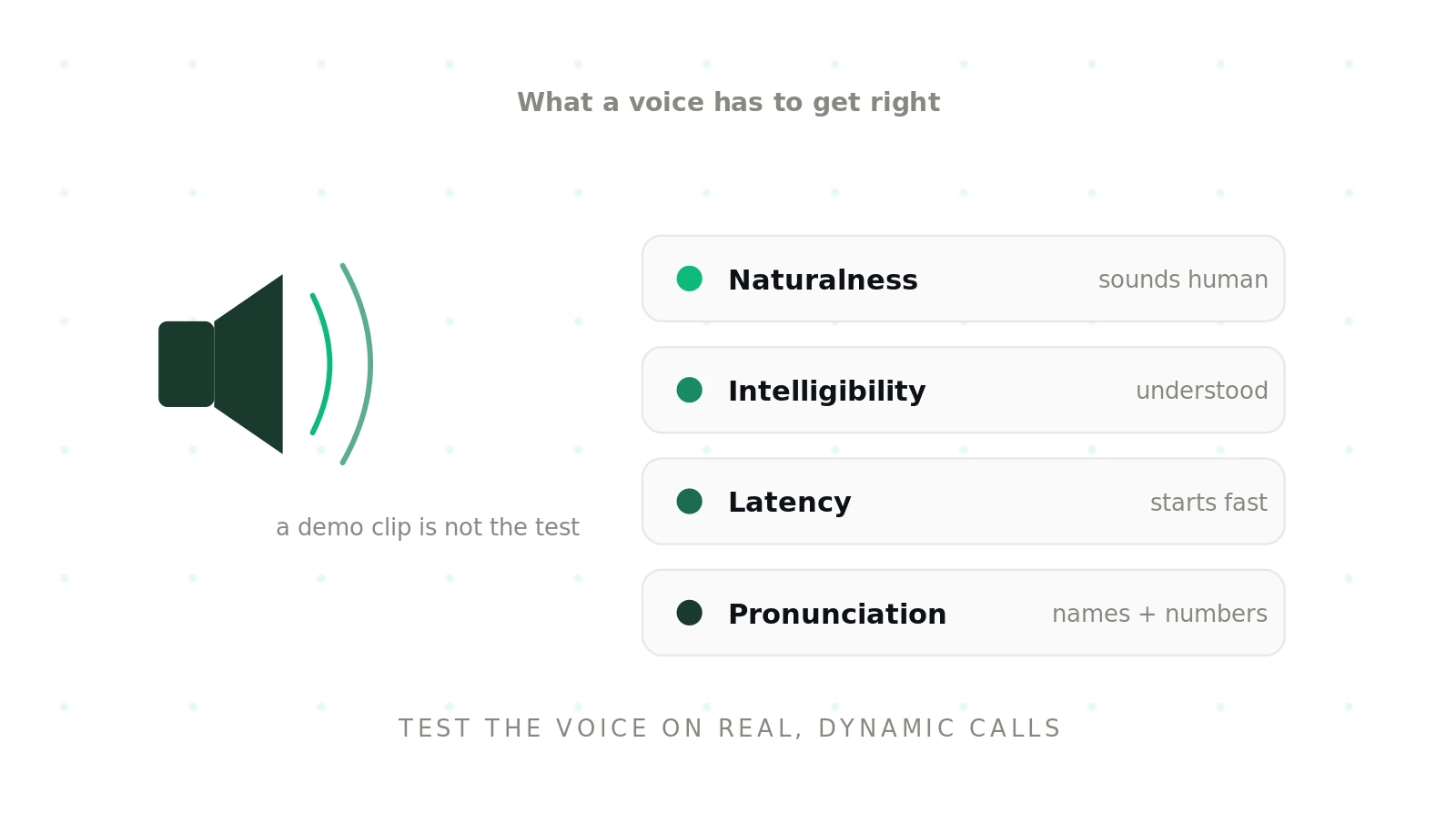
TTS evaluation: how to test text-to-speech for voice agents
TTS evaluation measures text-to-speech naturalness, intelligibility, latency, and pronunciation. Learn the metrics, MOS, and how to test a voice.
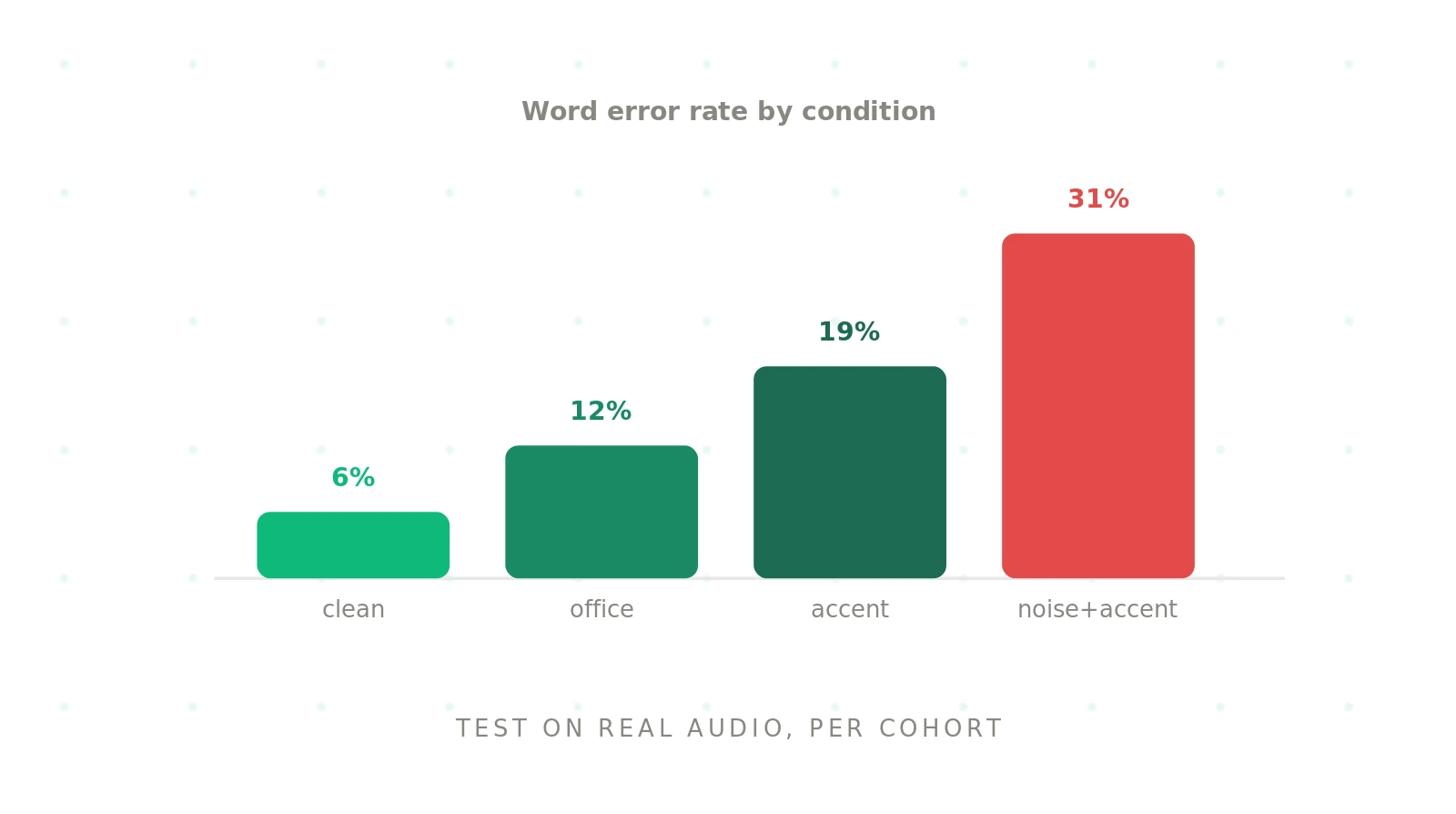
STT evaluation: how to test speech-to-text for voice agents
STT evaluation measures speech-to-text accuracy under real conditions: accents, noise, and jargon. Learn the metrics, the method, and what benchmarks miss.
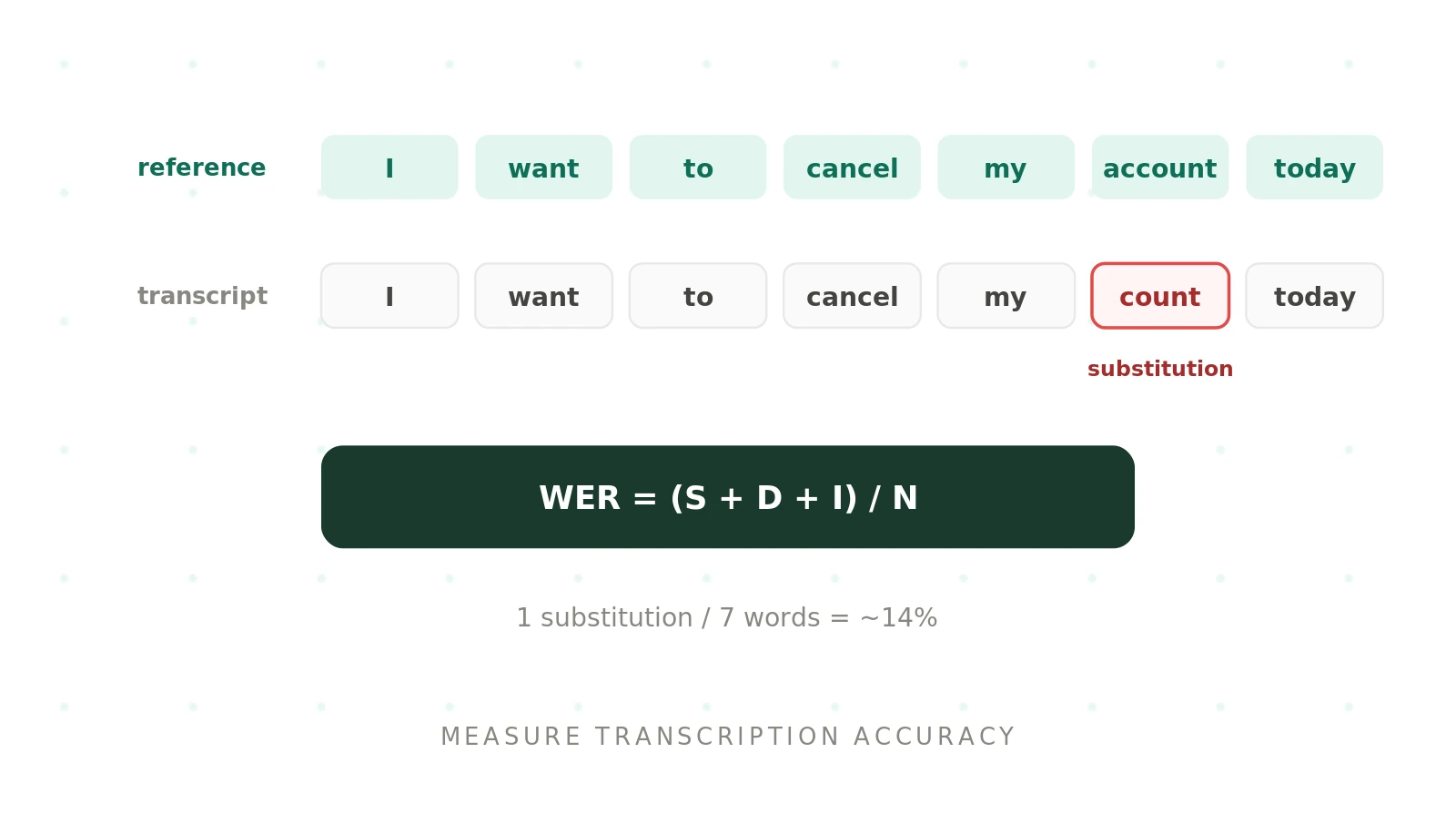
Word error rate (WER): the complete guide for voice agents
Word error rate measures speech-to-text accuracy via substitutions, deletions, and insertions over total words. Learn how to calculate it and its limits.
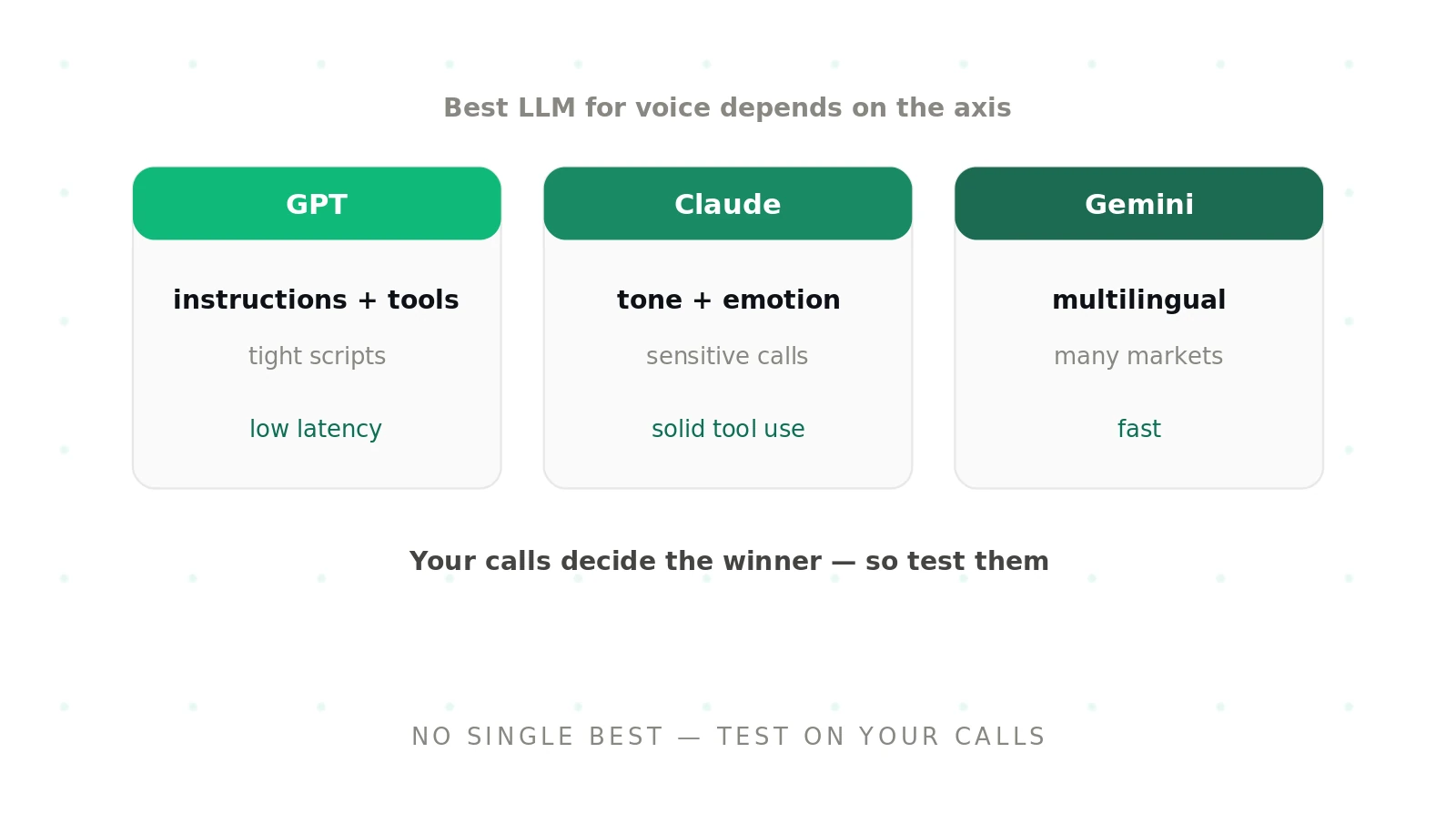
Best LLM for voice agents: how to choose
The best LLM for voice depends on latency, instruction following, and tool calling. Compare GPT, Claude, and Gemini, and learn how to choose.
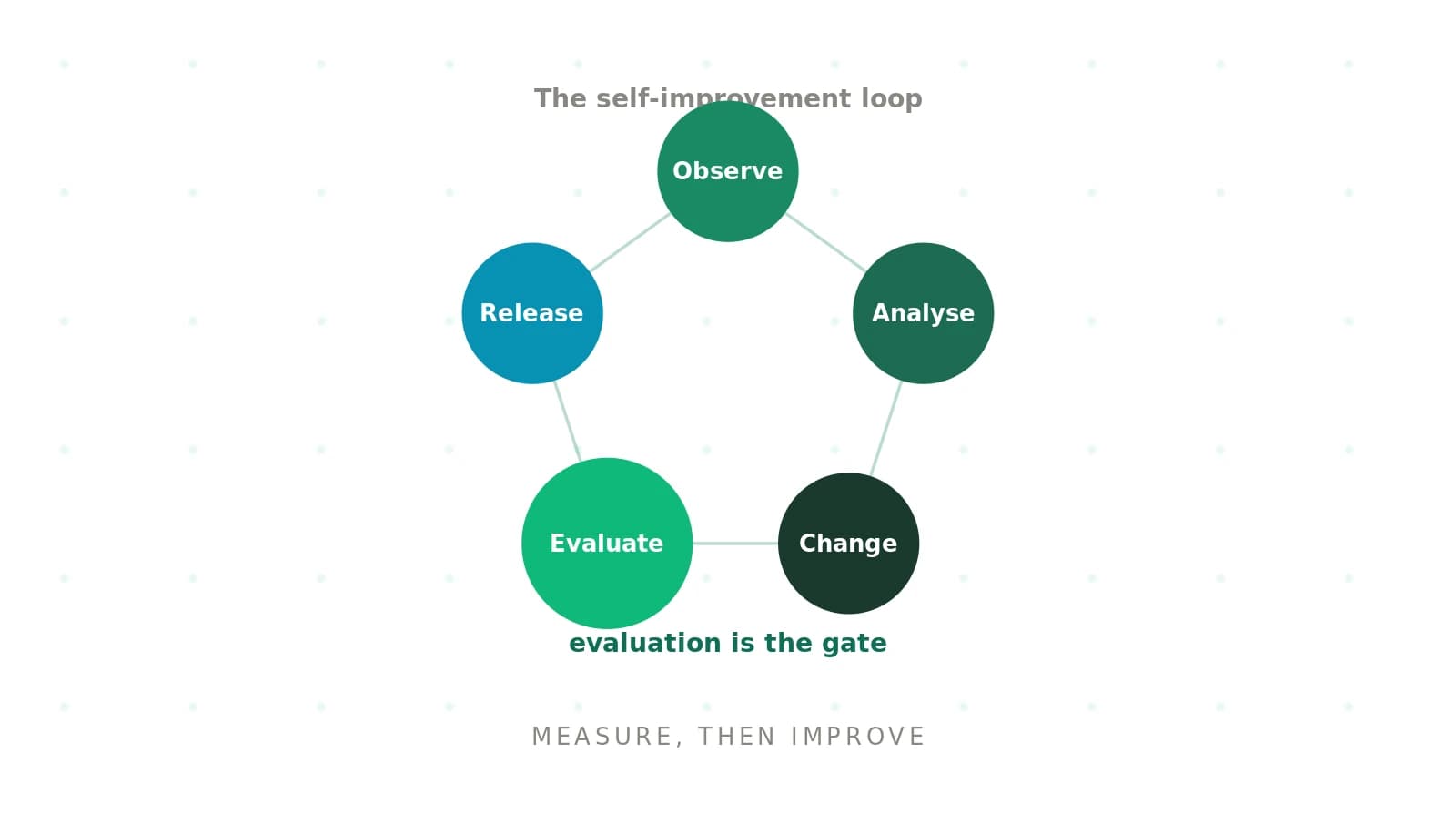
Self-improving voice agents: how feedback loops make agents better
Self-improving voice agents get better from production feedback. Learn how the loop works, where it differs from retraining, and how to keep it safe.
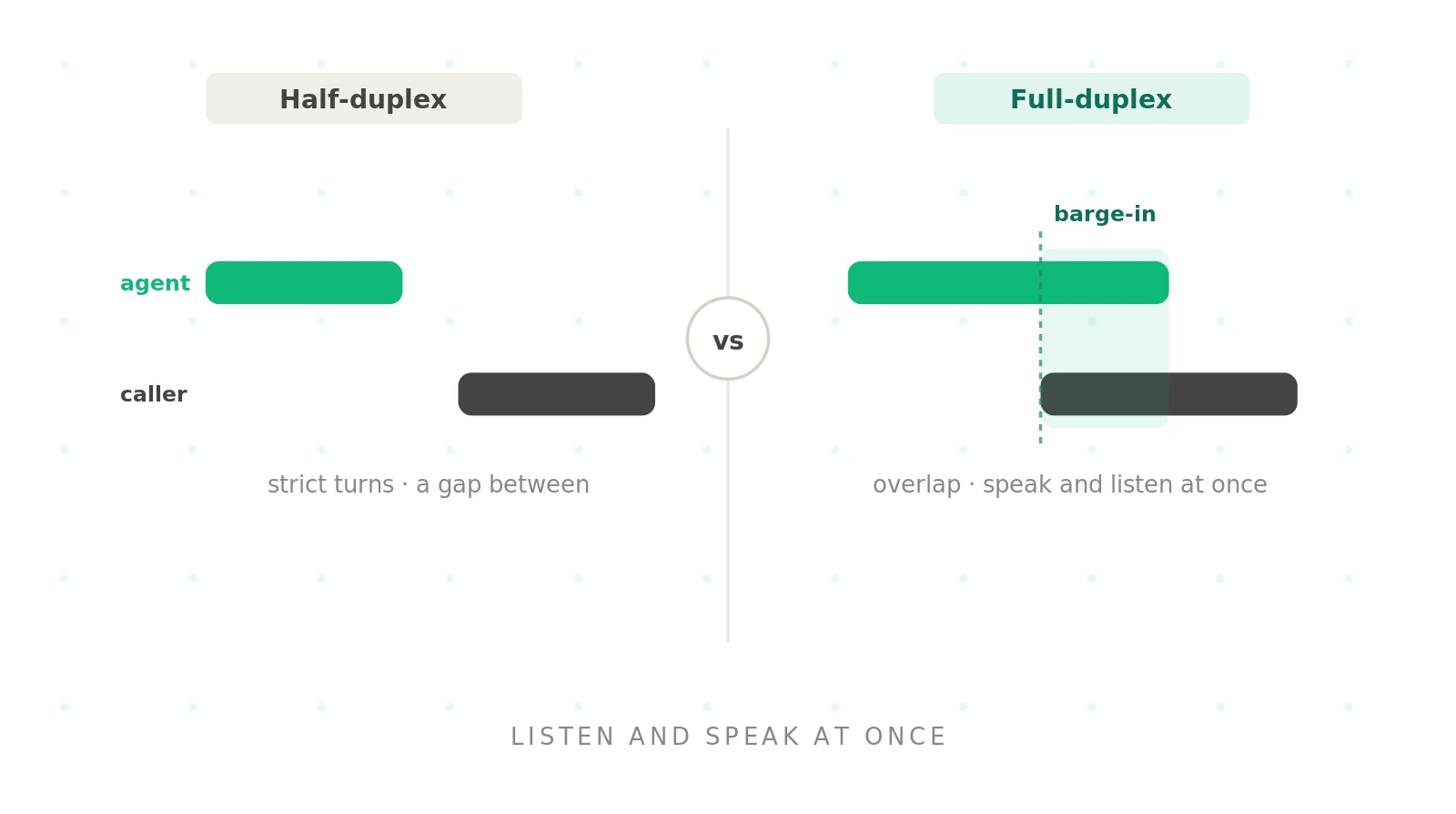
Full-duplex voice agents: how simultaneous speech changes voice AI
Full-duplex voice agents listen and speak at once, enabling barge-in and interruptions. Learn how they differ from half-duplex and how to test them.
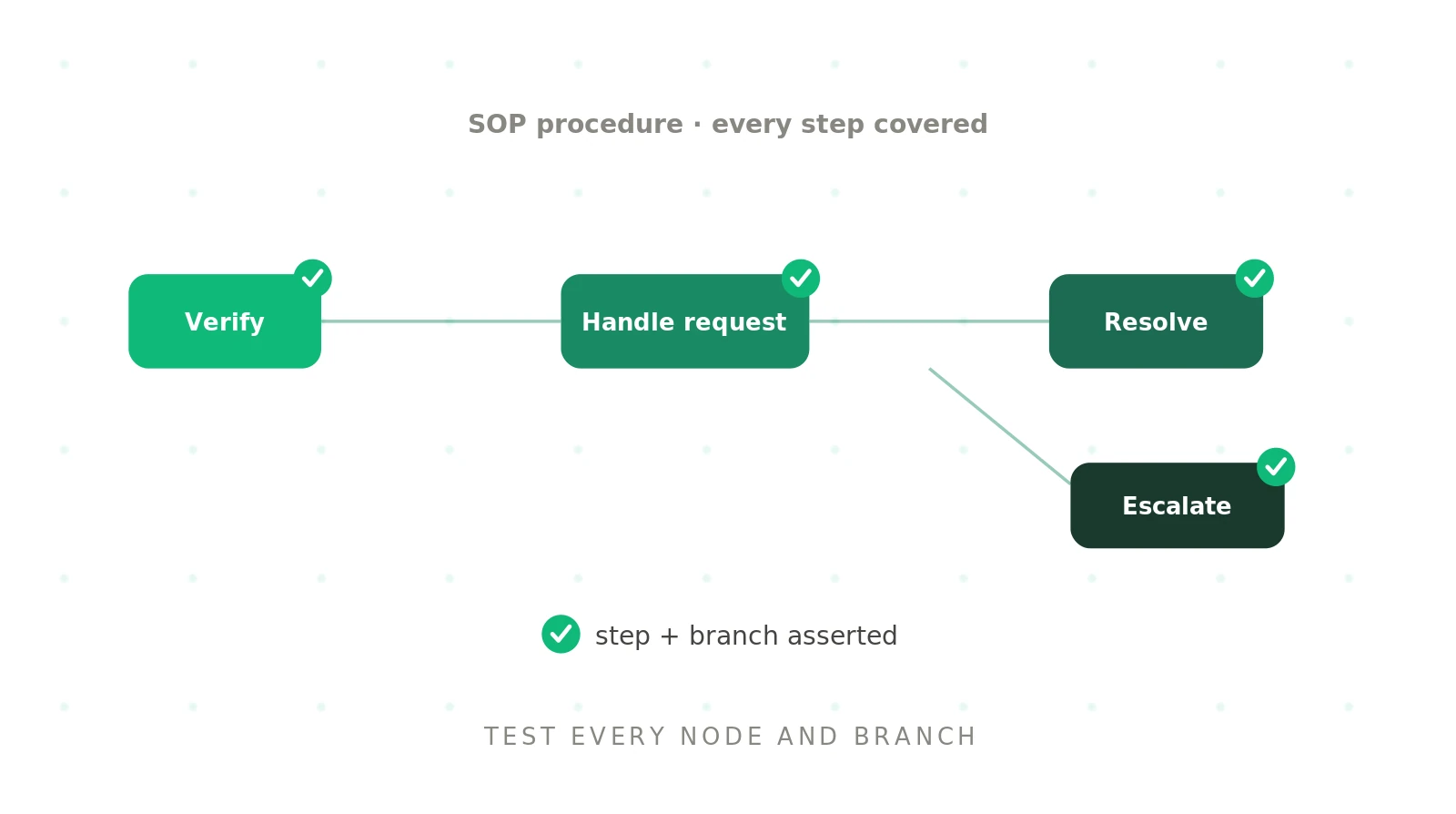
Testing SOP-based voice agents: how to verify procedure adherence
Testing SOP-based voice agents means verifying every step and branch of the procedure. Learn SOP adherence testing, step coverage, and metrics.
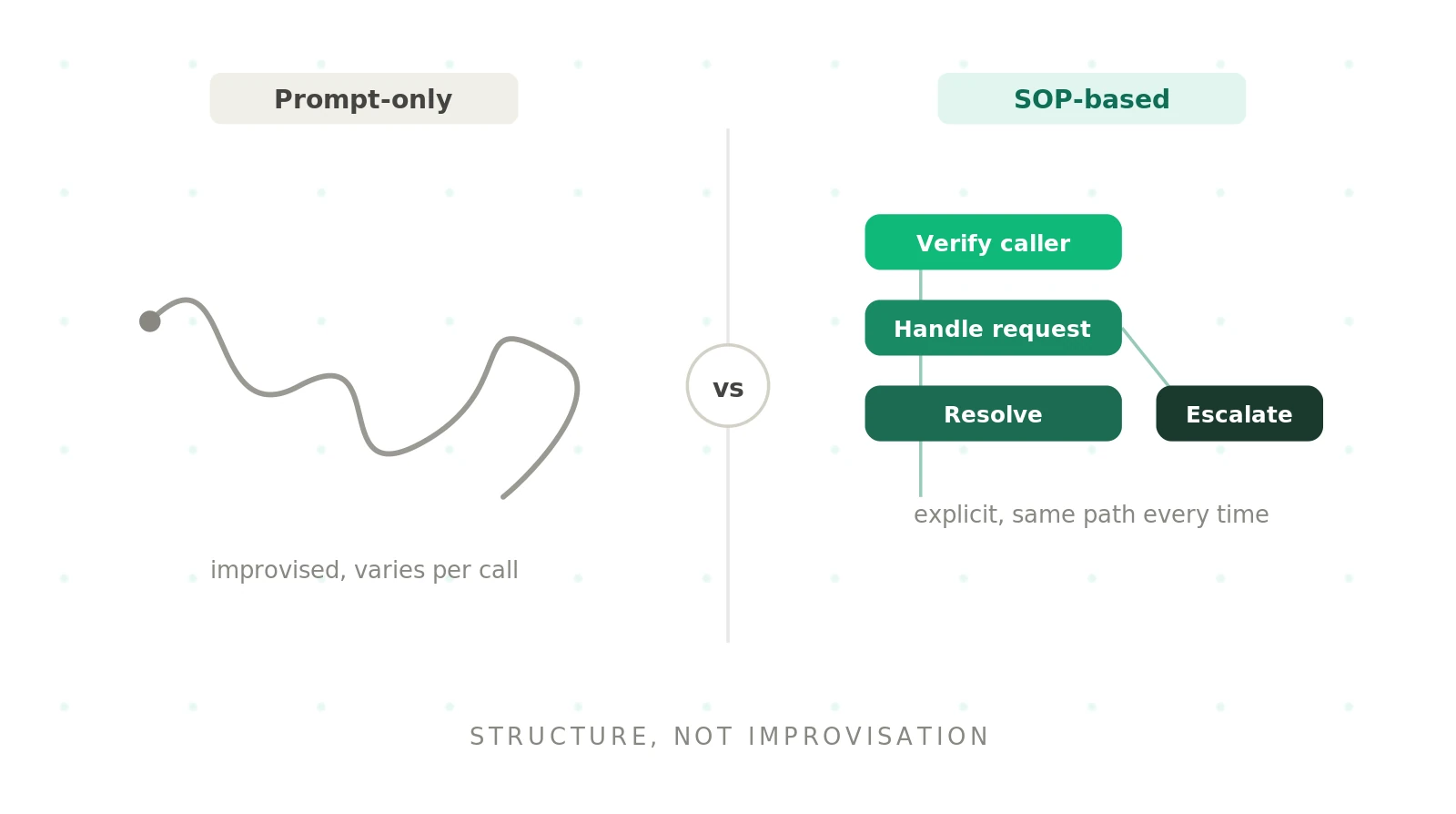
SOP-based voice agents: how standard operating procedures make agents reliable
SOP-based voice agents follow standard operating procedures instead of relying on a prompt. Learn how SOPs improve reliability, control, and testability.