Blog
Page 7 of 32
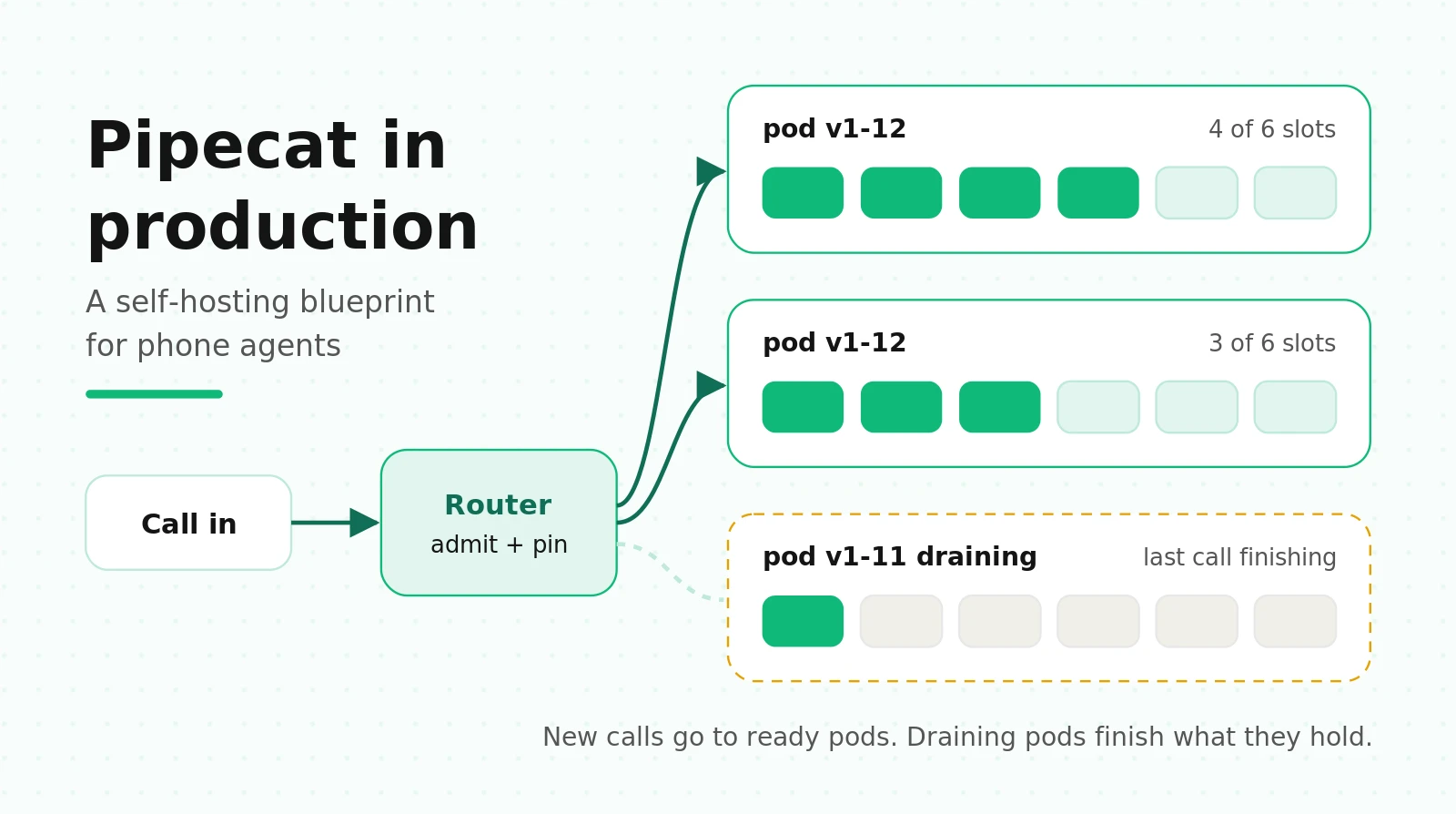
Pipecat Deployment in Production: A Self-Hosting Blueprint for Phone Agents
Pipecat deployment blueprint for phone agents: process model, Docker and Kubernetes setup, drain-safe deploys, capacity math, and Cloud vs self-host cost.
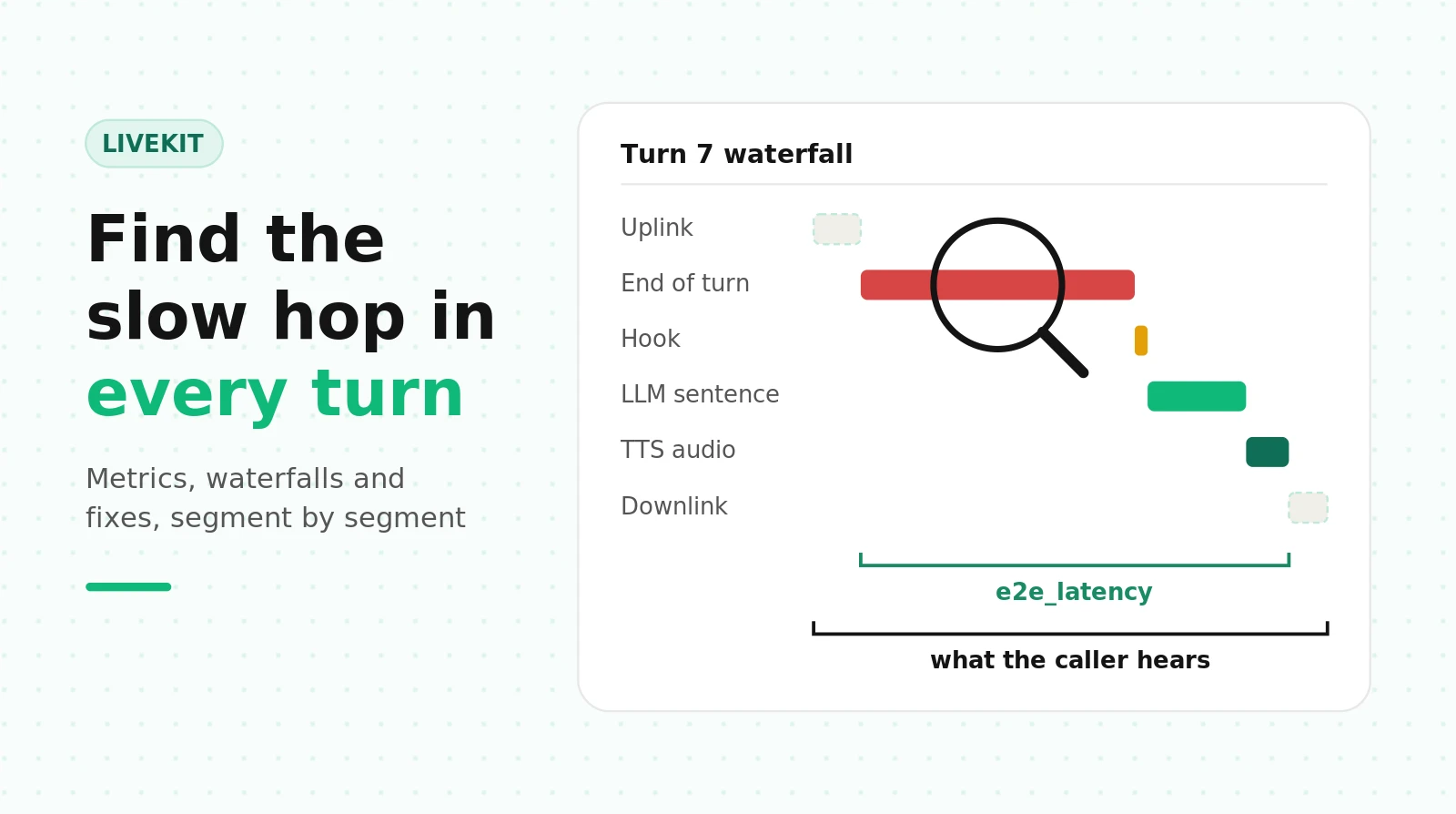
Debugging a LiveKit Latency Issue End to End: Metrics, Waterfalls and Fixes
Fix a LiveKit latency issue: map every metric to a hop, build p50/p95 waterfalls, find what e2e_latency misses, and apply the right fix per segment.
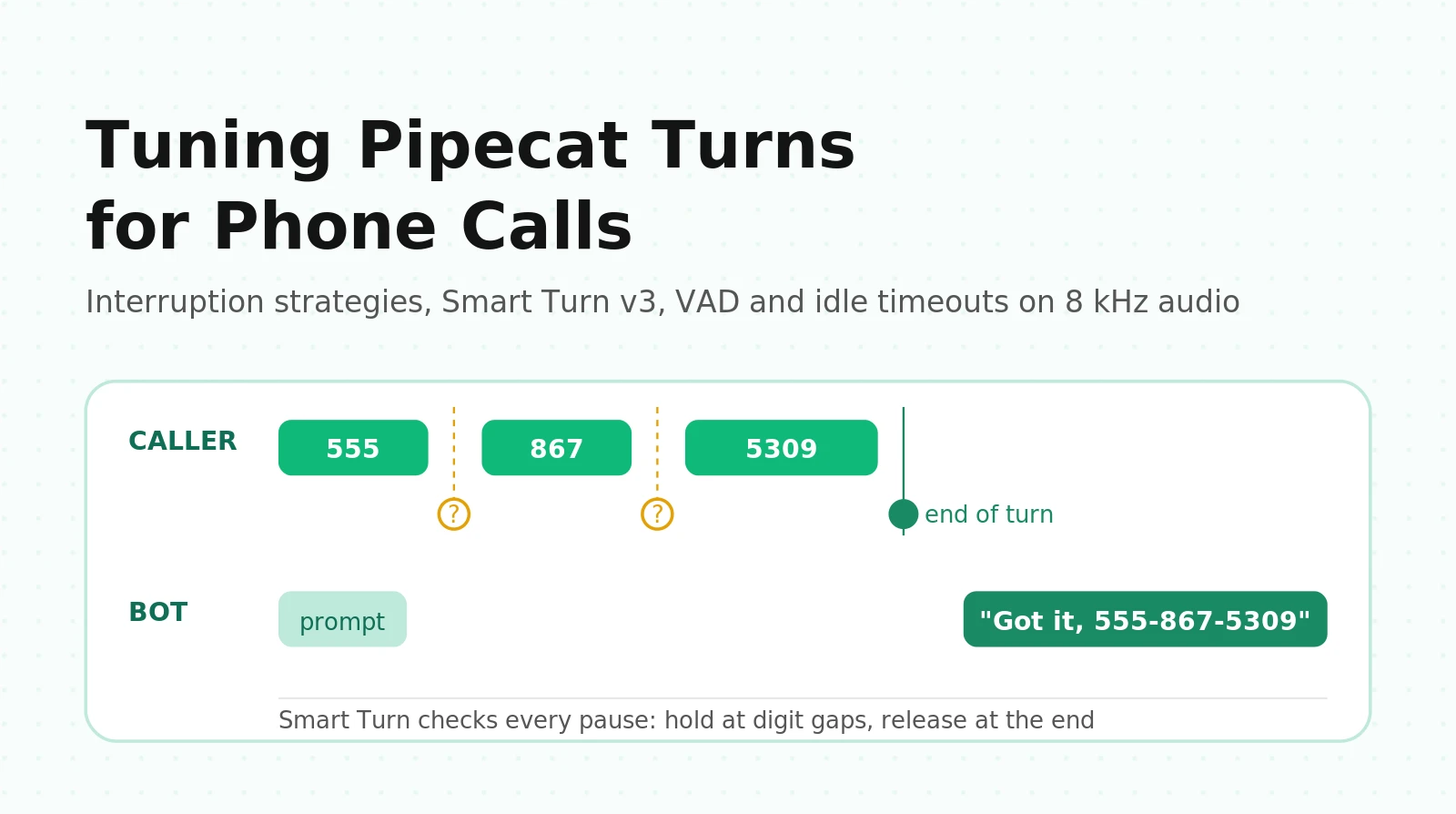
Pipecat Interruption Strategy and Smart Turn v3: Settings That Work on Phone Audio
Configure Pipecat interruption strategies, Smart Turn v3, Silero VAD and idle timeouts for 8 kHz phone calls, with latency math and a test plan.
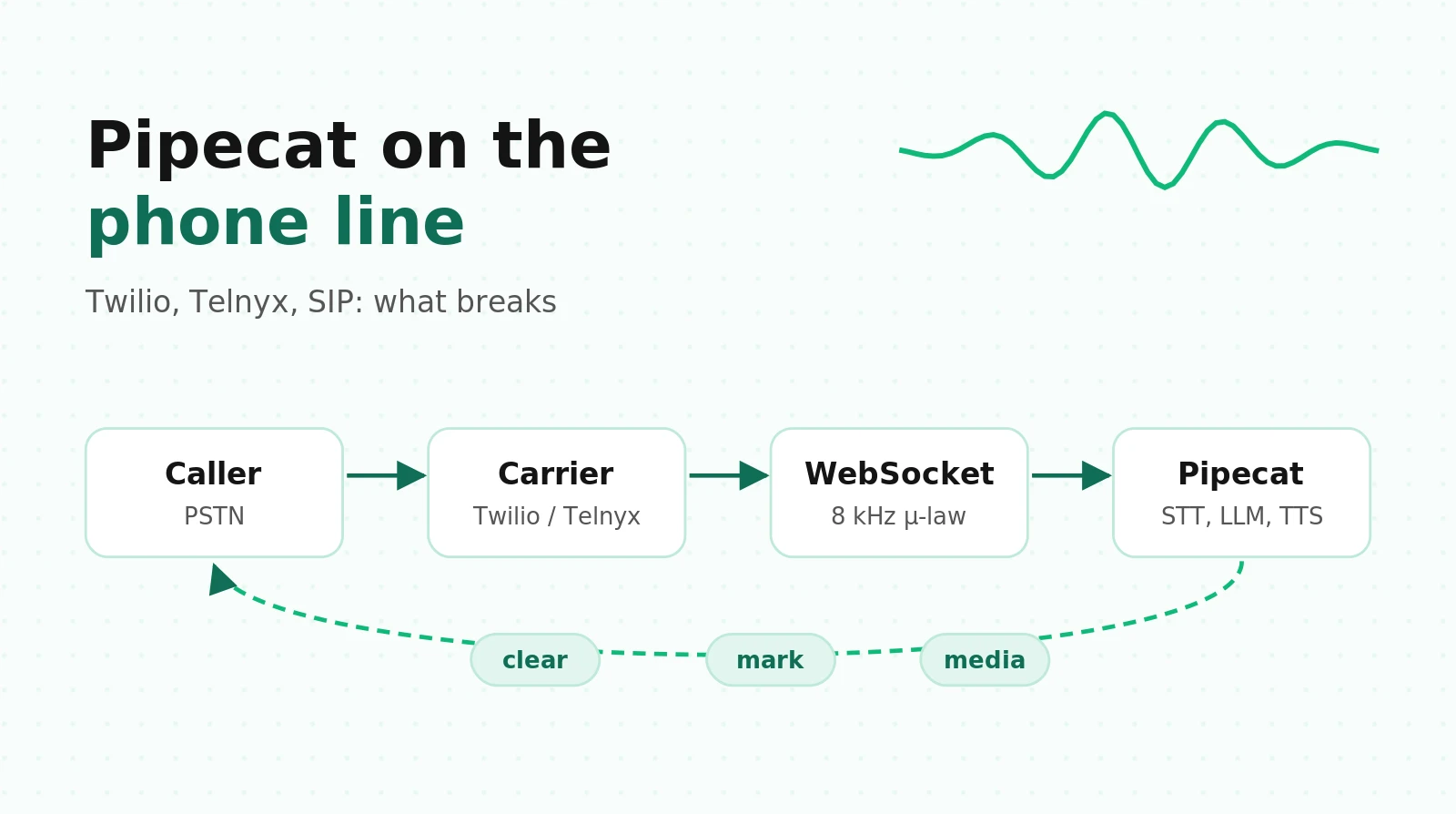
Pipecat Twilio Integration (and Telnyx): Media Streams vs SIP, Audio Formats, and the Failures to Test
Pipecat Twilio integration from the wire up: Media Streams vs SIP, Telnyx traps, 8 kHz resampling, clear and mark events, hang-ups, costs, test matrix.
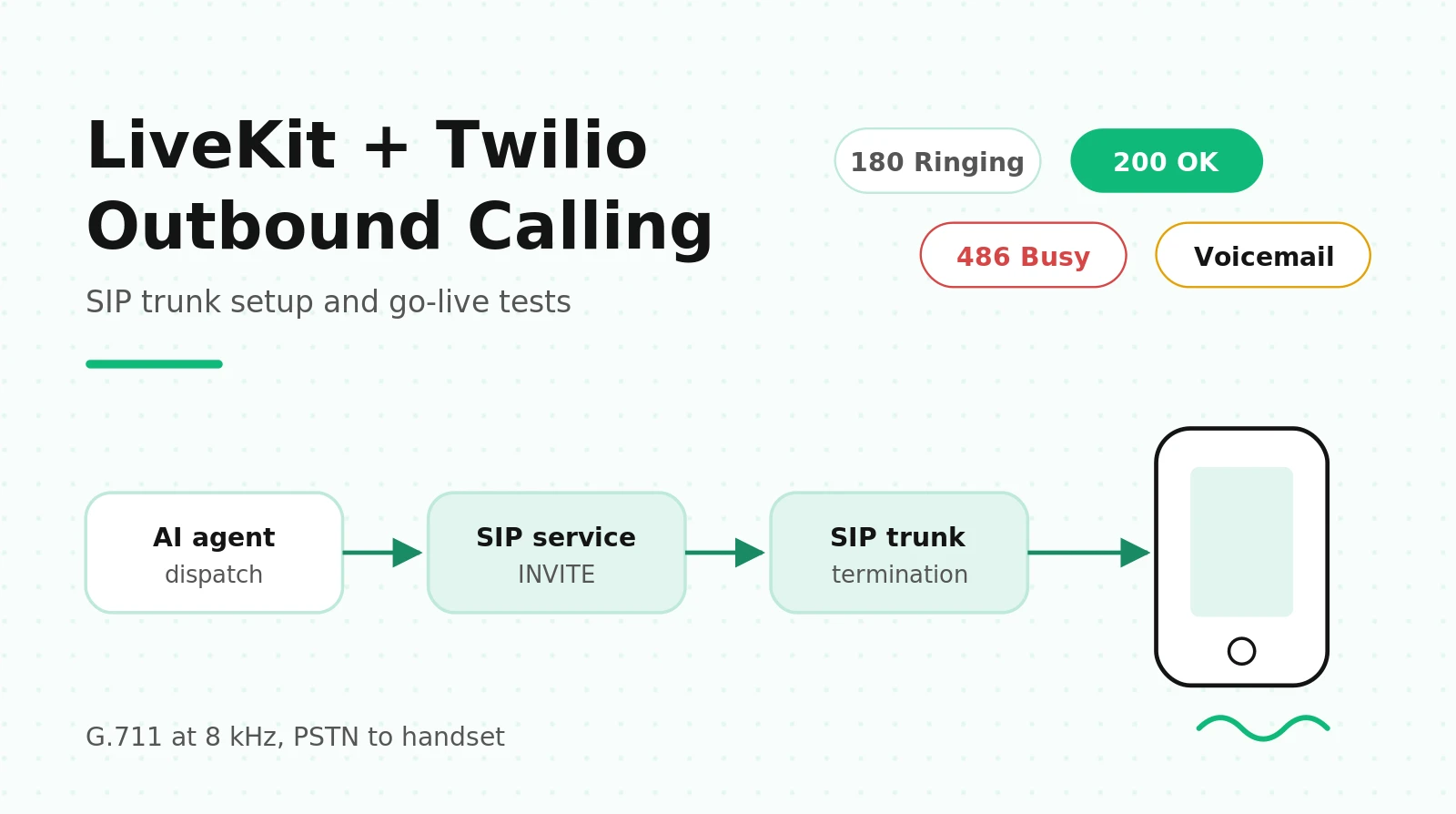
LiveKit + Twilio Outbound Calling: SIP Trunk Setup and What to Test Before Go-Live
LiveKit Twilio outbound call setup, leg by leg: Elastic SIP termination, CreateSIPParticipant, SIP codes, AMD, end-call, cost math, and go-live tests.
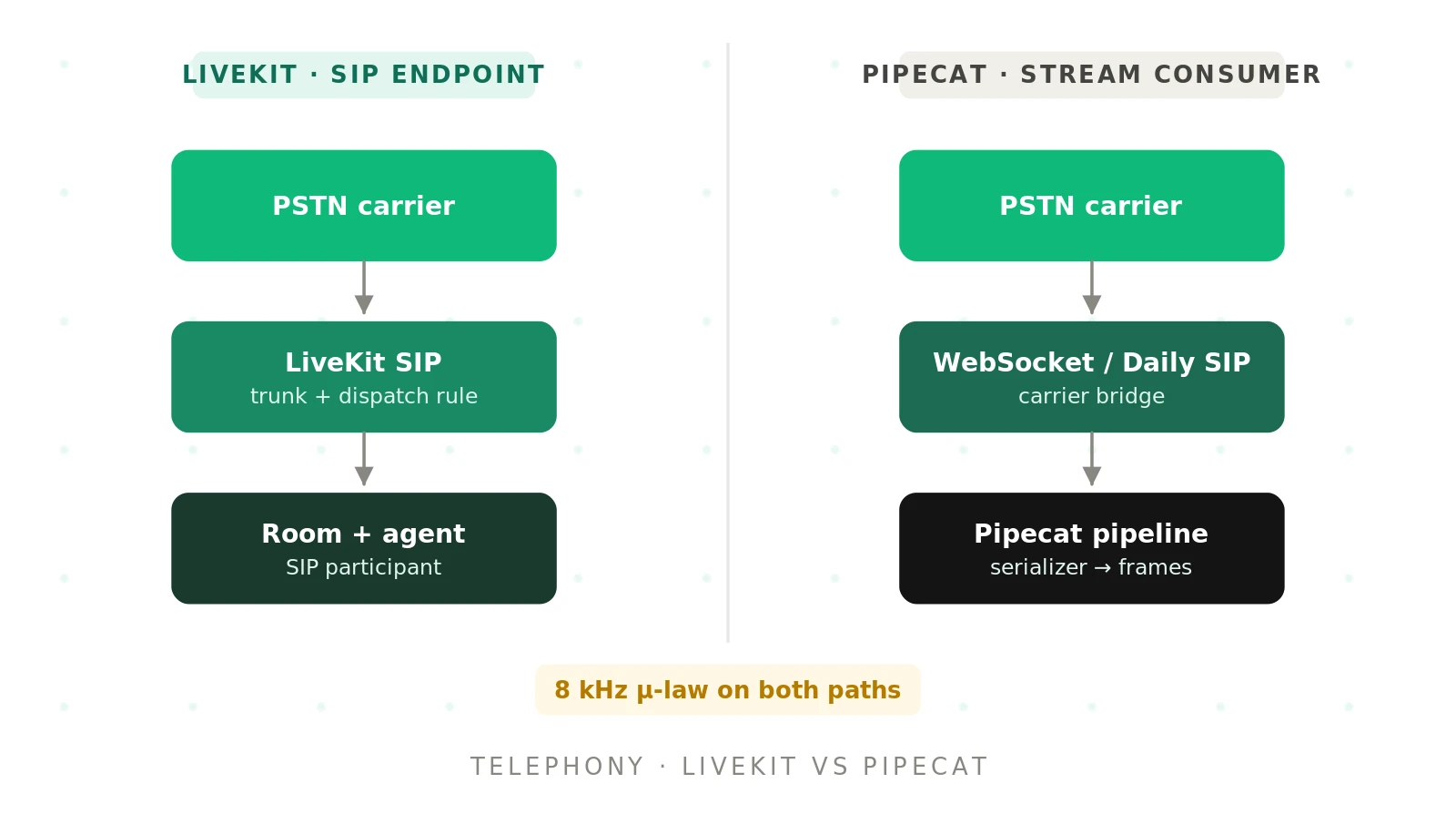
LiveKit vs Pipecat for Telephony: SIP, Phone Numbers, and Real Calls
LiveKit vs Pipecat telephony, compared hands-on: SIP trunks, dispatch rules, Twilio media streams, Daily SIP, DTMF, transfers, voicemail, failure modes.
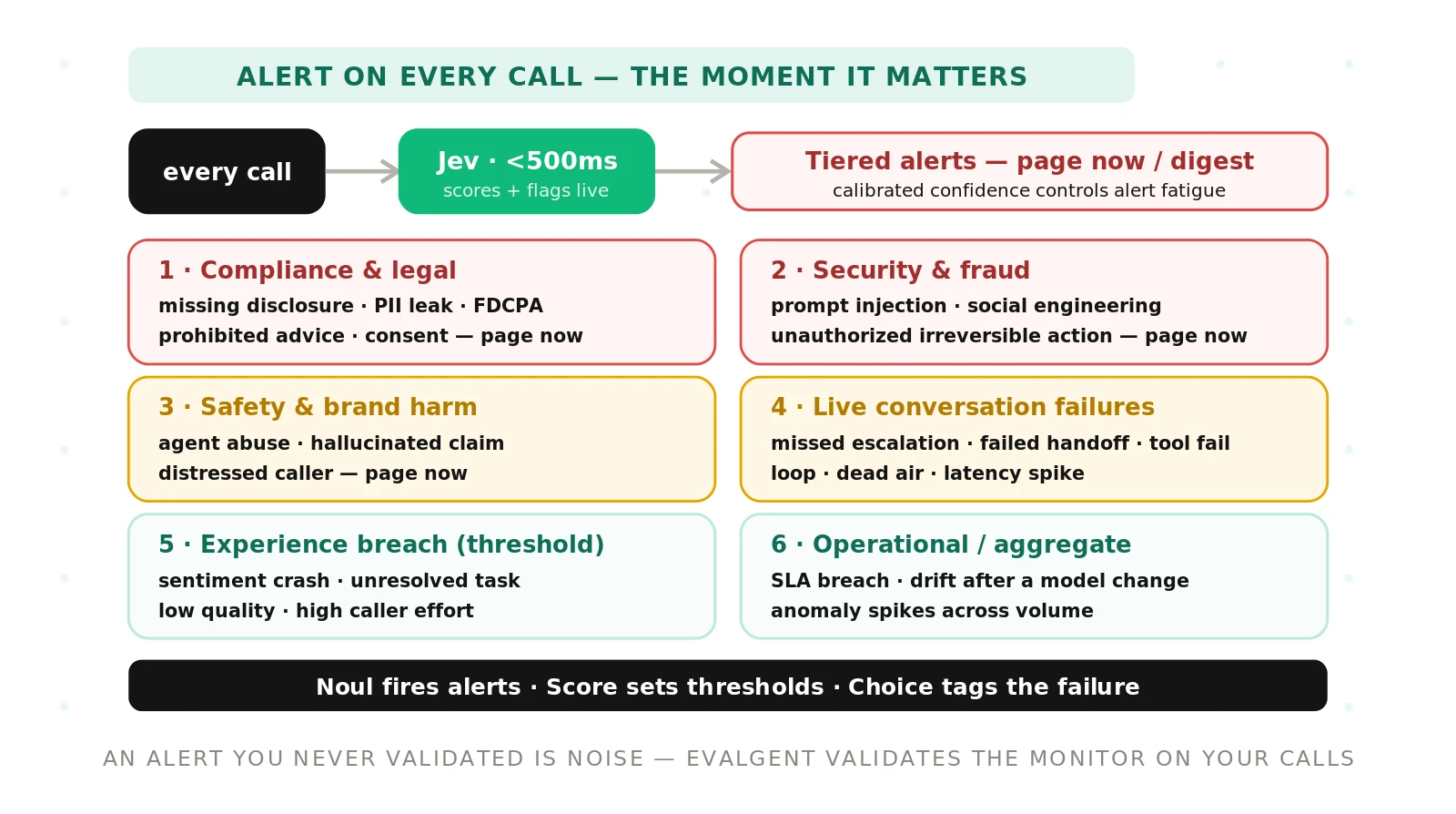
Jev for Voice Agent Call Monitoring
Jev voice agent call monitoring, hands-on: per-turn alert payloads, a Python alert router, cost math at 1M calls, and calibration checks that curb fatigue.
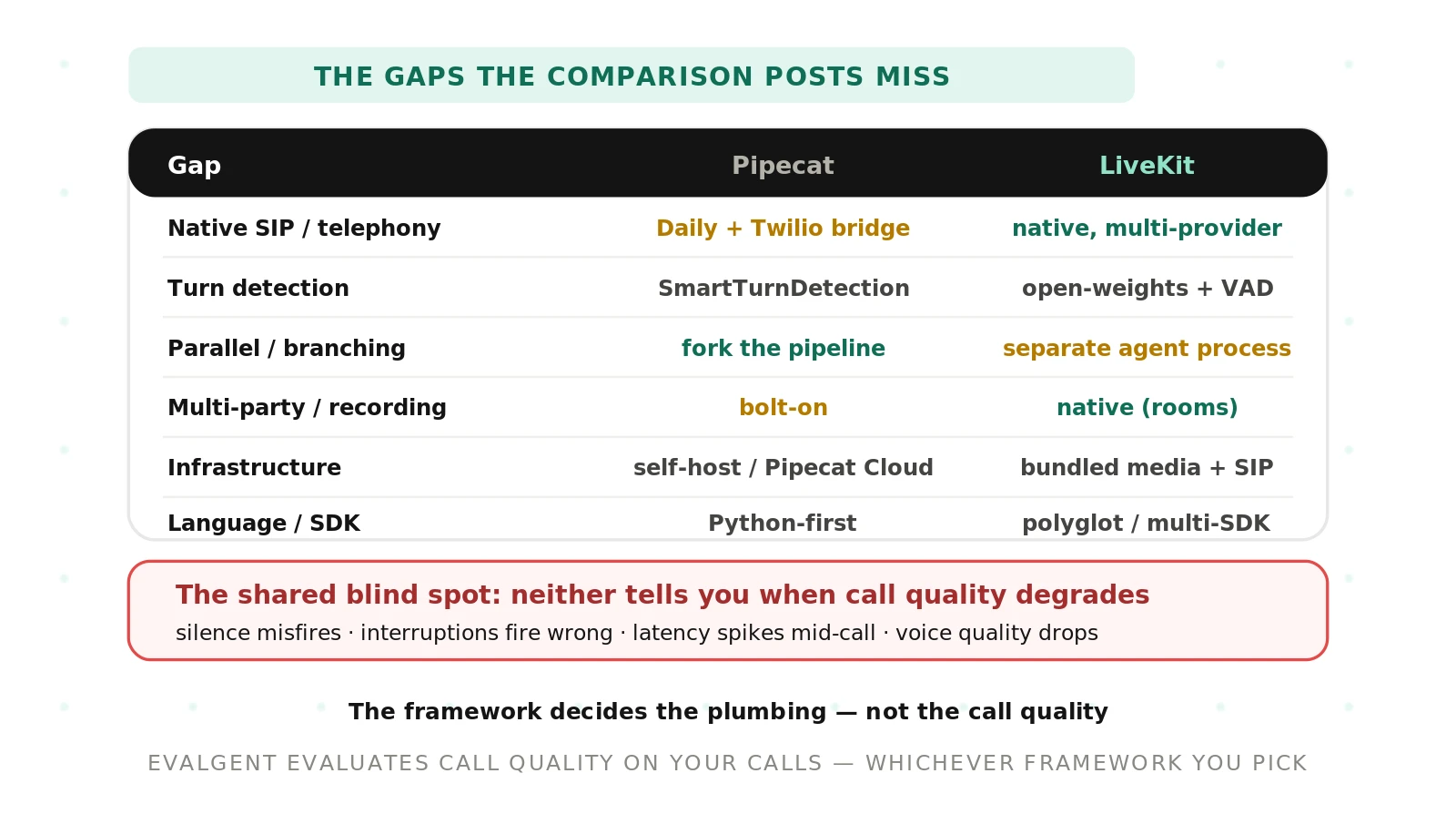
LiveKit vs Pipecat: The Deep Gaps the Comparison Posts Miss
LiveKit vs Pipecat comparisons skip the gaps that bite in production: SIP telephony, turn detection, branching, lock-in, and the call-quality blind spot.
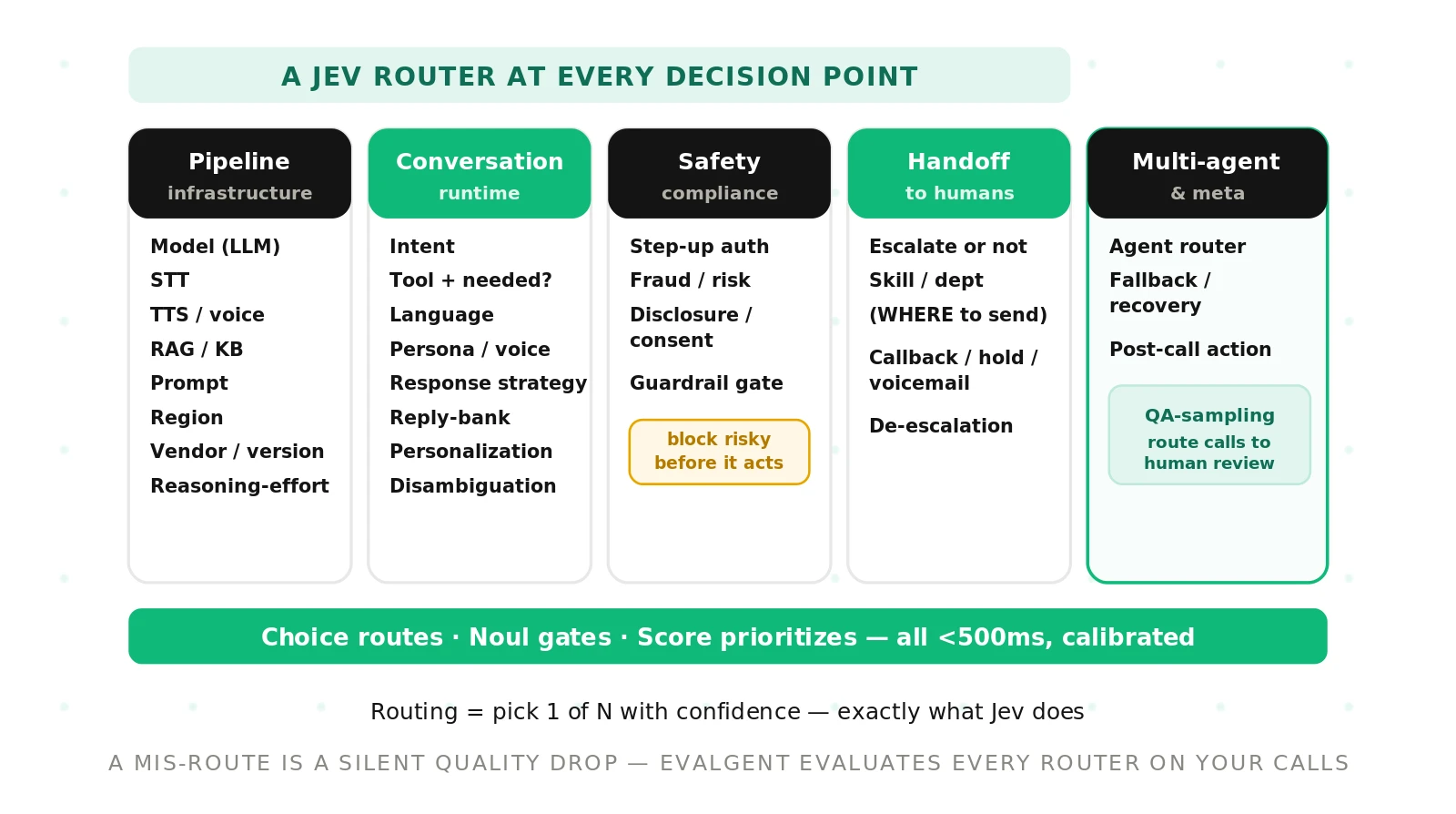
Routing Use Cases of Jev in AI Voice Agents
Jev routing use cases for voice agents: a 30-router catalog, a real Choice response decoded, reusable Python, and how to measure routing accuracy on calls.