Blog
Page 21 of 32
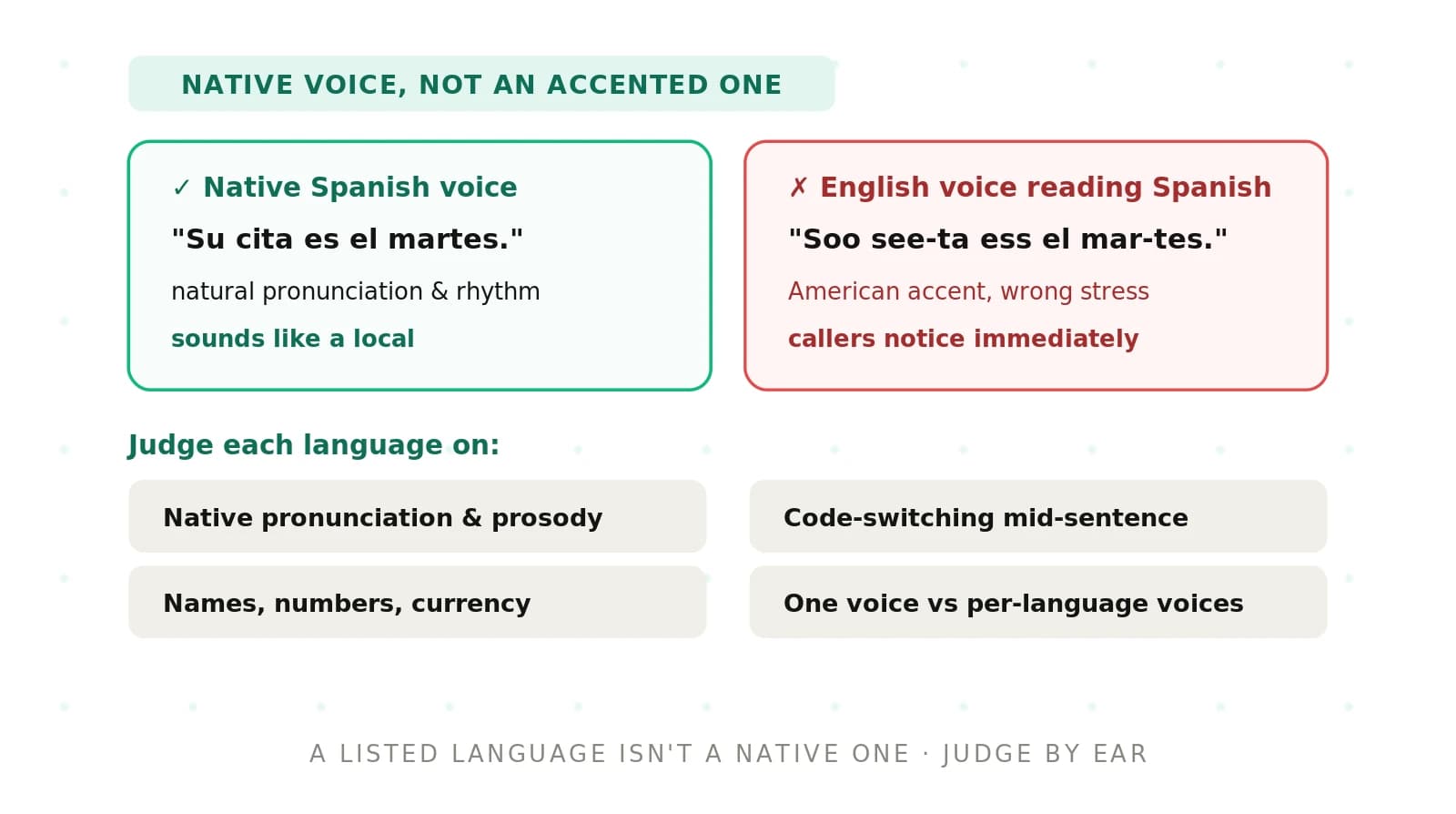
Multilingual TTS for Voice Agents: How to Choose
How to choose multilingual TTS for a voice agent: judge native pronunciation and prosody per language, code-switching, and names by ear on your scripts.
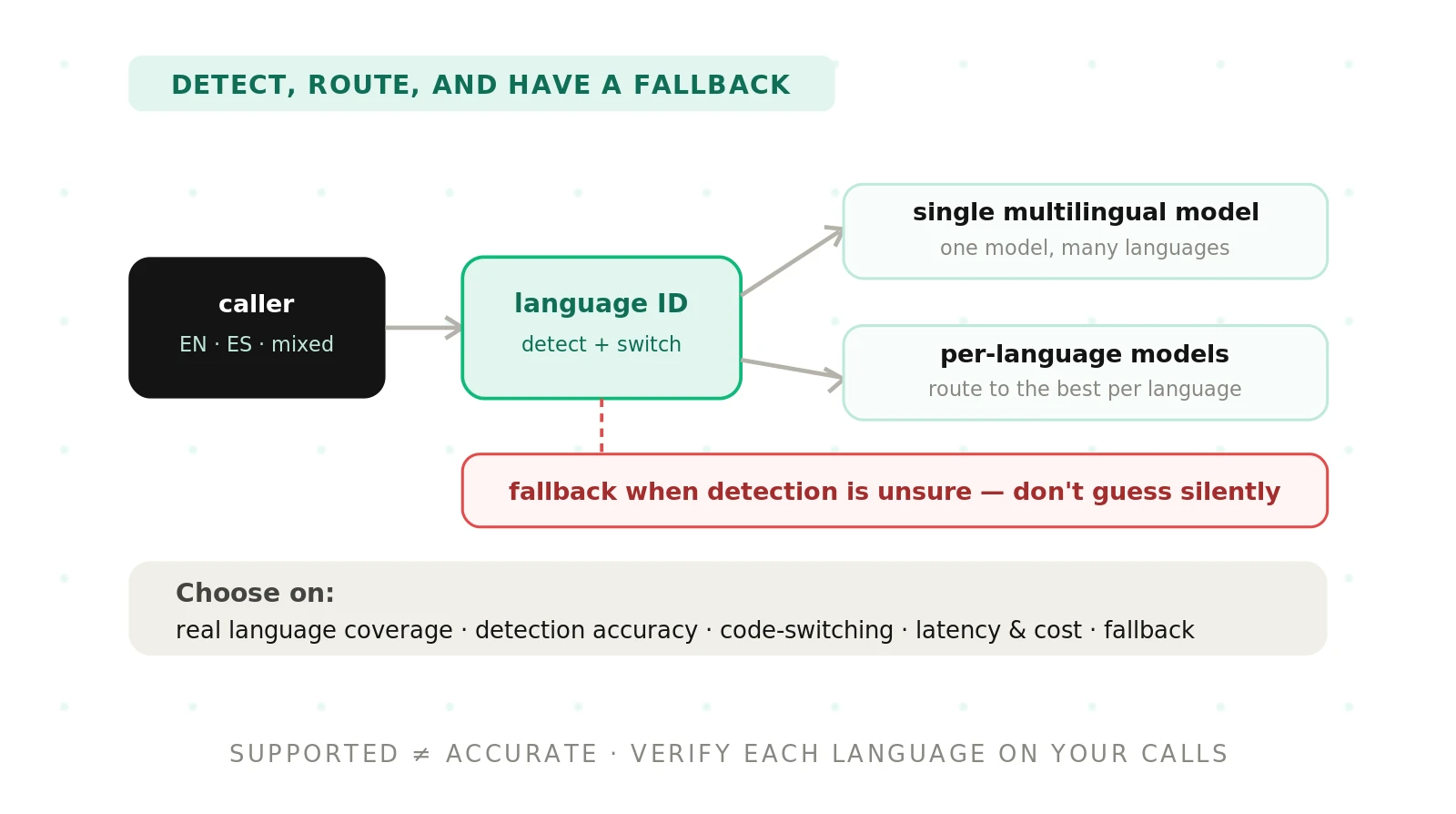
Multilingual STT for Voice Agents: How to Choose
How to choose multilingual STT for voice agents: real language support, automatic detection, mid-call switching, code-switching, and per-language testing.
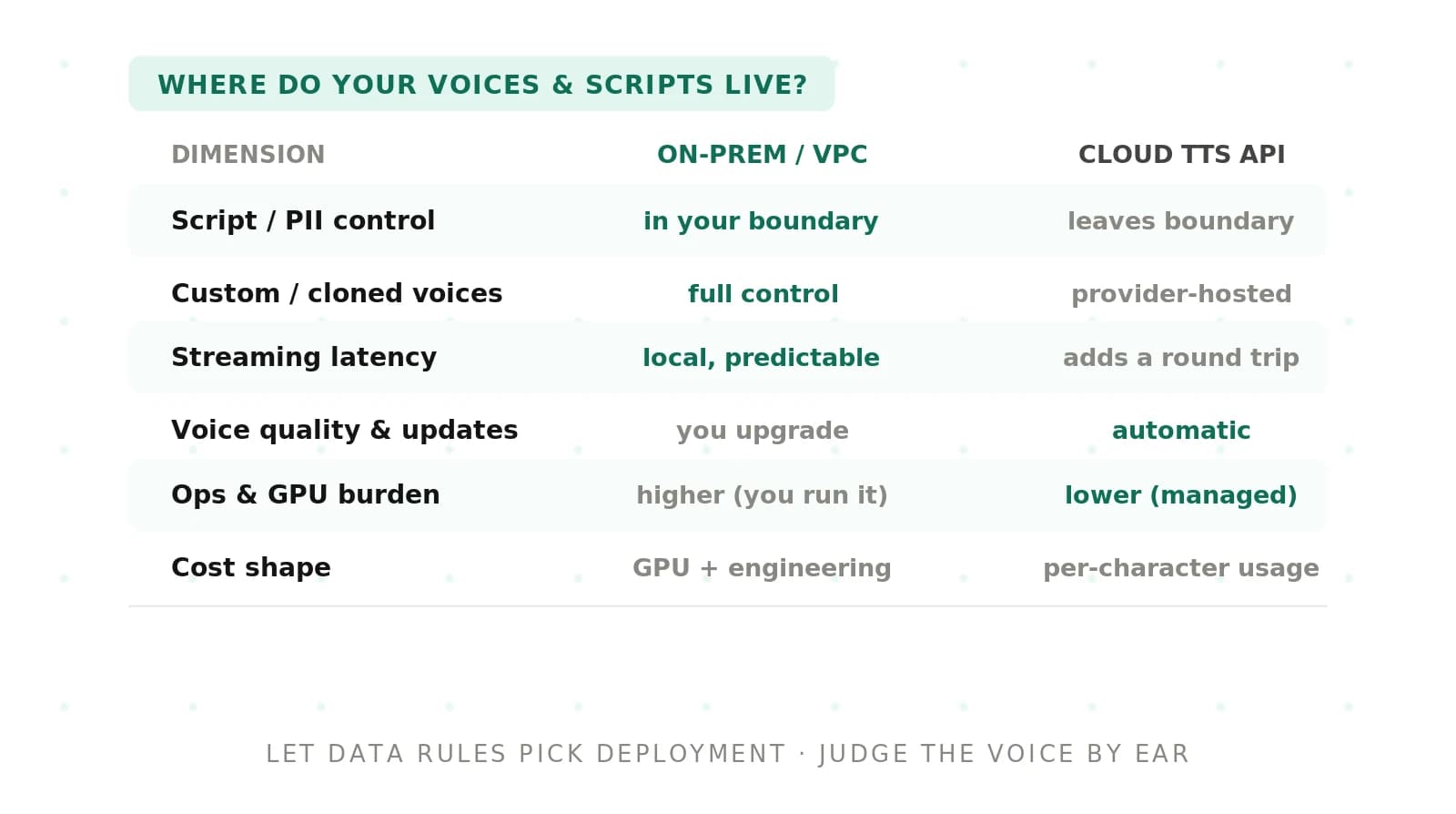
On-Prem vs Cloud TTS for Voice Agents
On-prem TTS keeps voice agent scripts and voices inside your network; cloud TTS trades that control for scale. Here is how to choose and verify it.
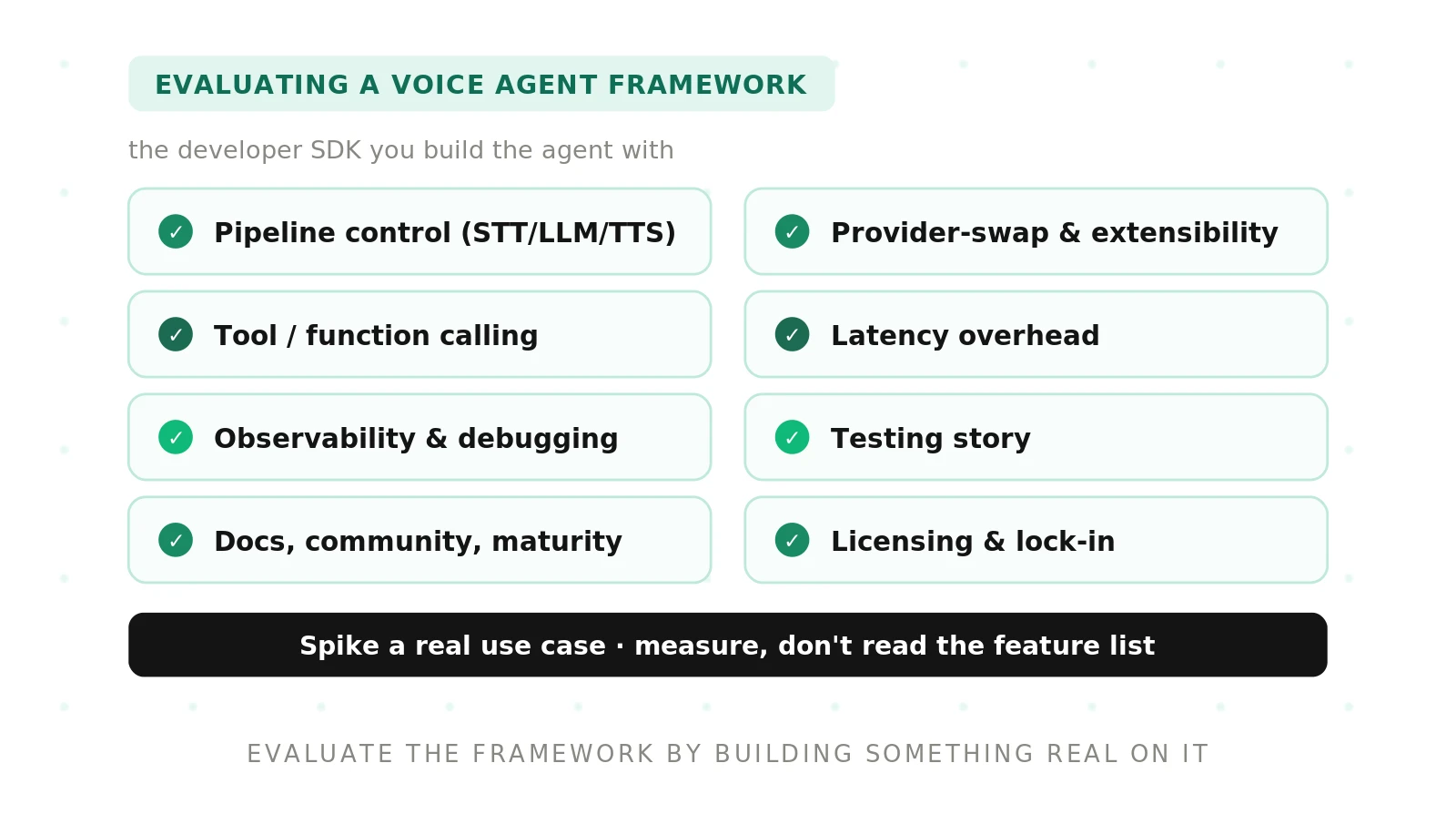
How to Evaluate a Voice Agent Framework
How to evaluate a voice agent framework before you commit: judge pipeline control, provider-swapping, tool calling, latency, observability, and lock-in.
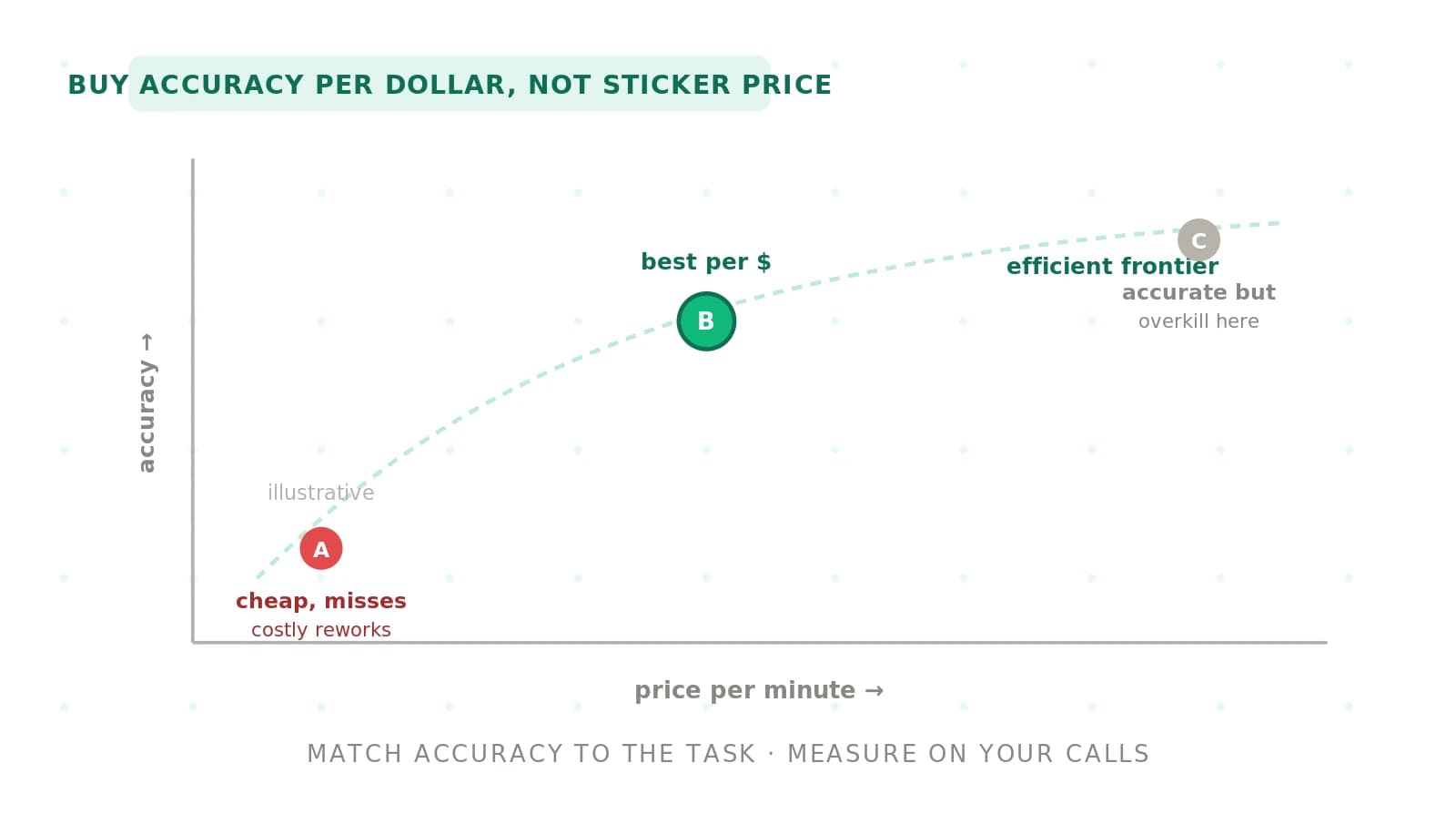
STT Cost vs Accuracy: How to Choose
The cheapest speech-to-text engine often costs more downstream. Here is how to weigh STT cost vs accuracy for voice agents and pick the right fit.
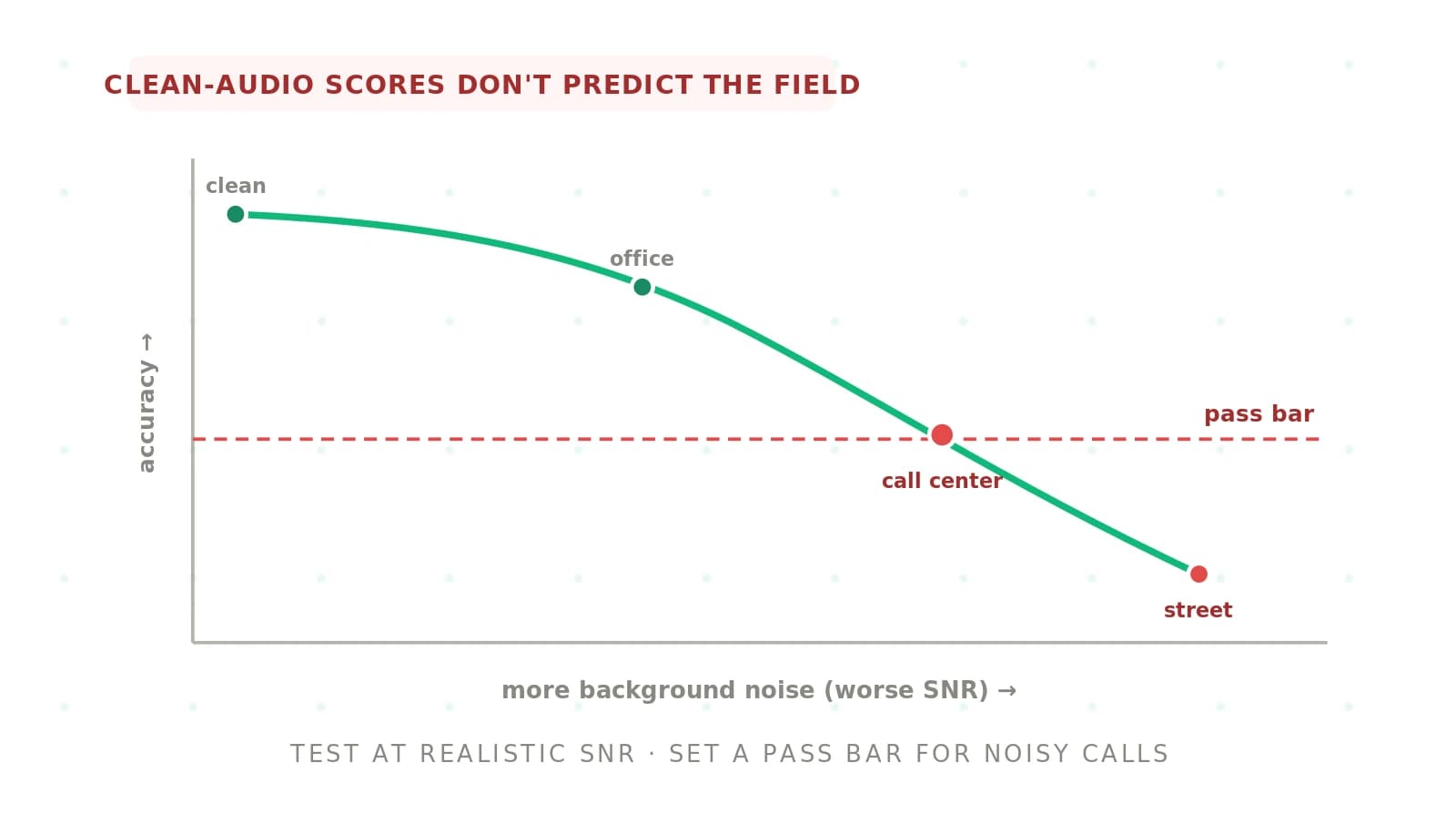
How to Test STT Under Background Noise
STT that scores well on clean audio can collapse on noisy calls. Here is how to build a noise-robustness test set and measure WER degradation.
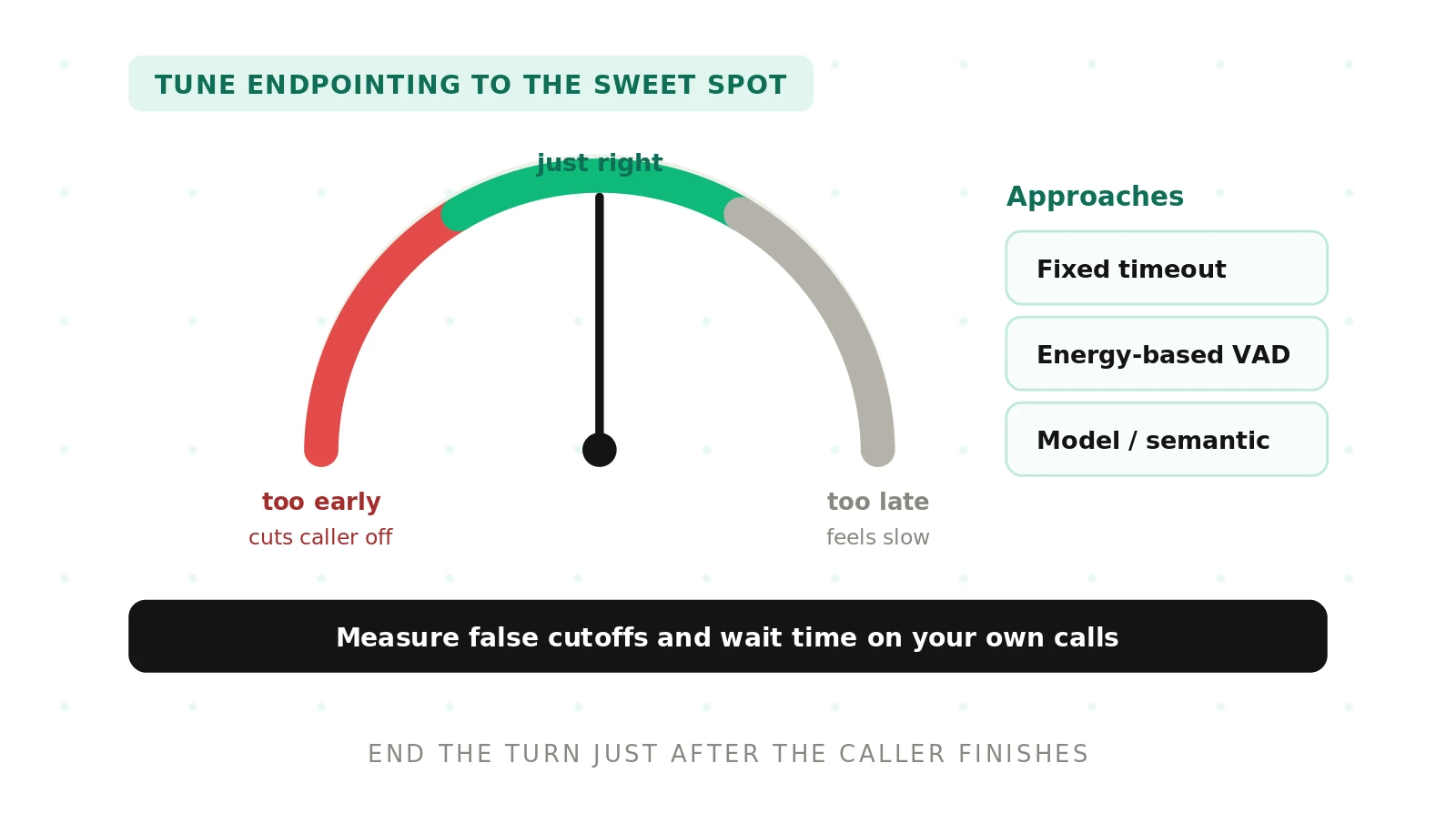
How to Choose Endpointing for Voice Agents (2026)
How to choose and tune endpointing for a voice agent in 2026 — fixed timeouts versus semantic detection, the latency trade-off, and how to measure it.
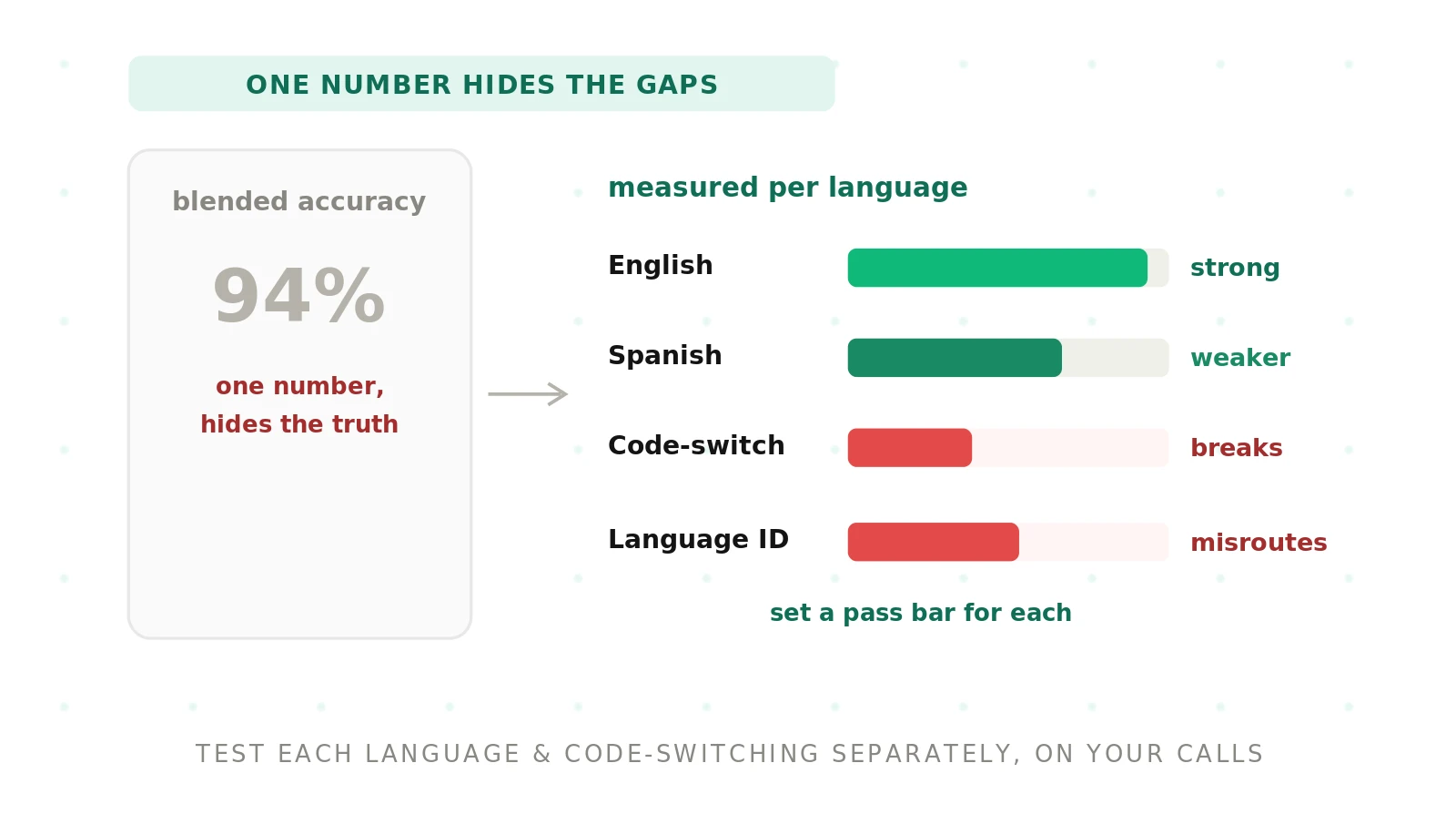
Evaluating Multilingual Accuracy for Voice Agents
A single accuracy score hides per-language failures. Learn to measure WER, CER, code-switching, and language ID separately on your own real calls.
How to Reduce STT Latency in Voice Agents
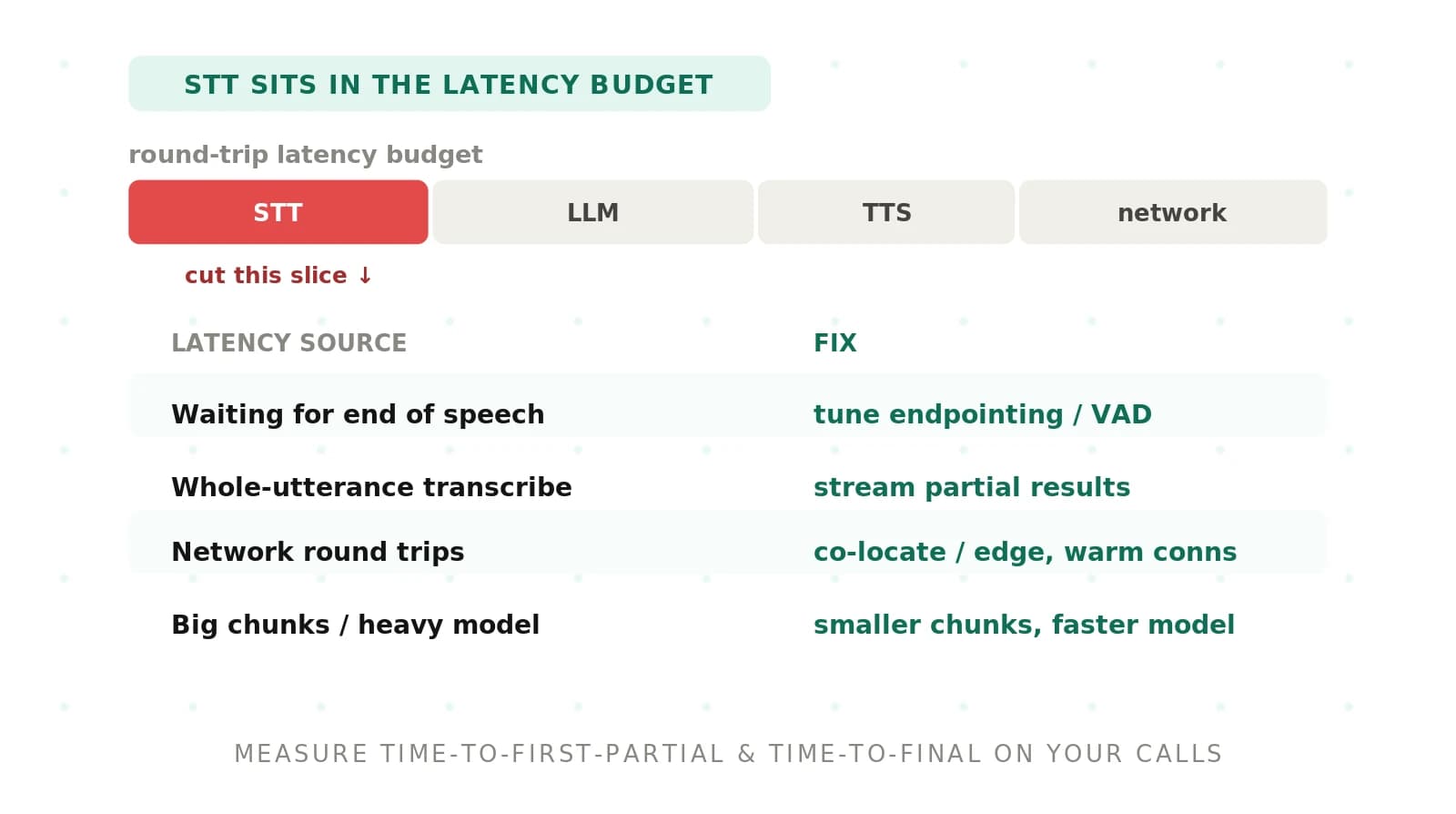
STT latency is the delay from speech to transcript in a voice agent. Here are practical ways to cut it, plus the two numbers you should measure.