Blog
Page 37 of 52
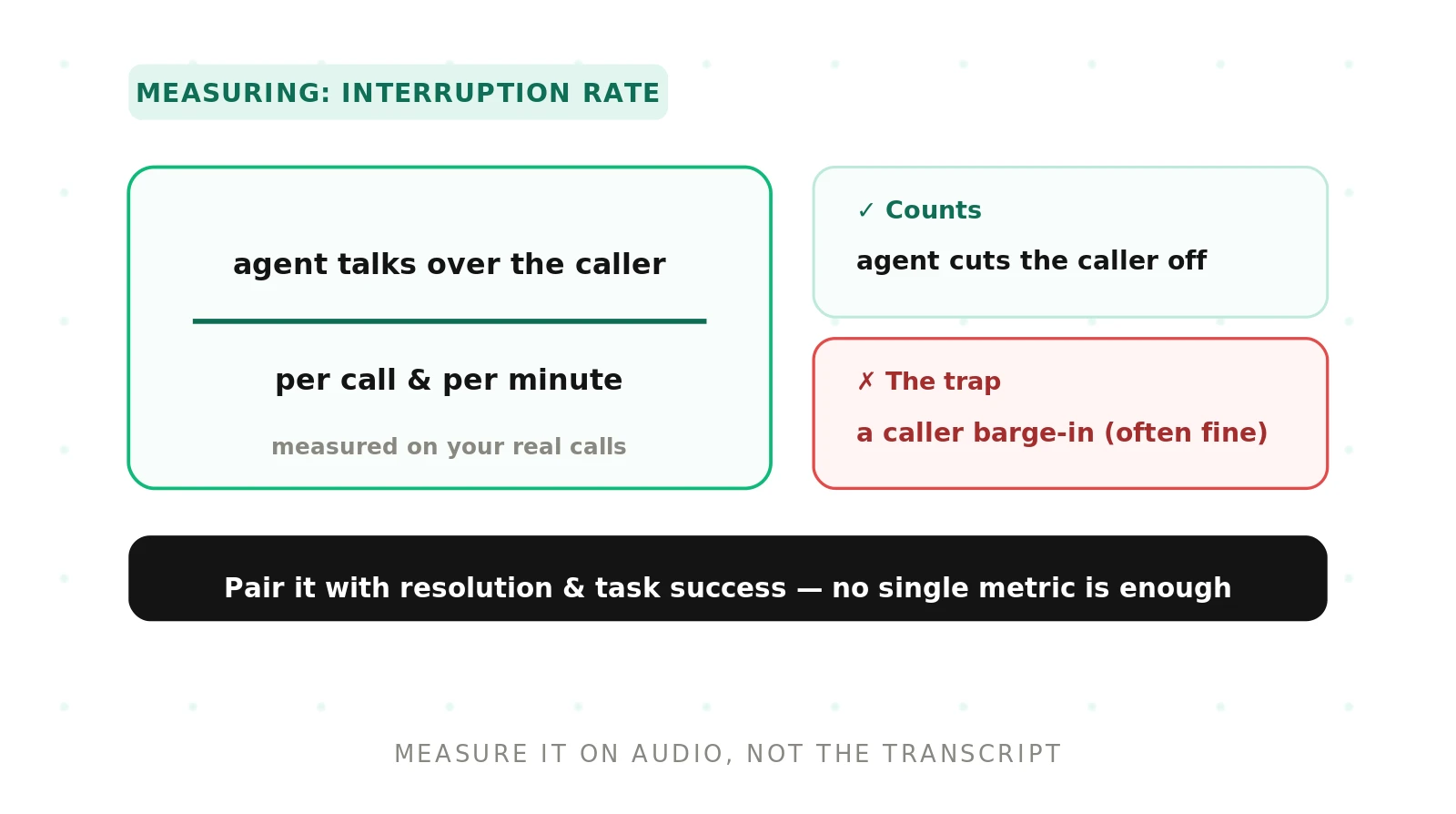
How to Measure Interruption Rate for Voice Agents
Learn how to measure interruption rate for voice agents on audio: define an interruption, count agent-over-caller apart from barge-in, and check yielding.
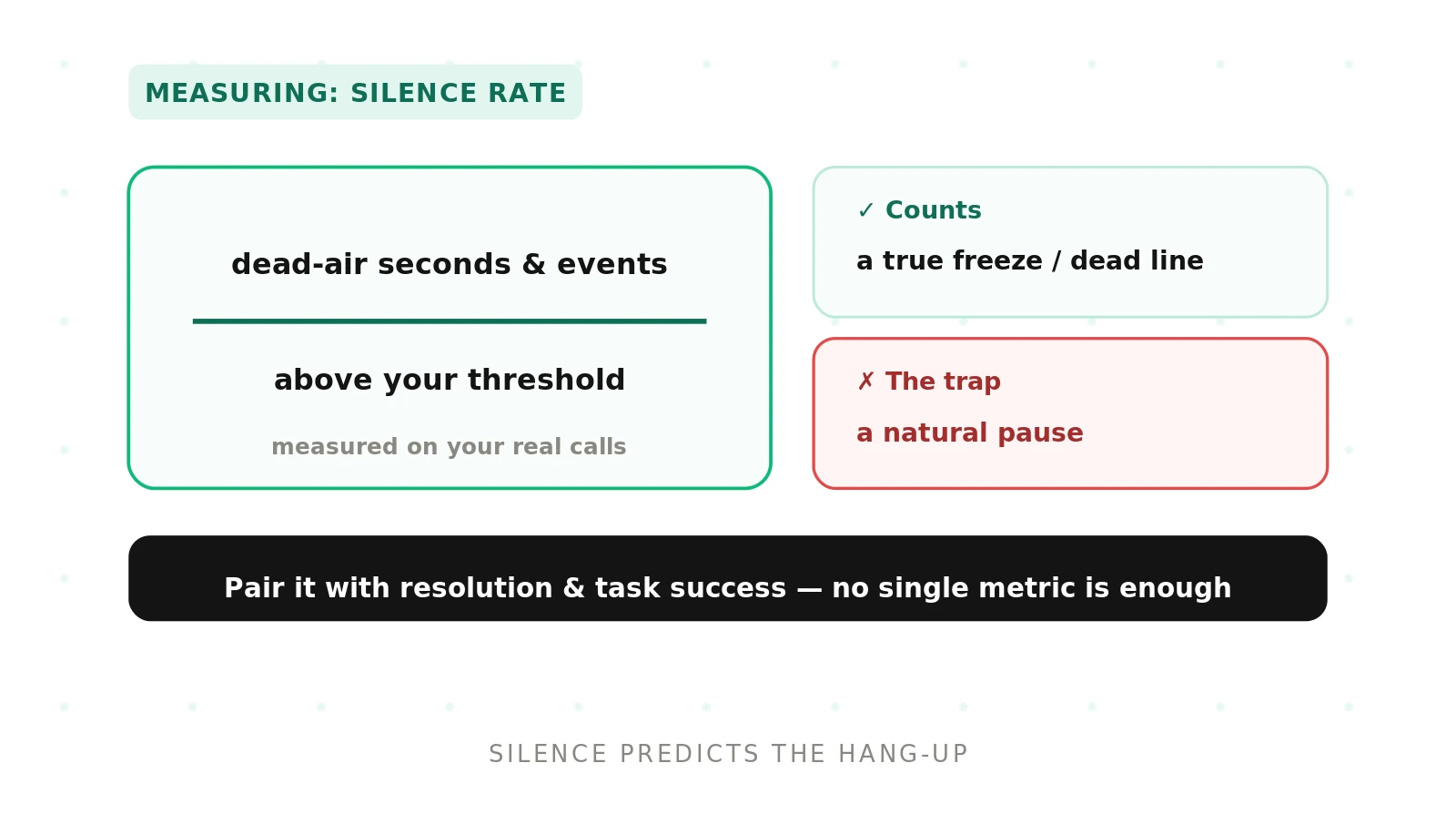
How to Measure Silence Rate for Voice Agents
Silence rate for voice agents measures how often and how long the line goes dead. Learn to set a threshold, count dead-air seconds, and set a pass bar.
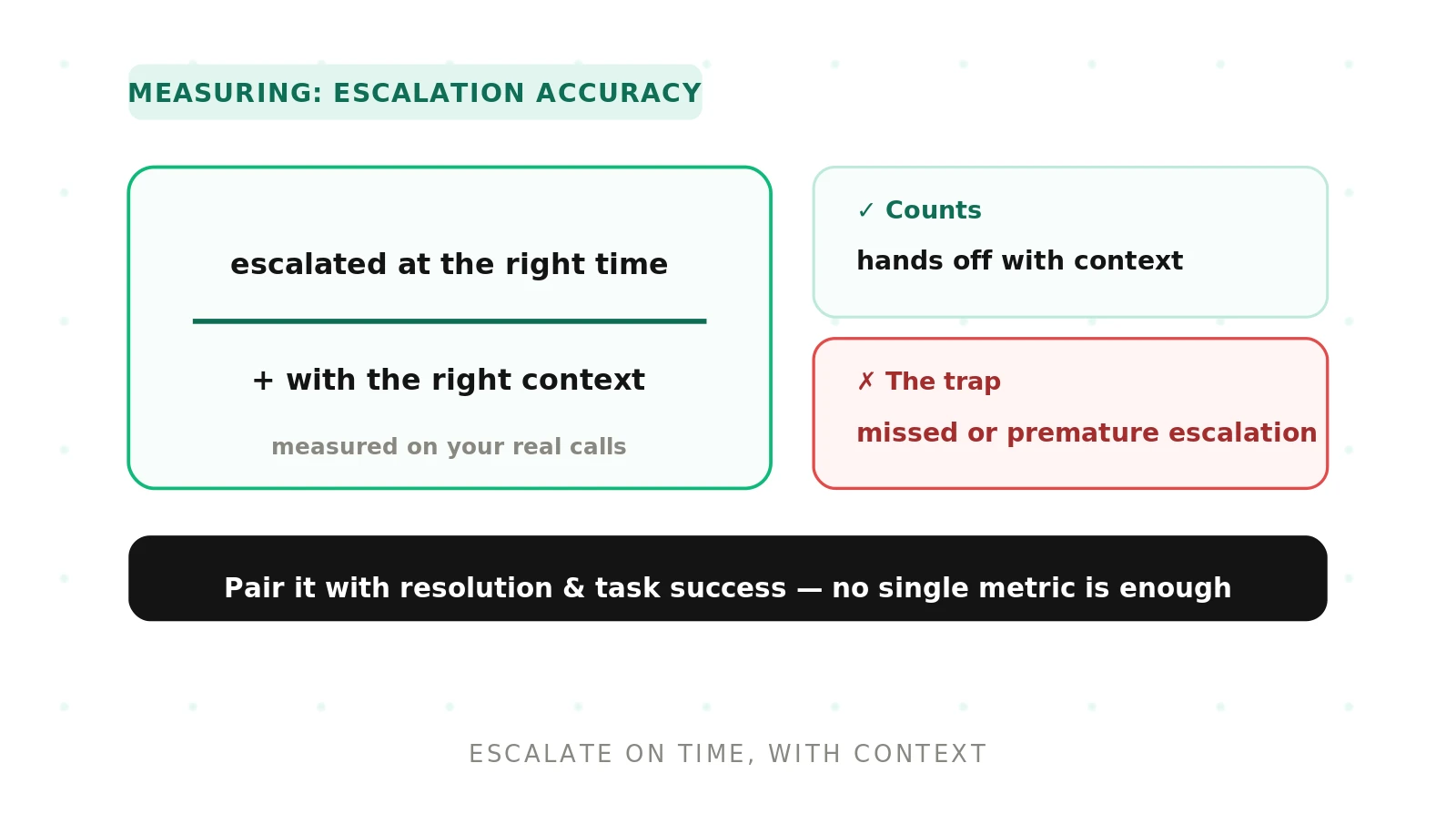
Escalation Accuracy: Measuring Good Handoffs
Measure escalation accuracy for voice agents: precision and recall on the escalate decision, plus timing and context-complete handoffs.
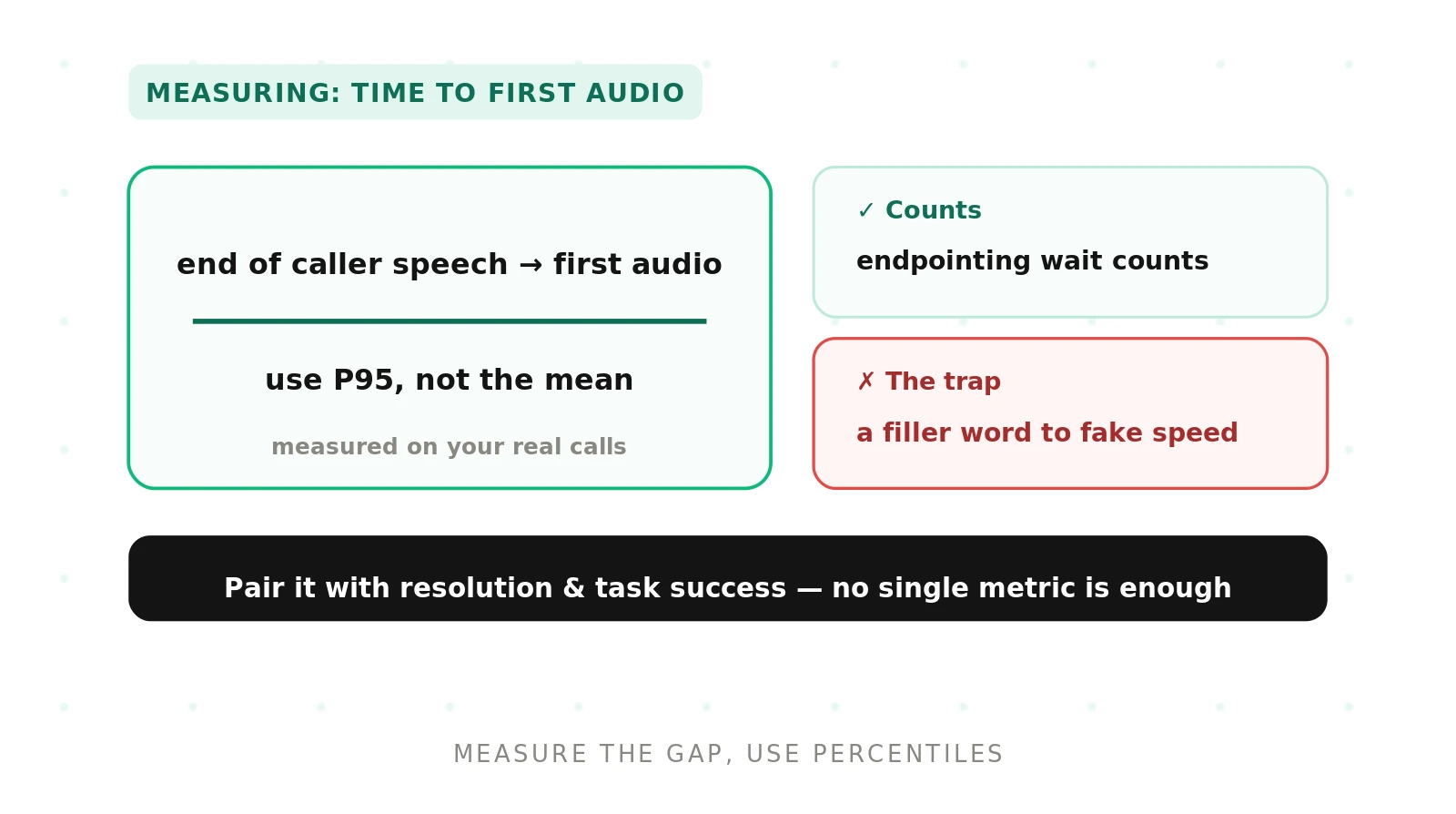
How to Measure Time to First Audio for Voice Agents
Time to first audio for voice agents is the gap from end of caller speech to the first sound back. Learn how to measure TTFA with P50, P95, and P99.
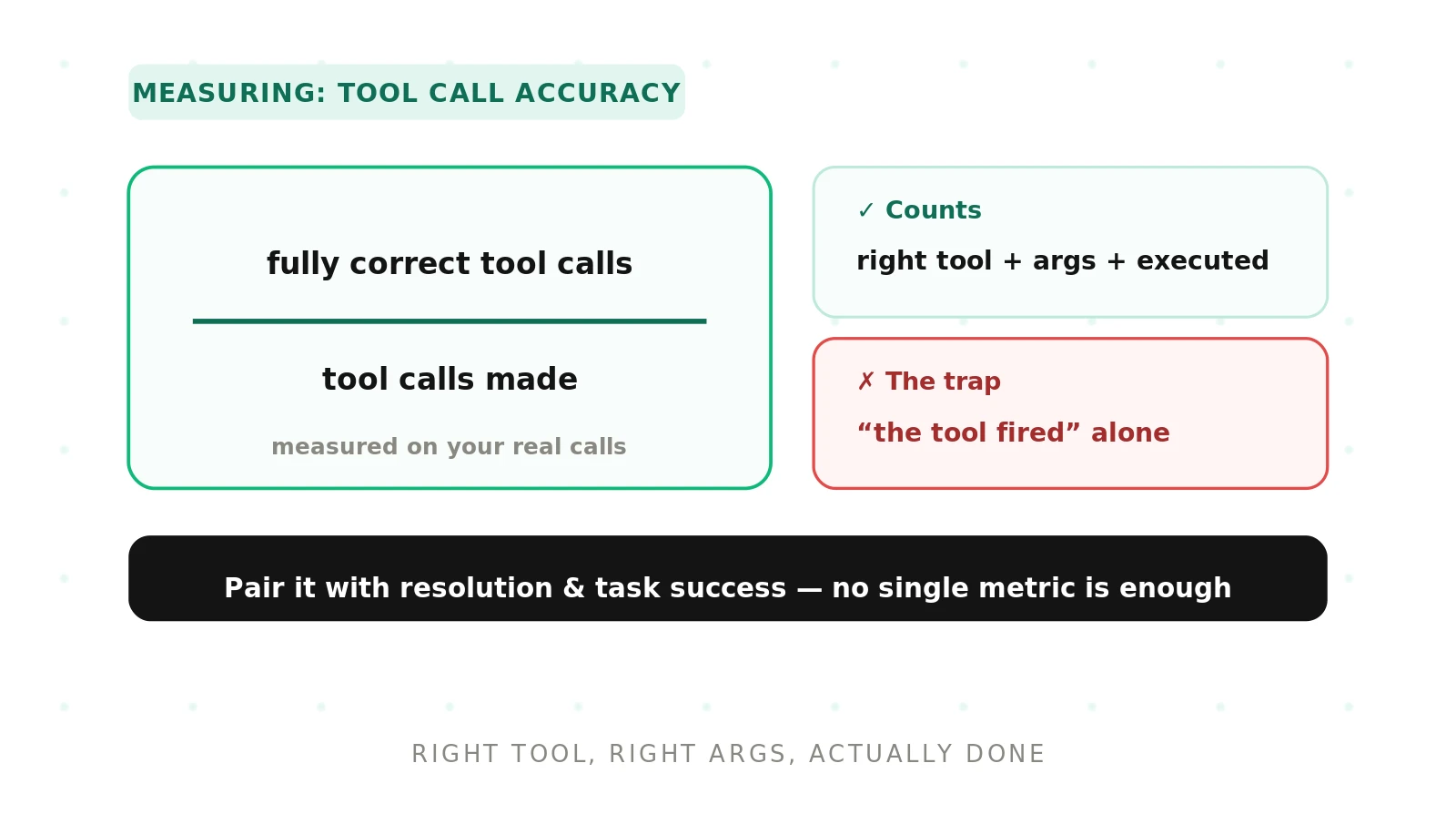
How to Measure Tool Call Accuracy for Voice Agents
Tool call accuracy tells you if a voice agent picked the right tool, with a valid schema and correct arguments, and the call succeeded. How to measure it.
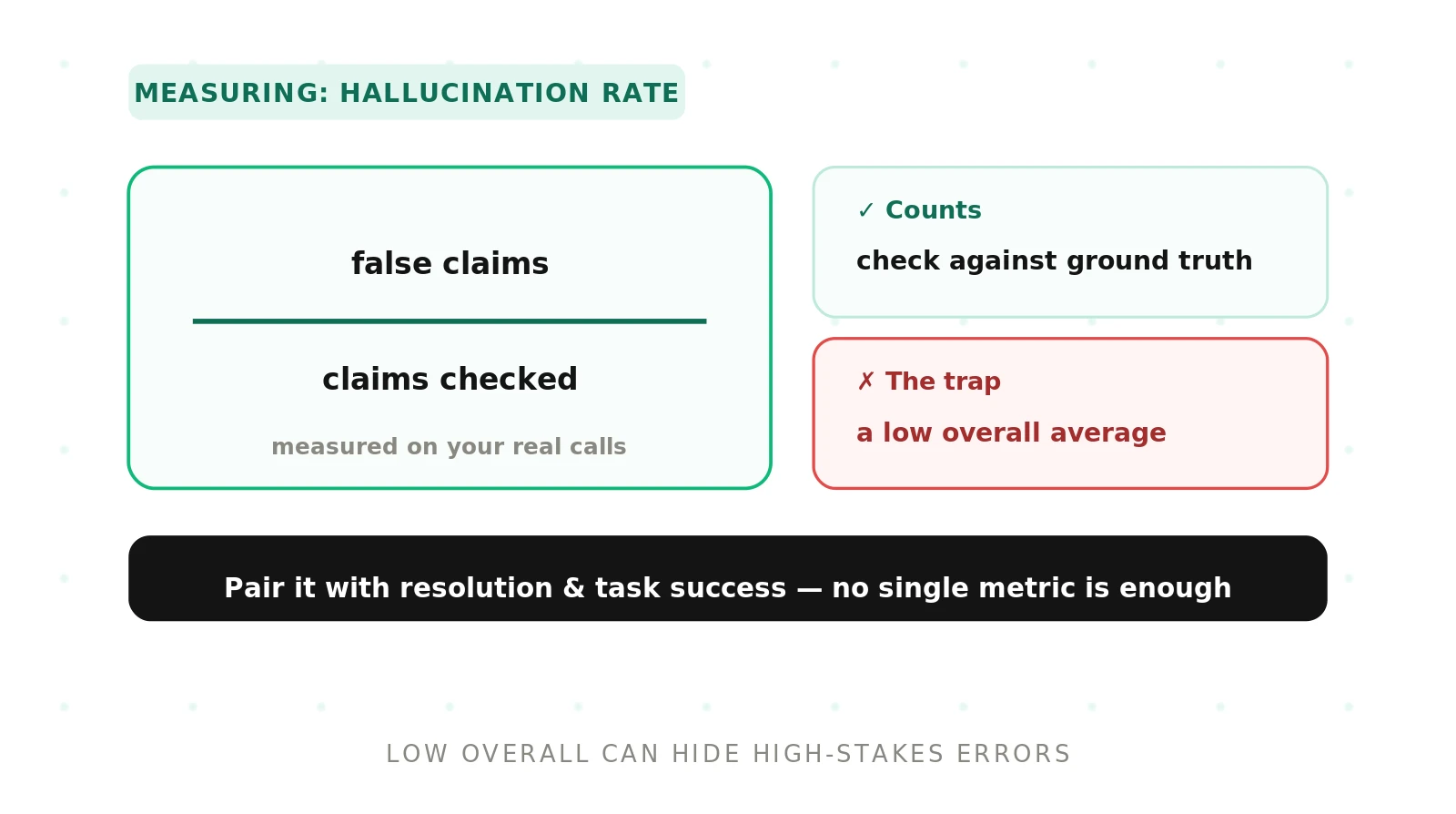
How to Measure Hallucination Rate for Voice Agents
Measure hallucination rate for voice agents: define what counts as false, build ground truth, pick a unit, sample and label calls, and track the rate.
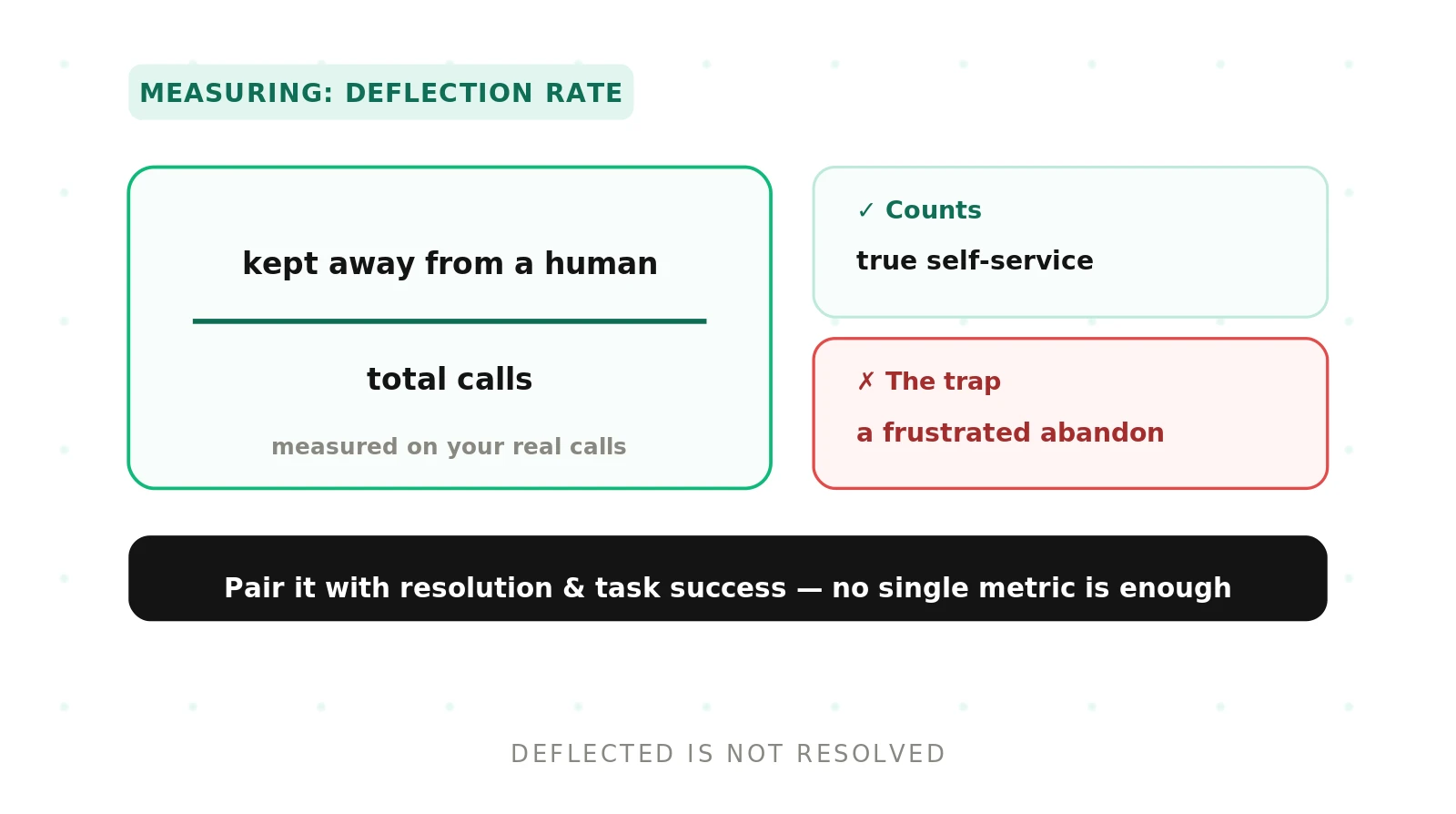
How to Measure Deflection Rate for Voice Agents
Learn how to measure deflection rate for voice agents, define the denominator, split self-service from abandonment, and pair it with resolution honestly.
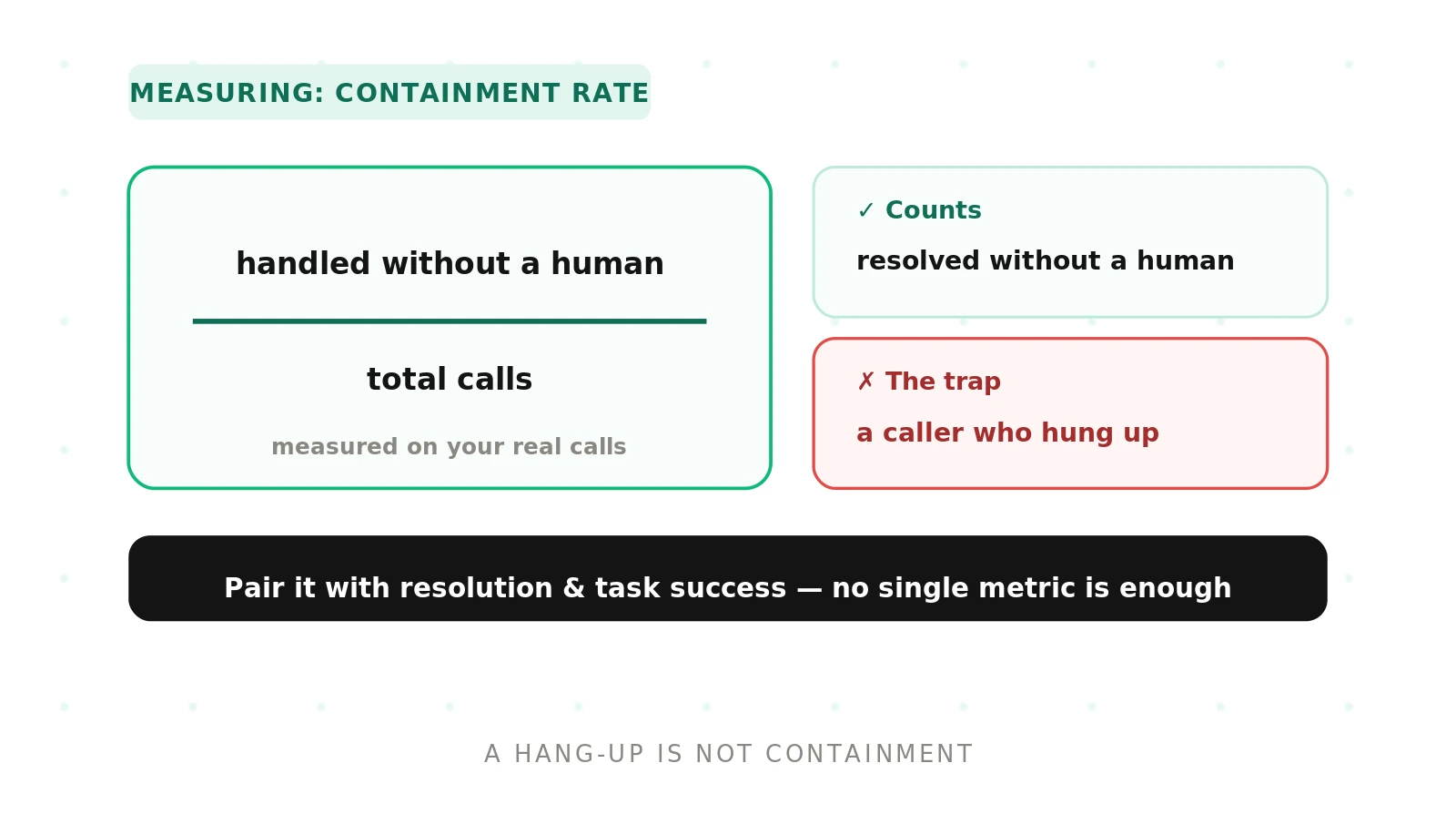
How to Measure Containment Rate for Voice Agents
Learn how to measure containment rate for voice agents correctly: numerator and denominator, what counts as contained, and pairing it with resolution.
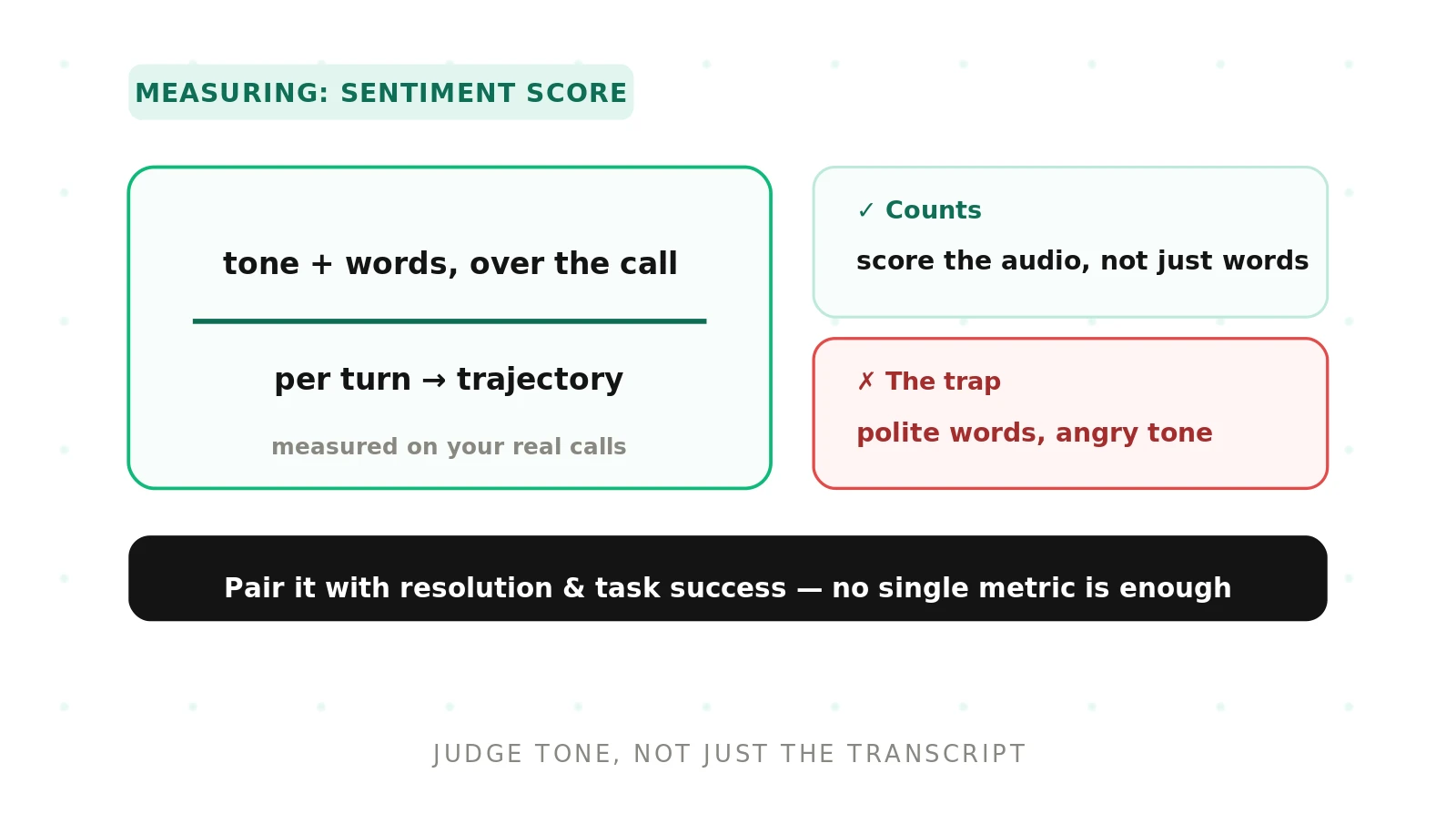
How to Measure Sentiment Score for Voice Agents
Sentiment score for voice agents: measure caller mood from words and tone, track recovery across a call, and use it as an early escalation signal.