Blog
Page 24 of 52
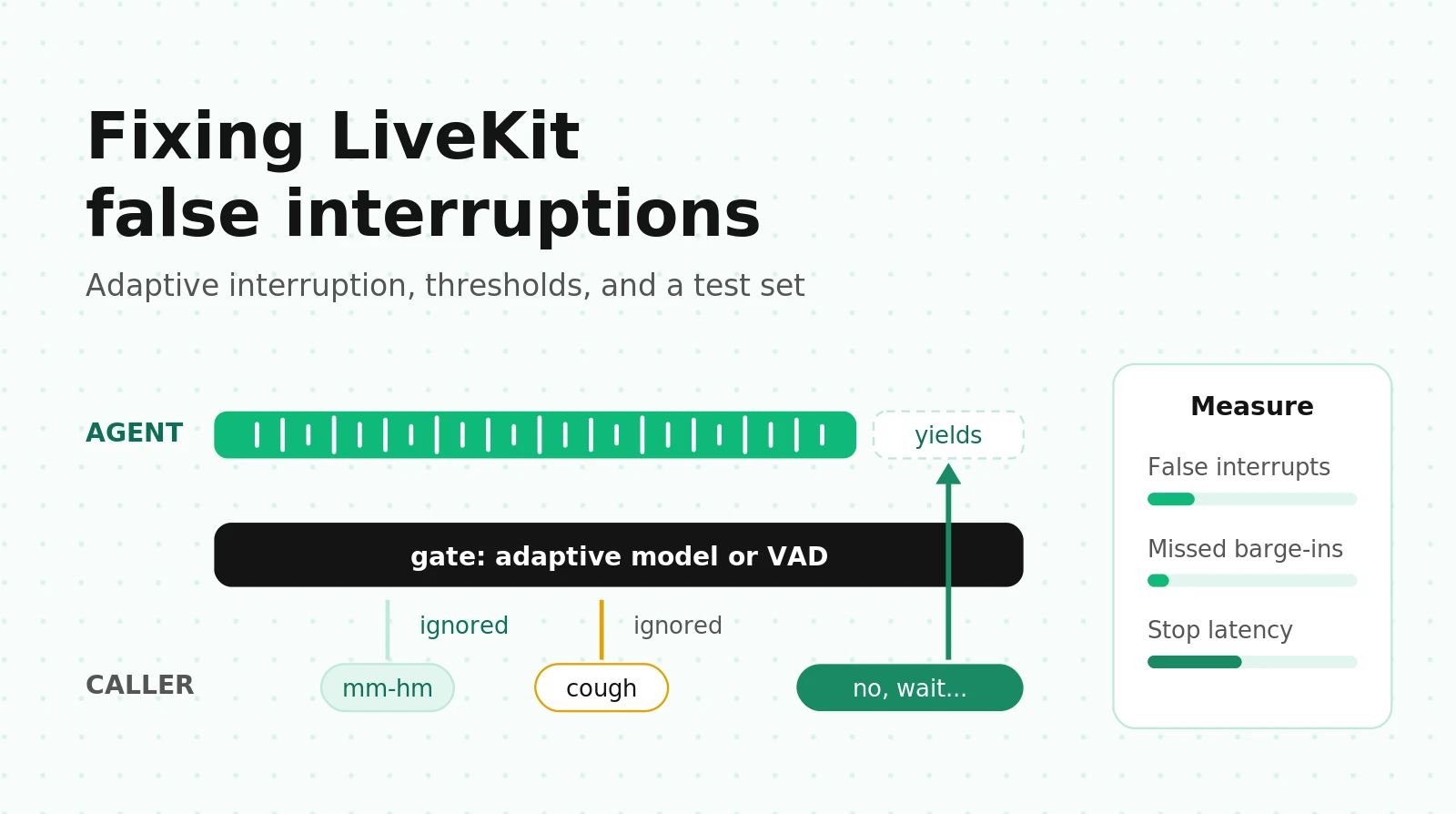
Fixing False Interruptions in LiveKit Agents: Adaptive Interruption, Thresholds and How to Test
Why LiveKit agents stop for mm-hm, coughs and echo, how adaptive interruption and min_duration work in the source, and a test set with pass thresholds.
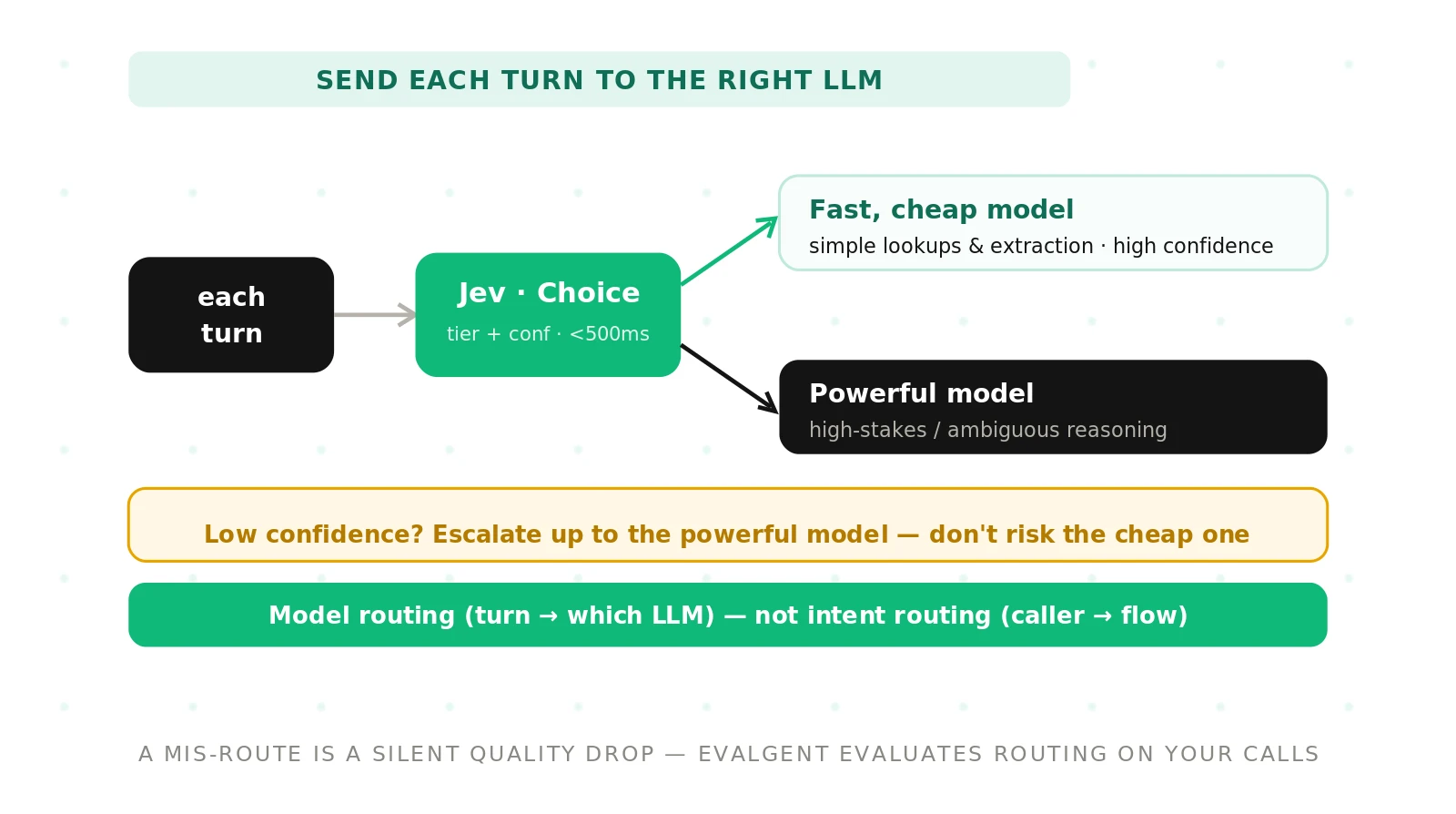
Jev Model Routing: Use Jev as a Model Router for Voice Agents
Jev model routing: use Jev as a model router that sends each voice turn to the right LLM. LangChain and API code, confidence gating, cost math, and evals.
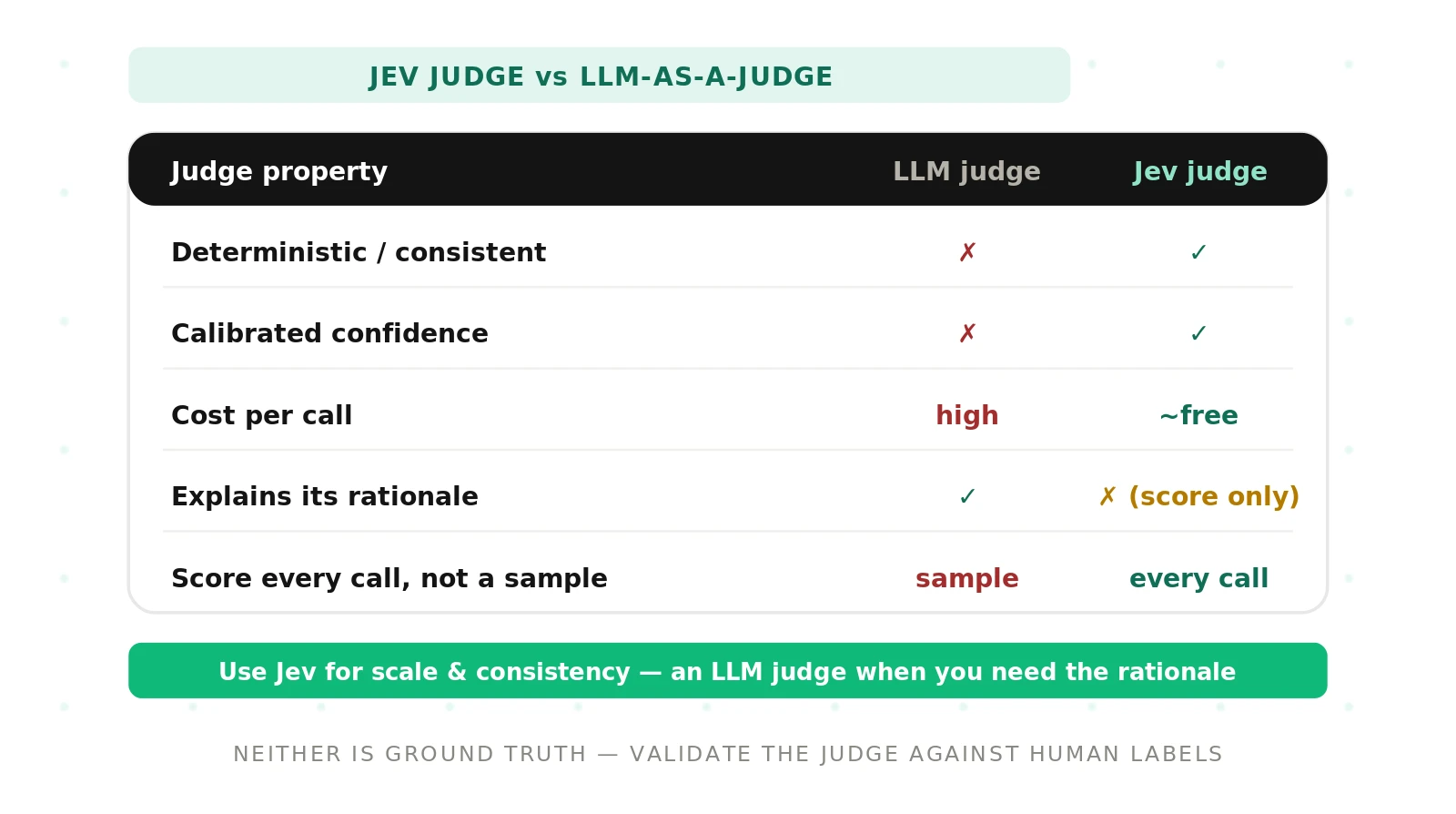
Jev as a Judge: A Calibrated Alternative to LLM-as-a-Judge
Jev as a judge matched human labels on 500 of 500 decisions in LangChain's study, at $0.34 vs $28.17 for Claude. Then build and validate a Jev judge.
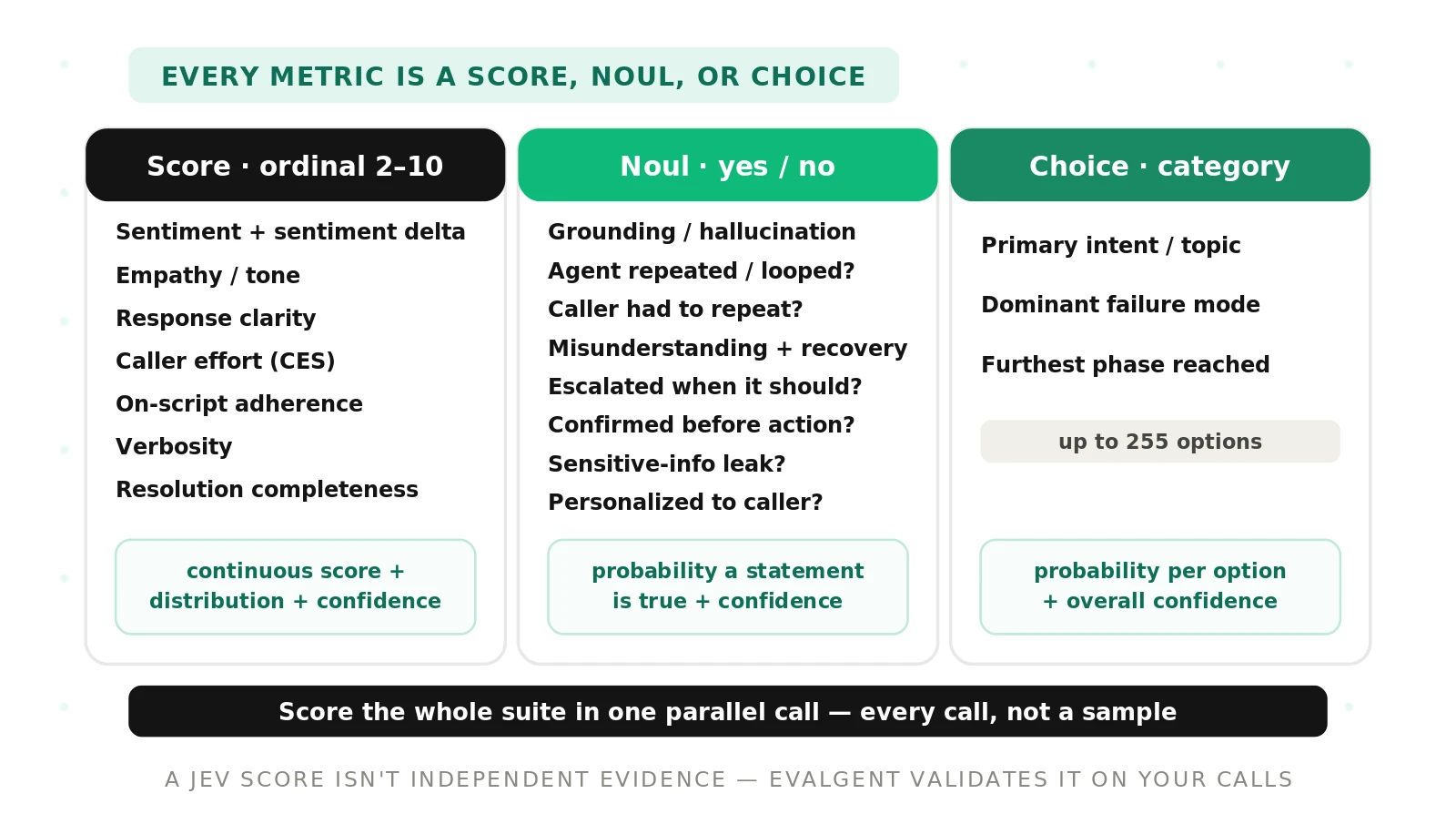
Jev Score, Noul and Choice: Voice Agent Metrics You Can Score
Jev Score, Noul and Choice explained: every voice agent metric as a real Jev question, with the JSON you send, the response, and Python to roll it up.
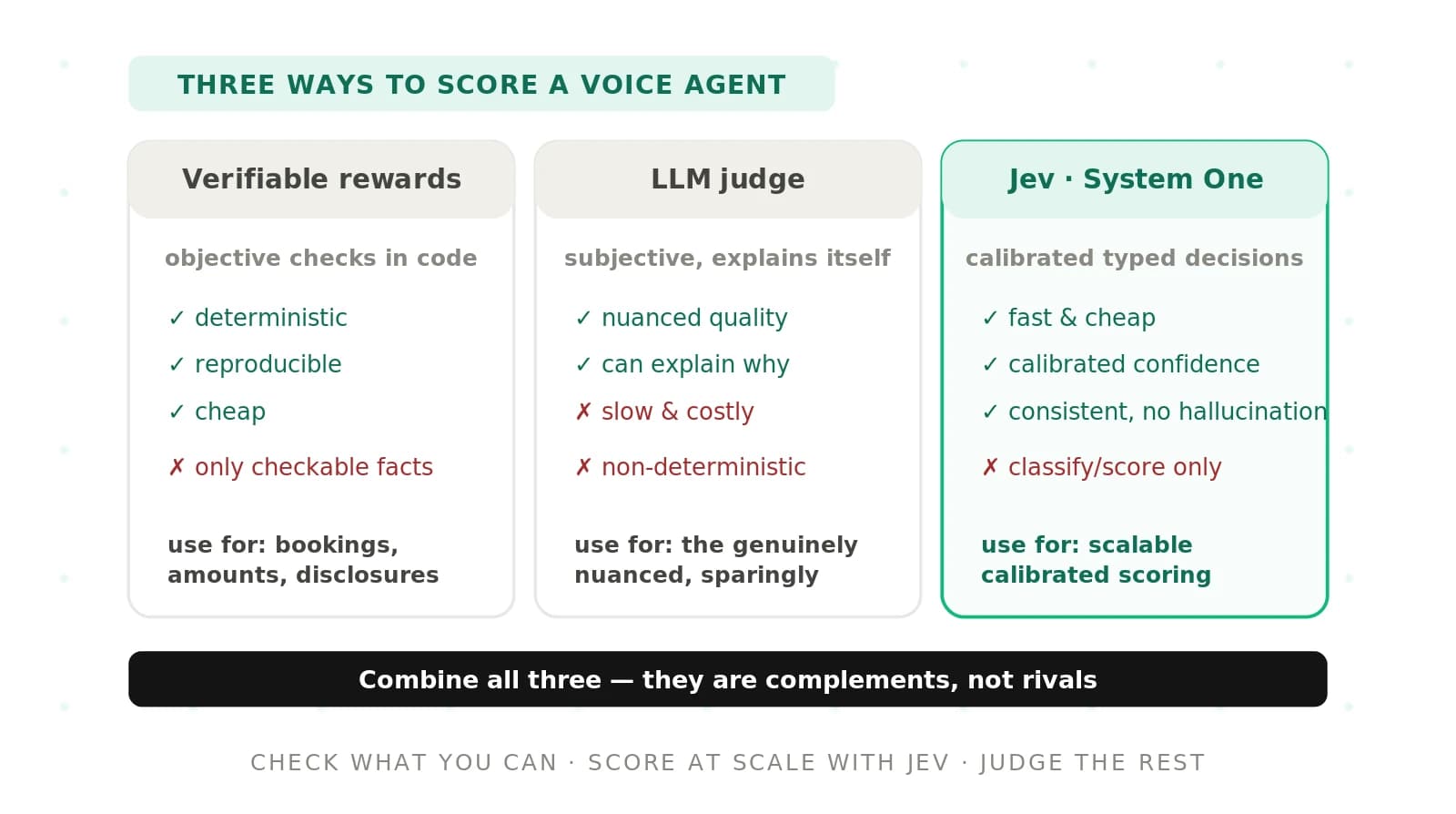
Verifiable Rewards vs LLM Judges vs Jev: 3 Ways to Score Voice Calls
Verifiable rewards vs LLM judges vs Jev: one voice call scored three ways in code, with agreement, variance, and cost compared, and how to layer all three.
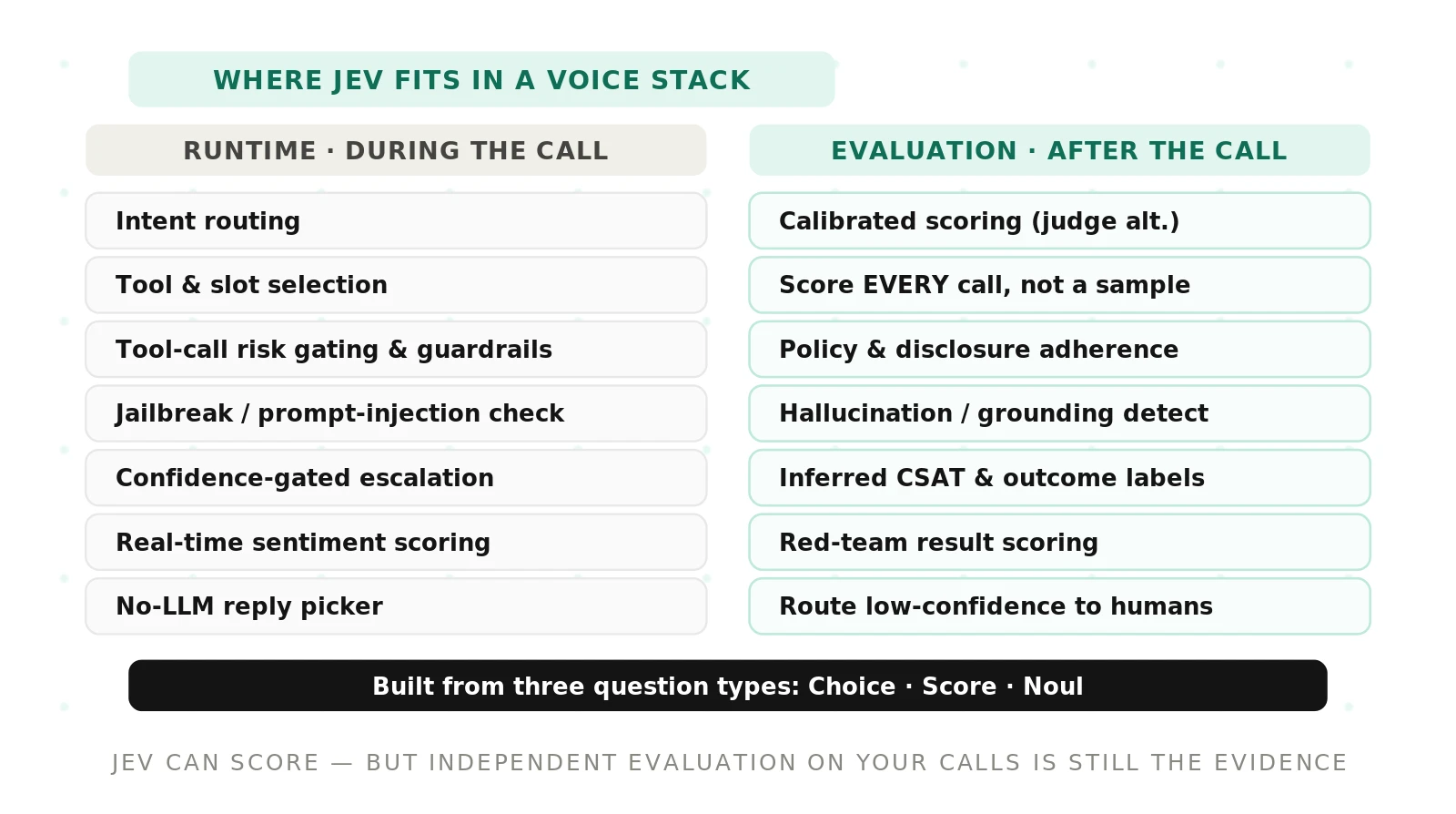
Jev Use Cases for AI Voice Agents, and How to Use Jev
Jev use cases for voice agents: 25 runtime and QA examples, and how to use Jev: send one state with several typed questions and read calibrated answers.
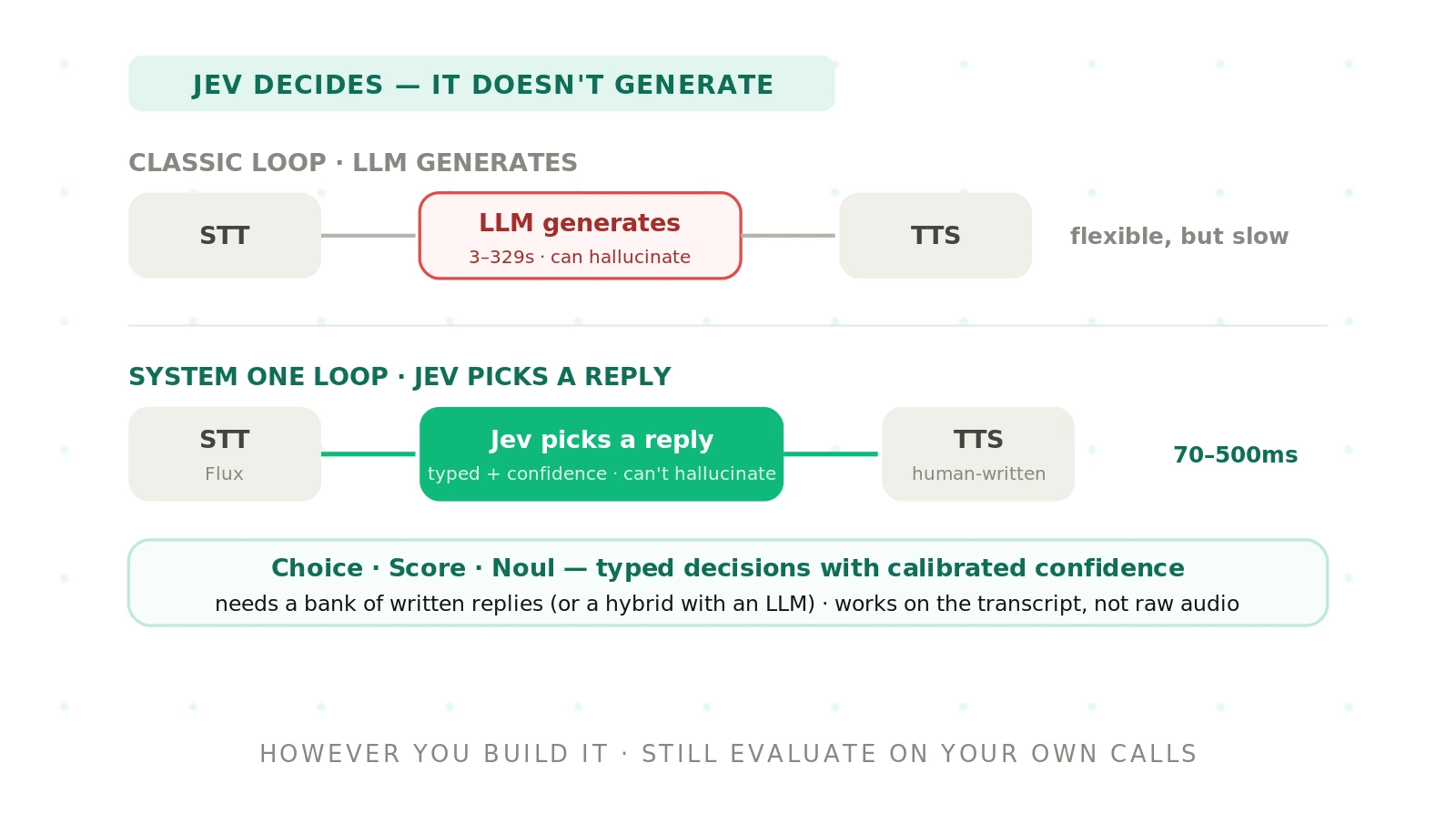
Jev for AI Voice Agents: How a Jev Agent Decides Without an LLM
Jev is a System One model, not an LLM. How a Jev agent works in voice AI: the no-LLM-in-the-loop stack, real API calls, the economics, and how to audit it.
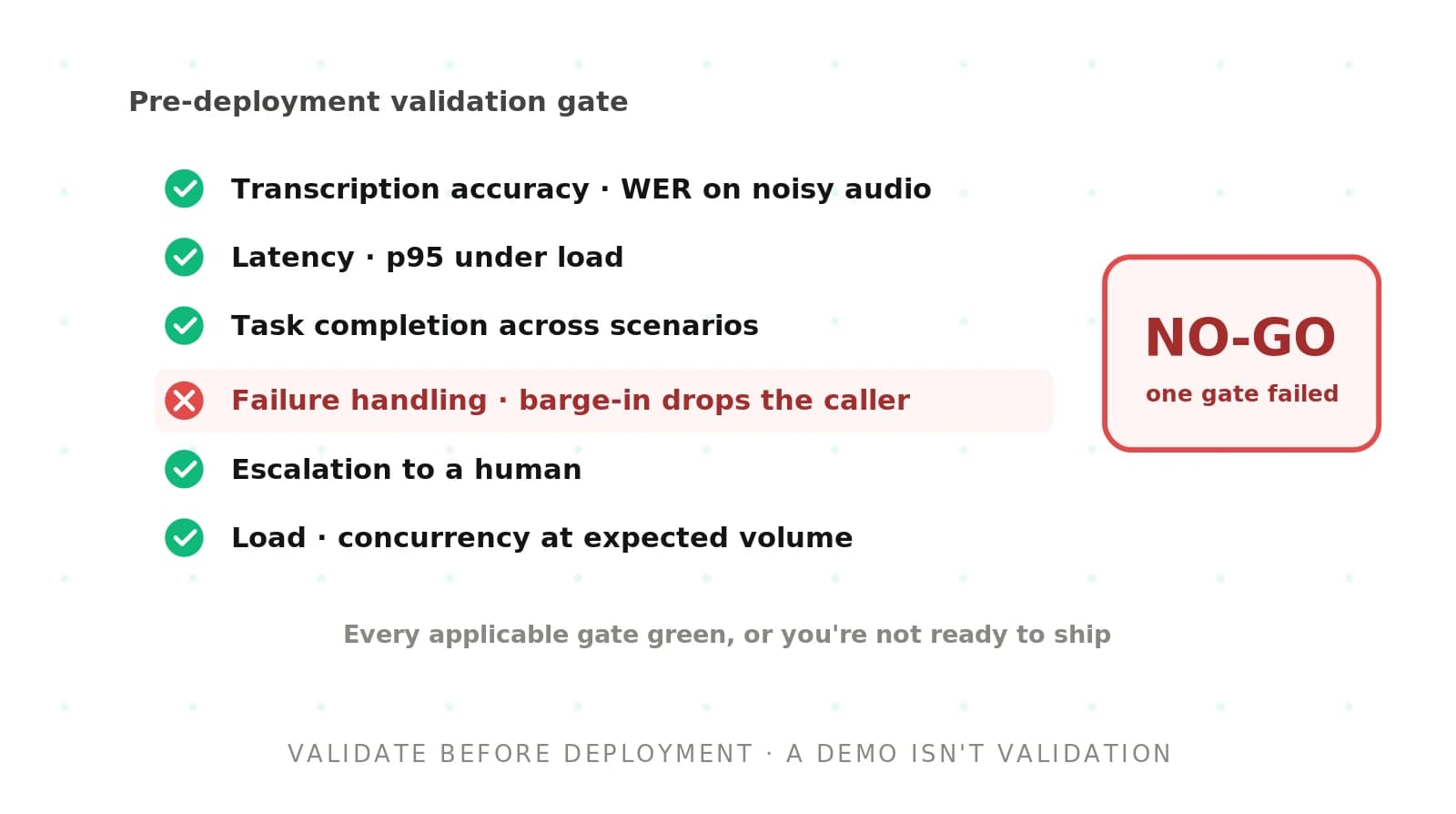
How to validate a voice agent before deployment: an 8-gate checklist
Validate a voice agent before deployment with an 8-gate go/no-go checklist: accuracy, latency, task completion, failure handling, load, and compliance.
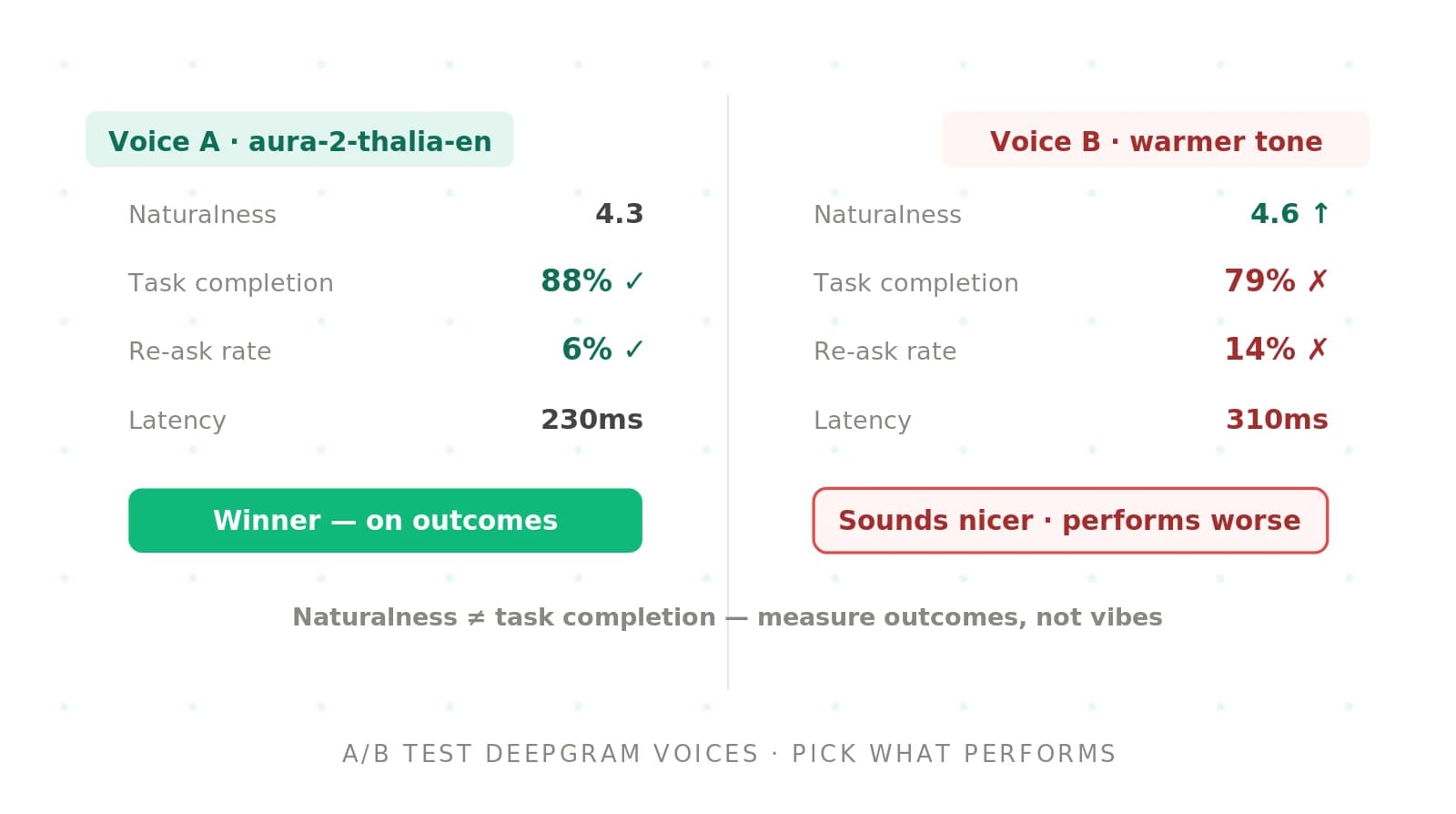
How to Evaluate Voice Variations With A/B Tests in Deepgram (2026)
Evaluate voice variations with A/B tests in Deepgram: pin Aura-2 or Flux TTS per session, randomize by caller, size the sample, and avoid peeking errors.