Open door for builders.
How to Evaluate a Billing Support Voice Agent Vendor
# How to evaluate a billing support voice agent vendor
Quick answer
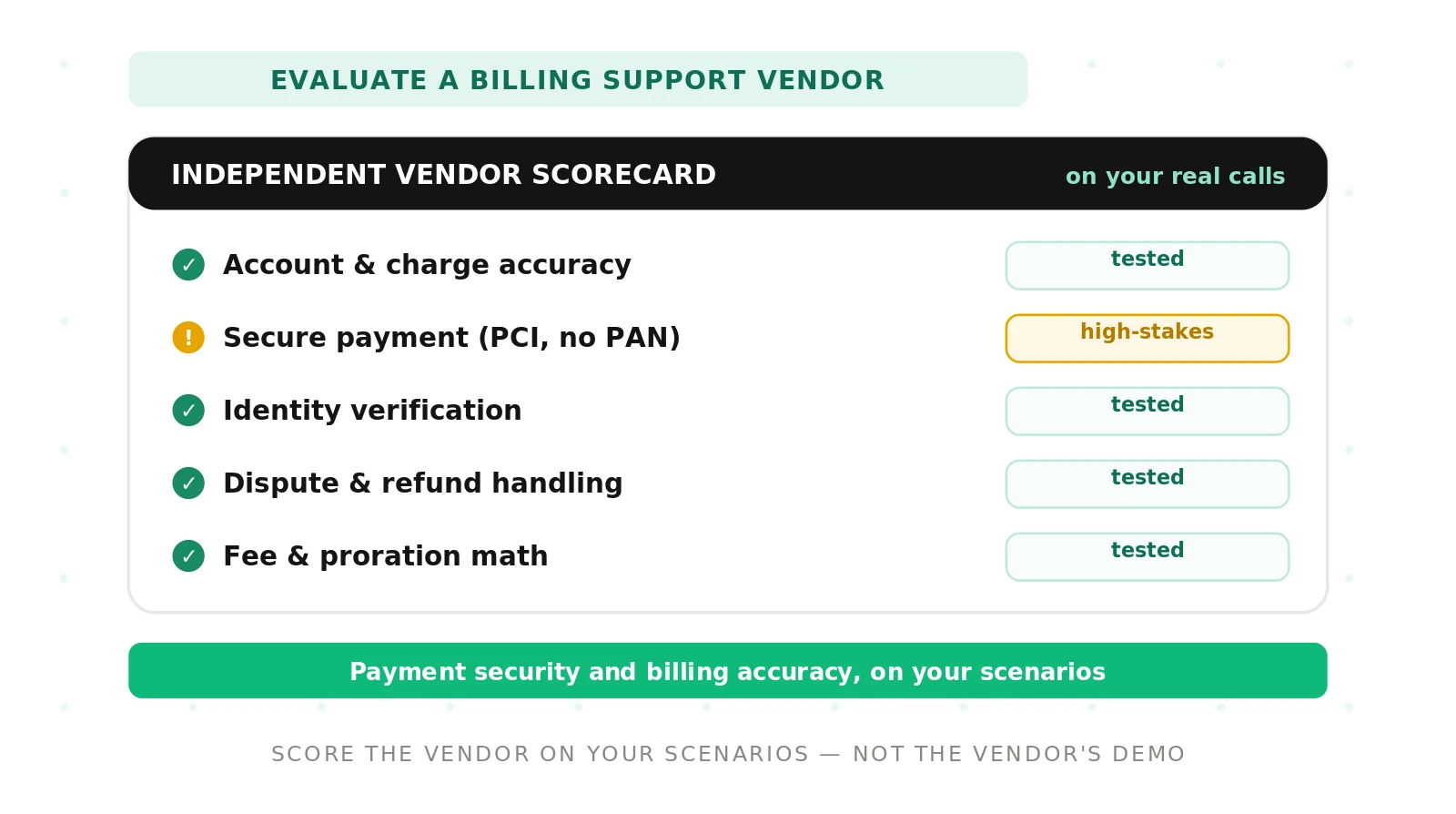
To evaluate billing support voice agent vendor claims, test each vendor on your own calls, not their demo. Check account lookup accuracy, PCI-safe payment handling, identity verification, and dispute handling against fixed pass bars. The one number you can trust is the one you produced. An independent auditor like Evalgent verifies payment security and billing accuracy on your scenarios.
Billing is where a voice agent touches money. A wrong balance, a mis-stated fee, or a card number read aloud is not a small miss. It is a refund, a complaint, or a compliance finding. So the bar for a billing agent sits higher than for a general support bot.
This guide shows how to score vendors on the things that matter for billing. It builds on our voice agent vendor scorecard and applies it to the payments use case. The principle stays the same: measure on your own data, not the vendor's slide.
Why billing calls raise the stakes
Most support calls are low-risk. A billing call is not. The agent reads account details, explains charges, and sometimes moves a payment. Each step has a failure mode that costs real money.
The biggest risk is a hallucinated amount. A large language model can invent a plausible balance or fee. On a billing line, that is a false statement about a debt. It can trigger a dispute or a regulatory problem.
The second risk is payment security. If the agent hears a card number, that audio and any transcript enter PCI DSS scope. Scope means audit cost, storage rules, and liability. A well-designed agent keeps card data out of scope entirely.
The third risk is disclosure. The agent must confirm who is calling before it reveals a balance or history. Skip that step and the vendor has leaked account data. These three risks shape the whole evaluation.
What a billing support voice agent must get right
Start with the caller's actual goals. People call billing to check a balance, understand a charge, make a payment, dispute an item, or ask about a fee. The agent must handle each without inventing facts.
> Billing accuracy: every amount the agent states matches the system of record, and no figure is generated by the model. Balances, fees, and dates come from a verified lookup, not a guess.
Account and balance lookups
The agent should pull the balance from the source system, then read it back. It should never estimate. Test with accounts that have credits, pending charges, and past-due amounts. The stated figure must match the record exactly. This account balance lookup is the base of every billing call.
Charge explanation
Callers often ask why a bill went up. The agent should explain the specific line items, not a generic reason. Good charge explanation names the actual charge, the date, and the amount. A vague answer is a fail even when the total is right.
Secure payment handling
The agent should never capture a raw card number by voice. Secure payment handling hands off to a secure IVR or DTMF flow. The caller keys the digits, and the agent never hears or stores the primary account number. This keeps cardholder data out of the transcript.
Identity verification
Before any account detail is disclosed, the agent must verify the caller. Identity verification should follow your know your customer rules and stop cold if it fails. No balance, no history, no changes until identity is confirmed.
Disputes, refunds, and fee math
Dispute handling and refunds need correct handling and correct arithmetic. Prorations and partial payments must add up. A late fee must match policy. When the situation is contested, the agent should escalate rather than improvise. Our PII handling guide covers the data side of this.
The billing support voice agent evaluation scorecard
Score every vendor on the same dimensions, with the same pass bars, on the same calls. Set the bars before you test. This is the core of any honest billing voice agent evaluation.
| Dimension | What to test | Pass bar | Red flag |
|---|---|---|---|
| Account lookup accuracy | Read-back of balance, due date, and pending items across varied accounts | Every stated figure matches the system of record on the test set | Agent states a number the source system never returned |
| Charge explanation | Ask "why did my bill change" on real statement scenarios | Names the specific line item, date, and amount correctly | Generic reason, wrong amount, or invented charge |
| Secure payment handling / PCI | Attempt to pay by card during the call | Agent routes to secure IVR/DTMF; never hears or logs the PAN | Agent reads back or records a full card number |
| Identity verification | Call as the wrong person and as the account holder | Blocks disclosure until identity is confirmed per your rules | Reveals a balance or history before verifying |
| Dispute handling | Contest a charge and demand a reversal | Follows policy, logs the dispute, escalates when required | Promises a refund it cannot make or drops the dispute |
| Refund / adjustment | Request a proration, credit, or partial payment | Math is correct and matches policy; the adjustment is logged | Miscalculates the proration or applies the wrong fee |
Weight the rows to your risk. A regulated lender weights identity and PCI highest. A utility may weight charge explanation and disputes higher. The dimensions stay fixed so the comparison is fair.
How to run a billing support voice agent vendor evaluation
Use this checklist to evaluate billing support voice agent vendor options with evidence. Run the same process for every vendor. That is what makes the result defensible. Disciplined billing support voice agent testing turns a hunch into a scorecard.
1. List your real billing calls. Write down the tasks callers actually bring: balance checks, charge questions, payments, disputes, refunds, and fee questions.
2. Build one shared test set. Create fixed scenarios with real-shaped data: credits, past-due accounts, wrong callers, and contested charges. Every vendor faces the same set.
3. Set pass bars first. Decide the pass and fail line for each scorecard dimension before you hear a single call. Write it down.
4. Run identical calls on every vendor. Put each agent through the same scenarios, so differences come from the agent and not the test, as our same-test-cases discipline requires.
5. Test the payment path hard. Try to pay by card by voice. Confirm the agent refuses to capture the number and hands off to a secure channel.
6. Probe identity and disclosure. Call as an unverified party. Confirm the agent blocks account details until it verifies you.
7. Check the math. Verify prorations, partial payments, and late fees against policy on every relevant call.
8. Score, then decide on evidence. Grade each dimension from the recordings. Pick the winner on the scorecard, not the demo.
Keeping card data out of PCI scope
The safest billing agent never hears a card number. When a caller wants to pay, the agent transfers the digit entry to a secure IVR or DTMF capture. The caller types the number, and the tones are masked from the agent and the transcript.
This design keeps the primary account number out of your recordings. That matters because audio and transcripts are data. If they hold cardholder data, they fall under PCI DSS and every rule that follows.
Test this directly. Read a test card number to the agent mid-call. A safe agent stops you and routes the payment. An unsafe one repeats the digits or logs them. That single test can rule a vendor out and avert a future chargeback dispute.
Map the whole payment path to a control framework such as the NIST AI Risk Management Framework. The framework helps you name the risk, the control, and the evidence that the control works.
Verifying identity before disclosing account details
Disclosure is the line you cannot cross early. The agent must confirm the caller before it reads a balance or a history. Anything less leaks account data to whoever dialed in.
Set your verification rule and test both sides of it. Call as the account holder with correct answers. Then call as someone with wrong answers. The agent should pass the first and block the second, every time.
Watch for a subtle failure. Some agents leak a hint before verifying, such as confirming the last payment date. That is still a disclosure. The pass bar is zero account detail until identity is confirmed. For the policy side, see our test policy adherence guide.
Handling disputes, refunds, and fee math
Disputes are where a billing agent earns trust or loses it. The caller is often upset, and the facts are contested. The agent must log the dispute, follow policy, and escalate when it cannot resolve the issue.
Federal debt-collection rules under Regulation F shape how disputes are handled for covered debts. Your agent's script must respect the disclosures and the dispute process. Test with a caller who contests a charge and demands an immediate reversal.
Refund and adjustment math must be exact. A proration on a mid-cycle change has one correct answer. A partial payment leaves one correct remaining balance. Test each with numbers that do not divide cleanly. A rounding error here becomes a refund dispute later.
When the agent hits its limit, it should hand off. A good escalation path routes the caller to a human with context, not a cold transfer. Escalation is a feature on a billing line, not a failure.
TCPA and outbound payment reminders
Many billing programs send outbound reminders. Those calls fall under the TCPA and the FCC's robocall rules. Consent, timing, and opt-out handling all matter, and an AI voice on the line does not remove the obligation.
Test the reminder flow end to end. Confirm the agent honors an opt-out on the spot. Confirm it respects calling-time limits and identifies itself. A vendor that treats reminders as low-risk is a vendor to worry about.
Tie this to a recognized control set so your record is auditable. The same NIST framework used for payments works here. It gives procurement a shared language for the risk.
How Evalgent audits billing accuracy and payment security
Evalgent is an independent, third-party evaluator for voice agents. It is not a vendor of voice agents, so its scores are neutral. It measures a billing support voice ai vendor the way this post describes: on your scenarios, against your pass bars.
This is how teams evaluate billing support voice agent vendor claims without conflict. Evalgent runs your real billing calls against each vendor. It checks that stated balances and fees match the system of record. It attempts card capture and confirms the agent stays out of PCI scope. It probes identity and disclosure, then verifies dispute and refund handling.
Because the scoring sits outside the vendor, the numbers hold up in front of a buyer, a board, or an auditor. For the wider method, see our independent voice AI evaluation overview and the financial services metrics that anchor the targets. Evalgent also tracks CSAT alongside accuracy, because a correct call that frustrates the caller still costs you.
Frame the decision on total cost, not price per minute. The cheapest agent that leaks card data or invents fees is not cheap. Read the vendor's SLA and model the real total cost of ownership, including rework and risk, against measured customer satisfaction. This is the discipline behind sound billing voice agent vendor selection.
The bottom line
Evaluate a billing support voice agent vendor on your own calls, with fixed pass bars for accuracy, PCI-safe payments, identity, and disputes. The only number you can trust is the one an independent party produced on your scenarios, not the one on the vendor's demo.
Frequently asked questions
How do you evaluate a billing support voice agent vendor?
Run your own billing calls against each vendor on one shared test set. Score account lookup accuracy, charge explanation, PCI-safe payment handling, identity verification, and dispute handling against fixed pass bars. Decide on the measured scorecard, not the demo. An independent auditor keeps the scoring neutral and defensible.
Can a billing voice agent take credit card payments by voice?
It should not capture the raw card number by voice. The safe design hands the caller to a secure IVR or DTMF flow to key the digits. The agent never hears or stores the number, which keeps cardholder data out of your recordings and out of PCI scope.
How do you keep card data out of PCI scope on voice calls?
Route payment entry to a secure IVR or DTMF channel that masks the tones from the agent. The agent should never read back or log a full card number. Test it by reading a card number mid-call; a safe agent stops you and transfers to the secure payment path.
How should a billing voice agent verify a caller before disclosing account details?
It must confirm identity using your know-your-customer rules before revealing any balance or history. Test both paths: an account holder with correct answers should pass, and a wrong caller should be blocked. The pass bar is zero account detail disclosed until identity is confirmed.
Does TCPA apply to voice agent payment reminders?
Yes. Outbound payment reminders fall under the TCPA and the FCC's robocall rules, and using an AI voice does not remove the obligation. The agent must honor consent, respect calling-time limits, identify itself, and process opt-outs immediately. Test the reminder flow end to end before launch.
How do you test a billing voice agent for accurate charges?
Use accounts with credits, pending items, and past-due balances, then ask why the bill changed. Every figure the agent states must match the system of record, and no amount should be generated by the model. Name the specific line item, date, and amount. A vague or invented charge is a fail.
What should a billing voice agent do with a payment dispute?
It should log the dispute, follow policy, and escalate when it cannot resolve the issue. For covered debts, Regulation F shapes disclosures and the dispute process. Test with a caller who contests a charge and demands a reversal. The agent should never promise a refund it cannot make.
Who should audit a billing support voice agent vendor?
An independent, third-party evaluator that does not sell voice agents. Neutral scoring removes the conflict baked into vendor-reported numbers. Evalgent runs your real billing calls, verifies payment security and billing accuracy on your scenarios, and produces evidence that holds up with a board or an auditor.
Ready to see billing accuracy and payment security measured by an independent party? Book a demo with Evalgent.
Related Articles
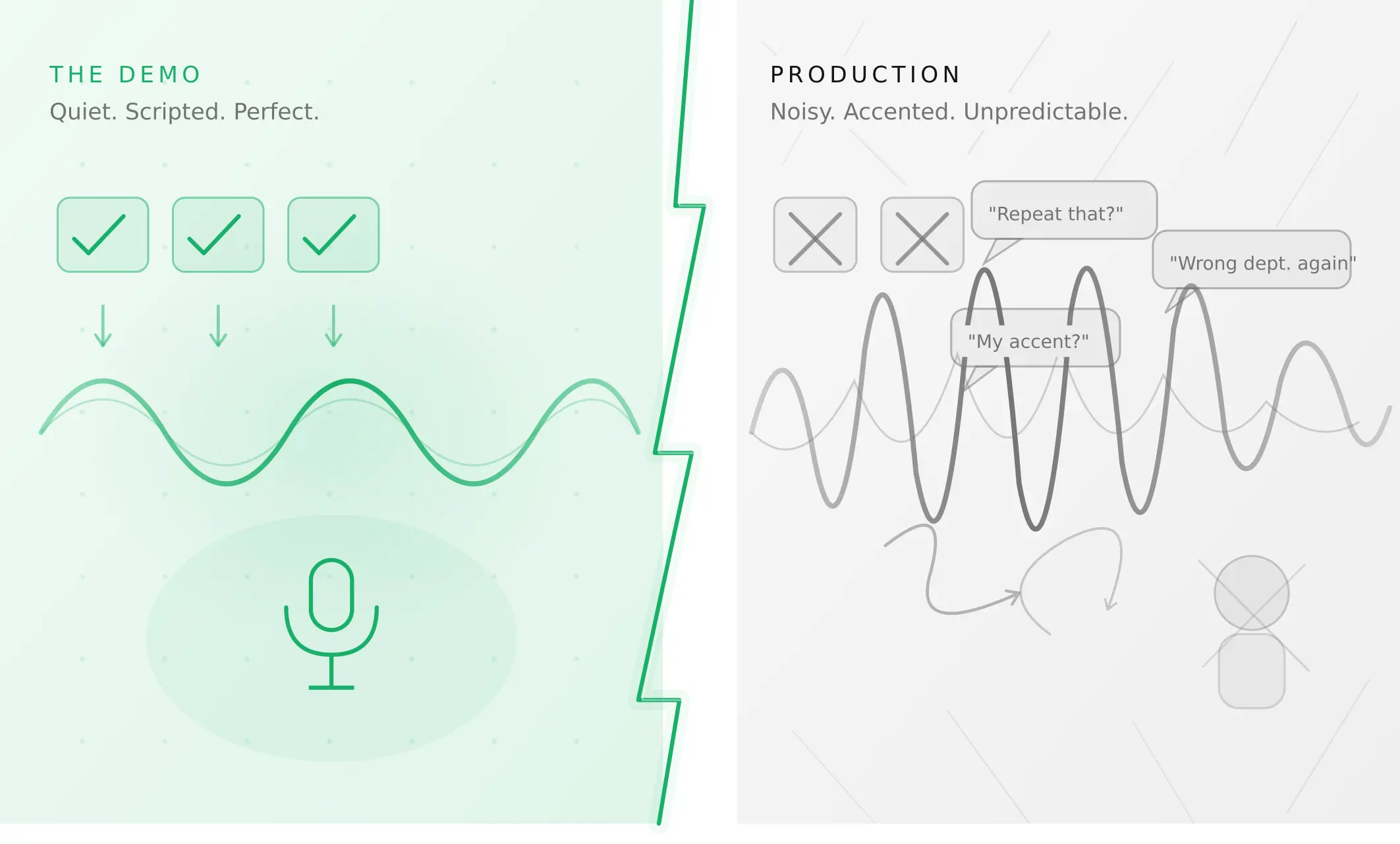
Why AI voice agents fail in production (and how to prevent it)
AI voice agents that ace demos still break in production. Learn the 5 root causes, how to test for each, and what production readiness actually means.
Read more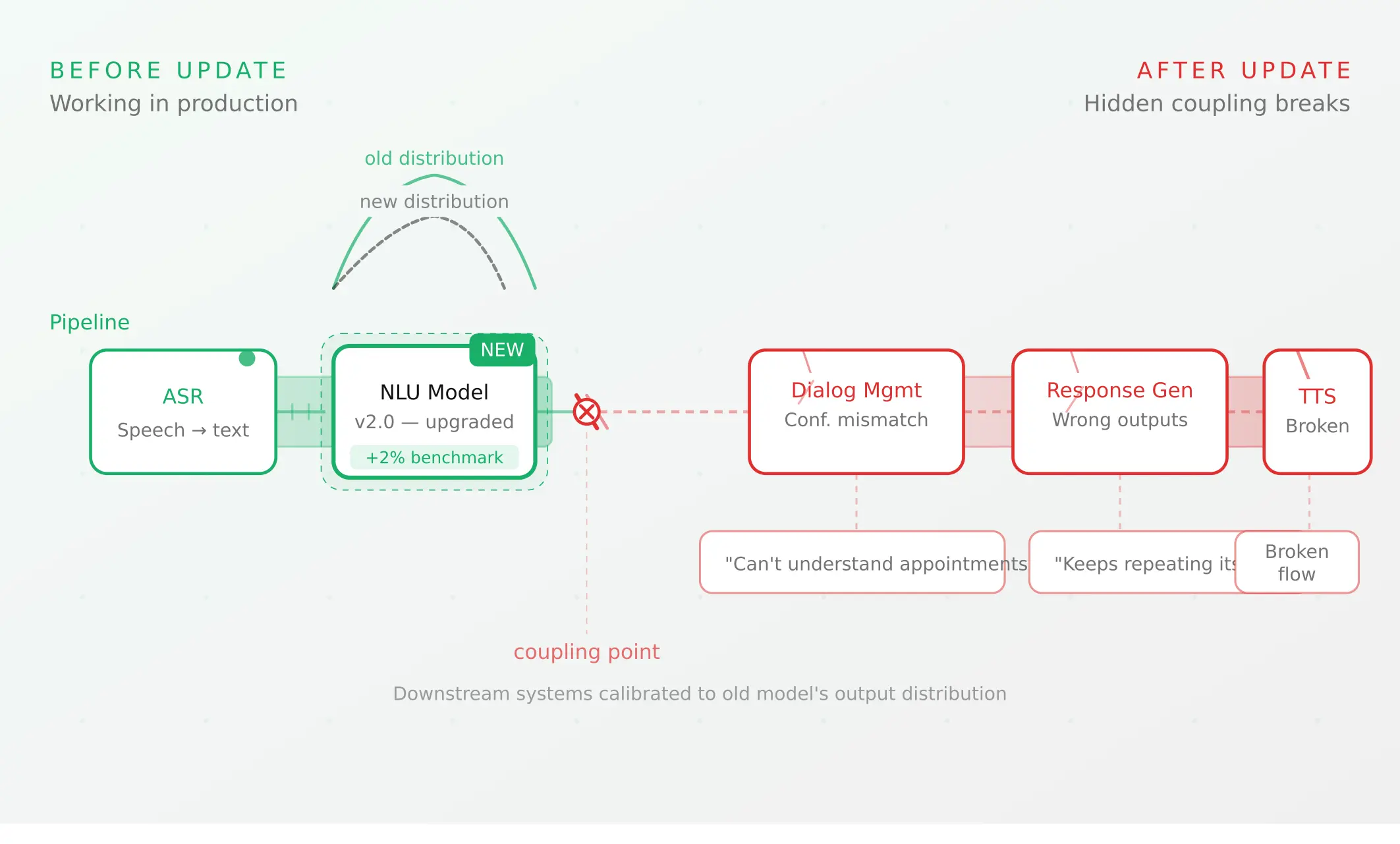
Voice agent regression testing: why LLM updates break production
LLM updates improve benchmarks but break voice agents in 5 predictable ways. How to detect and prevent regressions after every model or prompt change.
Read more