Blog
Page 9 of 32
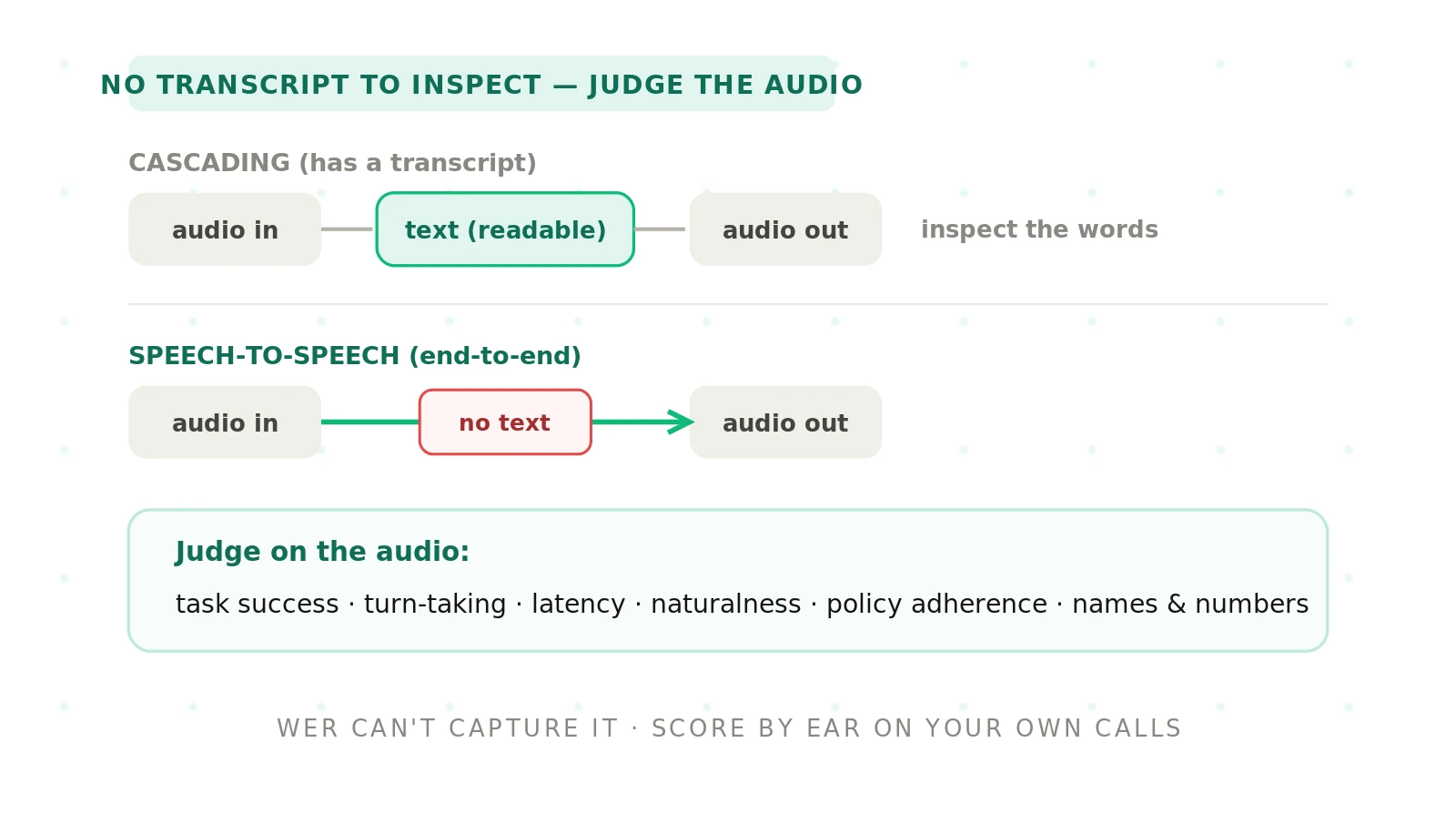
How to Evaluate a Speech-to-Speech Model: Benchmarks, Scorecard, and a Fair Bake-Off
Benchmarks disagree by 60+ points on one speech-to-speech model. Map the research, measure the voice-text gap, and run a fair gated bake-off on your calls.
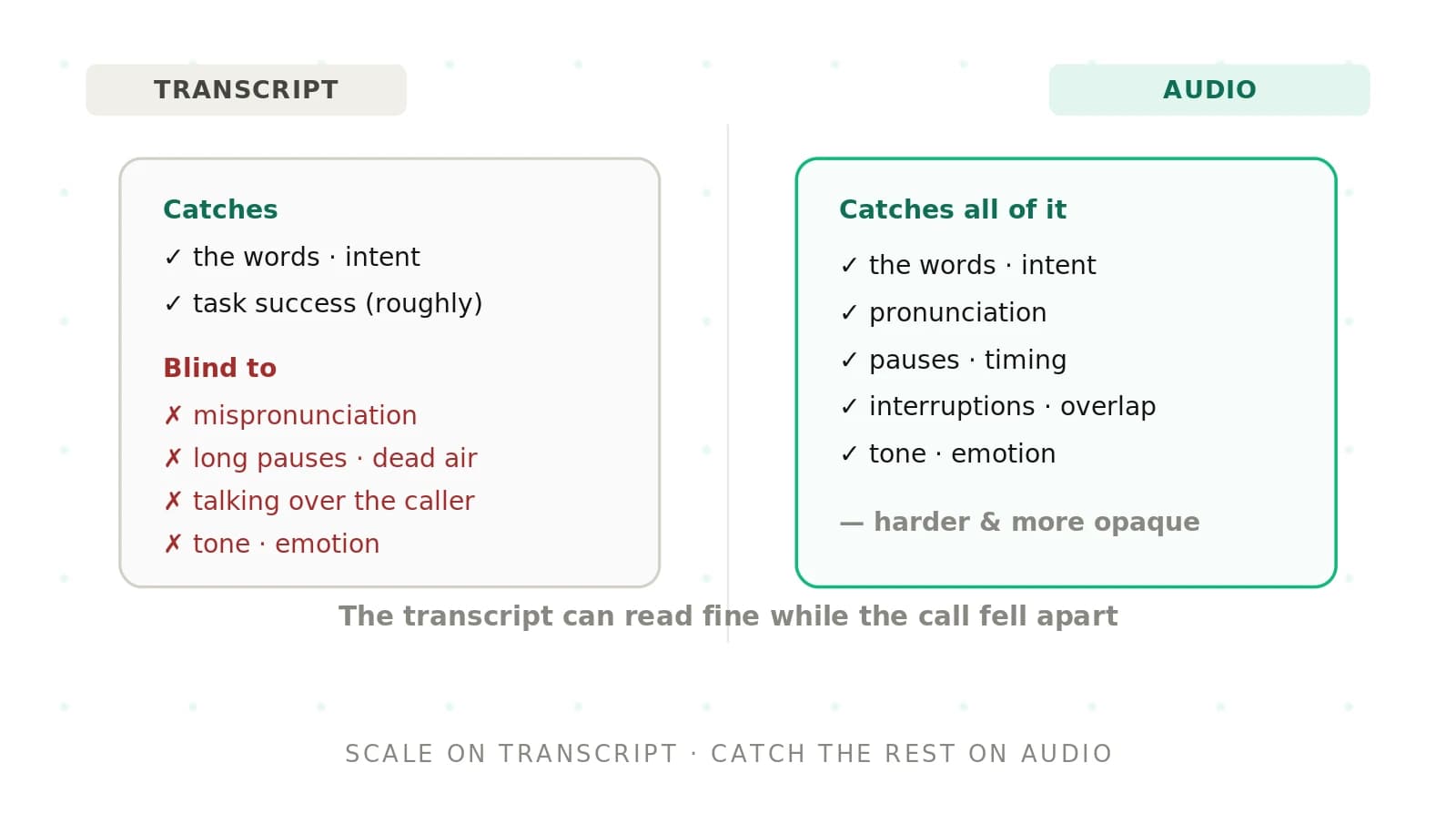
Transcript vs Audio Evaluation for Voice Agents: What Each One Misses (2026)
Transcript vs audio evaluation for voice agents: 15 failures transcripts hide, ASR laundering, audio-judge reliability data, cost math, and a hybrid plan.
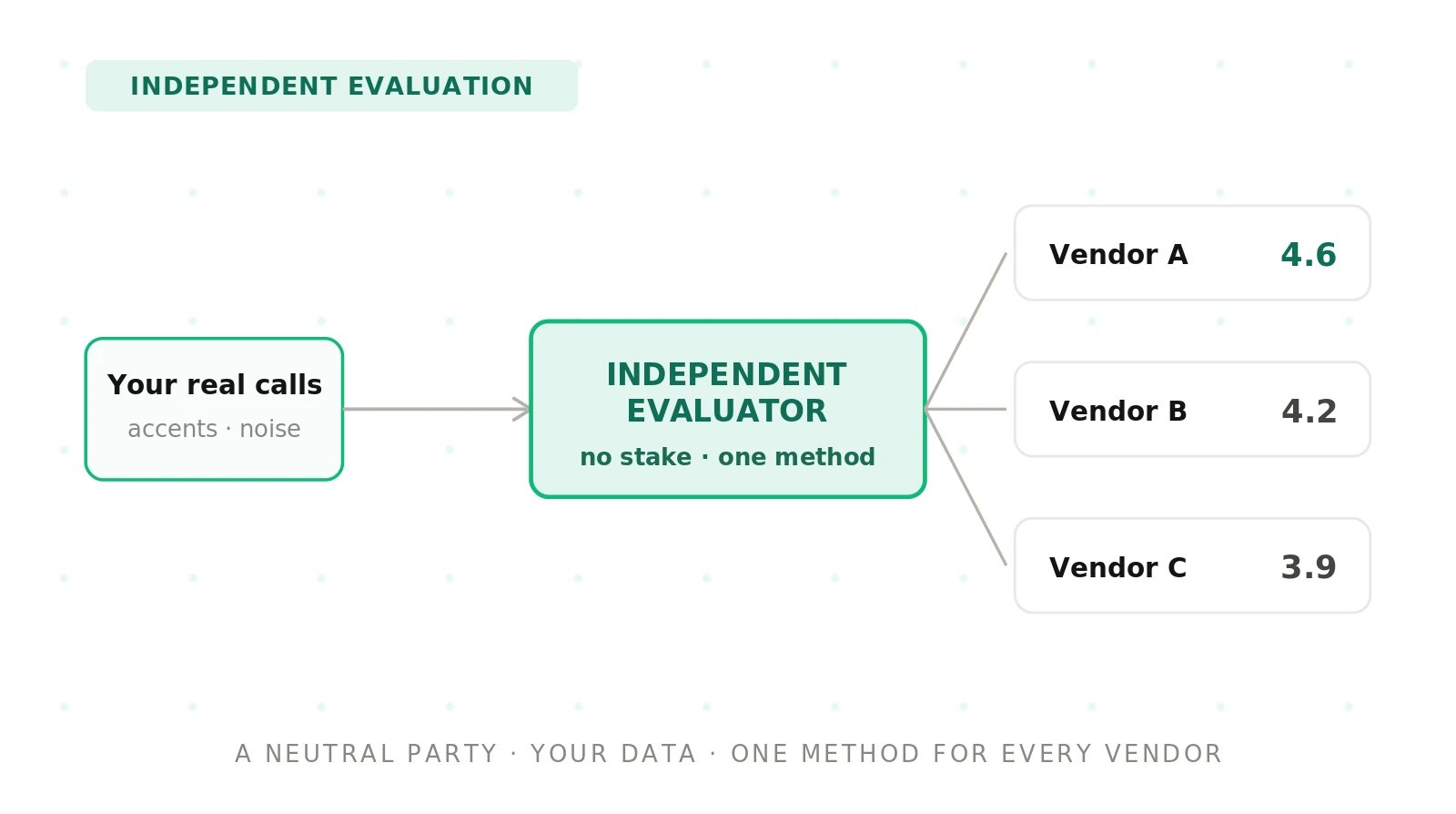
Independent Voice AI Evaluation: Why Self-Reported Metrics Fail and What Counts as Independent
Independent voice AI evaluation, built on research: why vendor metrics drift from reality, six tests of independence, and an RFP clause you can copy.
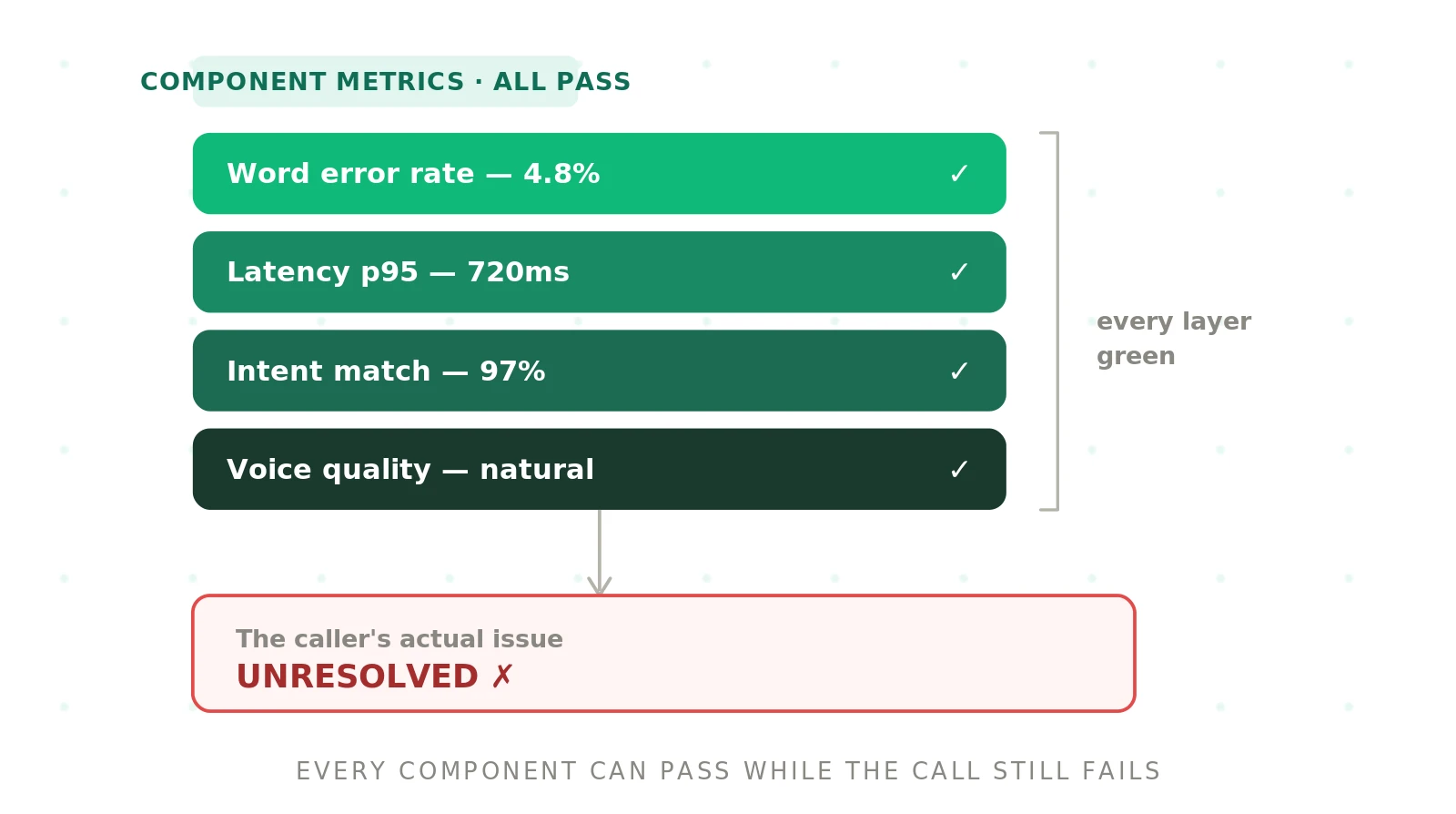
Voice Agent Evaluation: The Complete 2026 Guide
Voice agent evaluation, layer by layer: a metric catalog with formulas and gates, pass^k reliability, sample-size math, and how to validate an LLM judge.
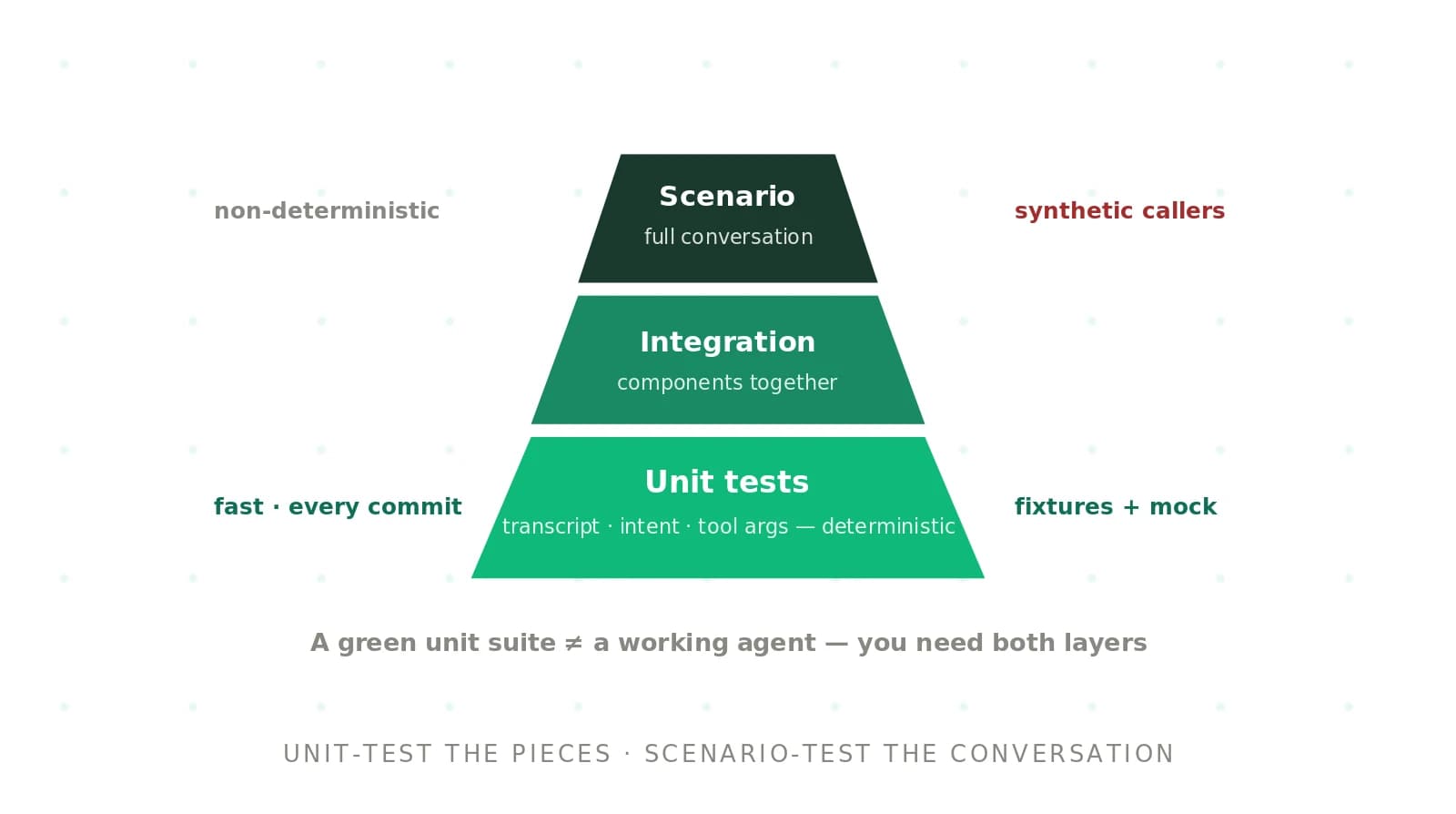
How to Unit Test Deepgram Voice Interactions: Fake Servers, Cassettes, and Assertions That Don't Flake
A four-layer test pyramid for Deepgram voice code: pure-logic tests, websocket cassettes on a fake server, model-version contract tests, and flake math.
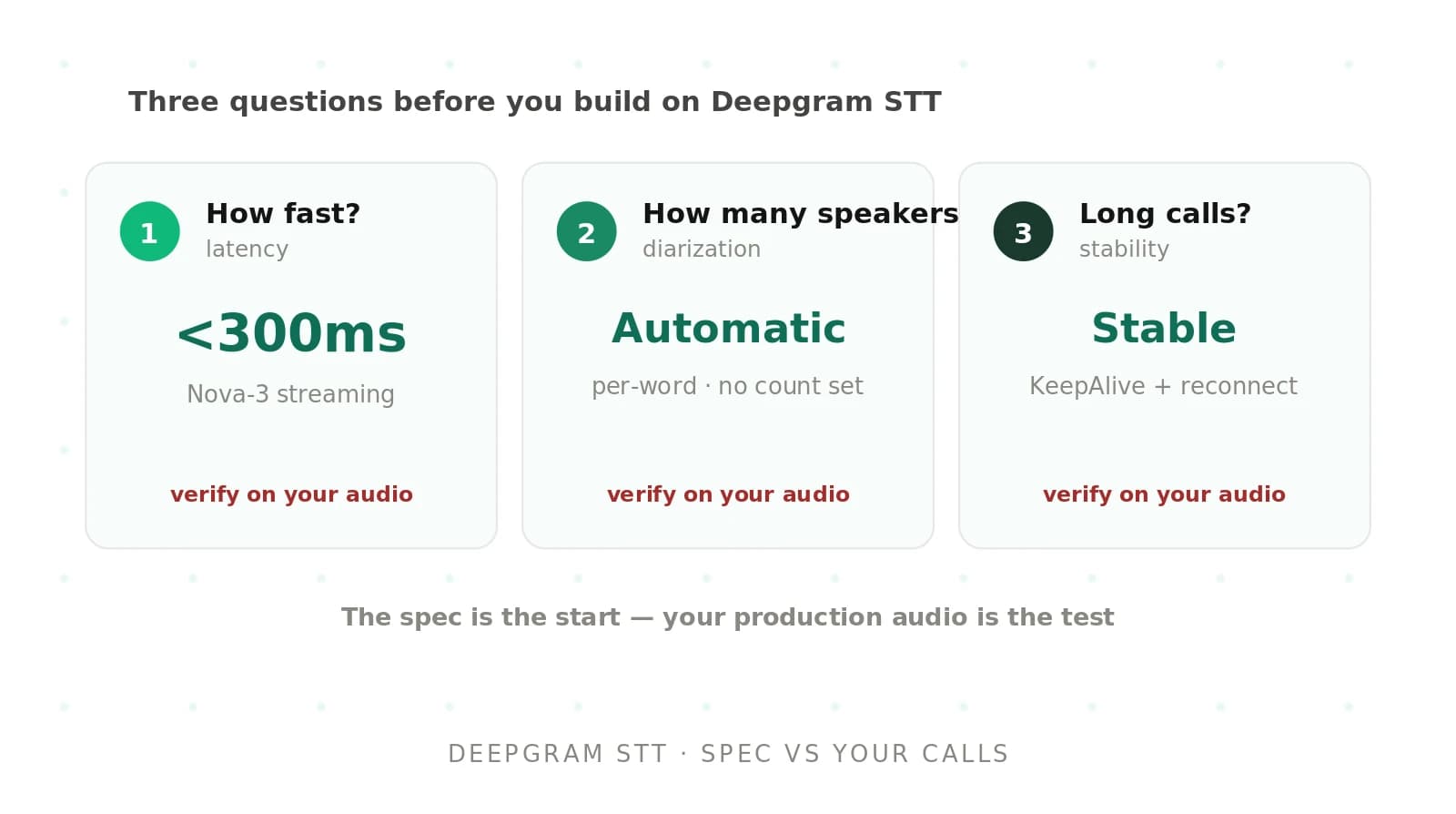
Deepgram STT latency, diarization, and long-call stability: how they work and how to measure them
How Deepgram finalizes transcripts, how to measure latency and DER the right way, and how to keep 30-minute streams alive through holds and reconnects.
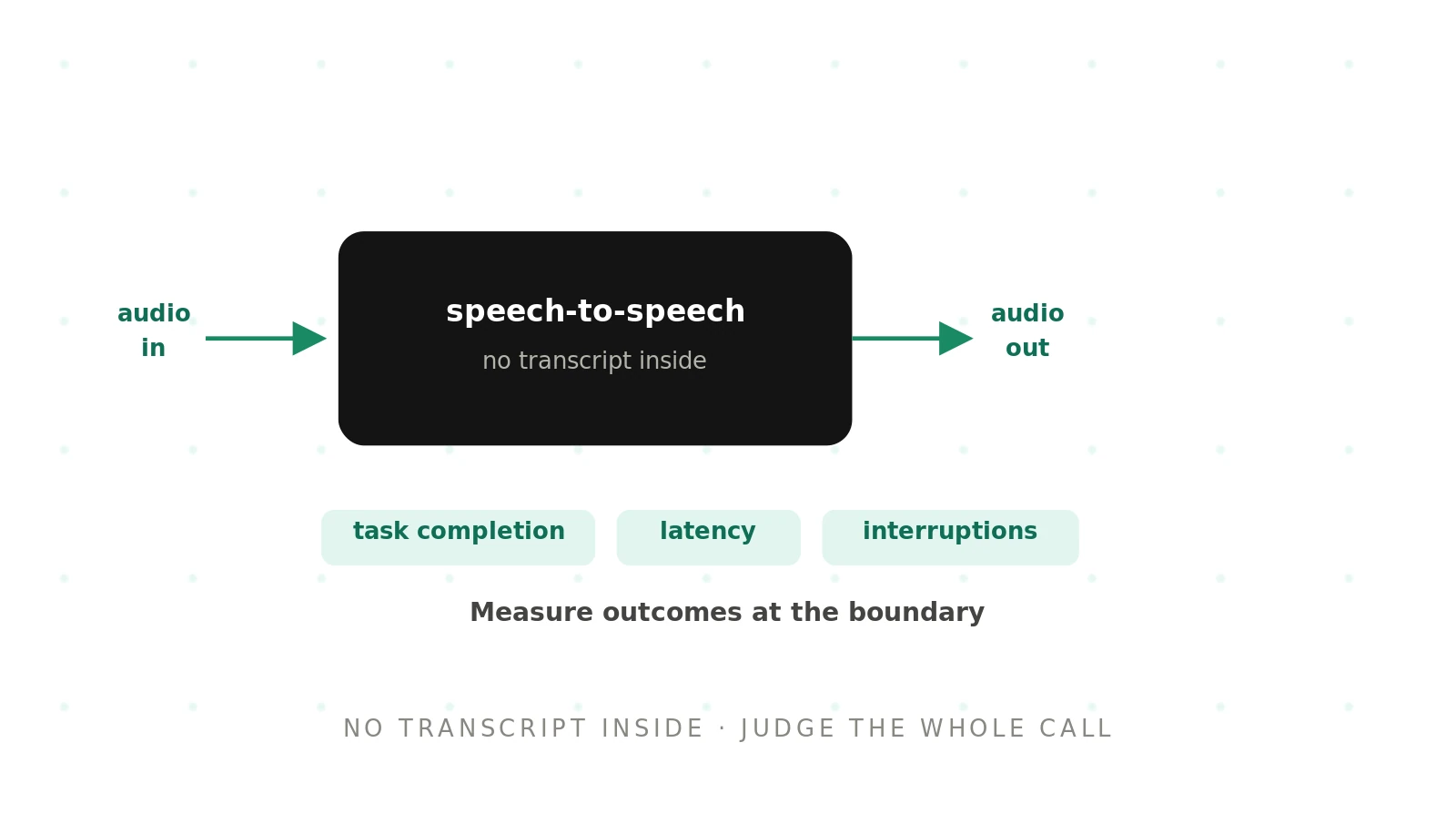
Testing speech-to-speech voice agents: ground truth, audio-native failures and a test matrix
Speech-to-speech agents have no trustworthy transcript. Learn to build ground truth, catch audio-native failures and test GPT-Live and Grok Voice.
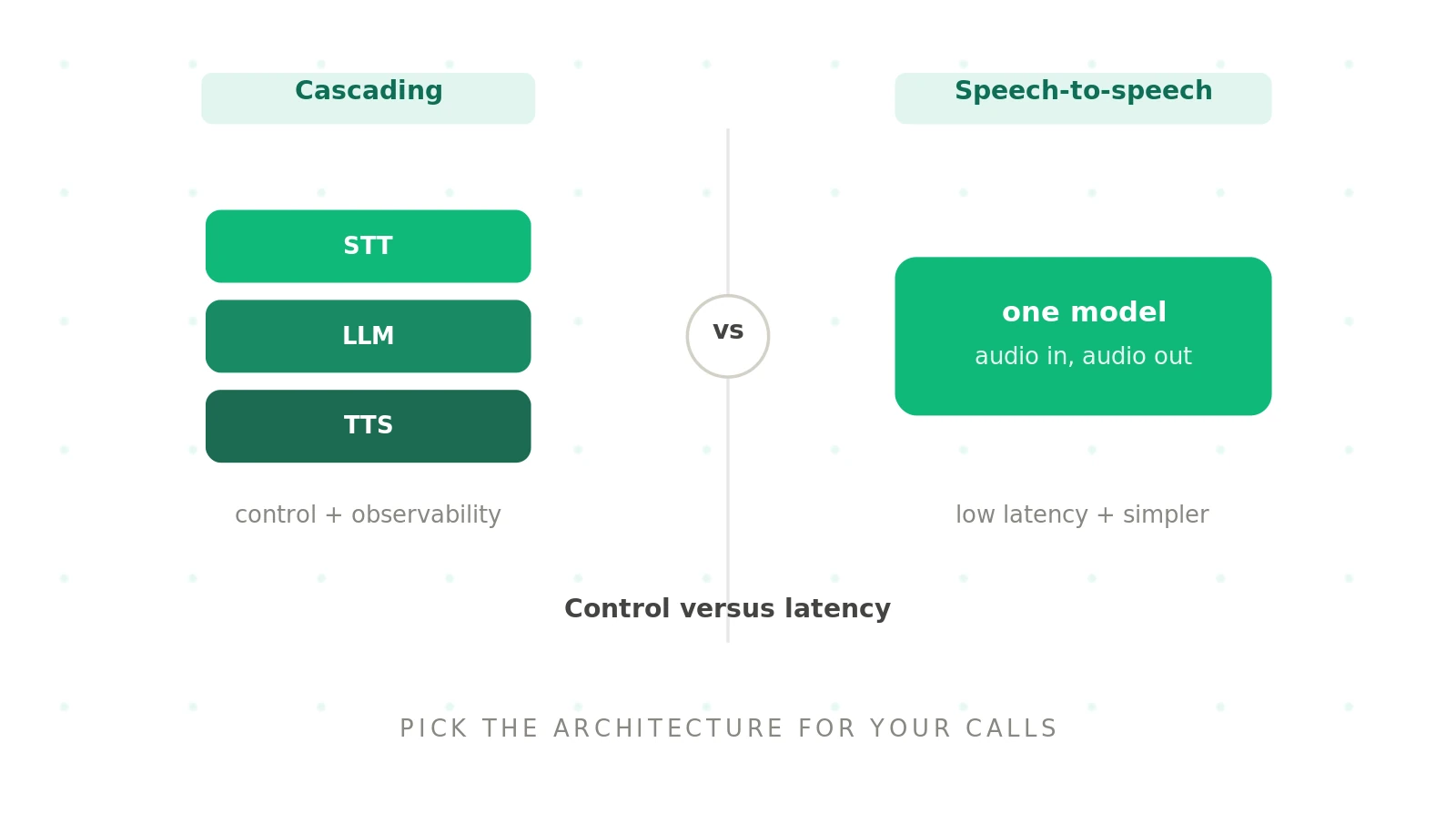
Cascading vs speech-to-speech voice agents: latency budgets, the intelligence tax, cost math, and hybrids
Cascading vs speech-to-speech voice agents, with per-hop latency budgets, benchmark-backed intelligence gaps, cost per minute, and hybrid patterns.
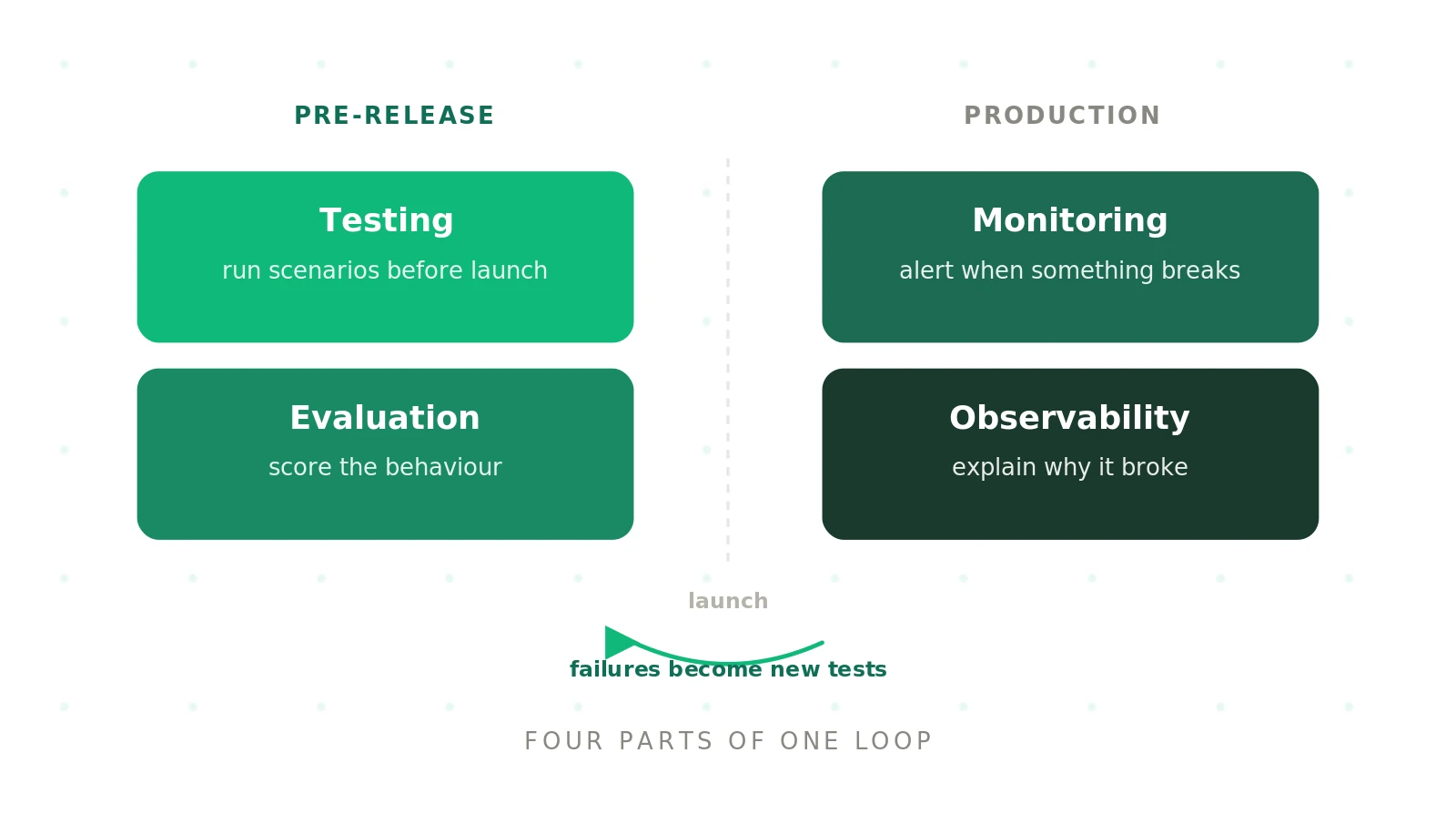
Voice agent testing vs monitoring vs observability (and evaluation): a working model
Testing, evaluation, monitoring and observability for voice agents: the question each answers, the failures each catches, sampling math and SLO alerts.