Blog
Page 10 of 14
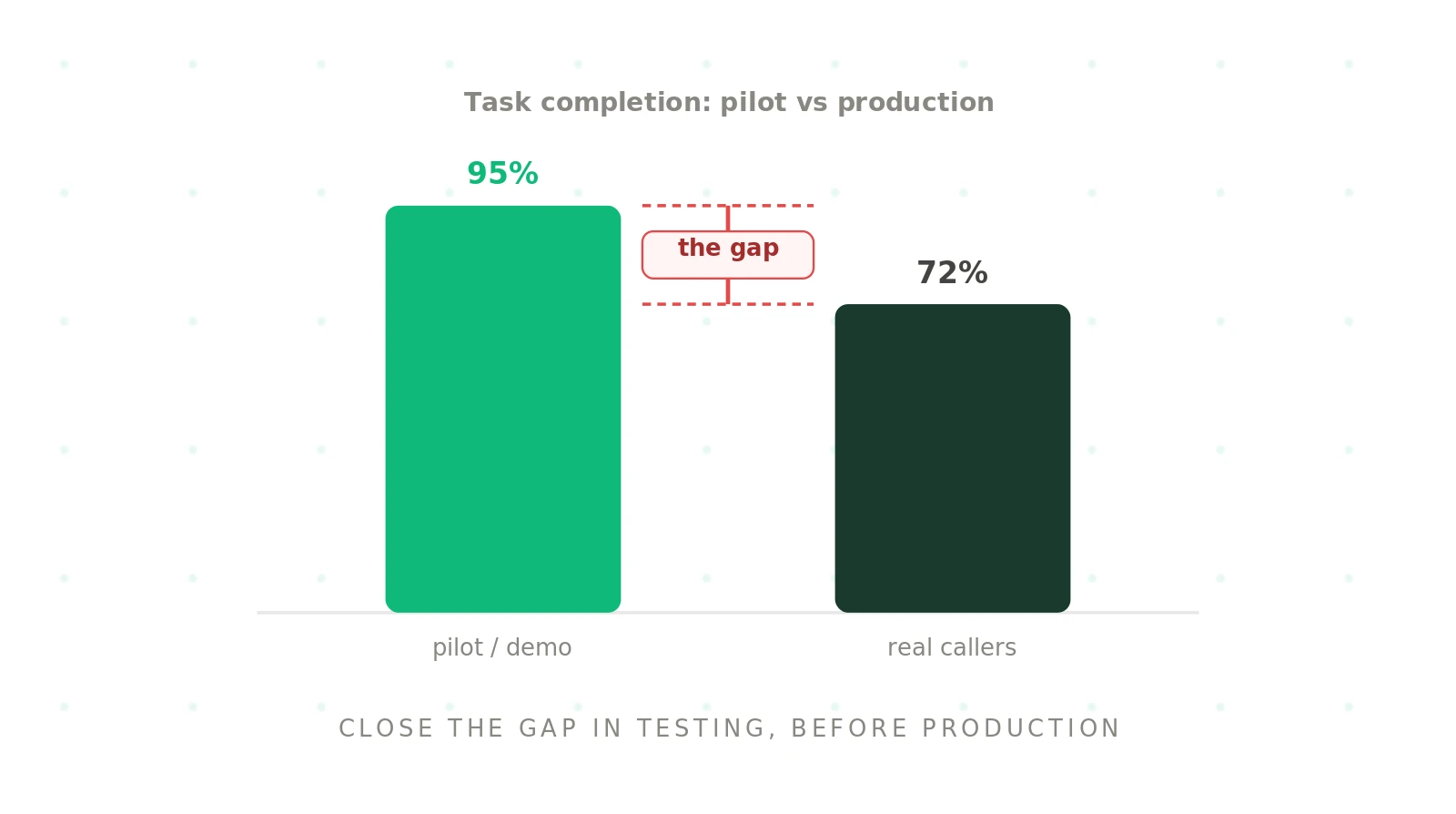
The voice AI deployment gap: why demos win and production breaks
The voice AI deployment gap is why agents that ace demos break in production. Learn what causes the pilot-to-production drop and how to close it.
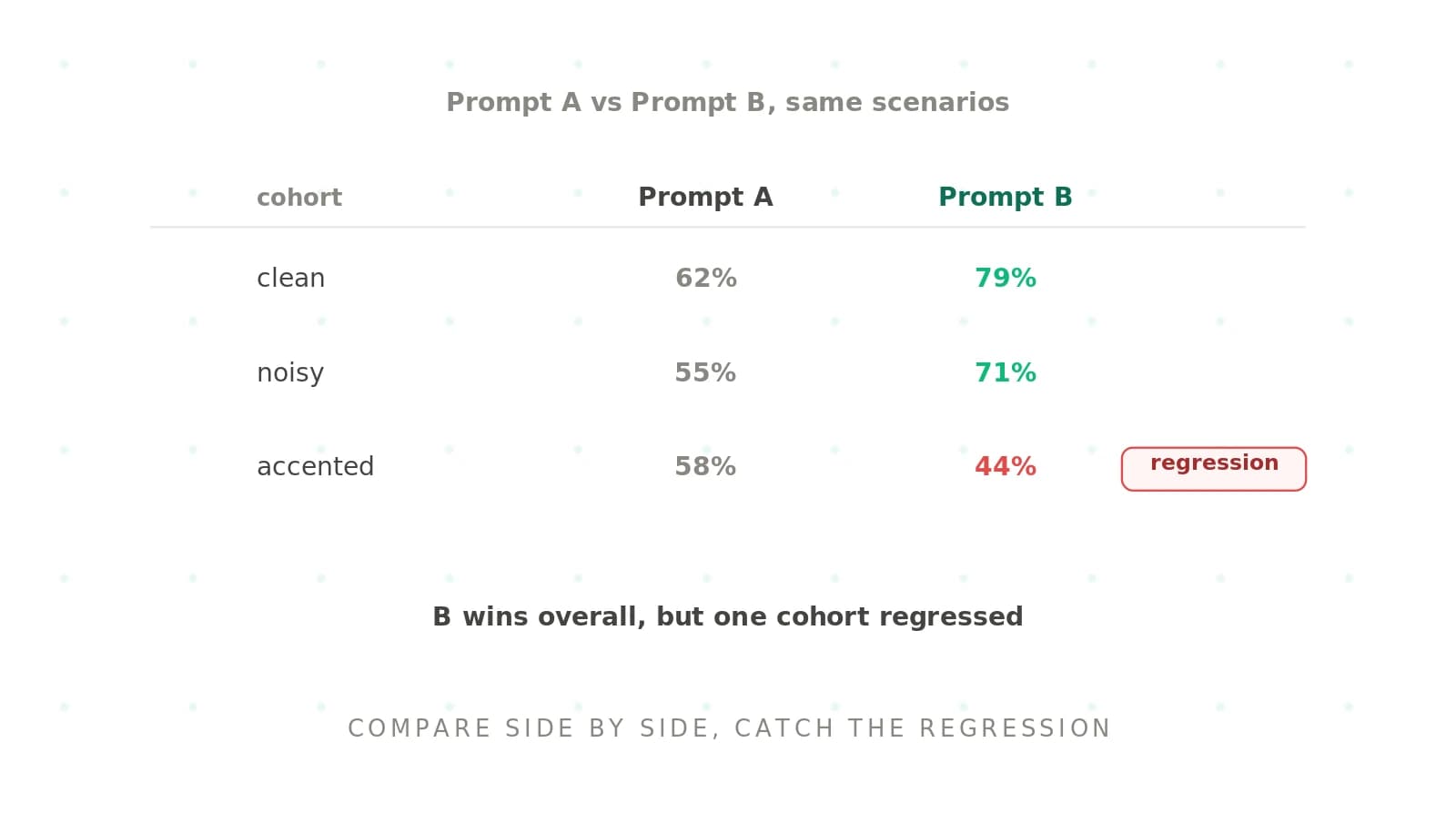
Voice agent prompt comparison: how to test prompt changes side by side
Voice agent prompt comparison runs two prompts on the same calls to find the winner. Learn side-by-side testing, catching regressions, and the tooling.
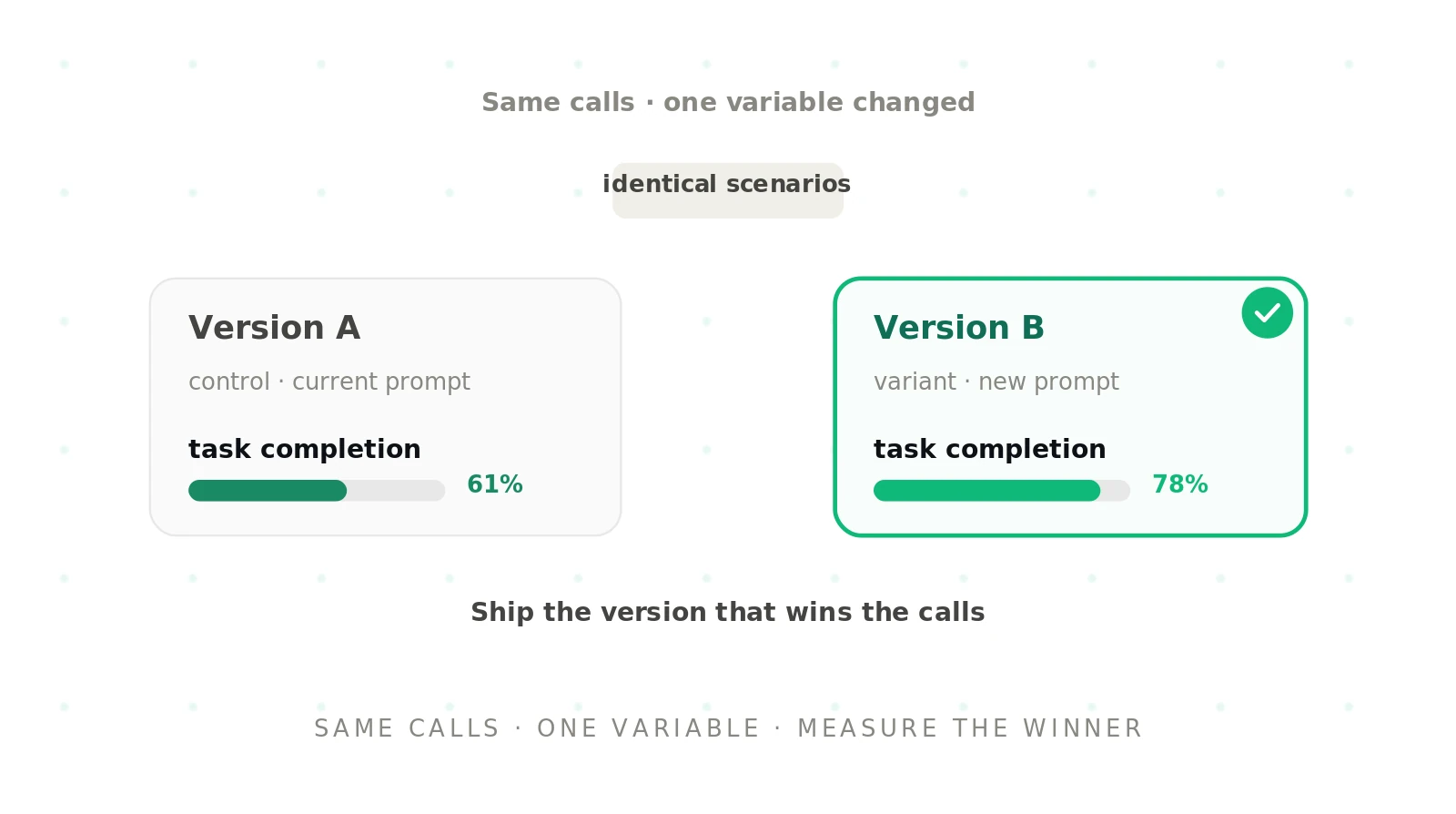
A/B testing voice agents: how to compare versions the right way
A/B testing voice agents compares two versions on the same calls to find the winner. Learn to test prompts, models, and voices with real metrics.
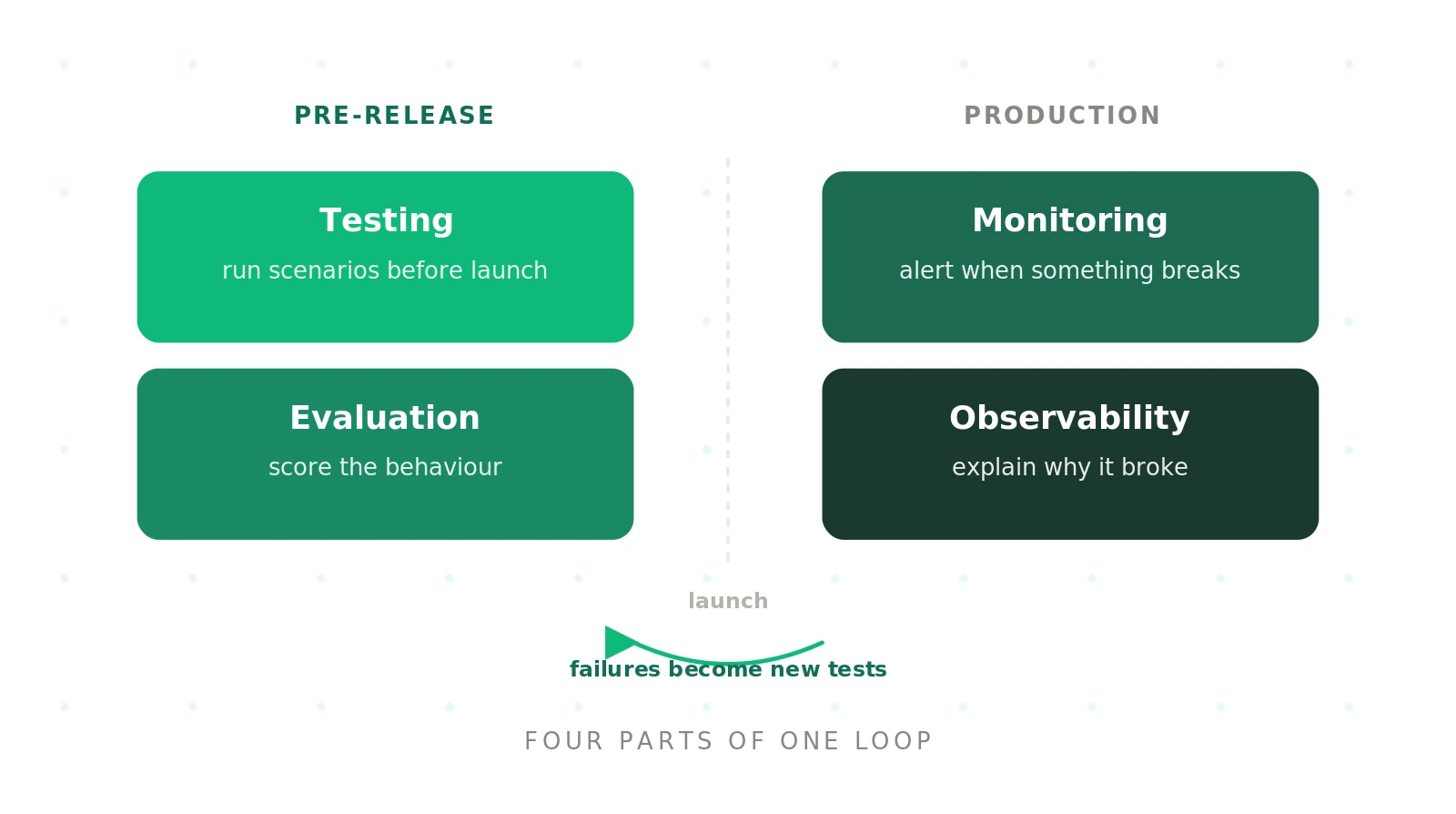
Voice agent testing vs evaluation vs monitoring vs observability
Voice agent testing vs monitoring vs evaluation vs observability: what each term means, when to use it, and how they fit into one loop.
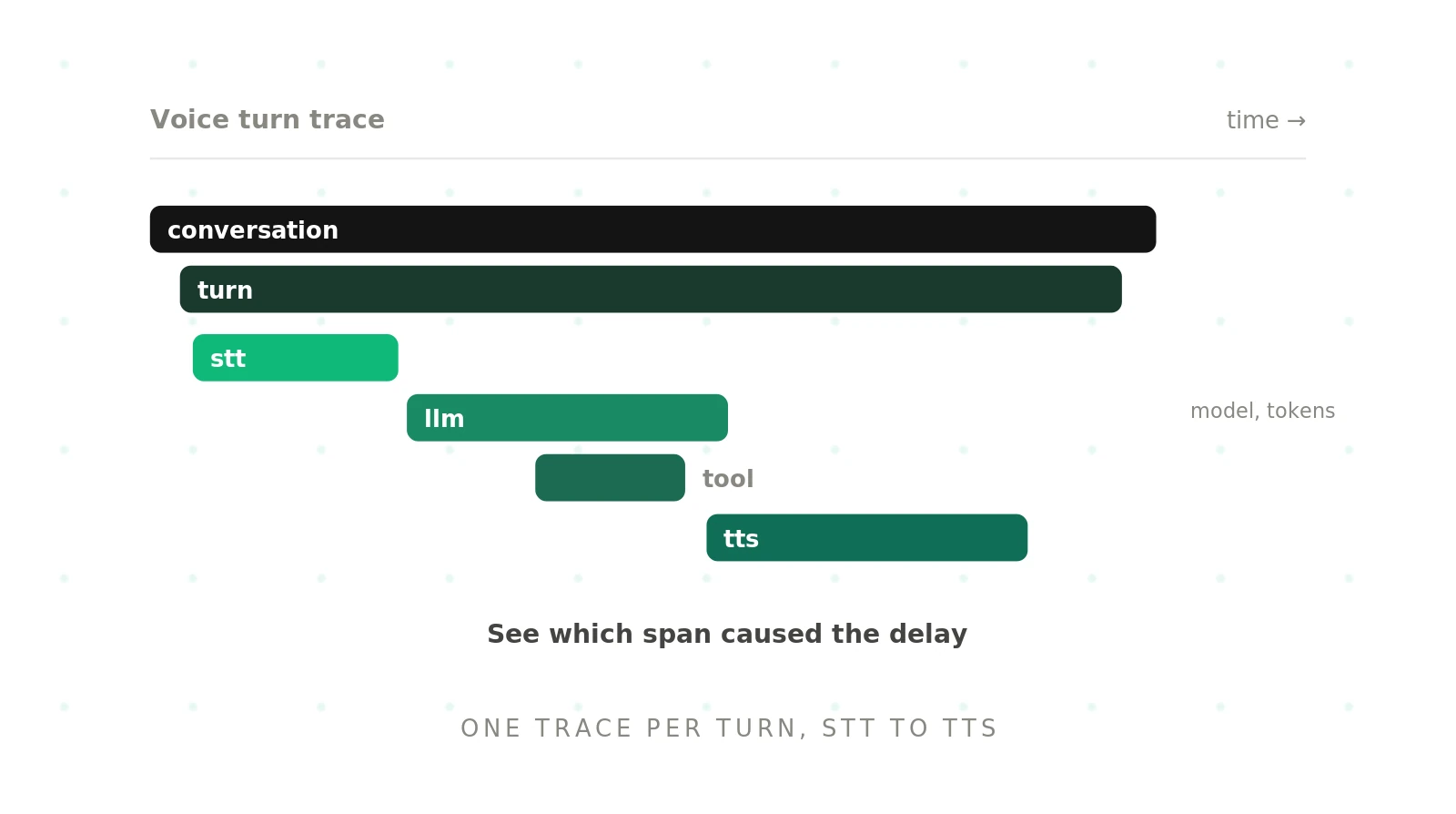
OpenTelemetry observability for AI voice agents
OpenTelemetry for voice agents traces every turn across STT, LLM, and TTS. Learn the GenAI conventions, the spans to emit, and how to instrument it.
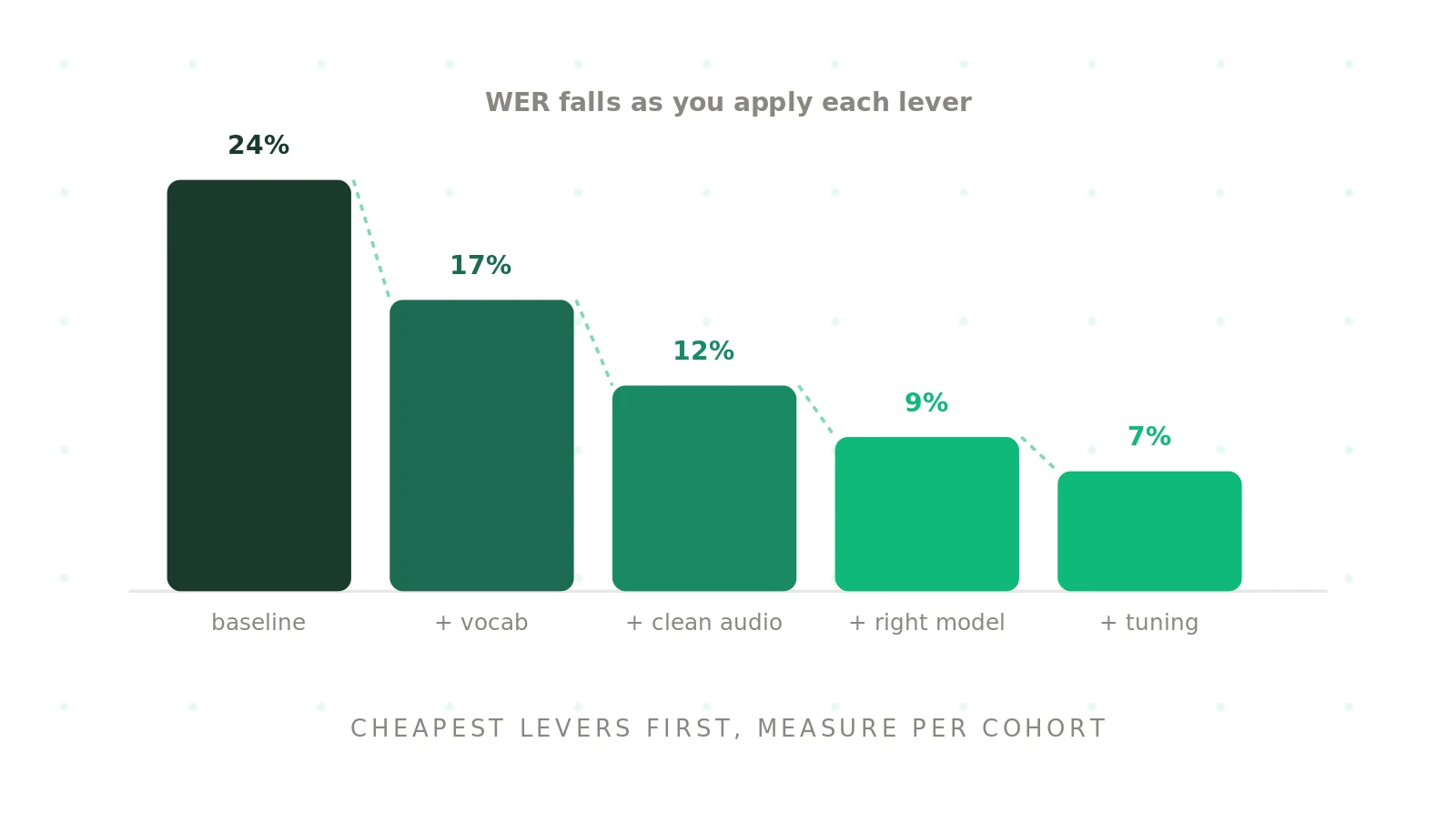
How to improve WER: reducing word error rate for voice agents
Improve WER for your voice agent with custom vocabulary, cleaner audio, model choice, and tuning. A practical guide to reducing word error rate per cohort.
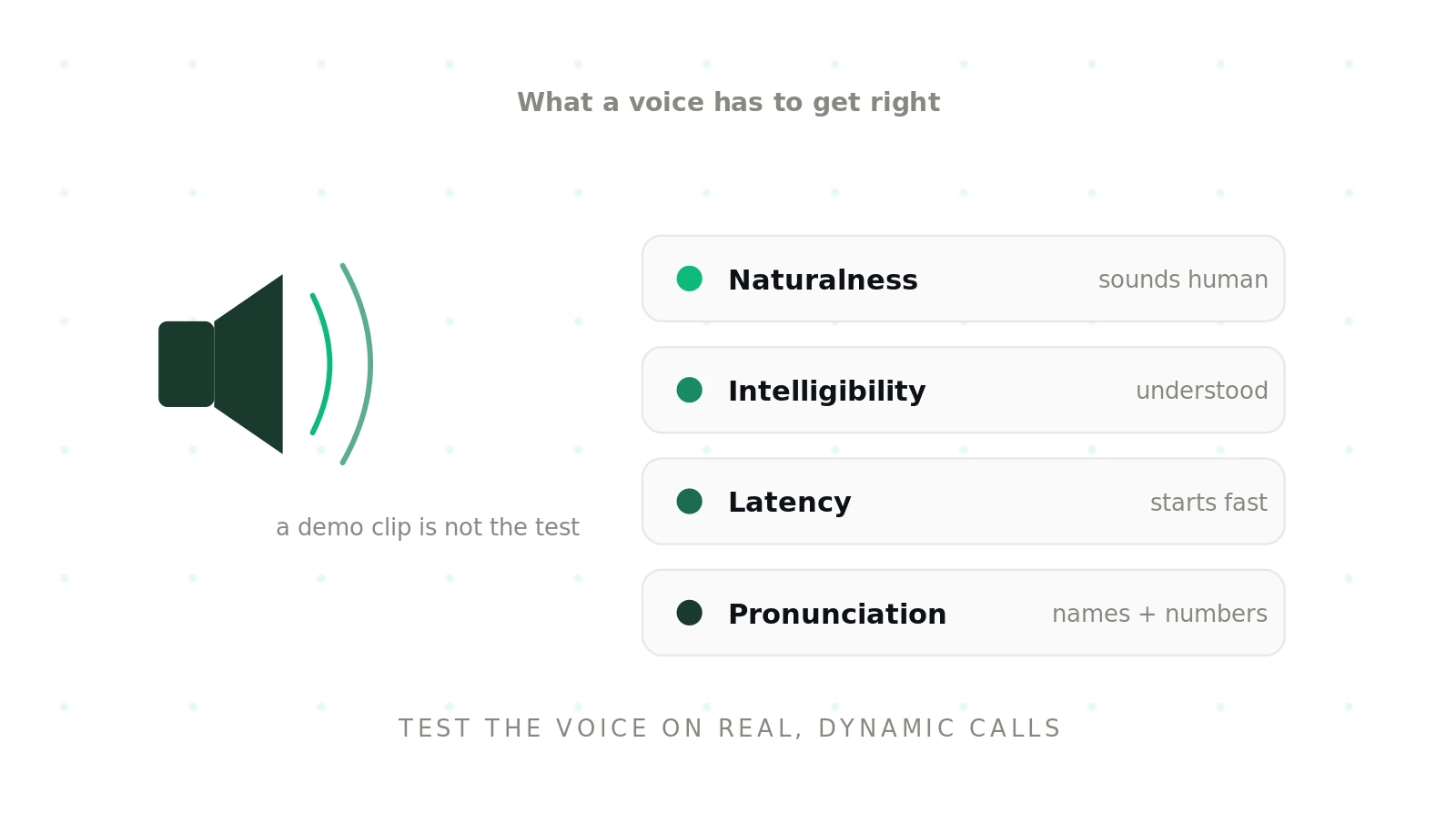
TTS evaluation: how to test text-to-speech for voice agents
TTS evaluation measures text-to-speech naturalness, intelligibility, latency, and pronunciation. Learn the metrics, MOS, and how to test a voice.
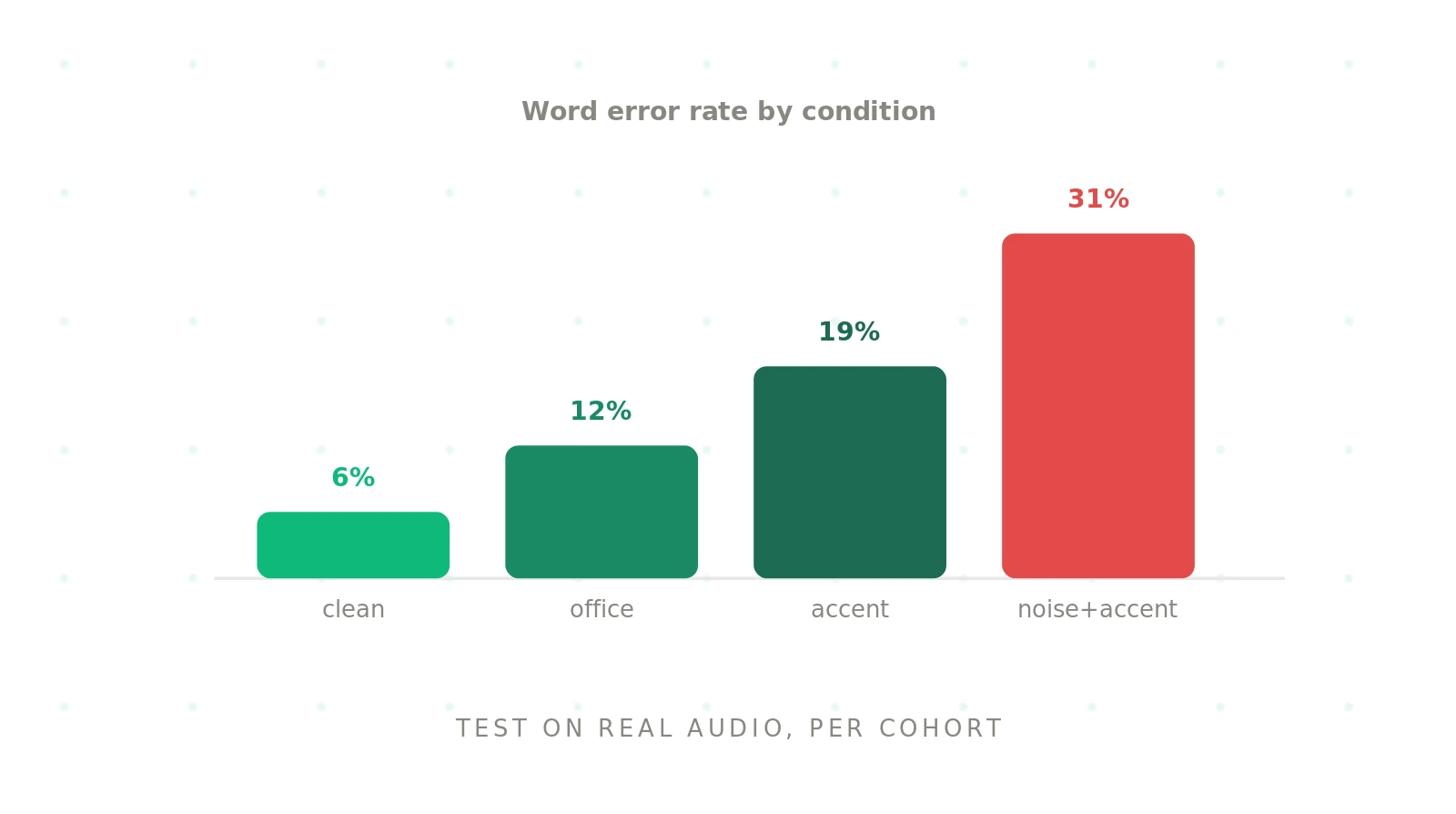
STT evaluation: how to test speech-to-text for voice agents
STT evaluation measures speech-to-text accuracy under real conditions: accents, noise, and jargon. Learn the metrics, the method, and what benchmarks miss.
Word error rate (WER): the complete guide for voice agents
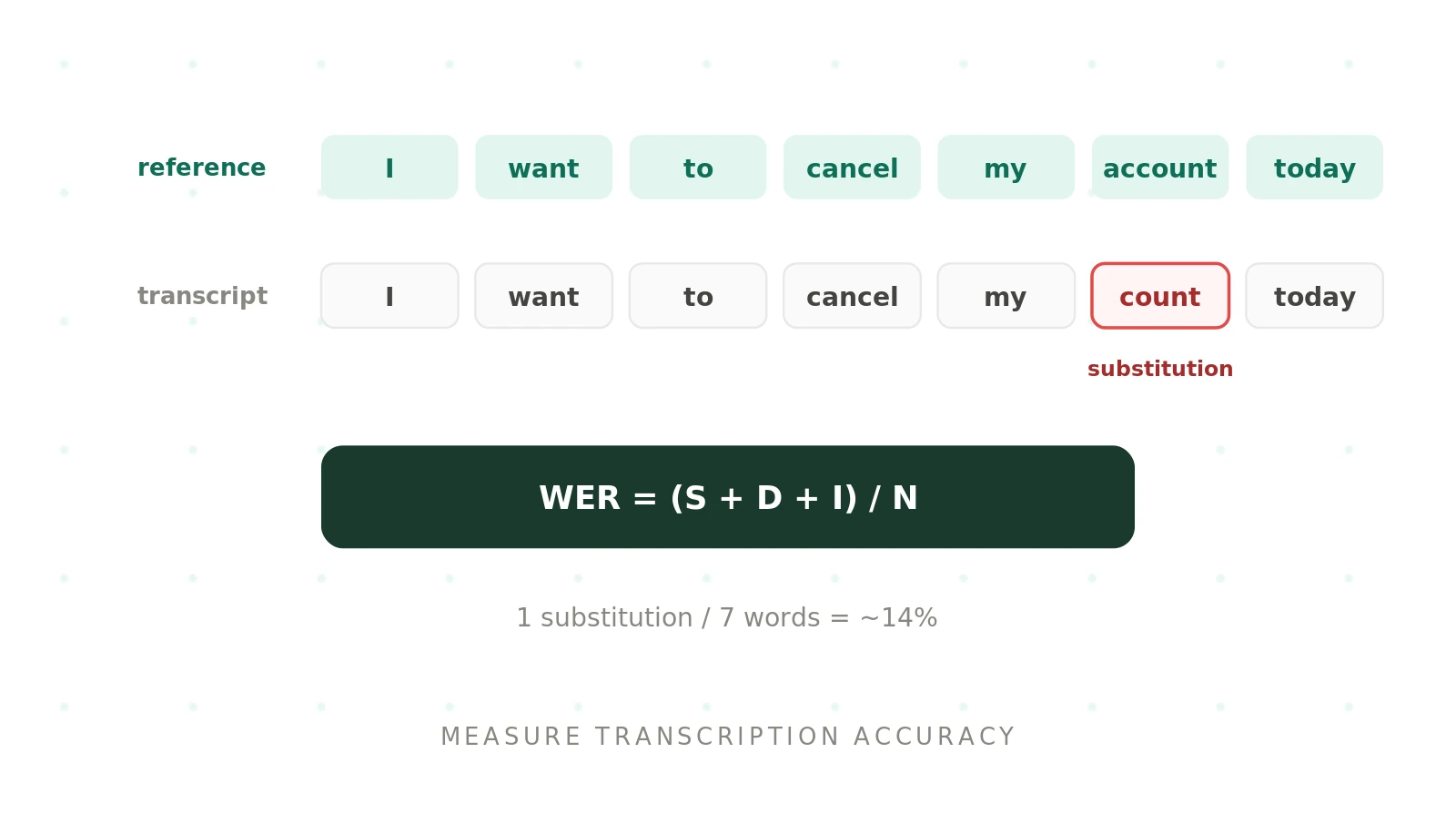
Word error rate measures speech-to-text accuracy via substitutions, deletions, and insertions over total words. Learn how to calculate it and its limits.