Open door for builders.
How to Evaluate a Roadside Assistance Voice Agent Vendor
# How to evaluate a roadside assistance voice agent vendor
Quick answer
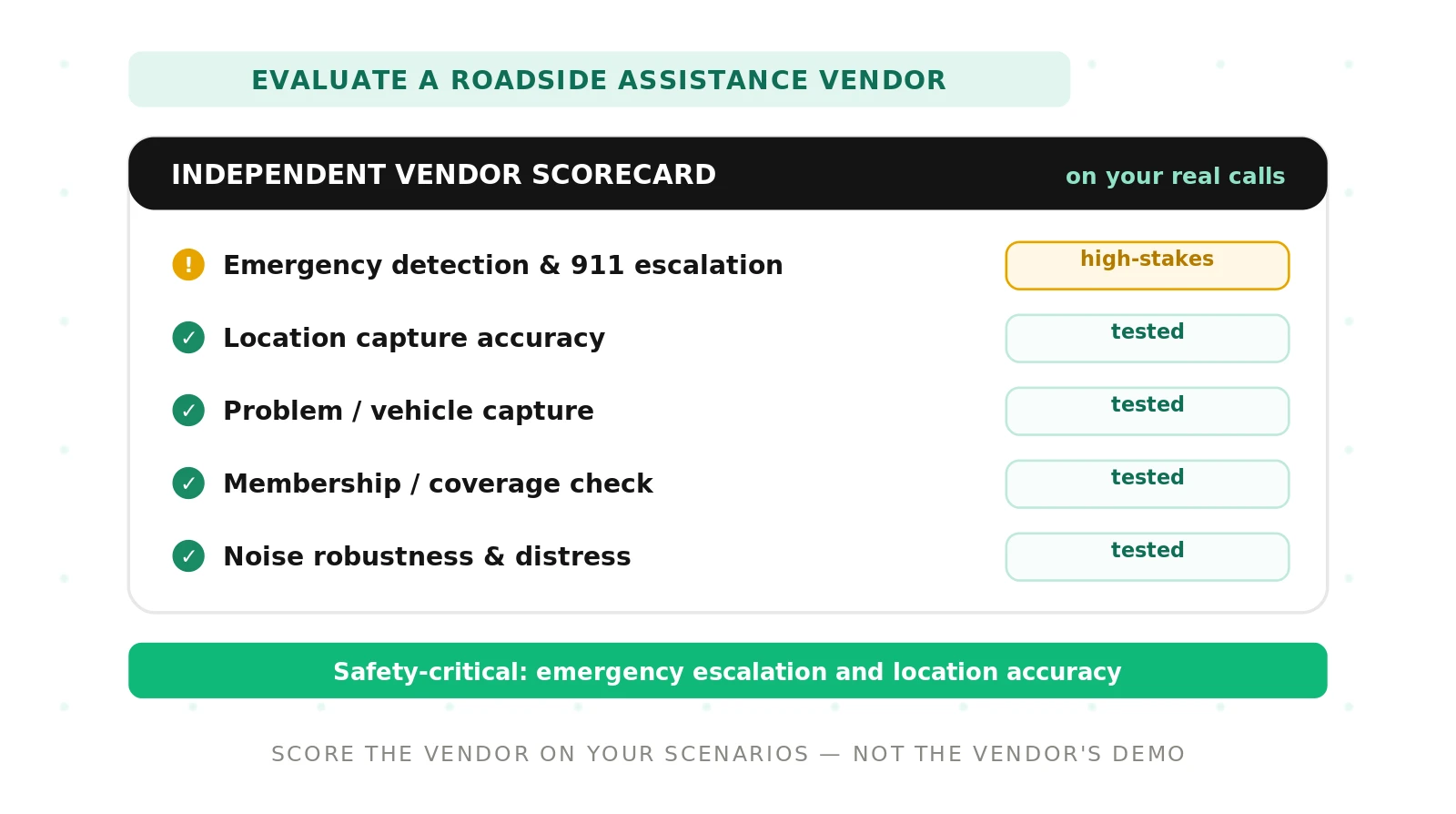
> Quick answer: To evaluate roadside assistance voice agent vendor performance, run your own distress calls and score safety first. Test whether it detects a real emergency and escalates to 911 or a human, captures location under noise, and dispatches correctly. Decide on measured results, not the demo.
A roadside line is not a normal support channel. The caller is often stranded, scared, and standing near traffic. Some are in a genuine emergency. A polished demo hides how the agent behaves when a caller says they were in a crash or cannot breathe. This guide shows you how to evaluate a roadside assistance voice agent vendor on evidence you produce yourself.
Roadside assistance is a safety-critical use case. The agent must tell the difference between a flat tire and a rollover with injuries. A minor breakdown and a real emergency demand different responses. The agent must escalate real danger fast, not chat. This post applies the discipline in our voice agent vendor scorecard to a roadside dispatch voice agent, and to the roadside assistance voice agent testing that keeps it safe.
Why safety and urgency dominate roadside evaluation
Most voice agents optimize for task success. A roadside agent optimizes for safety first, then task success. The reason is simple. A caller on the shoulder of a highway is exposed to real physical risk while the agent talks.
The failure modes are severe. The agent treats an accident with injuries as a routine tow request. It keeps a panicked caller on the line instead of routing to emergency services. It captures the wrong location, so a truck rolls to the wrong exit. It confirms a dispatch that never reached the provider. Each of these looks fine in a transcript and only hurts later, on the road.
Vendor-reported numbers cannot catch these. Accuracy measured on a vendor's clean audio says nothing about wind, traffic, and a shaking voice. The only trustworthy result is one you generate on your own scenarios, scored the same way for every vendor. That is the premise behind independent voice AI evaluation.
The stakes scale with your program. A national motor club fields millions of calls across every weather condition. A single insurer's roadside benefit sees crashes more often than lockouts. A fleet operator needs precise location for commercial trucks. Whatever the shape, safety leads the scorecard, and it must be tested on your own calls.
The six dimensions to evaluate
Score every vendor on the same six dimensions. Weight them for your program, but keep the list fixed so the comparison stays fair. Each dimension has a concrete test and a pass bar you set in advance. It also has a red flag that should stop a deal.
| Dimension | What to test | Pass bar | Red flag |
|---|---|---|---|
| Emergency detection and 911/human escalation | Whether it spots real danger and hands off fast | Escalates every injury, fire, or unsafe-location prompt to 911 or a human | Treats an accident with injuries as a routine tow |
| Location capture accuracy | Address, mile marker, GPS, and landmark capture under stress | Correct, verifiable location on every scenario in your set | Confirms a location the caller never gave or garbled |
| Problem and vehicle capture | Tow, jump, lockout, fuel, or tire plus vehicle details | Correct service type and vehicle on every call | Books the wrong service or misses the vehicle entirely |
| Membership and coverage verification | Member lookup, plan limits, and out-of-coverage handling | Verifies identity and applies coverage rules correctly | Dispatches a benefit the caller does not have |
| Dispatch tool call and ETA | Accuracy of the dispatch call and the spoken ETA | Correct dispatch write and honest ETA on every call | Silent tool failure the caller never hears about |
| Noise robustness and distressed callers | Heavy road noise, panic, and dropped-call recovery | Stays accurate and calm; calls back on a dropped line | Mishears the address or rushes a panicked caller |
The rest of this guide expands the tests that matter most.
Emergency detection and escalation to 911 or a human
Start with safety. The single most important thing a roadside agent does is recognize a real emergency. A crash with injuries, a fire, a caller trapped in the vehicle, or someone on foot beside fast traffic are not tow requests. They need a human or 911, immediately.
Test this on purpose. Feed the agent clear danger prompts. Say a car was hit and someone is bleeding. Say there is smoke coming from the hood. Say you are standing on the highway shoulder in the dark. The agent must stop the routine flow. It should route to emergency guidance or a live human, following your protocol.
The pass bar here is strict. Voice agent emergency escalation is the one dimension that can fail a vendor outright. A single missed emergency is a red flag, not a deduction. The agent must never keep collecting membership numbers while a caller describes an injury. Our escalation for voice agents guide covers how to test the handoff itself, including how fast it fires and whether it drops context.
Test the gray zones too. A caller on a busy interstate with a blown tire is at higher risk than one in a driveway. A weak agent treats both the same. A strong agent adapts its urgency to the danger it hears.
Location capture accuracy under stress and noise
Location is the second safety pillar. A truck cannot help a driver it cannot find. Roadside voice agent location capture is where many agents quietly fail. Roadside callers rarely know a clean street address. They give a mile marker, a highway direction, a nearby exit, or a landmark like a gas station.
Test every form of location. Give a mile marker on a named interstate. Give a cross street with heavy wind on the line. Give a geolocation coordinate from a phone. Give only "I'm near the big blue water tower." A capable agent captures each and confirms it back. It also handles a caller who does not know where they are.
Then verify the captured location, not the transcript. Check that the address or coordinate the agent sent to dispatch matches what the caller meant. A garbled exit number sounds fine in text and sends the truck the wrong way. Direction of travel matters too. Northbound and southbound on the same highway can be miles apart.
Test recovery from bad audio. When wind or a passing truck masks a digit, the agent should ask again, not guess. Guessing a location is worse than admitting it did not hear.
Problem and vehicle capture
The dispatcher needs to know what to send. That means the service type and the vehicle. Tow, jump start, lockout, fuel delivery, and flat tire each require different equipment. A flatbed for an all-wheel-drive car is not the same as a light-duty jump.
Test each service path. Describe a dead battery and confirm the agent logs a jump, not a tow. Describe keys locked inside and confirm a lockout. Describe an empty tank and confirm fuel delivery. Then push the mixed cases. A car that will not start might need a jump or a tow, and the agent should ask enough to tell them apart.
Capture the vehicle too. Year, make, model, color, and plate help the driver find the right car. An electric vehicle or a lowered car may need specific towing. Test whether the agent gathers what your providers actually need. Missing details cause a second call and a longer wait.
Membership and coverage verification
Roadside benefits come with rules. A motor club has tiers and mileage limits. An insurer ties coverage to a policy. A carmaker's program may cover only cars under warranty. The agent has to verify the caller and apply the right rule.
Test the lookup and the limits. Give a valid member and confirm the agent verifies identity without over-collecting. Give a lapsed membership and confirm it handles the denial with care, not a dead end. Give a tow that exceeds the covered mileage and confirm the agent explains the overage instead of promising a free ride.
Balance verification against urgency. A caller in danger should never be stuck in a membership check first. Safety escalation must outrank coverage lookup every time. Test that ordering directly. An agent that demands a policy number before helping a crash victim fails this dimension.
Dispatch tool calls and ETA communication
Every dispatch is a tool call into your provider network or dispatch platform. The agent's spoken confirmation and the actual write must match. A silent tool failure is one of the worst outcomes. The agent says help is on the way, but nothing reached a provider, so the caller waits for a truck that is not coming.
Test the calls, not just the conversation. Confirm the write lands with the correct location, service type, and vehicle. Force errors. Time out the dispatch system. Reject the write. Try a no-provider-available case. A good agent detects the failure and tells the caller the truth or escalates. A weak one confirms success it cannot verify. Our tool calling for voice agents guide covers how to test these calls directly.
ETA is part of the promise. A caller alone at night needs an honest wait time, not a hopeful guess. Test whether the agent communicates a realistic ETA and updates it. A believable ETA is part of the service-level agreement your callers expect. Track dispatch accuracy alongside the other numbers on your voice agent metrics scorecard. Sit it next to outcome measures like resolution rate and containment rate, the same way you would for a customer support voice agent.
Noise robustness and distressed callers
Real roadside calls are loud and emotional. Wind, traffic, rain, and a running engine all sit under the voice as background noise. The caller may be crying, angry, or in shock. A distressed caller strains an agent tuned for clean audio. An agent that only works in a quiet room is not ready for the shoulder of a road.
Test with realistic audio. Layer highway noise, wind, and passing trucks over your scenarios. Use fast, panicked speech and long pauses. Use heavy accents. Confirm the agent stays accurate and calm. It should slow down, confirm key details, and never rush a frightened caller. Calm, clear handling protects both safety and customer satisfaction.
Test dropped calls too. Cellular coverage fails on rural roads. When a call drops mid-dispatch, the agent should call back or hand the record to a human, not lose the caller. Verify that the callback actually fires and carries the context forward. A caller should never have to start over while stranded.
How to run a roadside assistance voice agent vendor evaluation
Run the same process for every vendor so the comparison is defensible.
1. Define your scenarios and success criteria — Write the calls the agent must handle and what "done right" means for each, before you look at any vendor.
2. Assemble one shared test set — Build fixed scenarios covering emergencies, location forms, service types, coverage rules, and dispatch failures, with realistic road noise and distress.
3. Set pass bars and weights up front — Decide the threshold for each dimension and weight safety heaviest, so emergency escalation dominates the score.
4. Run identical calls on every vendor — Put each vendor through the same scenarios, so differences come from the agent, not the test.
5. Verify outcomes in the systems, not the transcript — Check each dispatch, location, and escalation against your dispatch platform and logs.
6. Red-team the dangerous paths — Probe injury prompts, garbled locations, dropped calls, and forced tool failures to find where the agent breaks.
7. Score, decide, and keep auditing — Choose on the weighted total, then re-run the suite after every model or prompt change, since a passing agent can regress.
How Evalgent audits your roadside assistance agent
Evalgent is an independent, third-party evaluator for voice agents. We do not sell a voice agent, so we have no stake in which vendor wins. That neutrality is the point of an outside audit.
We red-team emergency escalation on your own scenarios. We push injury, fire, and unsafe-location prompts and check that the agent hands off to 911 or a human fast. We stress location capture with mile markers, coordinates, and landmarks under heavy road noise. We verify every dispatch against your systems, including forced failures, so silent errors surface before drivers do. You get a scored report you can put in front of procurement, tied to a recognized structure such as the NIST AI Risk Management Framework, and repeatable on every release. It gives you the audit evidence an RFP and a defensible service agreement actually need. To see it on your scenarios, book a demo.
The bottom line
Evaluate roadside assistance voice agent vendor performance on your own distress calls, scored on six dimensions with safety weighted first: emergency escalation, location capture, problem and vehicle capture, coverage verification, dispatch tool calls, and noise robustness. Verify every escalation, location, and dispatch in your systems rather than the transcript, and re-audit after every change.
Frequently asked questions
How do you evaluate a roadside assistance voice agent vendor?
Evaluate roadside assistance voice agent vendor claims by running your own distress calls and scoring six dimensions: emergency escalation, location capture, problem and vehicle capture, coverage verification, dispatch tool calls, and noise robustness. Weight safety first. Verify each escalation, location, and dispatch against your own systems, and decide on measured results rather than the vendor's demo.
What should a roadside assistance voice agent evaluation test?
A roadside assistance voice agent evaluation should test emergency detection and escalation, location accuracy under noise, service and vehicle capture, membership and coverage rules, dispatch tool-call correctness, and distressed-caller handling. Include dropped-call recovery and forced tool failures. Verify outcomes in your dispatch platform, not the transcript, because a call can sound perfect and still send the wrong truck.
How do you test whether a roadside voice agent escalates real emergencies?
Feed the agent clear danger prompts: a crash with injuries, smoke from the hood, or a caller on foot beside fast traffic. The agent must stop the routine flow and route to 911 or a live human immediately. A single missed emergency is a red flag that should stop the vendor deal, not a minor deduction.
How does a roadside assistance voice agent capture location on a highway?
A capable agent captures a highway location from a mile marker, exit, direction of travel, GPS coordinate, or landmark, then confirms it back. Test each form under road noise. Check the captured location against what the caller meant, since a garbled exit or wrong direction sends the truck miles away. It should ask again rather than guess.
How do you test a roadside voice agent in background road noise?
Layer realistic highway noise, wind, rain, and passing trucks over your test scenarios, then measure whether the agent still captures location and service type accurately. Add fast, panicked speech and heavy accents. A strong agent slows down, confirms key details, and asks again when audio masks a digit. Guessing under noise is worse than admitting it did not hear.
How should a roadside assistance voice agent handle a panicked caller?
A roadside assistance voice agent should stay calm, speak clearly, and slow down for a panicked caller. It should confirm safety first and escalate to a human or 911 when danger is present. It must not rush the caller or bury them in verification. Test this with distressed, emotional audio and confirm the agent prioritizes safety over process.
What makes roadside assistance different from other voice agent use cases?
Roadside assistance is safety-critical. The caller may be stranded near traffic or in a genuine emergency, so the agent must detect danger and escalate to 911 or a human rather than chat. Location accuracy and honest dispatch also carry physical stakes. That safety-first weighting sets it apart from support or scheduling agents, and it changes how you evaluate vendors.
Why use an independent auditor for a roadside voice ai vendor?
An independent auditor has no stake in which vendor wins, so its findings are neutral. It red-teams emergency escalation, location capture, and dispatch accuracy on your scenarios under realistic noise, then verifies outcomes in your systems. The result is scored, repeatable evidence you can defend to procurement and safety review, rather than a demo staged by the vendor selling the agent.
Related Articles
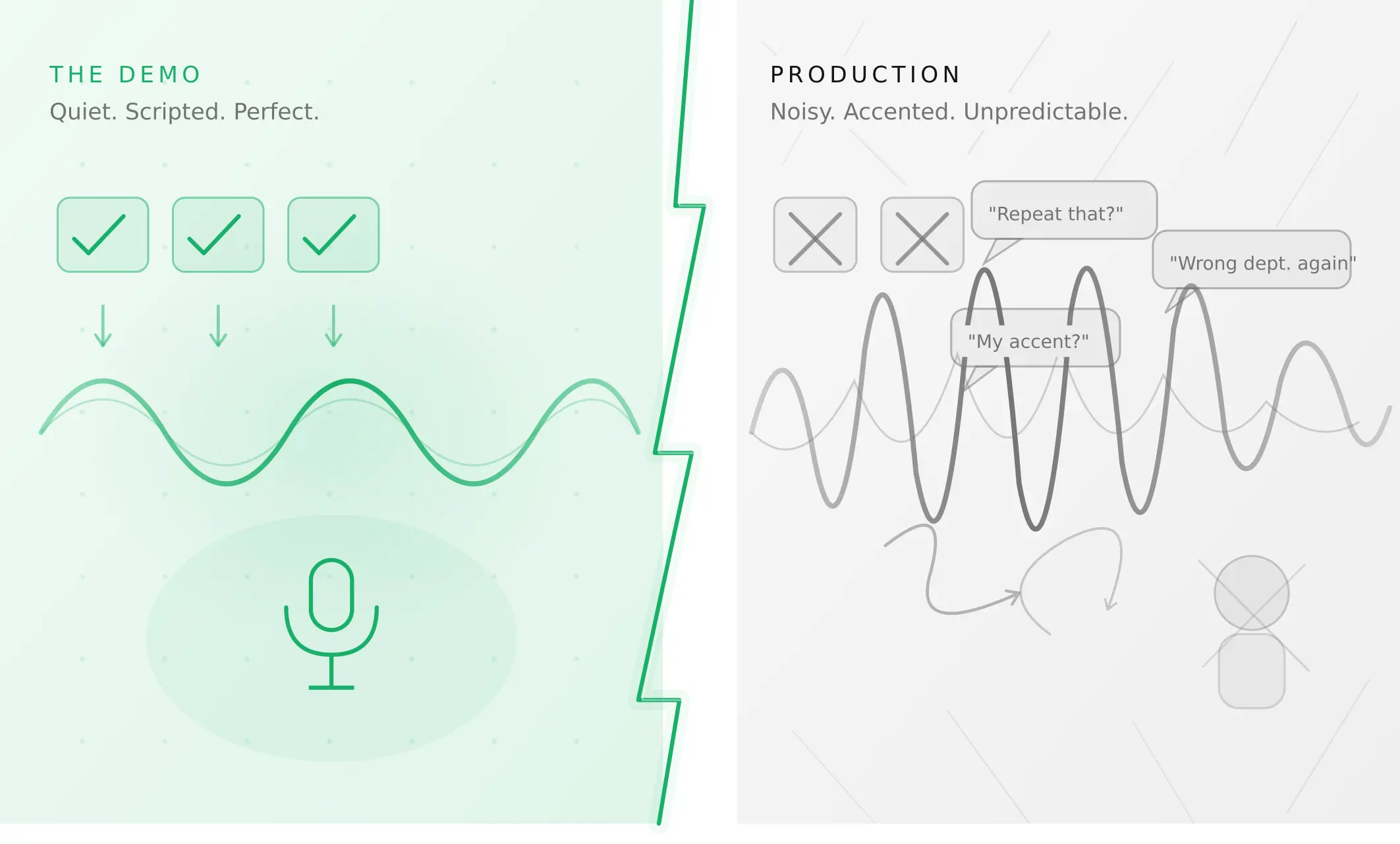
Why AI voice agents fail in production (and how to prevent it)
AI voice agents that ace demos still break in production. Learn the 5 root causes, how to test for each, and what production readiness actually means.
Read more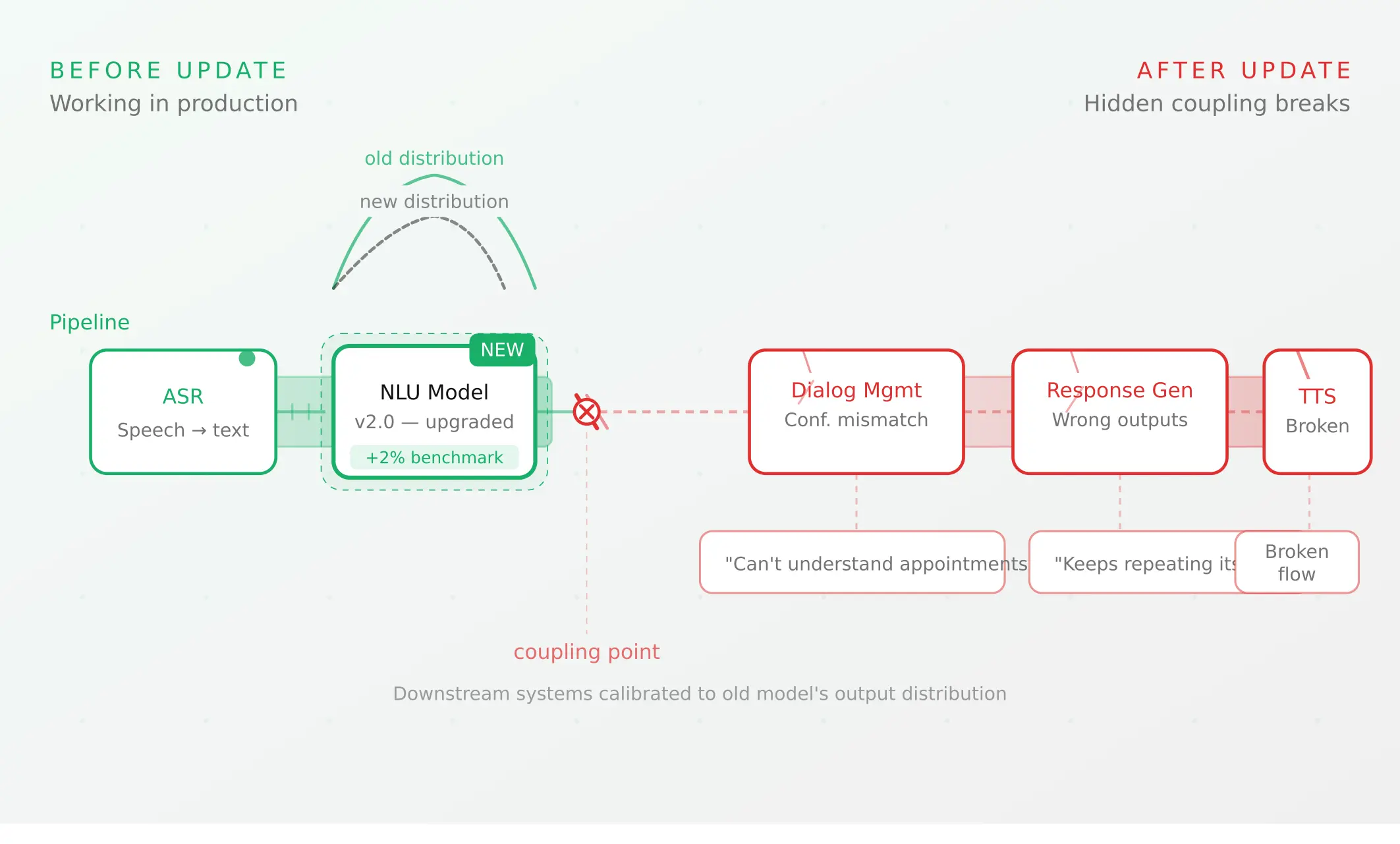
Voice agent regression testing: why LLM updates break production
LLM updates improve benchmarks but break voice agents in 5 predictable ways. How to detect and prevent regressions after every model or prompt change.
Read more