Open door for builders.
How to Evaluate a Reservations Voice Agent Vendor
# How to evaluate a reservations voice agent vendor
> Quick answer: To evaluate a reservations voice agent vendor, test the agent against your real booking system, not a scripted demo. Check availability accuracy and no double-booking, party-size and special-request capture, modify and cancel flows, and peak-hour concurrency. Score each on a fixed pass bar, watch for hallucinated availability, and verify confirmations before you sign.
A reservations voice agent answers the phone when your host stand is slammed. It quotes availability, books tables, takes special requests, and handles cancellations. When it works, you capture covers you would have lost to voicemail. When it fails, it double-books your Friday dinner rush or promises a table that does not exist.
The demo will look flawless. Vendors script the happy path. Your job is to test the paths they did not script. This guide shows how to evaluate a reservations voice agent vendor against your own system, your own hours, and your own edge cases.
Evalgent is an independent third-party evaluator. We test availability accuracy and peak-hour load on your booking system, and report the numbers without a stake in which vendor you pick. More on where that fits later. First, the method.
Why reservation voice agents fail in ways demos hide
A demo runs one call at a time. Your restaurant does not. The failures that hurt you show up under conditions a sales call never reproduces.
The biggest risk is hallucinated availability. The agent tells a guest 7:30 is open when your book is full. That guest arrives to no table. The second risk is double-booking. Two calls land at once, both grab the same slot, and neither release fires. The third is silent data loss. The guest says "nut allergy, wheelchair access," and none of it reaches the floor.
None of these appear in a clean demo. All of them appear on a busy Saturday. That gap is the entire reason to run a structured evaluation instead of trusting a walkthrough. It is also why independent voice AI evaluation beats vendor-reported numbers.
What to test in a reservations voice agent
The use case is narrow, so the test plan can be specific. Map every dimension to a real reservation scenario, then to a measurable outcome.
Real-time availability accuracy
This is the core test. The agent must read live availability from your booking system, not a cached guess.
Run calls while you change the book underneath. Fill a slot mid-call. Free one. The agent should reflect the state at the moment it speaks. Any table it offers must be a table your system actually holds. A single hallucinated slot is a failing result, not a rounding error.
No double-booking under concurrent calls
Availability accuracy is not enough on its own. Two agents talking to two guests can both claim the same 8:00 four-top.
Test this with concurrent calls targeting scarce inventory. The system must lock a slot the moment it is quoted, or reconcile atomically on confirmation. If two test callers walk away holding the same table, the integration is unsafe for peak service.
Booking, modify, cancel, and waitlist capture
A reservation is not just a new booking. Guests move times, change party size, cancel, and ask to join a waitlist.
Test each flow end to end. Book a table, then call back to change it from four to six. Cancel and confirm the slot returns to inventory. Ask for a full night and confirm the agent offers the waitlist gracefully. The record in your system must match what the guest said, every time.
Special requests, allergies, and accessibility notes
Guests attach constraints to bookings. A birthday. A nut allergy. A wheelchair-accessible entrance. A quiet section.
These notes carry real safety and service weight, so capture accuracy matters more here than anywhere. Speak the request. Check the note that lands on the floor. Test accented speech and background noise, because that is when transcription drops words. A missed allergy note is a guest-safety failure, not a typo.
Peak-hour concurrency and barge-in
Your phone spikes at 6:00 on a Friday. The agent must hold quality when call volume climbs and guests interrupt.
Load-test with concurrent calls at your real peak volume. Watch latency, dropped calls, and error rates as the count rises. Test barge-in: the guest cuts in mid-sentence with "actually, make it seven." A good agent yields the floor and updates the booking. A weak one keeps talking or loses the change.
Tool calls and reservation-system integration
Every booking is a series of tool calls into your platform. An OpenTable-style system, a POS, or a custom API. The agent reads availability, writes a hold, and confirms.
Test the integration for correctness and failure handling. Force a timeout. Return an error from the booking API. The agent should degrade gracefully, not invent a confirmation. Our guide on tool calling for voice agents covers how to test these calls in depth.
Confirmations, deposits, and no-show policy
The last step closes the loop. The guest needs a confirmation, and your policy needs to be stated.
Confirm the agent reads back the booking correctly: date, time, party size, name. If you require a deposit or enforce a no-show policy, the agent must communicate it clearly and consistently. Test the confirmation channel too, whether that is SMS or email. A booking with no confirmation is a booking the guest forgets.
Walk-in, "fully booked," and multilingual handling
Not every call ends in a reservation. Some ask about walk-ins. Some hit a full book. Some guests speak Spanish.
Test the graceful-failure paths. When you are fully booked, the agent should say so plainly and offer the waitlist or another time, not stall. For multilingual guests, confirm the agent either handles the language cleanly or escalates. See our escalation guide for handoff design that does not strand callers.
The reservations voice agent evaluation scorecard
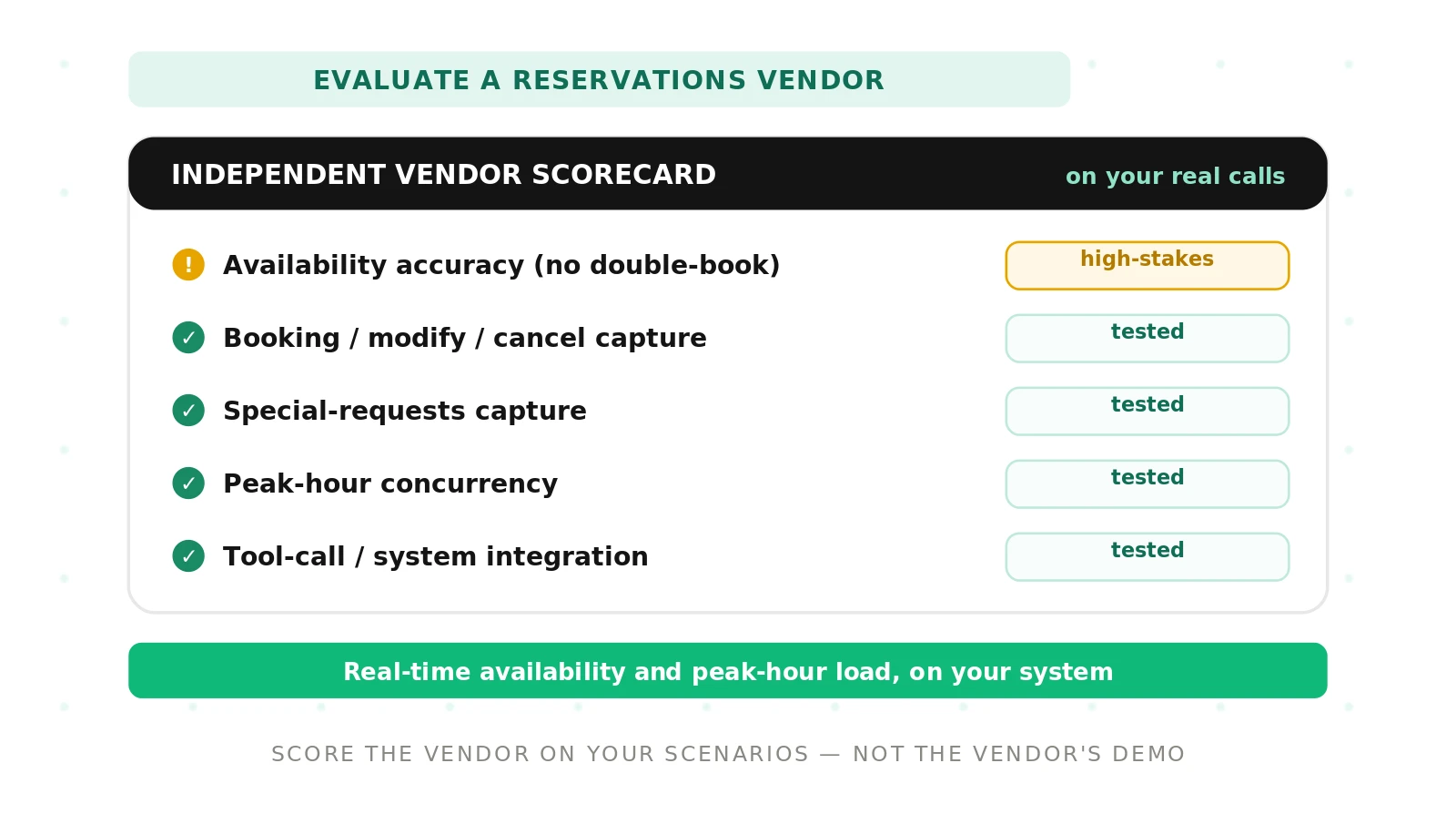
Score every dimension against a fixed pass bar before you compare vendors. A shared bar turns opinion into evidence. The table below is the minimum for a booking voice AI vendor.
| Dimension | What to test | Pass bar | Red flag |
|---|---|---|---|
| Availability accuracy and no double-book | Live reads while the book changes; concurrent calls on scarce slots | Every quoted slot exists; zero double-books across concurrent runs | Any hallucinated slot; two callers hold the same table |
| Booking, modify, cancel capture | New bookings, time and party-size changes, cancellations, waitlist | System record matches guest intent on every flow | Canceled slot not released; modify overwrites wrong field |
| Special-requests capture | Allergies, accessibility, seating notes under noise and accents | Notes reach the floor verbatim; safety notes never dropped | Missed allergy or accessibility note; garbled transcription |
| Peak-hour concurrency | Load at your real Friday-night call volume; barge-in mid-call | Latency and error rate hold; barge-in updates the booking | Dropped calls or spiking latency; agent ignores interruptions |
| Tool-call and system integration | Reads, holds, and writes to your platform; forced API errors | Correct calls; graceful degrade on timeout or error | Invented confirmation when the API fails; stuck retries |
| Confirmation and no-show policy | Read-back accuracy; deposit and policy statement; SMS or email | Accurate read-back; policy stated; confirmation delivered | Wrong details confirmed; policy skipped; no confirmation sent |
Pair the scorecard with the broader voice agent metrics scorecard so booking-specific bars sit inside your standard rubric.
How to run a reservations voice agent vendor evaluation
Run the same test set against every vendor. Identical scenarios make results comparable. Here is the sequence.
1. Define your scenarios from real calls. Pull a week of reservation calls. Build test cases for bookings, modifies, cancels, waitlist, allergies, walk-ins, and "fully booked." Include your busiest hours.
2. Connect the agent to a test copy of your booking system. Use a sandbox that mirrors real availability. Never test against your live book. The integration must behave exactly as production would.
3. Test availability accuracy first. Change the book mid-call and confirm the agent reflects it. Log every hallucinated or stale slot as a failure.
4. Run concurrent calls on scarce inventory. Point multiple callers at the same slots. Confirm the system locks or reconciles without double-booking.
5. Walk every booking flow end to end. Book, modify, cancel, and waitlist. Verify the system record against the guest's stated intent each time.
6. Load-test at peak volume. Ramp concurrent calls to your real Friday-night number. Track latency, dropped calls, and errors. Add barge-in to each scenario.
7. Force integration failures. Time out the booking API. Return errors. Confirm the agent degrades gracefully and never invents a confirmation.
8. Score against the fixed pass bar. Fill the scorecard for each vendor. Note red flags. Compare on the numbers, not the demo. This mirrors the process in our vendor evaluation pillar.
Write the scenarios and pass bars into your request for proposal so vendors know the bar before they pitch.
What separates a booking voice AI vendor worth signing
The scorecard tells you which vendor passes. The contract tells you whether the vendor stays honest after launch.
Ask for a service-level agreement that covers uptime and availability-read latency during peak hours. Ask how they measure guest experience, and whether it maps to customer satisfaction signals you already track. Ask for the right to re-run your evaluation on every model update, since voice models change under you. A good vendor welcomes an A/B test between versions on your own scenarios.
Weigh the full total cost of ownership, not the per-minute rate. Integration work, monitoring, and re-evaluation all cost time. A cheap agent that double-books during service is the most expensive option you can pick. For governance language, the NIST AI Risk Management Framework gives you a vocabulary vendors should already speak.
Where an independent evaluator fits
Vendors grade their own homework. Their metrics come from their test sets, on their infrastructure, tuned to their strengths. That is not fraud. It is a conflict of interest, and it is why demo numbers rarely survive contact with a real dinner rush.
An independent evaluator removes the conflict. Evalgent tests availability accuracy and peak-hour load on your booking system, with your scenarios, and reports results with no stake in the outcome. We run concurrent calls at your real volume, force integration failures, and check whether special-request notes actually reach your floor. You get one comparable scorecard across every vendor you are considering.
If you are weighing two or more reservation agents, an independent evaluation gives you a defensible answer instead of a gut call. Book a demo to see how we test booking voice AI vendors on your own system. Restaurants running related flows can also review our work on food-ordering voice agent testing and appointment-scheduling metrics.
Frequently asked questions
How do you evaluate a reservations voice agent vendor?
Test the agent against a sandbox copy of your booking system, using scenarios from real calls. Check availability accuracy, no double-booking under concurrent calls, booking and cancel capture, special-request accuracy, and peak-hour load. Score each dimension on a fixed pass bar, and compare vendors on the numbers rather than the demo.
How do you test availability accuracy in a voice agent?
Change your booking system underneath the call. Fill a slot mid-conversation, then free another, and confirm the agent reflects the live state when it speaks. Every slot it offers must exist in your system. A single hallucinated or stale slot is a failing result, because one no-show table erodes guest trust fast.
How do reservations voice agents avoid double-booking?
Safe agents lock a slot the moment they quote it, or reconcile atomically when the guest confirms. Test this with concurrent calls targeting the same scarce inventory. If two test callers walk away holding the same table, the integration is unsafe for peak service and needs work before launch.
Can a voice agent handle the dinner rush?
Only if it holds quality under concurrent load. Load-test at your real Friday-night call volume and watch latency, dropped calls, and error rates as the count climbs. Add barge-in, where a guest interrupts mid-sentence. A demo proves nothing about peak behavior, so concurrency testing is non-negotiable for restaurants.
What metrics matter for reservation voice agents?
Track availability accuracy, double-book rate, booking capture accuracy, special-request capture accuracy, peak-hour latency, dropped-call rate, and confirmation delivery. Pair these with escalation rate for calls the agent cannot handle. Booking capture and double-book rate matter most, because both directly affect whether a guest gets the table they expect.
How do you test cancel and modify flows in a voice agent?
Book a table, then call back to change the time or party size, and confirm the system record matches. Cancel a booking and verify the slot returns to inventory immediately. Weak agents overwrite the wrong field on a modify, or fail to release a canceled slot, which quietly shrinks your available covers.
Should a reservations voice agent handle deposits and no-show policies?
It should state them clearly and consistently. Test whether the agent communicates your deposit requirement and no-show policy on every relevant booking, not just some. It should read back the booking details and deliver a confirmation by SMS or email. A booking with no confirmation is a booking the guest is likely to forget.
Why use an independent evaluator instead of vendor benchmarks?
Vendor benchmarks come from vendor test sets on vendor infrastructure, tuned to vendor strengths. An independent evaluator like Evalgent runs your scenarios on your booking system and reports results with no stake in which vendor wins. That gives you one comparable scorecard and a defensible selection, rather than trusting numbers a salesperson produced.
The bottom line
A reservations voice agent must read live availability, avoid double-booking, and capture special requests accurately under peak load. Test it against your own booking system with real scenarios, score every dimension on a fixed pass bar, and treat vendor demo numbers as marketing until an independent evaluation confirms them.
Related Articles
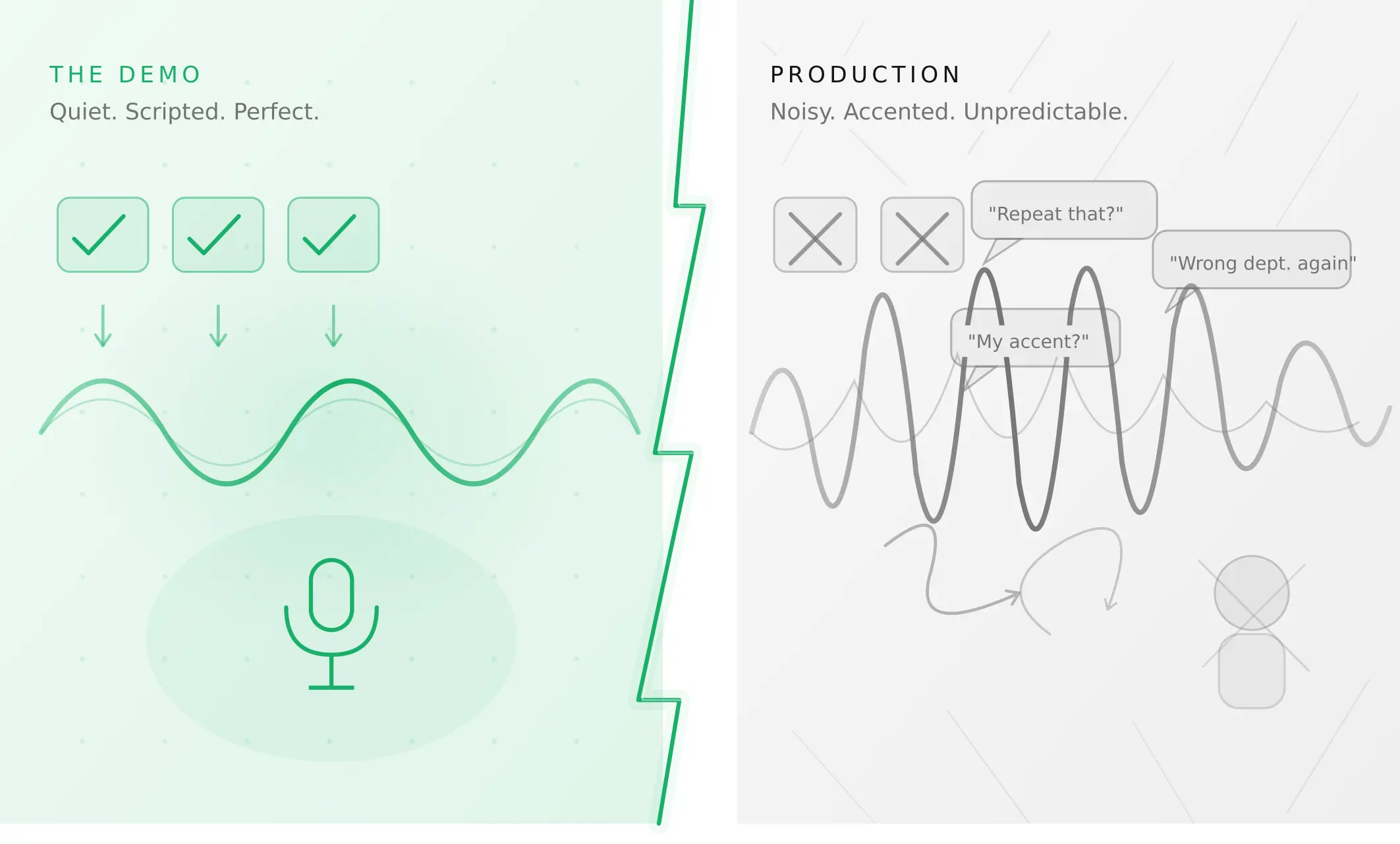
Why AI voice agents fail in production (and how to prevent it)
AI voice agents that ace demos still break in production. Learn the 5 root causes, how to test for each, and what production readiness actually means.
Read more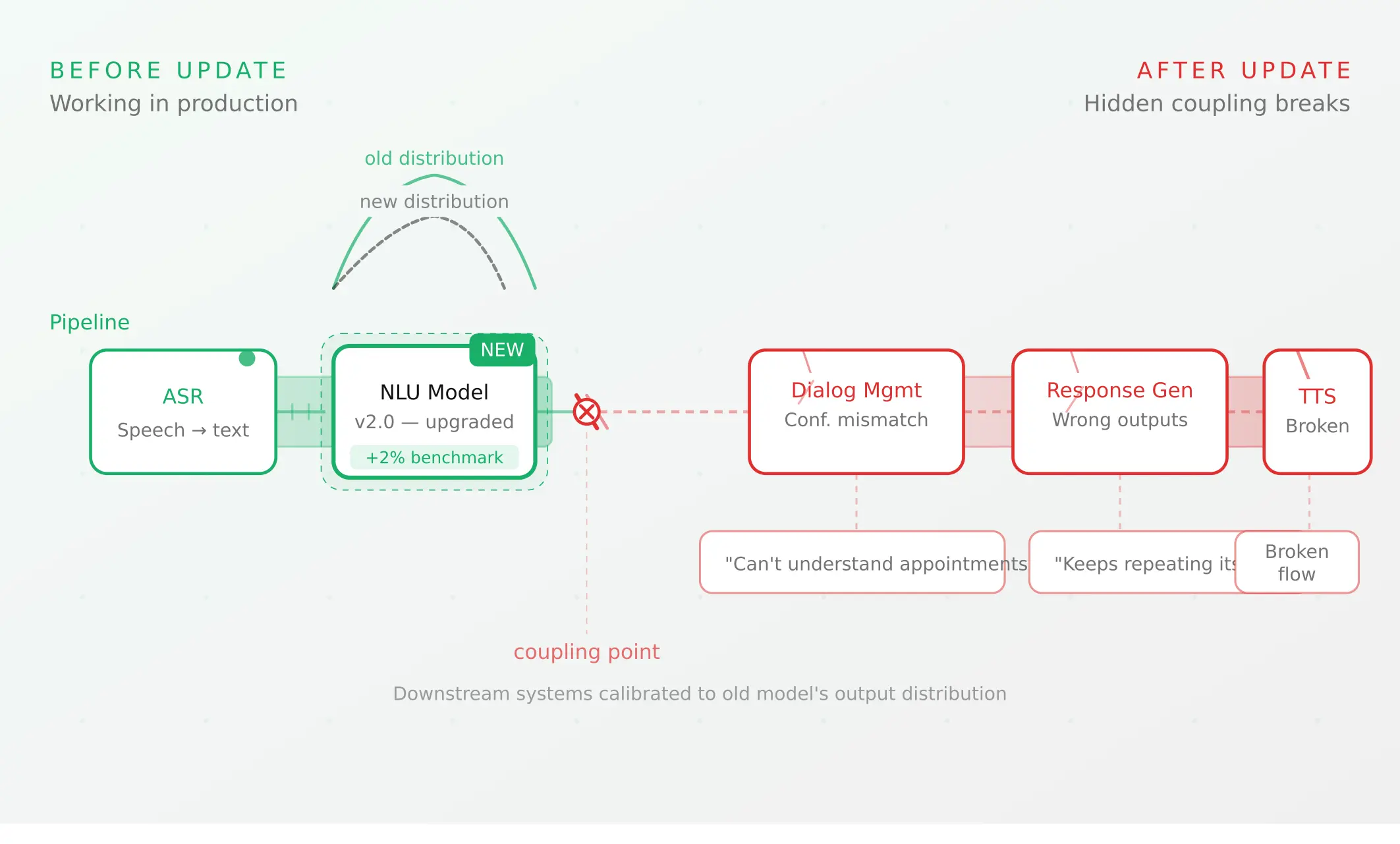
Voice agent regression testing: why LLM updates break production
LLM updates improve benchmarks but break voice agents in 5 predictable ways. How to detect and prevent regressions after every model or prompt change.
Read more