Blog
Page 43 of 52
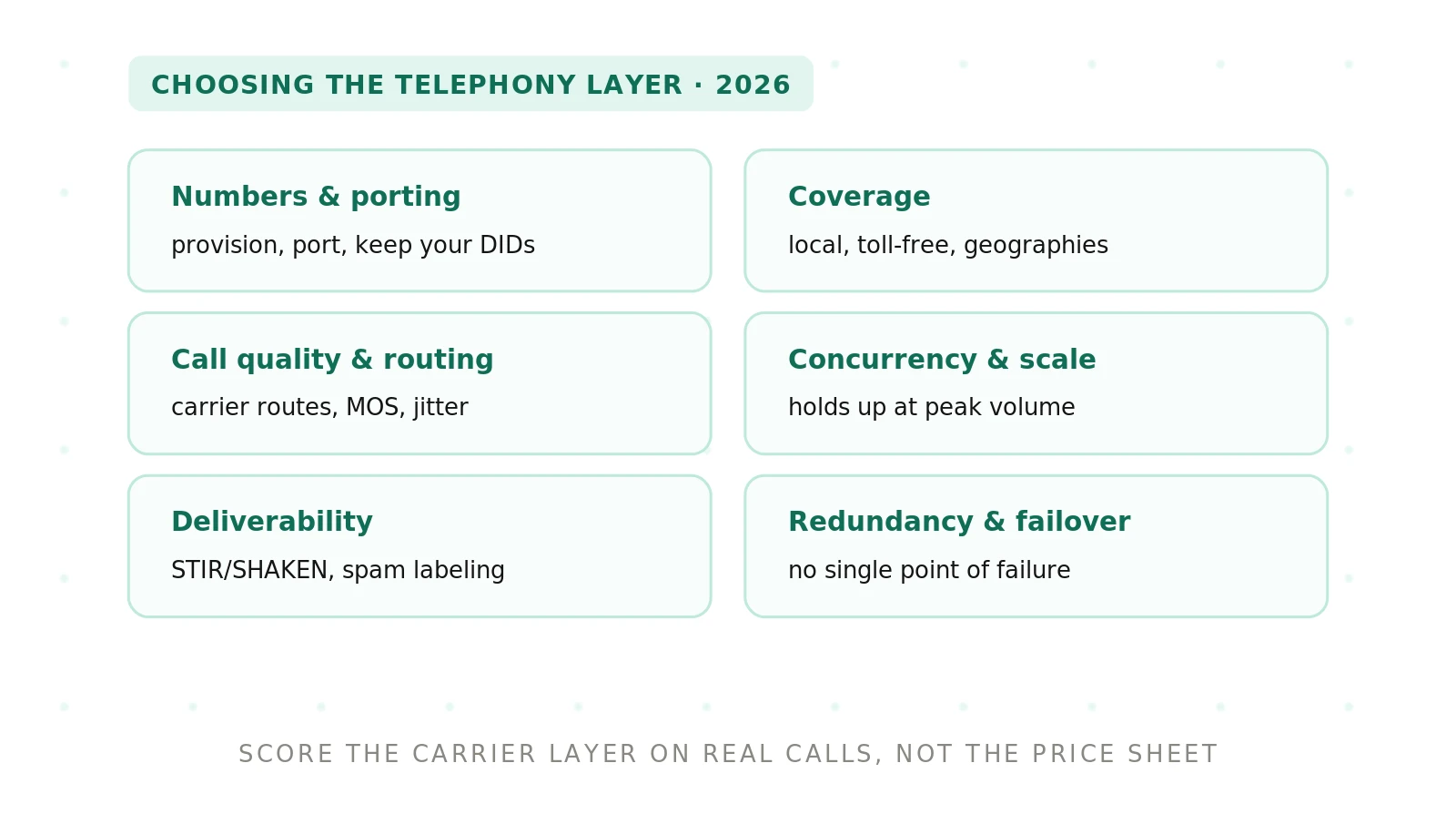
How to Choose Telephony for Voice Agents (2026)
How to choose the telephony layer for a voice agent in 2026: number porting, call quality, coverage, concurrency, and how to test carriers on real calls.
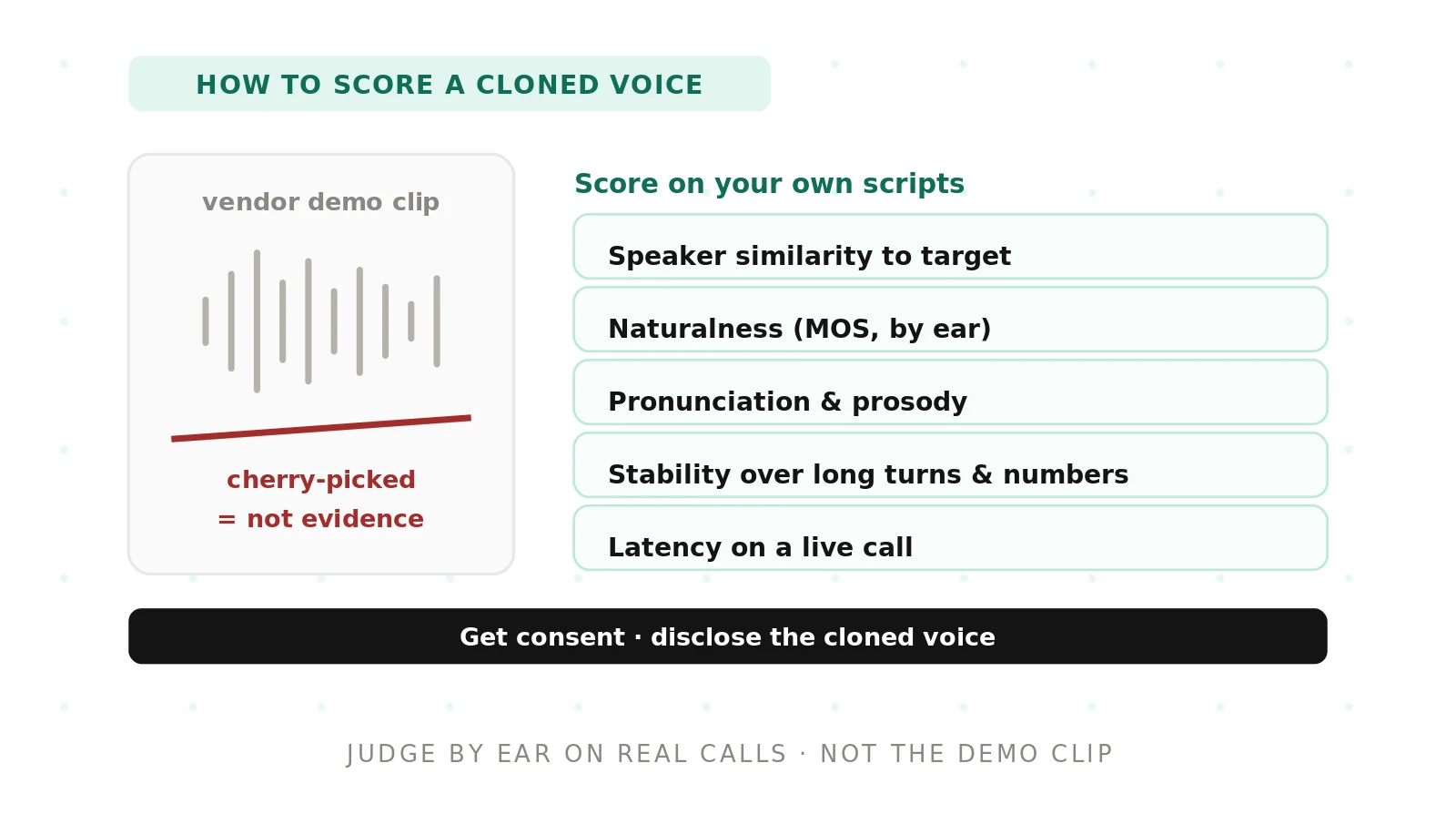
Voice Cloning Quality: How to Evaluate It
How to evaluate voice cloning for voice agents: speaker similarity, MOS, pronunciation, prosody, stability, emotion, and latency, judged by ear.
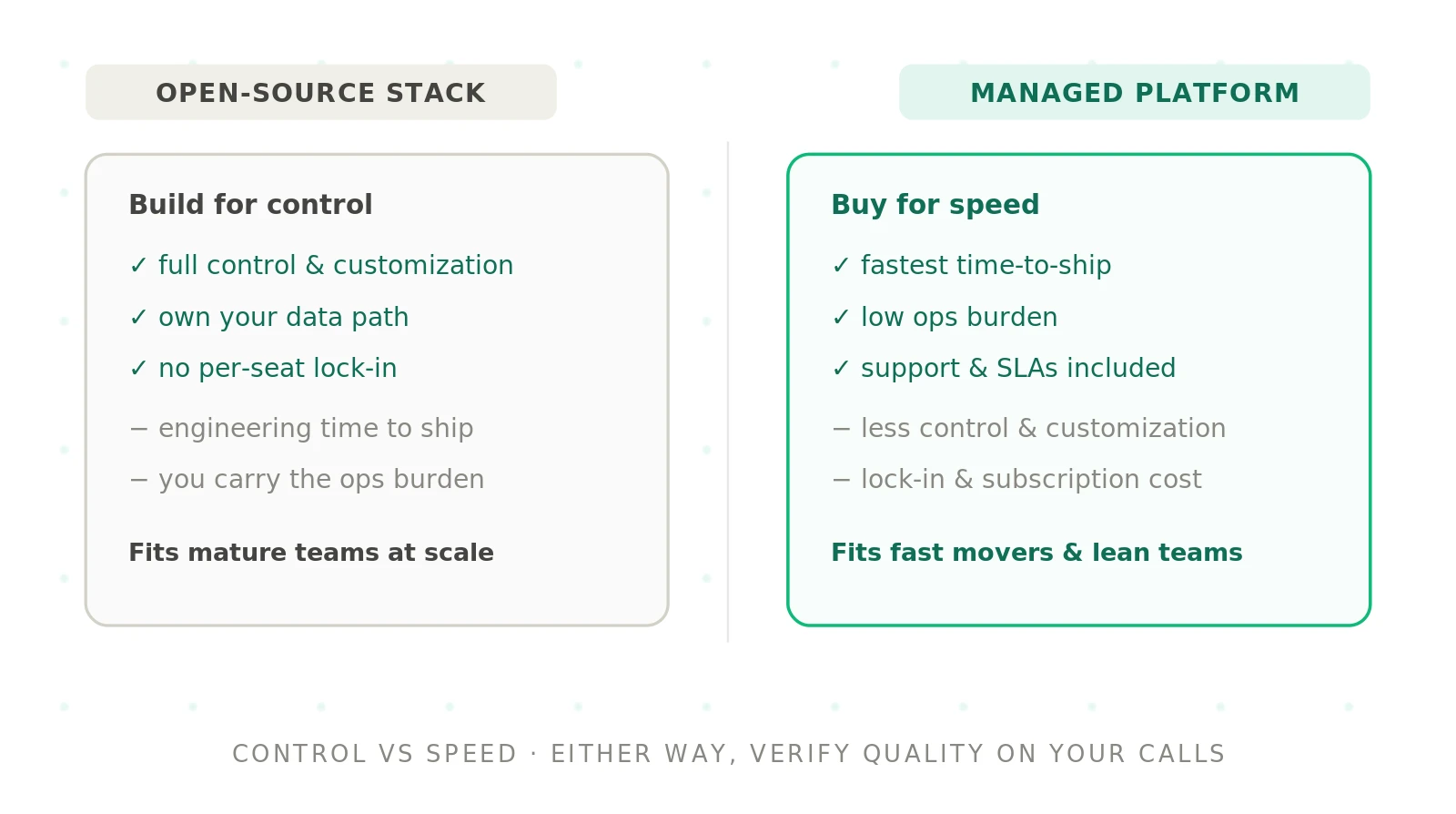
Open-Source vs Managed Voice Agent Stack
Open source vs managed voice agent stacks compared on control, time-to-ship, cost, ops burden, and lock-in, plus how to pick the right path fast.
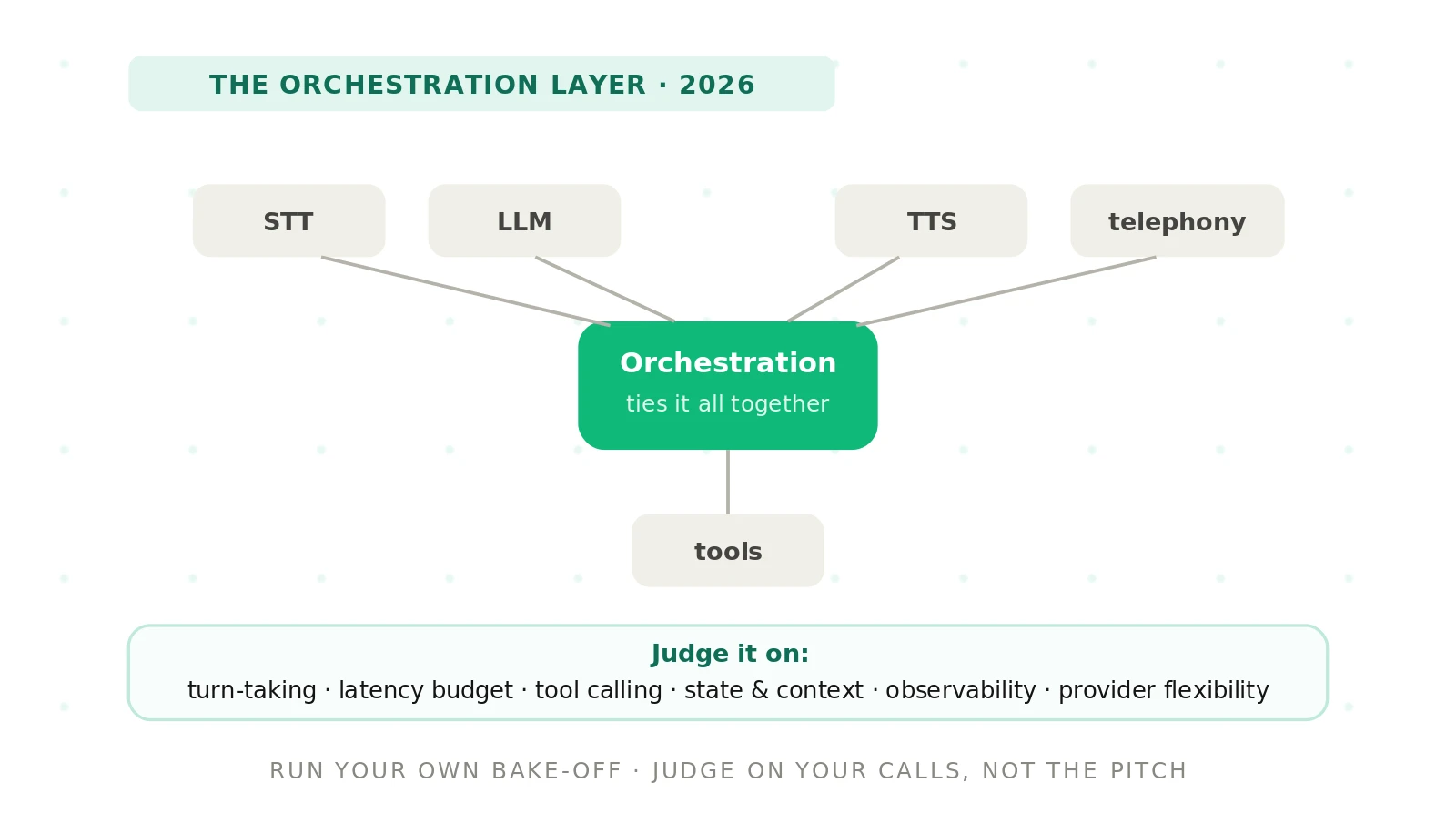
How to Choose a Voice Agent Orchestration Platform (2026)
How to choose the orchestration platform that ties STT, LLM, TTS, and telephony together in 2026 — the criteria that matter and how to test each.
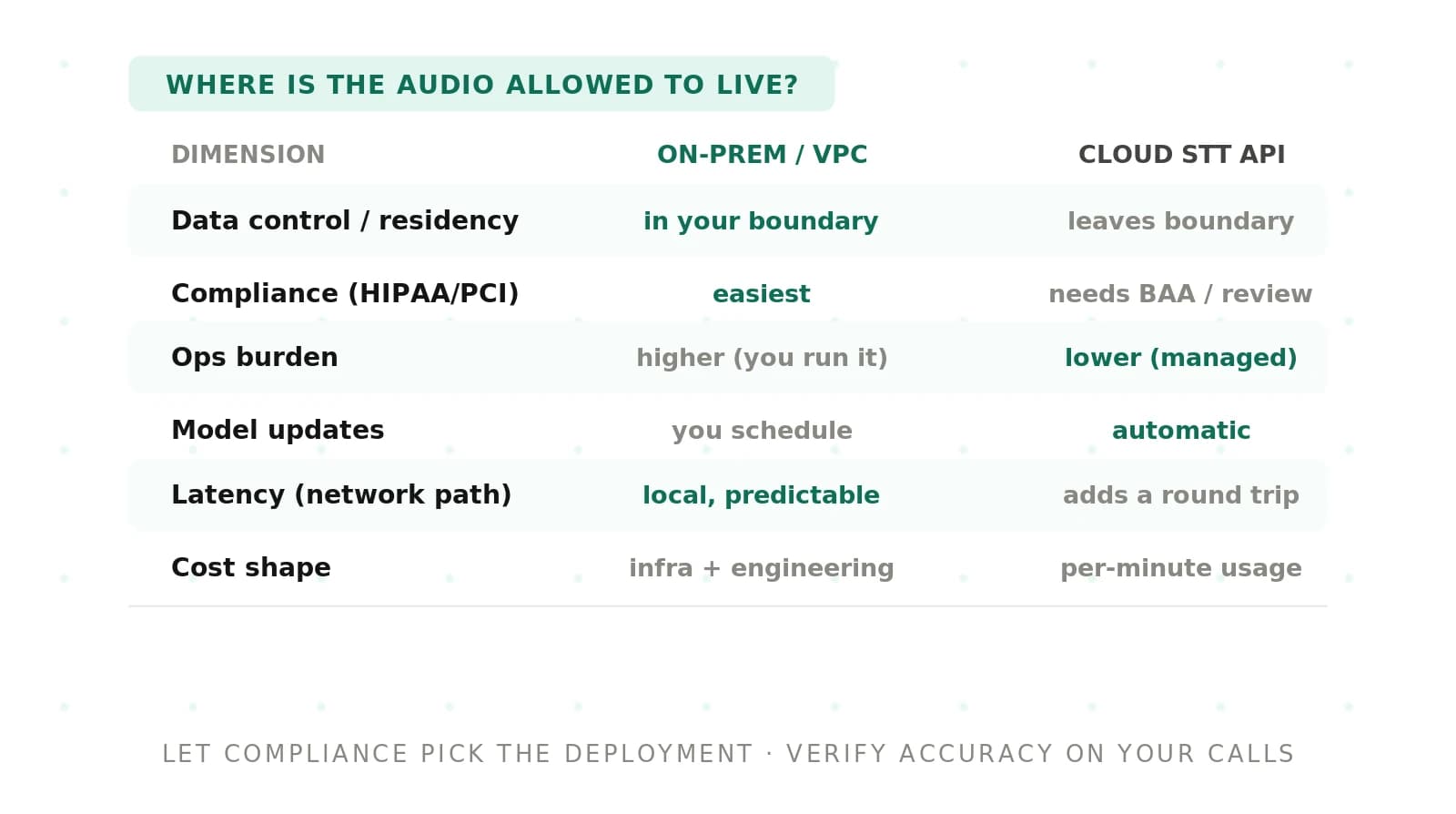
On-Prem vs Cloud STT for Regulated Voice Agents
On-prem STT keeps voice agent audio inside your network; cloud STT trades that control for speed. Here is how regulated teams choose, and how to verify it.
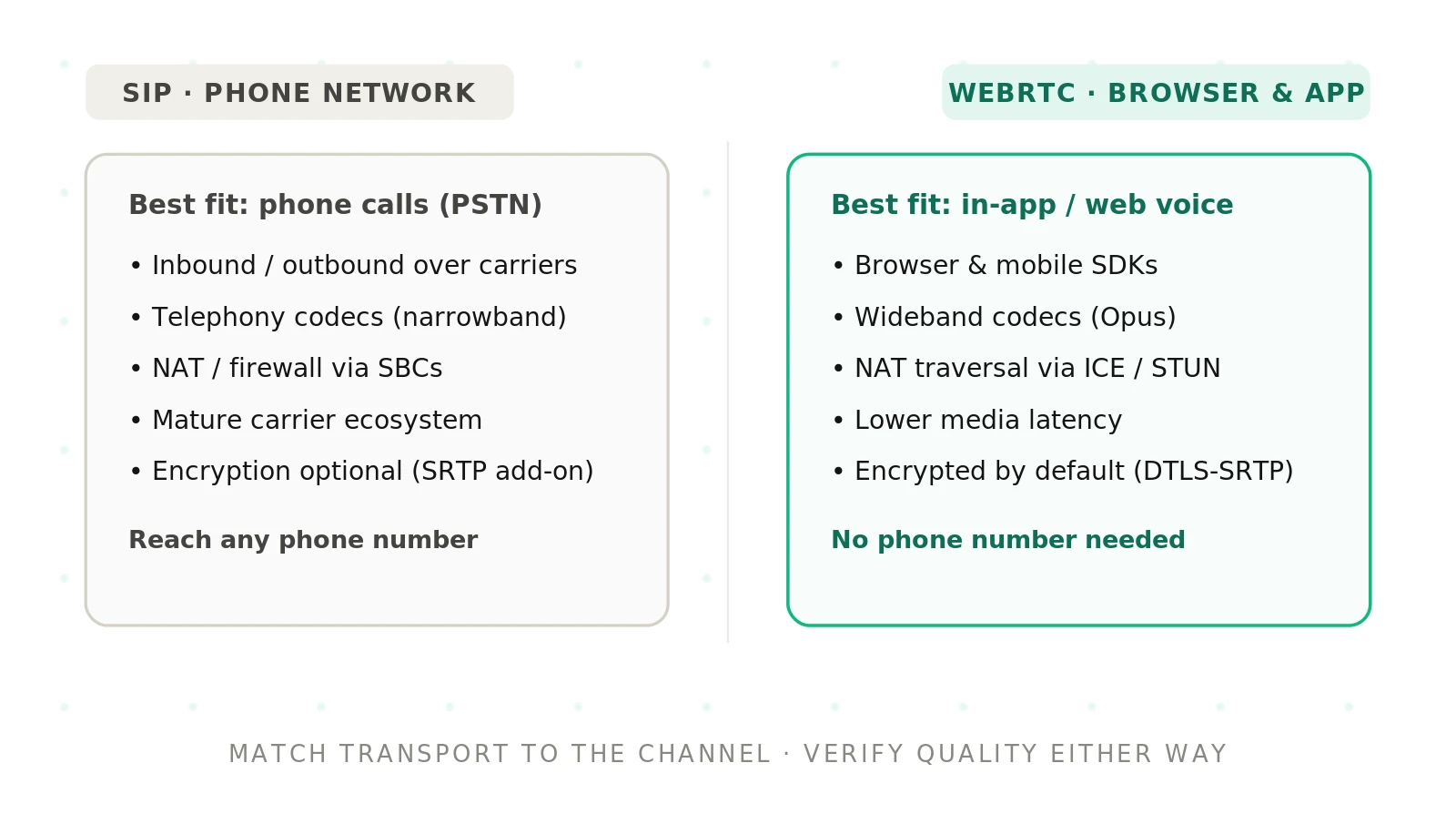
SIP vs WebRTC for Voice Agents: How to Choose
SIP connects the phone network; WebRTC connects browsers and apps. Compare latency, codecs, security, and best-fit use cases for your voice agent.
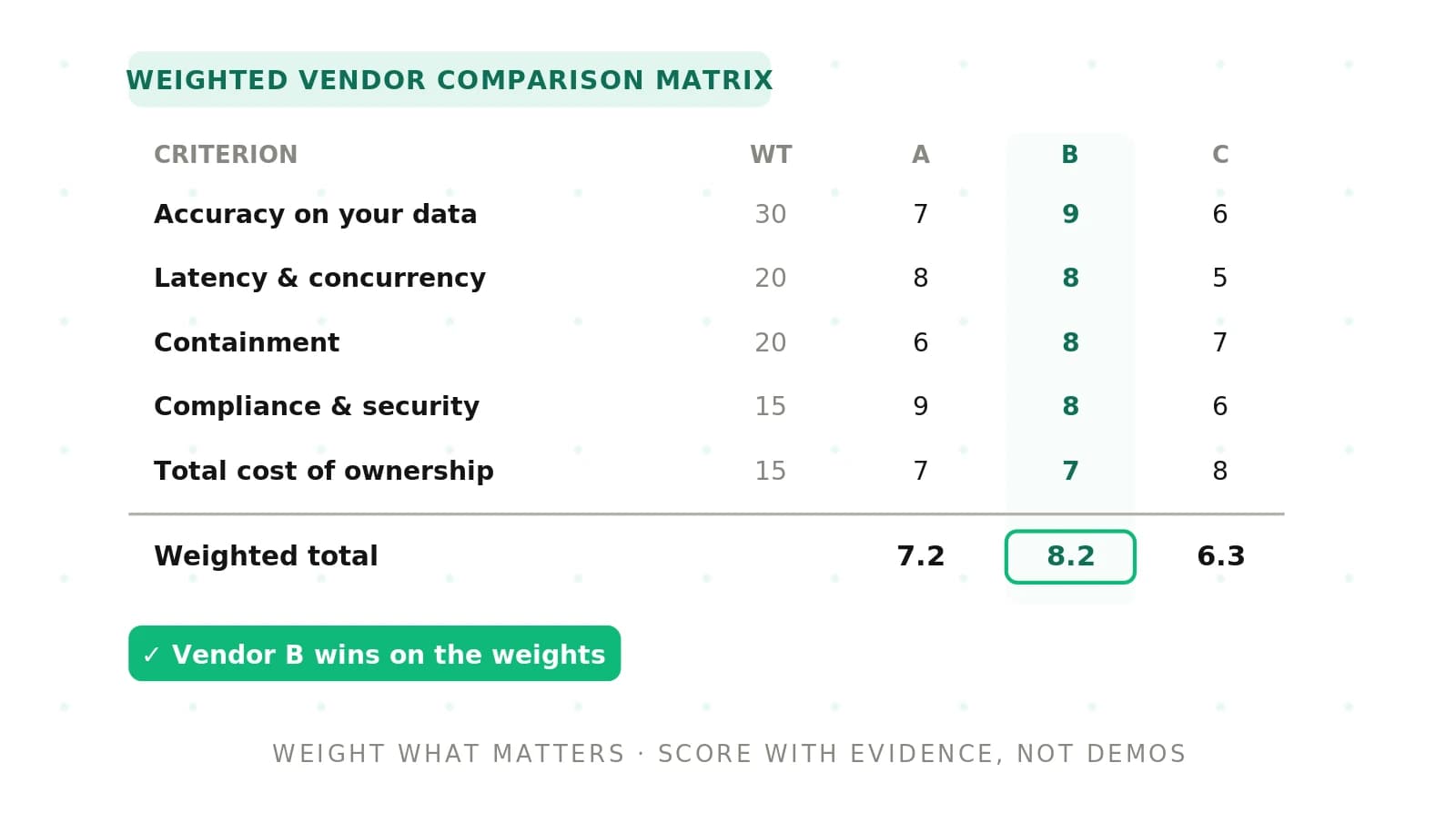
Voice Agent Vendor Comparison Matrix Template (2026)
A voice agent vendor comparison matrix template with weighted criteria, a scoring scale, and evidence-based columns for Vendor A, B, and C in 2026.
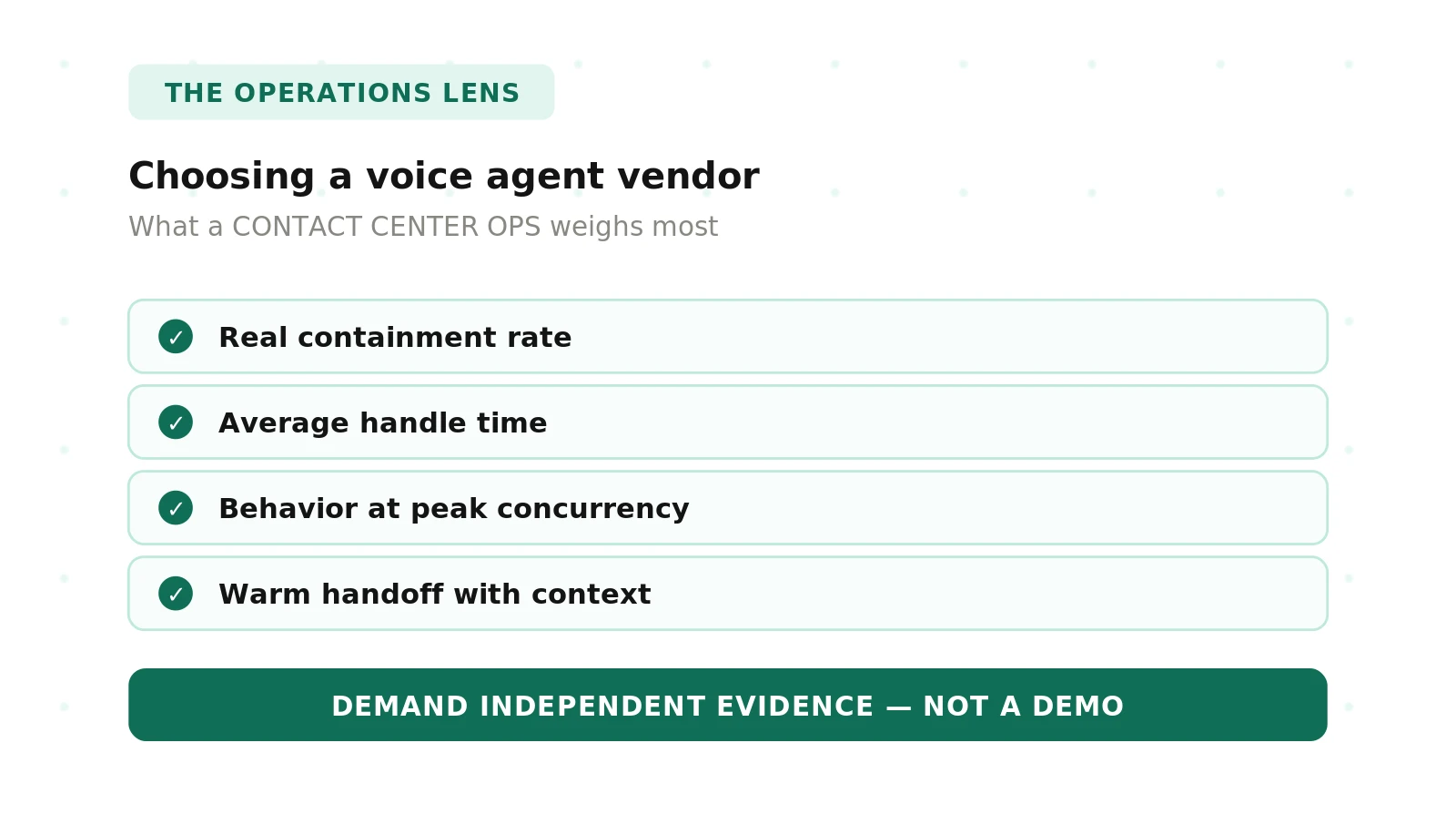
A Contact Center Manager's Guide to Voice Vendors
A contact center manager choosing a voice agent vendor must test real containment, handle time, peak concurrency, and clean handoff on their own calls.
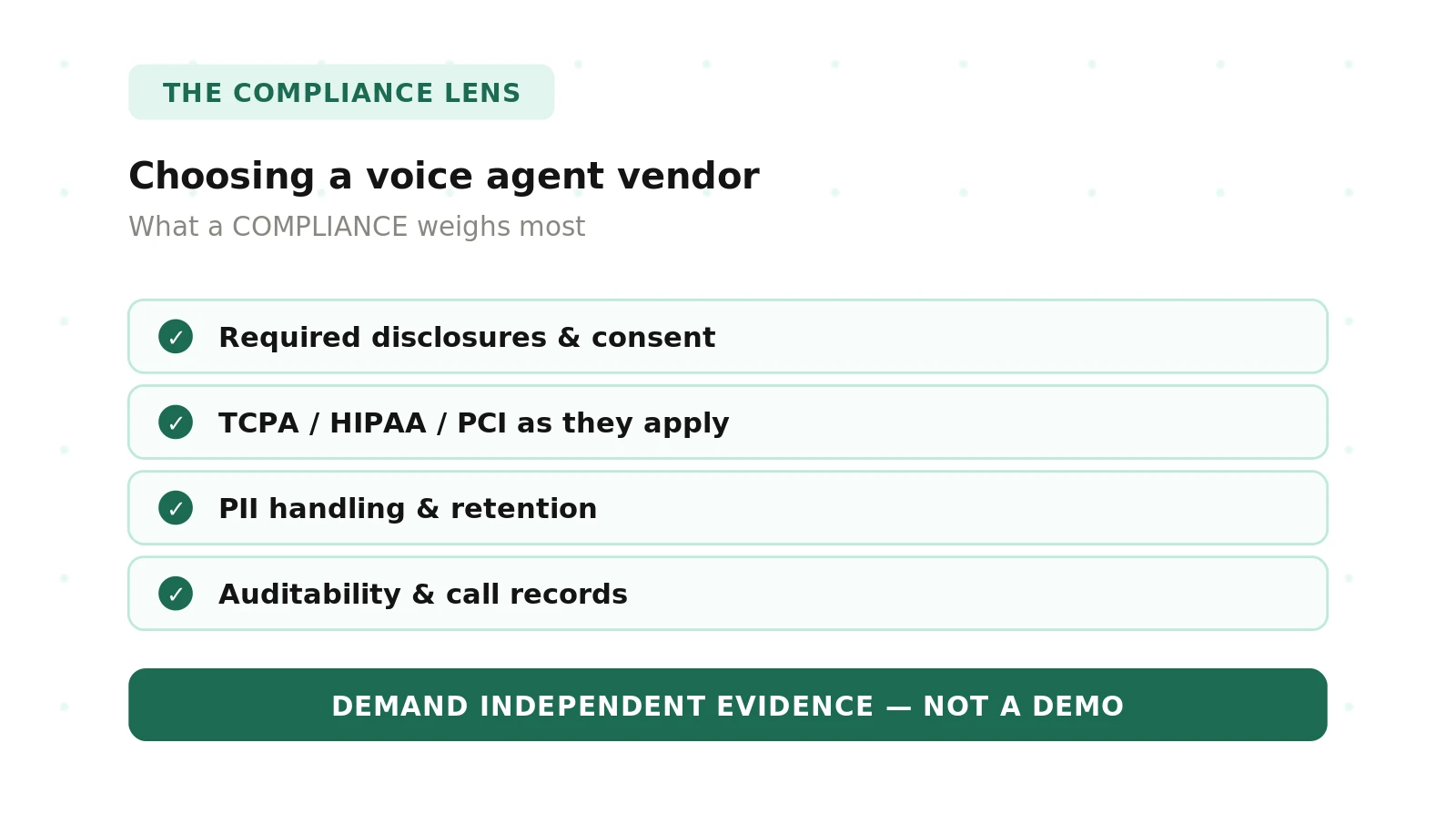
A Compliance Officer's Guide to Choosing a Voice Vendor
A compliance officer's guide to choosing a voice agent vendor: the US disclosures, TCPA, HIPAA, FDCPA and PCI rules, and the evidence to demand.