Blog
Page 16 of 32
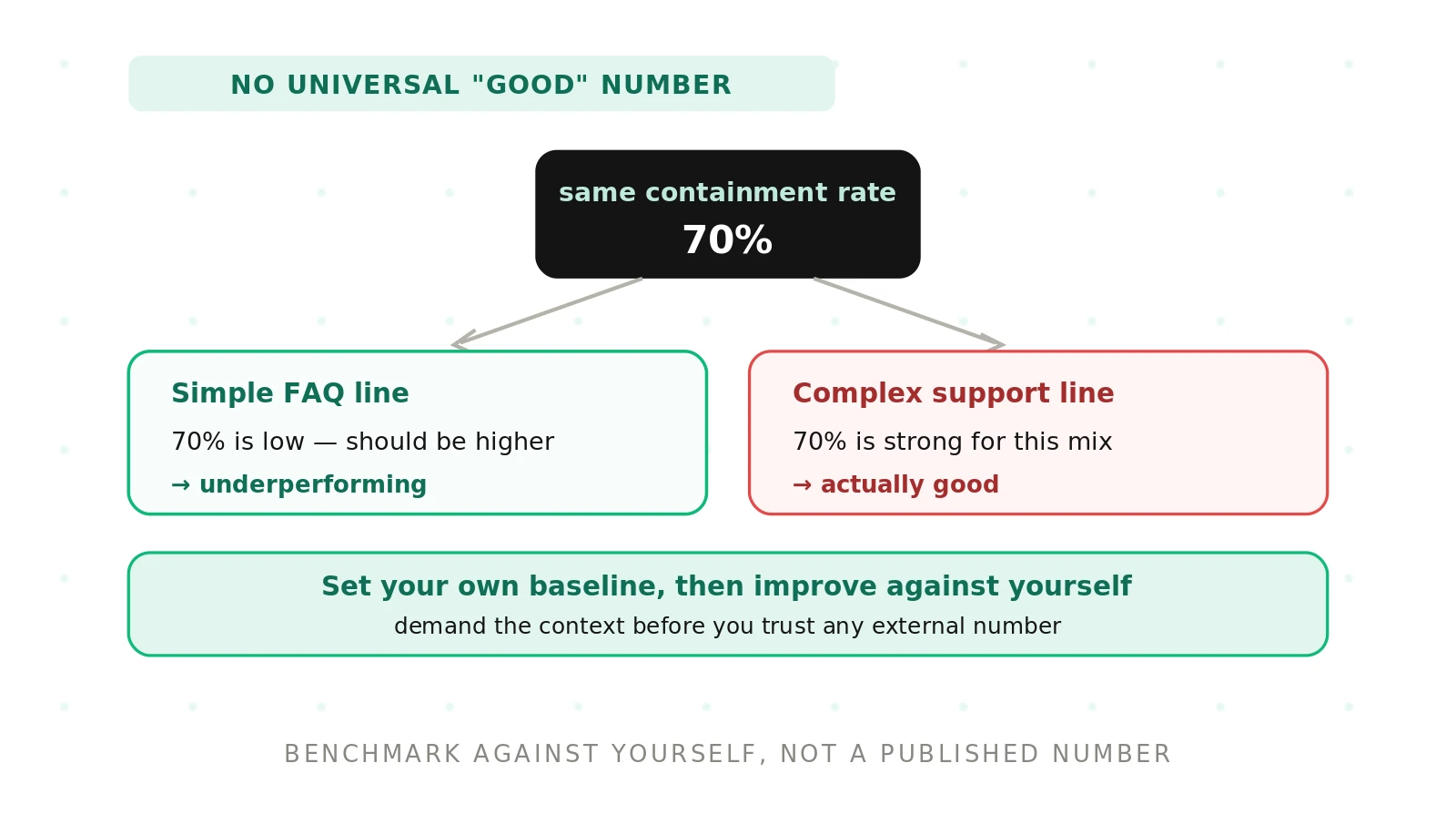
Benchmark Values for Voice Agent Metrics
There is no universal benchmark for voice agent metrics. Learn why published numbers mislead, and how to set and beat your own baseline instead.
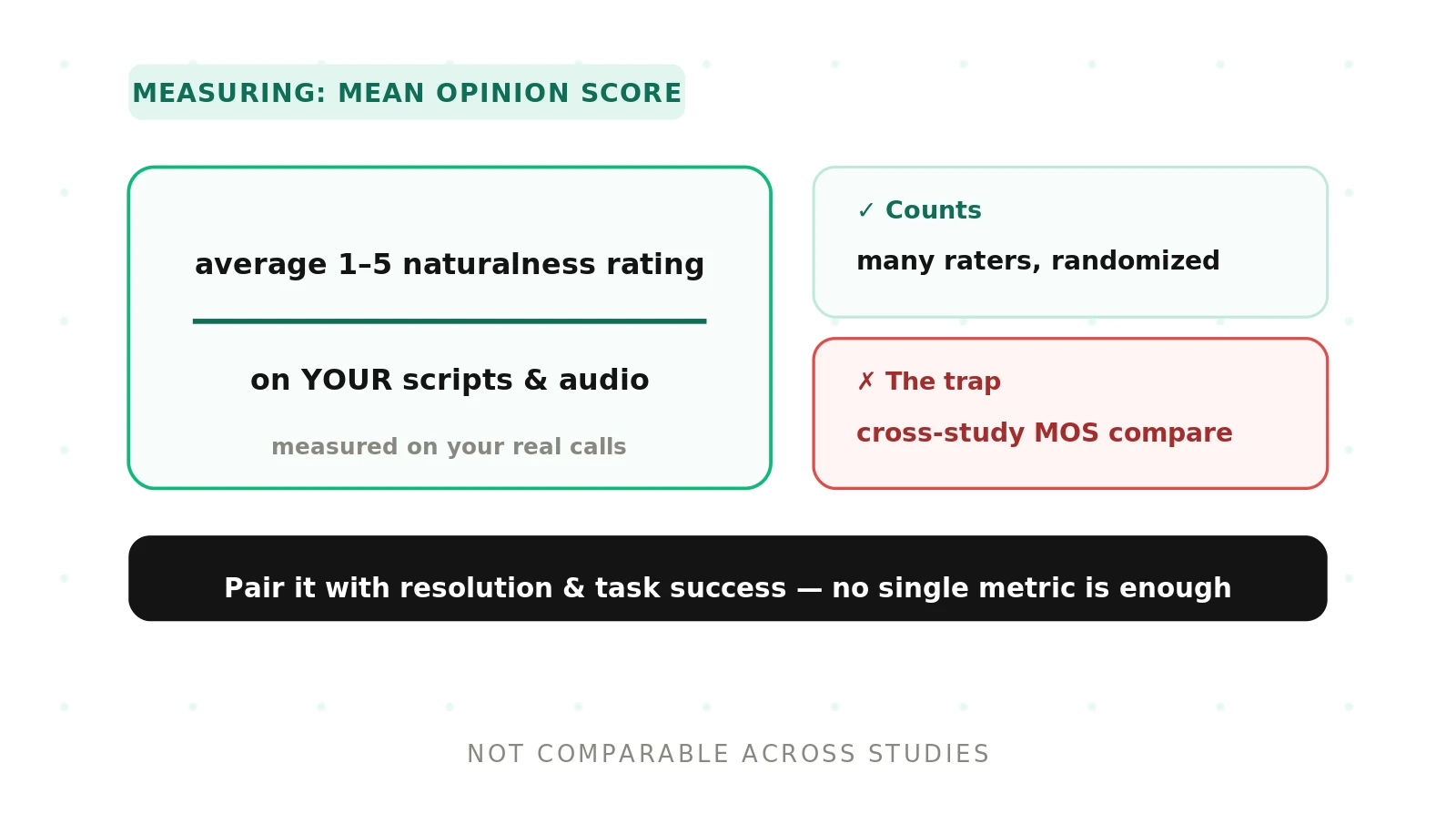
How to Measure Mean Opinion Score (MOS) for Voice
Mean opinion score (MOS) rates voice naturalness 1 to 5 on the ITU-T P.800 scale. Learn how to run a proper MOS listening test on your own audio.
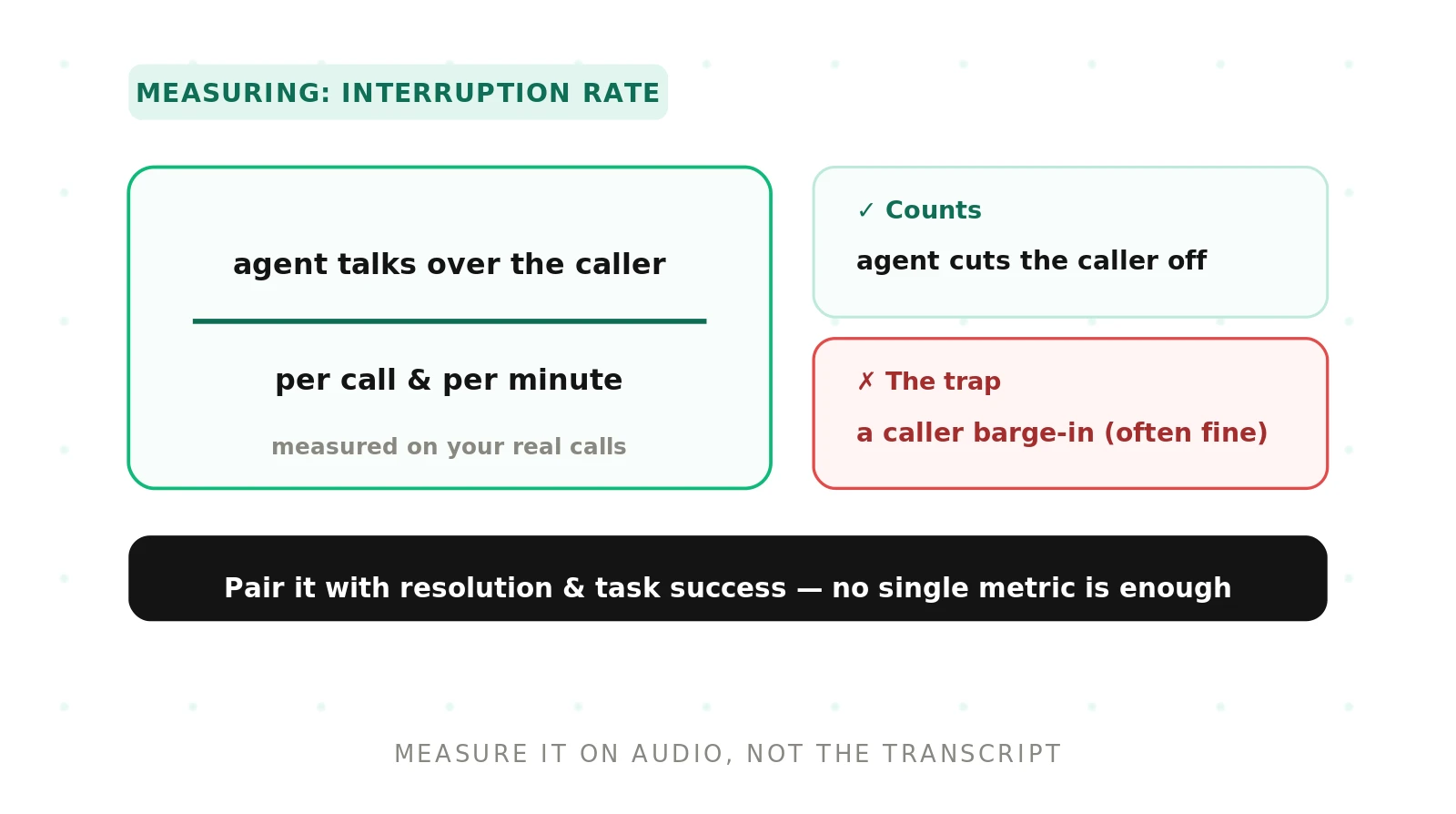
How to Measure Interruption Rate for Voice Agents
Learn how to measure interruption rate for voice agents on audio: define an interruption, count agent-over-caller apart from barge-in, and check yielding.
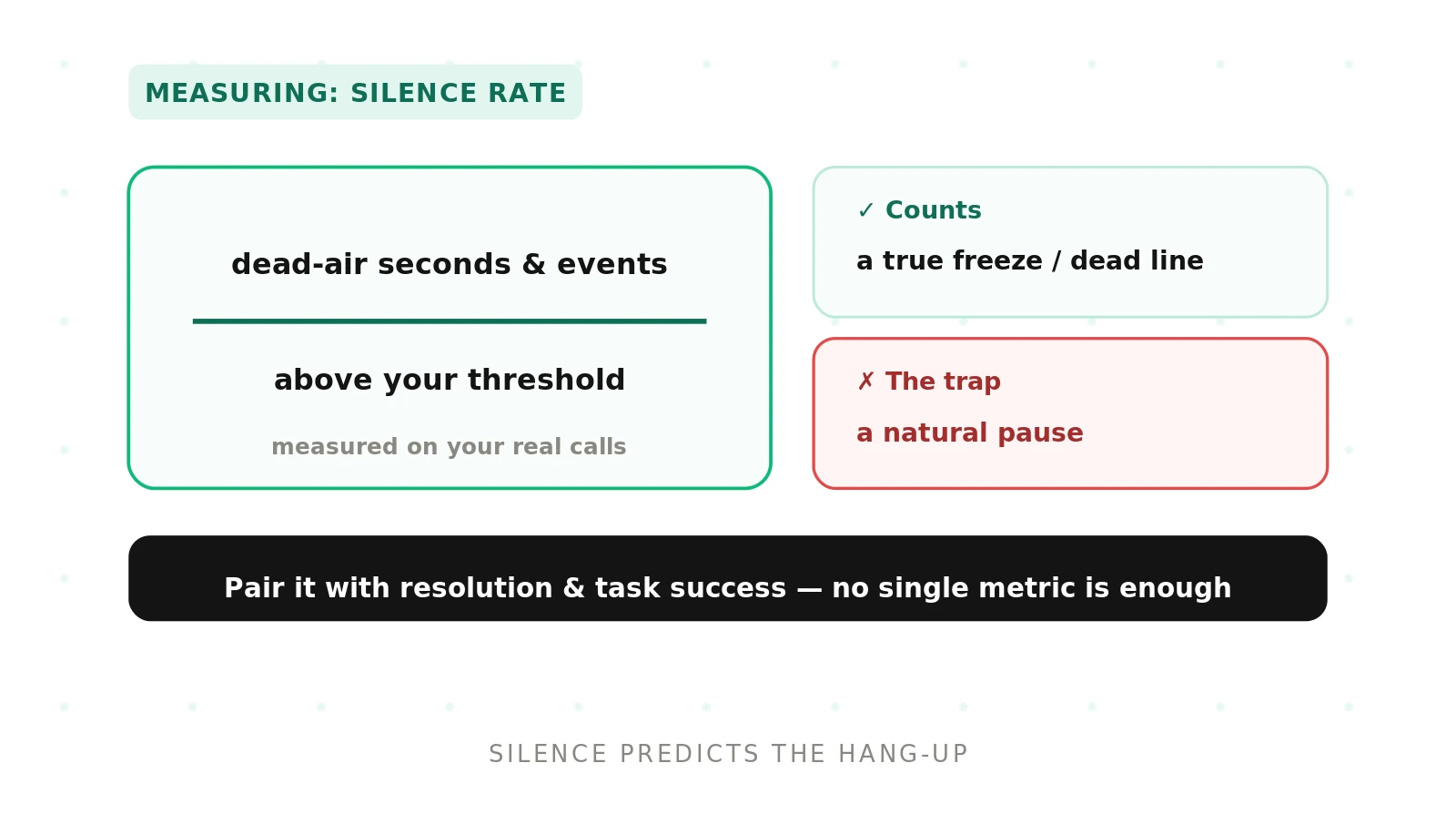
How to Measure Silence Rate for Voice Agents
Silence rate for voice agents measures how often and how long the line goes dead. Learn to set a threshold, count dead-air seconds, and set a pass bar.
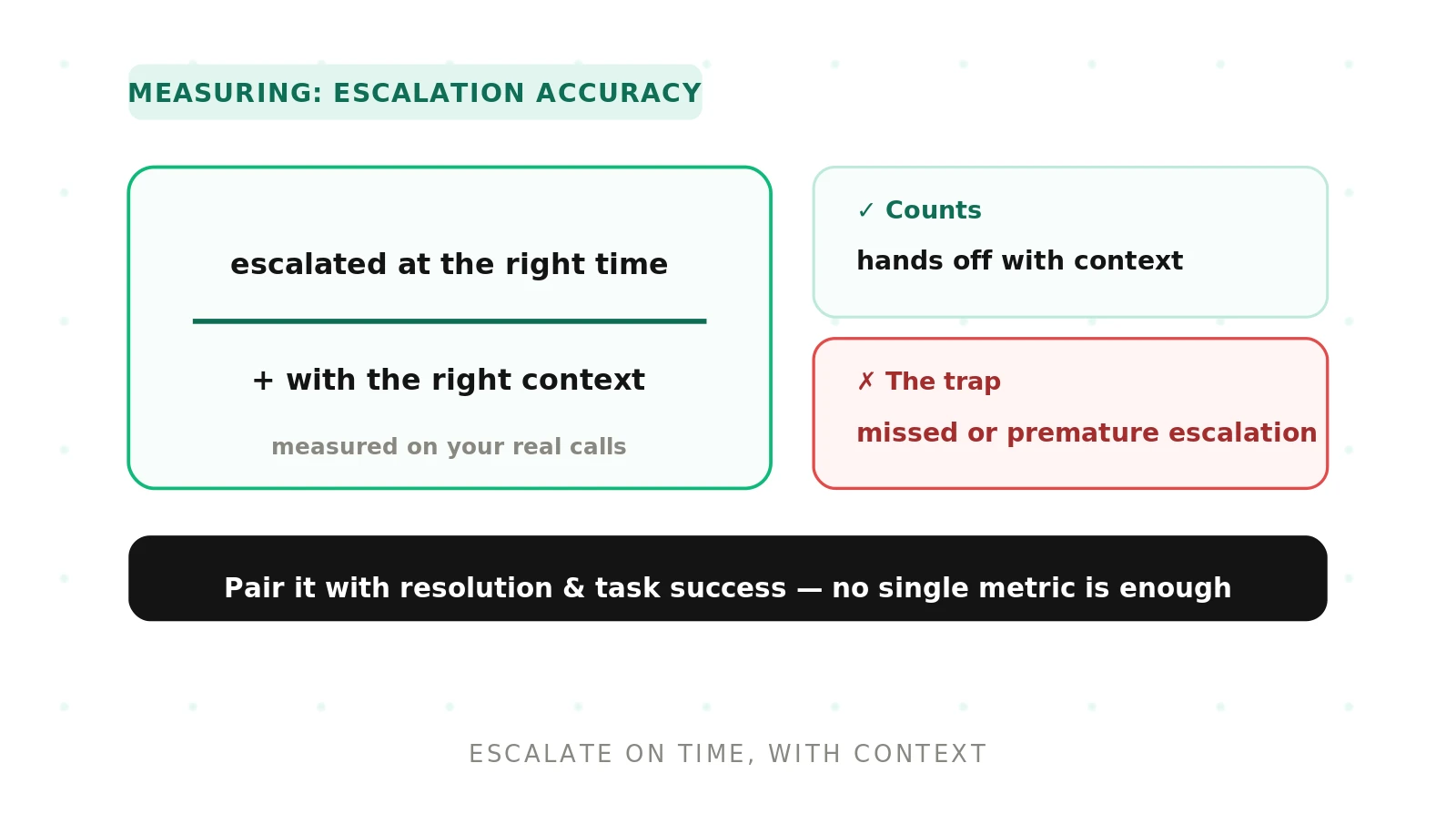
Escalation Accuracy: Measuring Good Handoffs
Measure escalation accuracy for voice agents: precision and recall on the escalate decision, plus timing and context-complete handoffs.
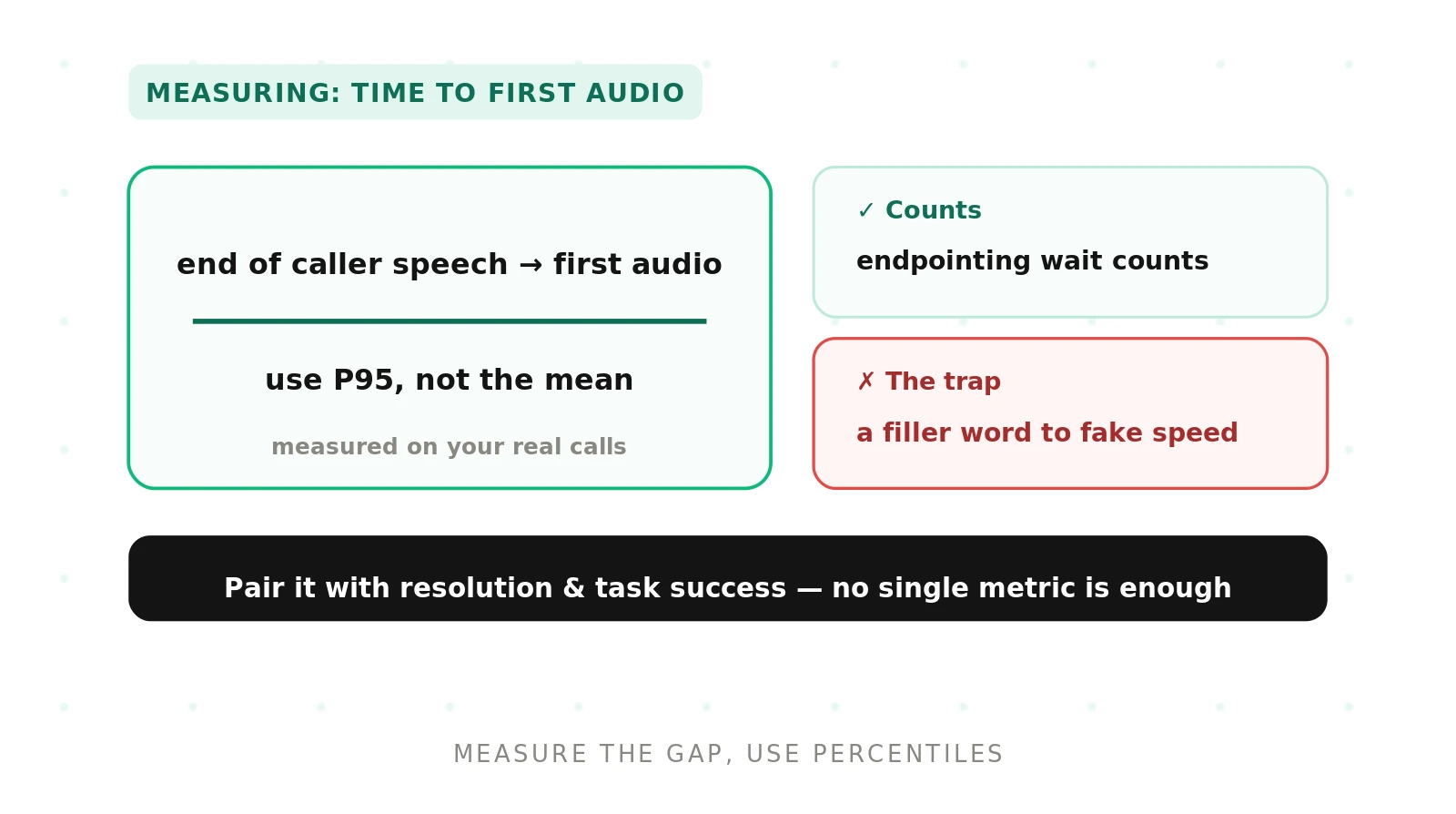
How to Measure Time to First Audio for Voice Agents
Time to first audio for voice agents is the gap from end of caller speech to the first sound back. Learn how to measure TTFA with P50, P95, and P99.
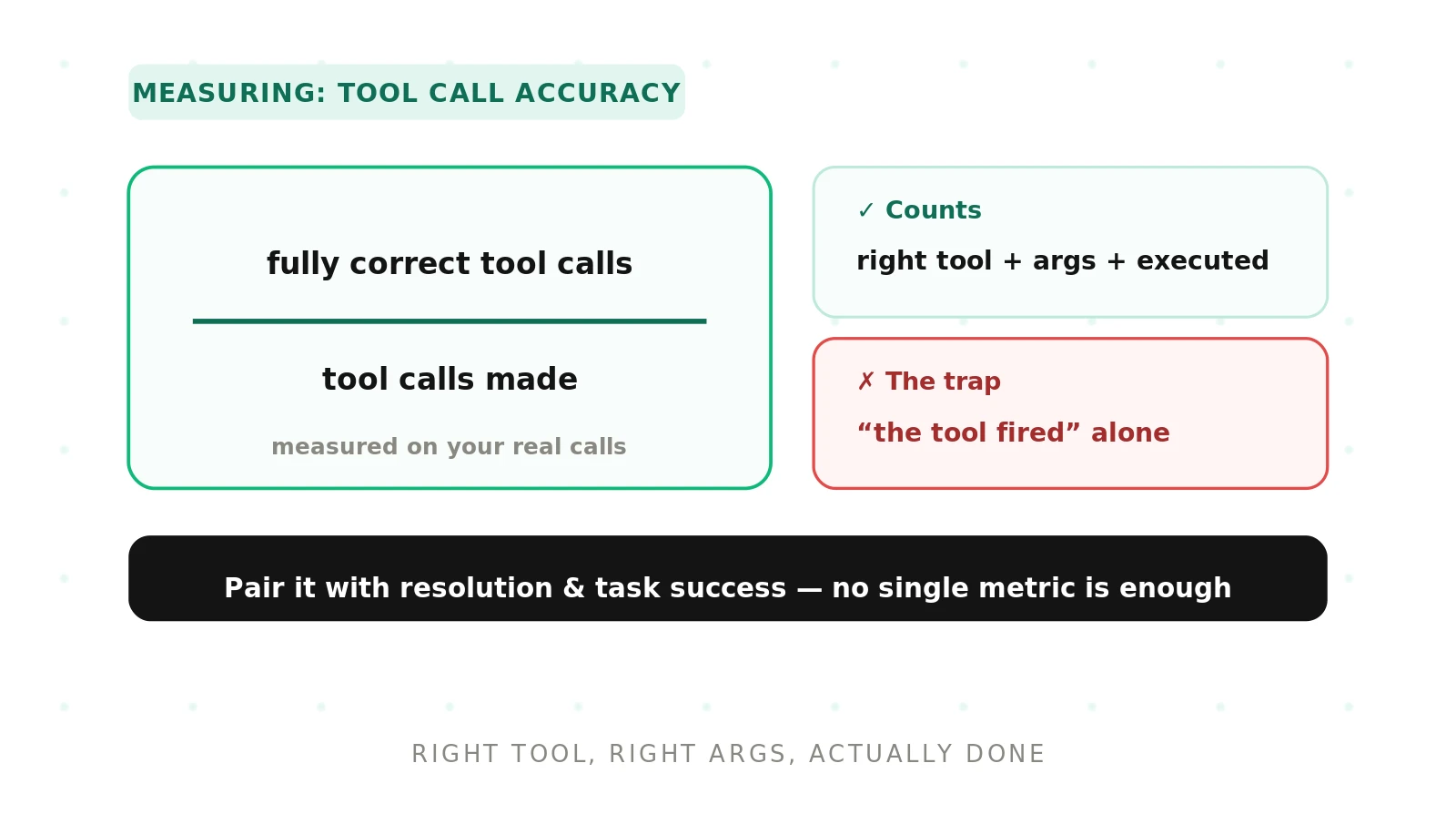
How to Measure Tool Call Accuracy for Voice Agents
Tool call accuracy tells you if a voice agent picked the right tool, with a valid schema and correct arguments, and the call succeeded. How to measure it.
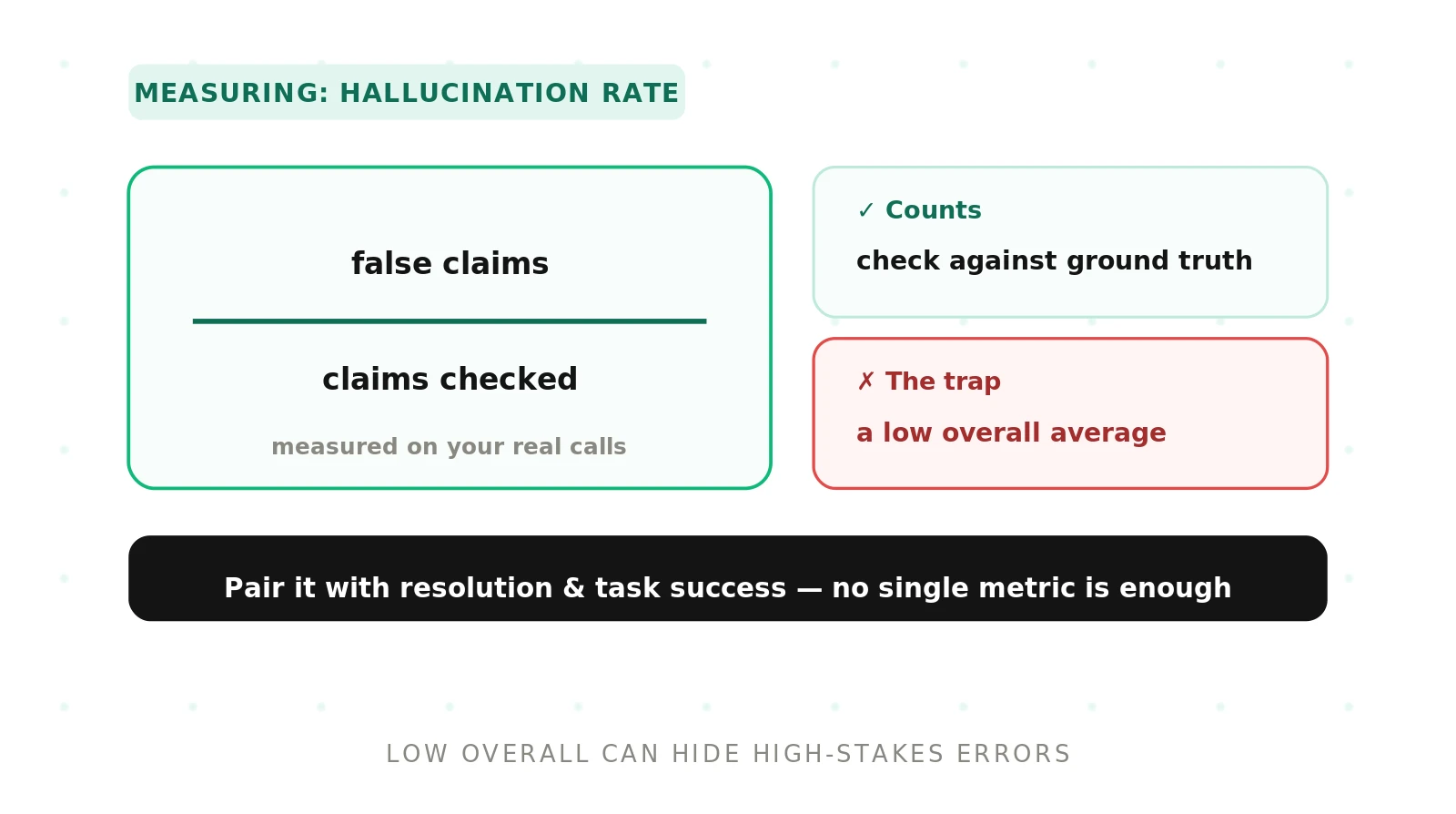
How to Measure Hallucination Rate for Voice Agents
Measure hallucination rate for voice agents: define what counts as false, build ground truth, pick a unit, sample and label calls, and track the rate.
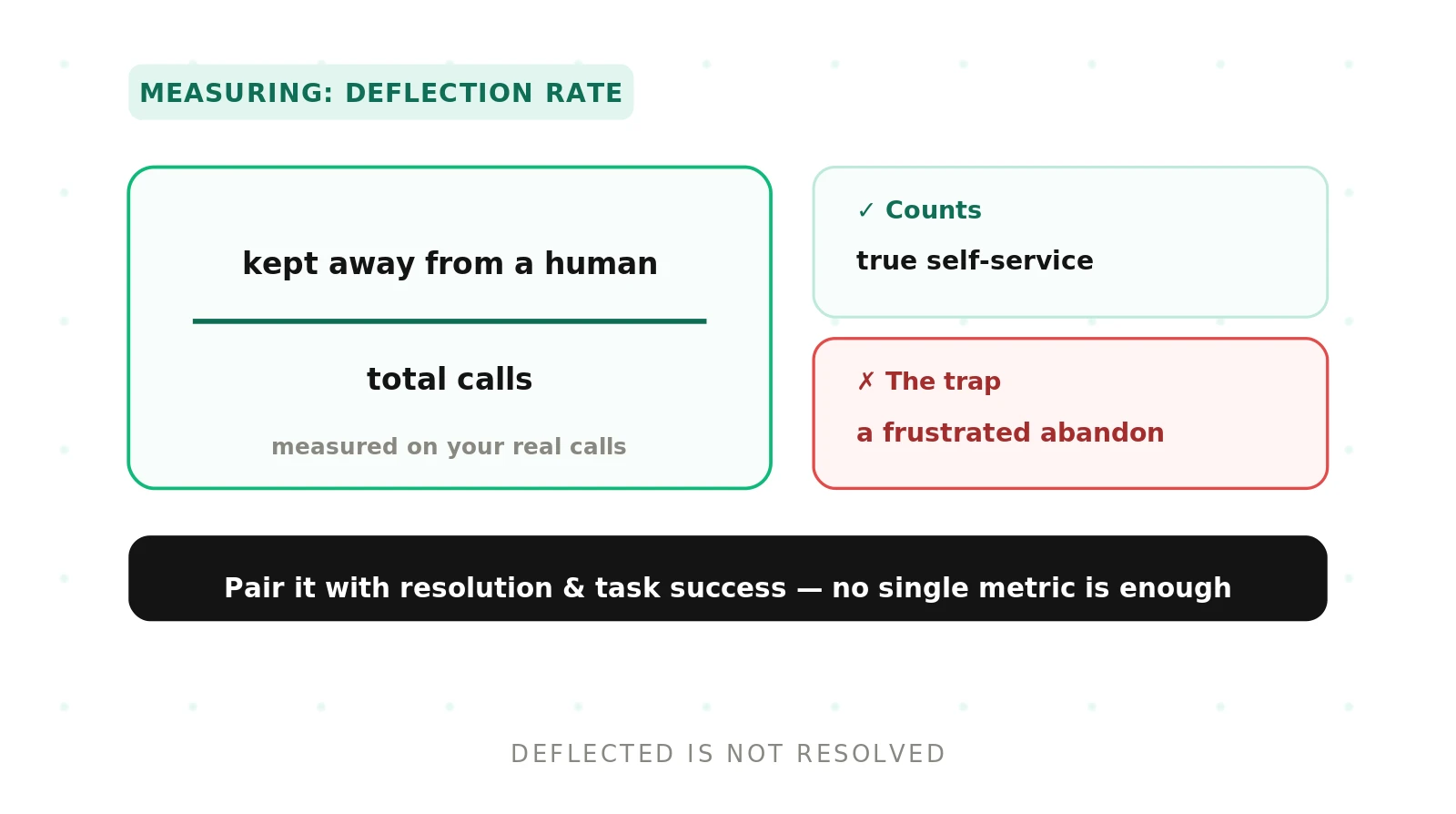
How to Measure Deflection Rate for Voice Agents
Learn how to measure deflection rate for voice agents, define the denominator, split self-service from abandonment, and pair it with resolution honestly.